





Related: Port Trucking Company Replaces Diesel with Natural Gas Trucks
LA, LB Ports: Near-Zero-Emission Natural Gas Trucks Ready for Drayage Operations
Near-zero-emission natural gas trucks have been deemed feasible for drayage operations by the Ports of Los Angeles and Long Beach. A May 2020 addendum to their Feasibility Assessment for Drayage Trucks upgraded currently available trucks to the highest technology readiness level.
May 29, 2020
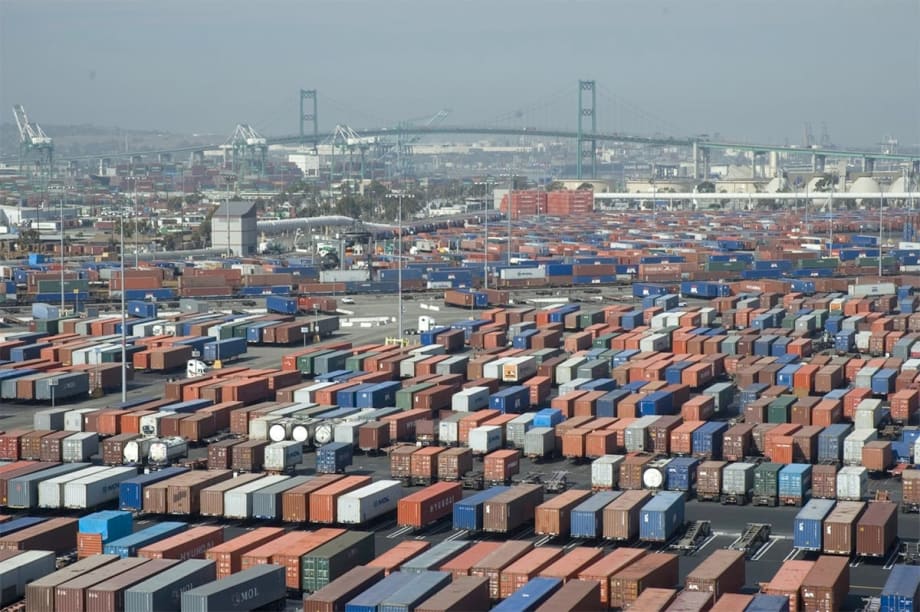
Photo: Charles Csavossy via Wikimedia Commons
2 min to read
Near-zero-emission natural gas trucks have been deemed feasible for drayage operations by the Ports of Los Angeles and Long Beach. In a May 2020 addendum, the ports officially upgraded the currently available near-zero-emission (NZE) heavy-duty natural gas trucks to the highest technology readiness level, TRL 9, in their Feasibility Assessment for Drayage Trucks.
First published in March 2019, the assessment evaluated the viability of various zero-emission and NZE drayage truck fuel-technology platforms based on four parameters: commercial availability, operational feasibility, infrastructure availability, and economic workability. NZE natural gas trucks are the first technology in the assessment to achieve the TRL 9 rating, according to the California Natural Gas Vehicle Partnership.
Key to the move was a successful demonstration of 20 natural gas trucks powered by the Cummins ISX12N NZE engine in daily drayage operations with Total Transportation Services, NFI, CR&R, Pacific 9 Transportation, 4Gen, Green Fleet Systems, and Orange Avenue Express. The trucks accumulated 567,603 miles running between the ports and distribution centers throughout Southern California. Currently, the trucks have surpassed 1 million miles of operation.
“In our experience, NZE natural gas trucks are the closest direct replacement for diesel trucks in terms of their power and speed, the 600-mile range they provide between refueling, the ability to fast-fuel in about 10 or 15 minutes, and most importantly, their ability to compete on a cost-per-mile basis,” said Vic LaRosa, CEO and president of TTSI.
The NZE ISX12N natural gas engine is produced by Cummins, which has partnered with Freightliner, Kenworth, Mack, Peterbilt, and Volvo to make it commercially available.
Southern California fleets benefit from the existing and extensive public access natural gas refueling network, which is poised to fuel several thousand trucks.
“With a substantial expansion of in-state renewable natural gas projects now underway — with many of these projects having very low to negative carbon intensity values — the GHG emission reduction benefits of the expanded use of heavy-duty natural gas trucks in the state will only continue to increase,” said Todd Campbell, vice president of public policy for Clean Energy and the chair of the California Natural Gas Vehicle Partnership.
More Fuel Smarts

Wex Adds Cardless Fuel Payments for Over-the-Road Customers
A new fuel card feature for Wex customers offers convenience and security.
Read More →
New California Law Could Shed Light on Electric Truck Prices
Why do battery-electric Class 8 trucks remain so expensive? A California bill signed by Gov. Gavin Newsom would give fleets and state agencies more visibility into what manufacturers charge.
Read More →
How Volvo Updated Its D13 for EPA 2027 [Watch]
Volvo’s updated D13 promises lower emissions without sacrificing performance or fuel economy. Take a closer look at what changed inside the engine in this HDT Spotlight video.
Read More →

Diesel Price Spike Shortens Payback for Natural Gas Trucks, Report Says
Energy Vision estimates fleets could recover the higher purchase price of an RNG-fueled Class 8 tractor in 1.3 to 2.8 years under current fuel-price scenarios.
Read More →
Calstart Becomes Catalyst Mobility, Reflecting Broader Focus
Calstart is now Catalyst Mobility, reflecting the nonprofit’s growing national role in clean transportation, including zero-emission trucks, infrastructure and incentive programs.
Read More →
Record Diesel Prices Squeeze Trucking Fleets
Average U.S. diesel prices have climbed to nearly $6 a gallon, surpassing the 2022 record as tight refinery capacity and Middle East disruptions keep fuel costs elevated.
Read More →
Sponsored•September 9, 2026
How Fuel Delivery Shapes Engine Performance
Fuel delivery depends on more than what happens at the injector. For fleet, maintenance and technical professionals, looking at the full path from pump to injector can provide useful context for understanding engine performance.
Read More →
East Coast Port Launches $45M Electric Truck Push
The Port Authority of New York and New Jersey announced millions in incentives for zero-emission drayage trucks, yard tractors, and new charging hubs near the port.
Read More →
Detroit Opens Orders for EPA 2027 Engines
Detroit isn’t starting from scratch to meet EPA 2027 diesel emissions standards. Its Gen 6 DD13 and DD15 engines keep much of today’s platform while updating the fuel and aftertreatment systems.
Read More →
Zero-Emission Truck Corridor Planned for West Coast
California, Oregon, Washington, British Columbia and Baja California are coordinating plans for truck charging and hydrogen fueling from Canada to Mexico.
Read More →