





About CVSA Decals: When a vehicle has no critical vehicle violations, an inspector will place a CVSA decal on the windshield, showing that the vehicle was inspected and found to be in safe operating condition.
Medical Cards, English Proficiency Reshape Roadcheck Violations
Medical-card violations jumped to the top of the driver out-of-service list during CVSA’s 2026 International Roadcheck, while English-language proficiency violations appeared among the leading violations for the first time.
August 26, 2026
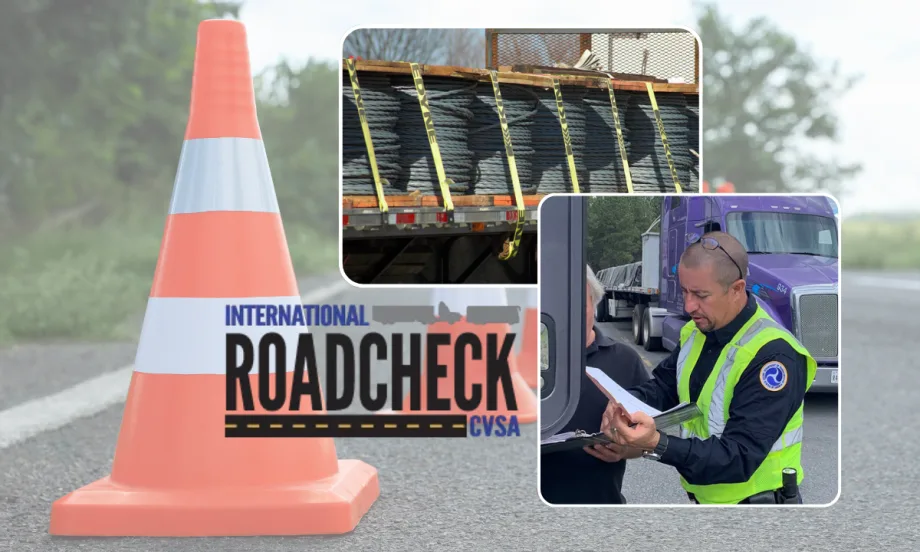
The focus areas for this year's Roadcheck three-day inspection blitz were cargo securement and ELD tampering.
Credit:
HDT Graphic. Photos Jim Park, CVSA
4 min to read
- Medical-card violations became the leading reason for drivers being placed out-of-service in the CVSA's 2026 International Roadcheck.
- English-language proficiency violations emerged as a significant concern, ranking among top violations for the first time.
- The emphasis on these violations highlights new trends and challenges in compliance and enforcement during road checks.
*Summarized by AI
The reasons drivers were placed out of service during this year’s three-day International Roadcheck inspection blitz changed significantly from last year, with English-language proficiency violations debuting on the list and medical-card violations jumping into the top spot.
During International Roadcheck, held May 12-14 in the U.S., Canada and Mexico, certified commercial motor vehicle inspectors conducted nearly 55,000 driver and vehicle inspections. Most vehicles and drivers passed without an out-of-service violation. But inspectors placed 10,350 commercial motor vehicles and 3,184 drivers out of service.
A vehicle or driver is placed out of service when an inspector finds a violation serious enough that operation cannot continue until the problem is corrected.
English Proficiency Makes Roadcheck OOS List
English-language proficiency was a new entry among this year’s driver out-of-service violations, accounting for 9% of driver OOS violations in the U.S.
English-language proficiency was not an out-of-service condition during last year’s Roadcheck. The Federal Motor Carrier Safety Administration made it an OOS condition in June 2025 through agency guidance.
Earlier this month, FMCSA issued a proposed rule that would codify the English requirements in federal regulations.
Driver Out-of-Service Violations Shift
Across the U.S. and Canada, nearly 3,200 drivers, or nearly 6% of those inspected, were placed out of service.
Because one driver can have more than one violation, inspectors identified more than 3,800 driver out-of-service violations in the U.S.
The top five driver out-of-service violations in the U.S. were:
- No medical card
- Hours-of-service violations
- No commercial driver’s license
- English-language proficiency
- False records of duty status
Medical-card violations saw one of the biggest changes. They accounted for 28% of driver out-of-service violations this year, up from 18% in 2025. That moved them from third place last year to the No. 1 driver violation in 2026.
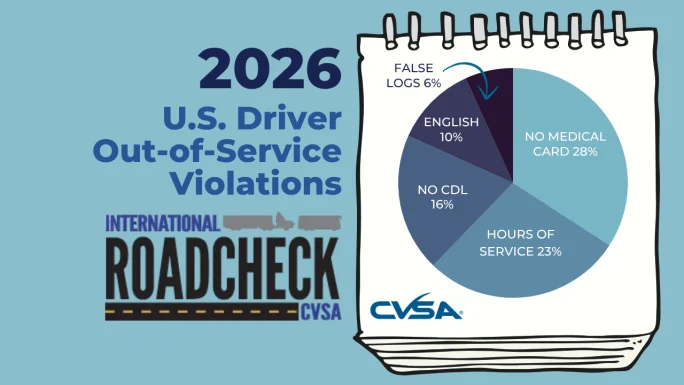
False records of duty status were the driver focus of this year’s Roadcheck, but those OOS violations fell from 9% last year to less than 6% this year.
Credit:
HDT Graphic from CVSA Data
Hours-of-service violations moved in the opposite direction. They accounted for 23% of driver OOS violations, down from 36% last year, when they topped the list.
The share of violations for drivers operating without a CDL also fell, from nearly 30% in 2025 to 16% this year.
False records of duty status were the driver focus of this year’s Roadcheck, but those violations also declined, from 9% last year to less than 6% this year.
Did Medical-Card Changes Play a Role?
The increase in medical-card violations comes as states, drivers and motor carriers continue adjusting to FMCSA's new electronic medical-certification process.
The Medical Examiner’s Certification Integration rule, known as NRII, is intended to electronically transmit medical certification information from certified medical examiners to state driver licensing agencies. Two states have not yet implemented the system.
FMCSA also issued a temporary exemption allowing interstate CDL and commercial learner's permit holders, as well as motor carriers, to continue relying on a paper copy of the medical examiner’s certificate as proof of medical certification for up to 60 days after the certificate is issued.
The exemption is in effect from April 11 through Oct. 11, 2026.
Roadcheck Focuses on ELD Tampering
The driver emphasis for this year’s International Roadcheck was electronic logging device tampering, falsification and manipulation.
Inspectors issued 146 out-of-service orders for ELD tampering, accounting for 3.7% of driver out-of-service violations and making it the seventh most-cited driver OOS violation in North America.
ELD tampering involves altering, obscuring, falsifying, interfering with or reengineering ELD data to conceal hours-of-service violations.
In March, FMCSA issued new guidance for commercial vehicle inspectors that distinguishes more traditional logbook violations from tampered ELD data.
Late last year, amid growing complaints about falsified driver logs and unscrupulous ELD providers, FMCSA revamped the process for registering electronic logging devices, adding new safeguards but stopping short of requiring third-party certification.
Brakes Again Lead Vehicle Violations
Unlike the driver results, the leading vehicle out-of-service violations changed little from last year, with brakes again topping the list.
Inspectors conducted more than 44,000 vehicle inspections and placed 10,350 vehicles out of service after finding 13,924 OOS vehicle violations. A vehicle may have more than one violation.
Brake-system violations were the most common vehicle out-of-service violation in North America.
Inspectors identified nearly 3,800 brake-system violations, accounting for 24% of vehicle OOS violations.
Another 2,072 violations involved the 20% defective-brakes criterion, the third most-cited vehicle OOS violation. A vehicle or combination meets that threshold when 20% or more of its brakes have an out-of-service condition.
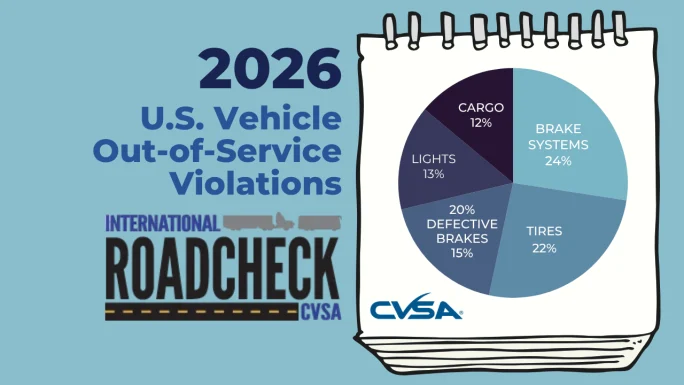
Brakes continue to be the top vehicle out-of-service violation during Roadcheck.
Credit:
HDT Graphic From CVSA Data
Combined, brake-related violations accounted for 39% of vehicle out-of-service violations.
Inspectors identified more than 11,900 vehicle OOS violations in the U.S. The top five were:
- Brake systems
- Tires
- 20% defective brakes
- Lights
- Cargo securement
Cargo securement was the vehicle emphasis for this year’s Roadcheck and ranked fourth among vehicle out-of-service violations across North America.
Inspectors identified more than 1,700 cargo-securement OOS violations, representing about 12% of all vehicle out-of-service violations.
Cargo-securement violations can include freight that is inadequately restrained, immobilized, locked, secured, tied down or packed.
Hazmat and Dangerous Goods Inspections
Inspectors conducted nearly 2,600 inspections of vehicles transporting hazardous materials or dangerous goods, identifying 368 vehicle out-of-service violations and 63 driver out-of-service violations.
Placarding was the most common hazardous materials/dangerous goods out-of-service violation, accounting for nearly 25% of the total. Placarding violations include vehicles or freight containers that do not display the correct, visible and compliant hazard warning signs.
More Safety & Compliance
Sponsored•October 6, 2026
A Camera Isn't a Safety Program. Here's What Brokers Are Screening for Now
Footage alone may not be enough to pass broker vetting processes. Here's what counts as a defensible safety program now.
Read More →
Marijuana and Trucking’s Drug-Testing Dilemma
Marijuana is getting stronger, laws are changing, and drug tests still can’t reliably establish impairment. What does that mean for truck drivers and the fleets that employ them?
Read More →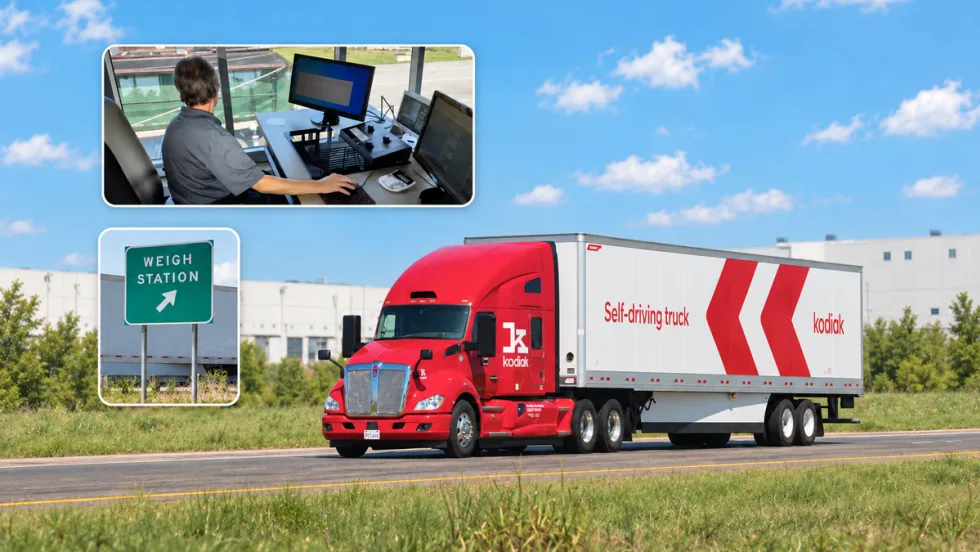
PrePass, Kodiak Connect Driverless Trucks to Roadside Enforcement
The system will allow enforcement agencies to verify Enhanced Inspection information and decide whether Kodiak’s autonomous trucks can bypass roadside screening sites.
Read More →

From One Generation to the Next: How Mentorship Builds Safer Truck Drivers
After three decades in trucking, Harold Perry shares what he's learned about driver safety, mentorship, and helping the next generation build confidence behind the wheel.
Read More →
FMCSA Pauses Biennial-Update Enforcement Amid Motus Transition
Carriers whose updates were due on or after June 1 have more time, while FMCSA works to stabilize its new registration system and warns of phishing sites impersonating its new carrier registration system, Motus.
Read More →
ZF Expands Commercial Vehicle Push in North America
ZF is expanding its North American commercial-vehicle presence with new transmission applications, electrification, trailer technology and autonomous-driving systems.
Read More →
Truck Drivers Need More Than Another Alert
Fleets have more visibility into truck health, safety events, and driver activity than ever. The next challenge is turning all that information into useful guidance for the person who has to decide what to do next.
Read More →
Tesla Wants a Self-Driving Semi. Are Cameras Enough?
Could Tesla’s camera-only autonomous driving technology work on an 80,000-pound Semi? In this commentary, HDT's Deborah Lockridge takes a look at Tesla, Cybercab, and how autonomous trucks see the road.
Read More →
What DOT’s Automated Vehicle Strategy Means for Trucking
The U.S. Department of Transportation issued a new automated-vehicle strategy that outlines plans for driverless-truck regulations, cross-state freight corridors, and federal safety standards.
Read More →
NYC Expands Speed, Pedestrian Safety Tech Across Fleet
New York City is expanding intelligent speed assistance and pedestrian-alert systems across its municipal fleet, moving the technologies from pilot programs into vehicle procurement and retrofit requirements.
Read More →