




From One Generation to the Next: How Mentorship Builds Safer Truck Drivers
After three decades in trucking, Harold Perry shares what he's learned about driver safety, mentorship, and helping the next generation build confidence behind the wheel.
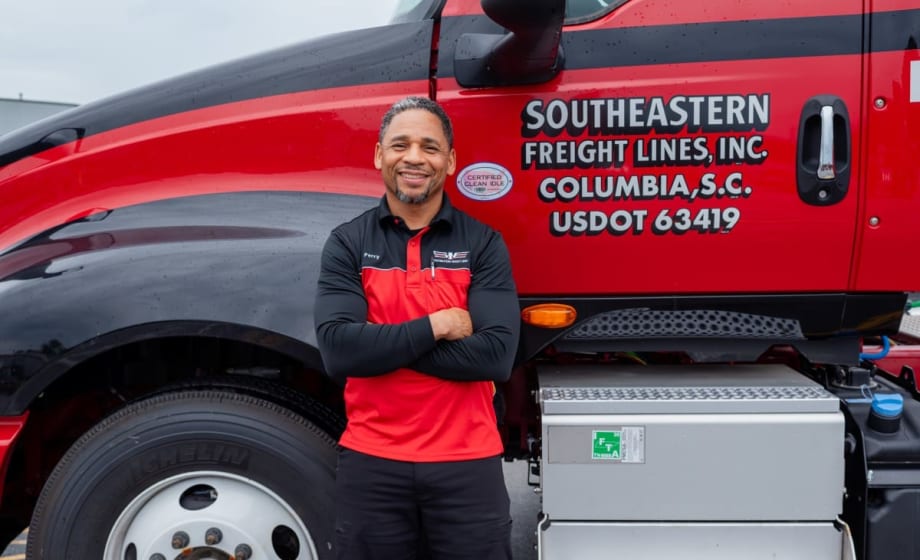
“At the end of the day, nobody becomes a great driver overnight,” said driver mentor Harold Perry. “It takes good training, experience, and having the right people around you.”
Southeastern Freight Lines
- Harold Perry emphasizes the importance of mentorship in enhancing driver safety within the trucking industry.
- With 30 years of experience, Perry shares insights on how experienced drivers can build the confidence of new drivers.
- Perry believes that passing knowledge to the next generation is crucial for cultivating safer driving habits.
*Summarized by AI
It’s National Truck Driver Appreciation Week, and this is an opportunity for fleet and safety managers not only to listen to people but also to commemorate fleet safety policies and training behind the wheel.
For Harold Perry, a professional driver with Southeastern Freight Lines in Columbia, South Carolina, three decades on the road have reinforced the importance of experience, training, and mentorship in developing safer drivers.
Perry has also had the opportunity to pass those lessons to newer drivers through Southeastern's Driver Mentor Program.
“One of the most important things newer drivers have to learn is how quickly things can change out on the road,” Perry said. “A truck doesn’t stop or react the same way a passenger vehicle does, so it takes time to develop the awareness and judgment that comes with experience.”
That learning curve is why Perry encourages newer drivers to prioritize safety rather than rush the process.
“That’s why I always tell new drivers to put safety first, slow down and don’t be afraid to ask questions or take the time to learn something the right way,” he said.
Building Driver Judgment Through Mentorship
Formal training can teach truck drivers procedures and expectations, but Perry sees experienced drivers as another important resource for developing the judgment required on the road.
Southeastern's Driver Mentor Program pairs newer drivers with experienced drivers who can provide hands-on coaching as they build their skills.
“At the end of the day, nobody becomes a great driver overnight,” Perry said. “It takes good training, experience, and having the right people around you.”
Perry said mentorship can help newer drivers build confidence while learning to recognize situations earlier and make safer decisions.
“When you combine those things with a mentor who’s willing to teach and invest in a new driver, you can really see their confidence grow,” he said. “They start making better decisions, anticipating situations earlier and developing the habits that help them become safe, successful professional drivers.”
What makes a good mentor?
“Effective mentorship is really about education, patience and leading by example,” Perry said. “When I’m working with a new driver, I want them to understand from the beginning that safety comes first, every single time.”
Moving Safety Beyond the Checklist
Perry has seen driver training evolve during his three decades in trucking, including a greater emphasis on formal training and accountability. But he believes training is most effective when drivers understand how it connects to what happens on the road.
“For me, it really comes down to making safety relatable and showing drivers why it matters,” Perry said. “You can sit through a training course and check the box, but if you don’t understand how it applies to what you’re doing every day, it’s not going to have the same impact.”
When mentoring drivers, Perry focuses on the responsibility that comes with operating a truck and encourages them to understand the reasoning behind safe driving practices.
“I want them to understand the ‘why,’ not just the ‘what,’” he said.
That distinction can help turn safety from a training requirement into a daily habit.
“Safety really has to become part of your mindset,” Perry said. “Once it does, it’s no longer something you’re just completing for training. It becomes part of how you approach every mile and every decision you make on the road.”
Passing Experience to the Next Generation
For Perry, the value of mentorship recently became personal.
His son, Darrian Perry, went through mentorship training, giving Perry an opportunity to see another generation of his family learn from experienced professional drivers.
“As a dad and someone who’s spent my career in this industry, it was really rewarding to hear him talk about what he learned and how much he enjoyed working with his mentor,” Perry said. “It made me even more proud of what these experienced drivers are able to do for the next generation.”
Perry also believes experienced drivers should stay open to learning.
“After three decades in trucking, I’ve learned that no matter how much experience you have, there’s always something you can learn from somebody else,” he said.
That exchange of knowledge can extend beyond an individual mentor and driver.
“At the end of the day, mentorship is about more than just teaching someone how to operate a truck,” Perry said. “It’s about helping them understand the responsibility that comes with the job and giving them the foundation to make good decisions while on the road.”
What Fleet Managers Should Understand About Professional Drivers
For fleet and safety managers, Perry emphasized how many decisions professional drivers make while operating large vehicles in constantly changing environments.
“I think it’s important to understand just how much goes into being a professional driver every day,” he said. “Drivers have to stay flexible and make good decisions on the fly, always keeping safety at the forefront.”
That makes communication and support from fleet leadership important, particularly when drivers encounter situations that cannot always be replicated in formal training.
“When fleet and safety managers understand what drivers are dealing with and give them the right training, communication and resources, it makes a real difference,” Perry said.
For Perry, that partnership ultimately comes back to a shared goal between drivers and fleet leadership.
“When drivers know their company is invested in their safety and success, it creates a stronger partnership — and ultimately, a safer fleet.”
About the Author:Faith Howell is the Associate Editor for Automotive Fleet, a sister Bobit fleet brand.
Quick Answers
Mentorship improves driver safety by providing new drivers with guidance from experienced professionals like Harold Perry, who share valuable lessons and best practices gained over decades of safe driving.
*Summarized by AI
More Drivers

Truck Drivers Need More Than Another Alert
Fleets have more visibility into truck health, safety events, and driver activity than ever. The next challenge is turning all that information into useful guidance for the person who has to decide what to do next.
Read More →
FMCSA Removes 110 Truck Driver Training Schools from Certified ELDT List
Federal regulators also are targeting more than 160 additional training providers and launching a nationwide audit of third-party CDL skills testers as part of a broader crackdown on trucking fraud.
Read More →
Hours of Service Pilot Programs: FMCSA Readies for 2027 Rollout
Two pilot programs could eventually reshape hours-of-service rules, giving truck drivers options to pause their 14-hour clock or use longer split sleeper rest periods.
Read More →
Medical Cards, English Proficiency Reshape Roadcheck Violations
Medical-card violations jumped to the top of the driver out-of-service list during CVSA’s 2026 International Roadcheck, while English-language proficiency violations appeared among the leading violations for the first time.
Read More →
Driver Trust Can Make or Break the Success of Fleet Safety Technology
New Teletrac Navman research suggests that onboarding, transparency about driver data, and positive feedback can play a significant role in how commercial drivers respond to safety and coaching technology.
Read More →
EEOC Sues KLLM Over Alleged Sex Discrimination in Driver Training
KLLM is facing a federal sex-discrimination lawsuit over policies the EEOC alleges put female truck driver trainees at a disadvantage.
Read More →
FMCSA Moves to Codify English Language Requirements for Commercial Drivers
By changing regulations on English-language proficiency requirements for commercial drivers, rather than relying on a guidance memo, the FMCSA said future administrations won't be able to walk back the Trump administration's stricter enforcement with just a memo.
Read More →
Drivers Put Western Star Trucks to the Test at Star Nation Experience
Watch to get an inside look at the Western Star trucks, technology, and community behind the Star Nation Experience 2026!
Read More →
Trump Administration Looks to Put More Veterans Behind the Wheel
The Freedom Haulers program pulls together existing and expanded programs at several federal agencies to recruit veterans to drive commercial heavy-duty trucks and cut the red tape for them to get a CDL, training, and employment.
Read More →
Putting Mack’s Command Steer to the Test
A test drive of Mack’s Command Steer active steering system evaluates how it can make truck driving easier and less tiring.
Read More →