





Protecting Your Fleet After a Truck Crash: Have a Plan in Place
Truck Drivers Need More Than Another Alert
Fleets have more visibility into truck health, safety events, and driver activity than ever. The next challenge is turning all that information into useful guidance for the person who has to decide what to do next.
September 9, 2026
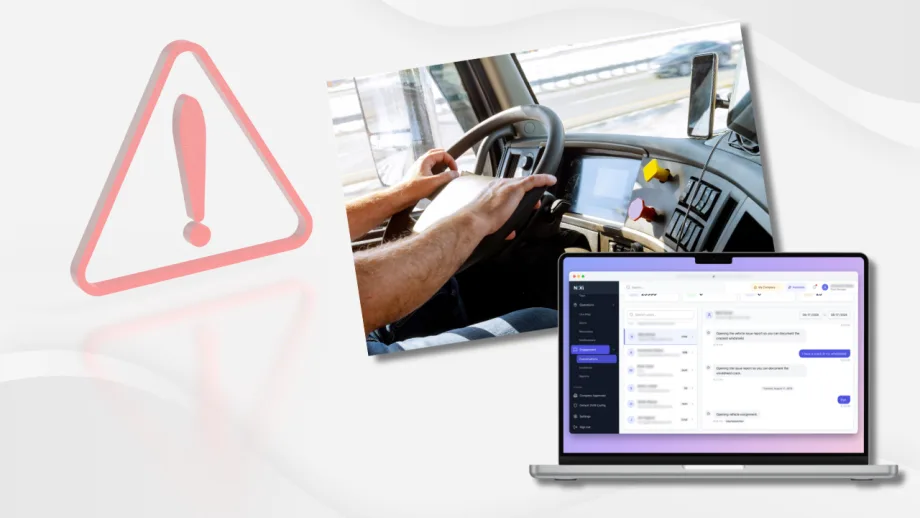
Alerts become more valuable when they connect to an action a driver needs to take, rather than simply adding to a queue for someone to interpret later.
Credit:
HDT Graphic
7 min to read
- Connected truck technology is good at detecting problems, but drivers still need help understanding what an alert means and what to do next.
- Driver-facing technology can turn diagnostics, crash alerts, and other vehicle data into clear, actionable guidance based on the truck and situation.
- Effective decision support must fit naturally into the cab, reducing driver guesswork and complexity rather than adding more alerts, screens, and steps.
*Summarized by AI
Commercial trucks have gotten very good at telling us when something happened. A fault code appears, a telematics alert fires, a camera captures an event, and a warning light comes on. Somewhere in the operation, another notification lands on another dashboard.
That visibility has given trucking fleets a much clearer picture of what is happening with their equipment. But a gap remains between detecting a problem and helping the person in the cab respond.
For the driver, the question is rarely just, "What happened?" It’s: “Can I keep driving? Do I need to pull over? Is this urgent? Who do I call? Does maintenance already know? What am I supposed to do next?”
Answering those questions may be one of the next big opportunities for connected truck technology.
Detection Has Outpaced Decision Support
One fact that no one can argue? Fleets are not hurting for alerts. Telematics, diagnostics, cameras, safety systems, and maintenance platforms can surface an enormous amount of information about a truck.
The harder problem is turning that information into something useful when a decision has to be made.
A diagnostic trouble code is a good example. A driver sees a code or warning pop up halfway through a route, but that information alone does not answer the questions that matter in the cab. Is this something I can finish the run with? Do I need to pull over now? Can it wait until I get back to the yard, or am I risking a much bigger repair if I keep going?
A technician may know exactly what that code means. The driver usually does not need that level of detail. They need enough context to make the next decision without guessing.
Even translating the code into plain English only gets you part of the way there. Telling a driver what is wrong is useful. Telling them what to do next is what closes the loop.
Joe Zucchero, co-founder and CTO of Connex2X, which offers connectivity solutions, sees that distinction as an important part of where fleet technology needs to go next.
When discussing the company's approach to incident response, he summed it up simply: "We start talking to the driver and tell them what they're supposed to do."
In a crash, that could mean prompting the driver to photograph the damage, capture the other vehicle’s VIN or license plate, gather insurance information, and follow the fleet’s own reporting protocol.
That may sound like a small change, but it’s really a significant shift in how fleets think about vehicle information. Instead of technology ending its job when it detects something, the workflow continues until the driver understands the appropriate response.
The Next Alert Needs an Answer Attached
Think about what a useful alert should accomplish from the driver's perspective. It should:
- Explain what happened in language the driver can understand.
- Help establish the seriousness of the situation.
- Make clear whether the truck can continue operating.
- Identify the next action.
- Ideally, remove unnecessary steps such as wondering whether dispatch, maintenance, or the fleet manager has already been notified.
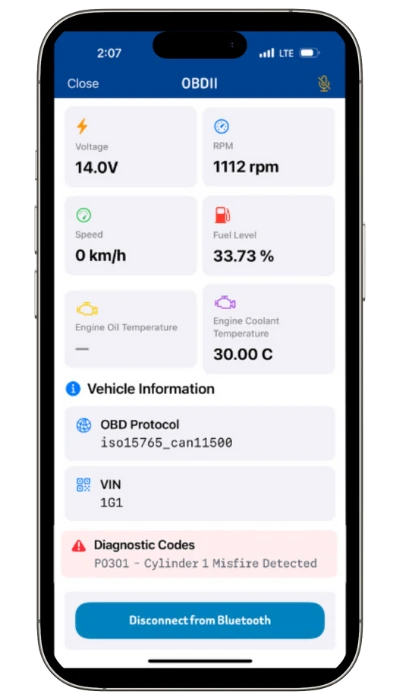
A diagnostic event can become more than a code presented to the driver.
Credit:
Connex2X
The goal is not to make the driver a technician, but to give the driver enough context to make the right operational decision.
That is the idea Connex2X is exploring with NEXi, its conversational artificial intelligence platform. A diagnostic event, for example, can become more than a code presented to the driver. The interaction can provide context around the problem, guide the next step, and share information with the fleet.
The technology is one example of a broader direction fleet systems can take. Alerts become more valuable when they connect to an action rather than simply adding to a queue for someone to interpret later. The more context technology can provide at that moment, the less the driver has to guess.
This truly matters when a driver may be hundreds of miles from the terminal and a decision must be made. There may not be a technician standing nearby to translate the warning light. There may not be time for several phone calls between the driver, dispatcher, maintenance department, and fleet manager.
Put the Procedure Where the Decision Happens
The same concept applies when the problem is not mechanical. For example, consider what happens immediately after a crash or incident.
A fleet may have a carefully written collision policy explaining exactly what a driver should do. But a crash is also precisely the kind of moment when asking someone to remember a multistep procedure is difficult. The driver may need to check for injuries, determine whether emergency assistance is necessary, document vehicle damage, collect information from another party, notify the company, and follow fleet-specific reporting requirements.
The policy exists, but the challenge is putting it in front of the driver when it matters. Connex2X has built that thinking into its own incident workflow.
Zucchero explained that especially in an accident, the driver’s adrenaline is flowing, and the steps in established procedures may be skipped or forgotten completely.
Fleets can configure the process around their procedures, beginning with questions about whether the driver and others are safe, then moving through photographs, vehicle information, insurance information, and required notifications.
The larger lesson is not about one incident-reporting platform. It is about moving procedures out of binders, portals, and training sessions and into the actual workflow. Technology can increasingly bring the procedure to the driver instead.
A driver should not have to remember where to find the process while managing the event the process was written for.
Heavy-Duty Context Changes the Answer
Providing guidance also requires something more than knowing that an event occurred. The system needs enough context to understand the truck and the operation. That becomes especially important in heavy-duty applications.
A route that works perfectly well for a passenger car could create a serious problem for a commercial truck. Vehicle height, weight, bridge restrictions, hazmat requirements, and other factors can change whether a road is appropriate.
Zucchero brought up that issue while discussing Connex2X's Pathways development. The company is working with vehicle-specific routing that takes truck dimensions into account, along with considerations such as bridge weights and hazmat restrictions. This capability is in the works.
He noted that drivers may otherwise reach for the navigation tool they already use on their phones, even though consumer navigation does not necessarily understand the truck they are driving.
And right there is another example of the difference between providing information and providing useful guidance. Location alone is not enough. A truck-specific navigation system needs to understand where the vehicle is, where it is going, and enough about the equipment to know whether that route makes sense.
And the same principle applies to diagnostics and safety events. Good decision support has to understand context before it can recommend an action.
Usability Is Part of the Equation
There is one more problem fleets cannot ignore: The best guidance in the world does not matter if the driver will not use the system delivering it. When the Connex2X team discussed Class 8 applications, Zucchero said usability was one of the complaints the company was hearing from fleets.
That should sound familiar. Drivers already work around screens, apps, logins, alerts, cameras, navigation systems, electronic logs, dispatch communications, and other technology competing for attention. Adding another application or another notification does not automatically make the cab more connected in a useful way.
Sometimes it just creates another thing to manage. That is part of the reason Connex2X has focused on voice interaction. Paul Porrini, co-founder and chief administrative officer, described the company's thinking around voice in terms of "the safety and the efficiency and the convenience of voice-first."
The larger question for fleets is not whether voice is always the answer. It is whether the interface reduces the amount of work required from the driver.
If a new technology turns one confusing alert into five taps, three menus, and another login, the fleet may have solved the information problem while creating a workflow problem. Driver technology has to work where drivers actually work — a truck cab, not a desk.
From Monitoring Trucks to Supporting Drivers
For years, connected vehicle technology has helped fleets answer increasingly sophisticated questions about their equipment. Where is the truck? What fault codes are active? How is it being driven? Did a safety event occur? Is maintenance needed?
Those capabilities are not going away. If anything, fleets will continue collecting more information. The more interesting question now may be what happens after the system finds something.
A mature driver-facing workflow should move beyond "something happened" toward "here is what happened, here is what it means for you, here is what you should do next, and here is who already knows about it."
Conversational AI is one way companies such as Connex2X are beginning to tackle that problem. Other technologies and platforms will likely approach it differently. The important shift here, however, is from monitoring to guidance. Because at some point, another alert on another dashboard stops being the goal.
For the driver trying to decide whether to keep rolling, pull over, call maintenance, document an incident, or change the route, the technology earns its keep when it helps answer the only question that really matters in that moment: What do I do next?
Quick Answers
Current technology provides fleets with detailed data and real-time insights into truck health and safety events, enhancing overall visibility.
*Summarized by AI
Subscribe to Our Newsletter
More Drivers

FMCSA Removes 110 Truck Driver Training Schools from Certified ELDT List
Federal regulators also are targeting more than 160 additional training providers and launching a nationwide audit of third-party CDL skills testers as part of a broader crackdown on trucking fraud.
Read More →
Hours of Service Pilot Programs: FMCSA Readies for 2027 Rollout
Two pilot programs could eventually reshape hours-of-service rules, giving truck drivers options to pause their 14-hour clock or use longer split sleeper rest periods.
Read More →
Medical Cards, English Proficiency Reshape Roadcheck Violations
Medical-card violations jumped to the top of the driver out-of-service list during CVSA’s 2026 International Roadcheck, while English-language proficiency violations appeared among the leading violations for the first time.
Read More →
Driver Trust Can Make or Break the Success of Fleet Safety Technology
New Teletrac Navman research suggests that onboarding, transparency about driver data, and positive feedback can play a significant role in how commercial drivers respond to safety and coaching technology.
Read More →
EEOC Sues KLLM Over Alleged Sex Discrimination in Driver Training
KLLM is facing a federal sex-discrimination lawsuit over policies the EEOC alleges put female truck driver trainees at a disadvantage.
Read More →
FMCSA Moves to Codify English Language Requirements for Commercial Drivers
By changing regulations on English-language proficiency requirements for commercial drivers, rather than relying on a guidance memo, the FMCSA said future administrations won't be able to walk back the Trump administration's stricter enforcement with just a memo.
Read More →
Drivers Put Western Star Trucks to the Test at Star Nation Experience
Watch to get an inside look at the Western Star trucks, technology, and community behind the Star Nation Experience 2026!
Read More →
Trump Administration Looks to Put More Veterans Behind the Wheel
The Freedom Haulers program pulls together existing and expanded programs at several federal agencies to recruit veterans to drive commercial heavy-duty trucks and cut the red tape for them to get a CDL, training, and employment.
Read More →
Putting Mack’s Command Steer to the Test
A test drive of Mack’s Command Steer active steering system evaluates how it can make truck driving easier and less tiring.
Read More →
Competition Heating Up for Truck Drivers
New report reveals rising driver hiring costs, the return of sign-on bonuses, growing AI advantages, and the operational factors shaping driver retention.
Read More →