Part 1 in a Series
Part 3: The Critical Role of Evidence Preservation
Part 4: Preserving Records That Can Make or Break a Trucking Company's Defense
Editor's Note: This series is a longer version of a feature in HDT's July/August 2025 print issue
 MENU
MENU SEARCH
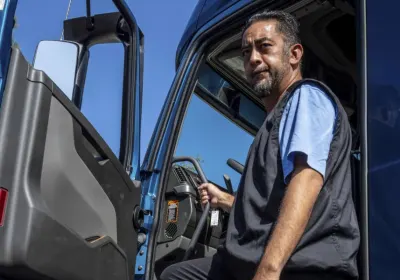
Even the safest trucking fleets still have crashes. What happens in the first few minutes after the crash — from driver behavior to documentation and claims — can shape your fleet's legal, financial, and reputational future.

What should a truck driver and trucking company do after a crash?
Image: HDT Graphic
You’ve done everything you can to prevent crashes at your trucking fleet. The latest advanced safety equipment. In-cab cameras. Driver training and coaching. Creating a culture of safety.
But still, accidents will happen. Attorneys will file lawsuits. What happens after a crash can make a big difference in how your company fares in court, as well as affect your insurance.
What policies, procedures, training, and technology can your fleet implement post-crash to improve those outcomes?
Jennifer Akre, managing partner at Tyson & Mendes, stresses the importance of the first moments after a crash.
“The immediate 10, 15, 20, 30 minutes following a crash are really, really important,” says Akre, who has extensive experience in defending trucking fleets.
These early moments are often the hardest for attorneys, who must rely on secondhand accounts and policies rather than firsthand evidence.
Adam Lang emphasizes the importance of acting quickly and decisively: “One of my favorite words is alacrity,” says Lang, who is director of customer advisory services at Netradyne.
During his nearly 10 years at Wisconsin-based Halvor Lines, the truckload fleet earned numerous safety awards, including Lang being named the winner of HDT’s Safety & Compliance Award for 2020.
Another award-winning fleet safety executive, Jeremy Stickling, chief administrative officer for Illinois-based Nussbaum Transportation, also stresses moving quickly after a crash.
“The sooner we know if there is a severe one where there’s critical injury, that’s where we can mobilize the boots on the ground,” says Stickling, who is the 2025 Truckload Carriers Association Safety Professional of the Year.
“We can let our insurance company know right away. They can get the resources out to the scene and collect all the context while it’s fresh.”
It’s vital to get the claim reported to your insurance company as soon as possible, says Nick Saeger, assistant vice president for transportation products and pricing at Sentry Insurance.
“When we know that something happened, we can get in touch with everybody that's been impacted, to the extent that we have the contact information — the trucking company owner, the driver himself, any other impacted third parties,” he says.
“We can let them know how the claims process might proceed and just help them become better acquainted with how we expect it to go.”
Even if you don’t believe your driver is at fault, even if the police officer at the scene says it wasn’t the driver’s fault, Saeger says, your insurance company needs to know as soon as possible.
“Liability and negligence laws vary widely from state to
state,” he explains. “So even when a fleet thinks their driver is not at fault, you still need to report those claims.
“In some states, in the worst of scenarios, even if your driver is apportioned just 1% of fault, it’s possible for that accident or that claim to go straight to policy limits if the outcome or if the accident is severe enough. So when we know it’s possible, we can get in front of that and help eliminate those scenarios.”
Allowing the insurance company to get involved from the beginning also can affect a carrier’s ultimate cost of insurance.
“If you have a $25,000 or a $50,000 liability deductible, you are on the hook for that,” Saeger says. “Getting the insurance company involved can help save you actual dollars in those situations.
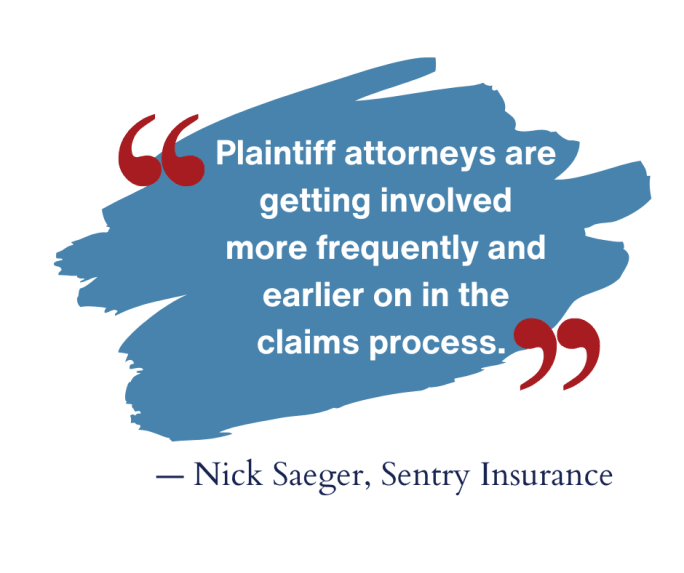
“Plaintiff attorneys are getting involved more frequently and earlier on in the claims process. The sooner we know, the sooner we can help.”
A trucking fleet should train its truck drivers on what they should — and shouldn't — do after a crash.
The first thing a driver should address after a crash is the safety of the scene. For instance, if the collision involved a utility pole on a wet road, you wouldn’t want the driver jumping out to help others only to get electrocuted by a live power line.
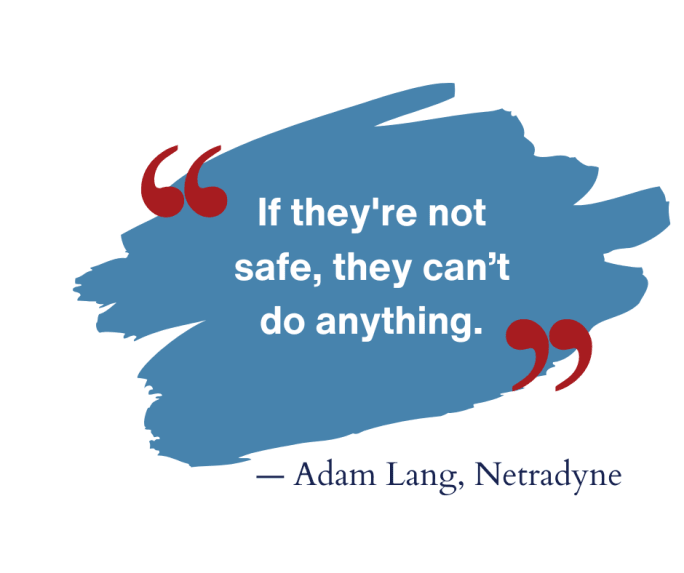
“You want to make sure that the area around the driver is safe,” Lang says. “If they're not safe, they can’t do anything.
“I want that driver putting their flashers on and getting their high-vis triangles out and putting their high-vis equipment on when they get out of the vehicle. Day, night, doesn't matter. I want it on.”
Drivers should call 911 before they even notify the company.
“Even if somebody at the scene says they’ve called 911, it doesn’t matter,” Lang says. “You want the driver to call 911, inform law enforcement quickly, and then you want that call to come in to the company.”
Once others in the crash have been seen to, 911 called and the driver’s company notified, drivers should take photos and/or video of the scene and gather other information that may be helpful. (More details on this in Part 2.)
“I had a driver who taught me something very valuable,” Lang says. “He was involved in a crash, and when he went and talked to the other motorist involved, he brought a bottle of water over to them and said, ‘Are you OK? Here's some water.’
“The other driver remembered that small act of kindness, and it helped us solve that claim very quickly.”
Traditional thinking has seen trucking companies telling drivers not to get out of the truck, for fear that they might do or say something that could lead to litigation later on. But that’s changing.
“You’ll see some coaching out there that says the driver should never say ‘sorry’ at the scene,” says Stickling.
“I flinch at that a little bit. There’s humans involved, and there should be empathy and care.”
Akre has seen from experience what can happen when a driver doesn’t show concern for others at the scene.
“I think that the old advice was, ‘Don’t say anything, don’t talk to anyone, don’t call anyone, buckle down and call your boss immediately and let them handle it,” she says.
“That led to a bunch of cases where I had a plaintiff or multiple plaintiffs that are injured, and I’ve got a truck driver who’s been told to sit in the cab of his truck and do nothing.”
Two years later, she says, the driver ends up being grilled in a deposition by the plaintiff’s attorney, who is saying something like, “So while my client was bleeding in her car, you didn’t even go check on her. While my client was pinned underneath your truck, you didn’t even get out of the cab to go check on her.”
When the driver responds that it’s company policy, the corporate representative must try to explain why that policy exists.
“And the corporate rep can’t really explain it outside of, ‘We’re just trying to cover our butts from a liability perspective. And because my lawyers told me to,’” Akre says.
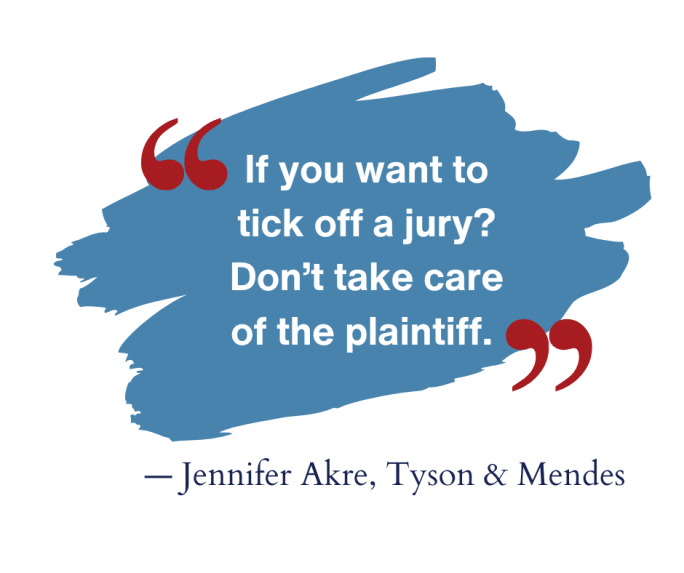
“If you want to tick off a jury? Don’t take care of the plaintiff. Don’t be a human.”
In fact, Tyson & Mendes, a pioneer in fighting against “nuclear verdicts,” is unveiling a new litigation and trial strategy called The Apex.
“The first rule of our Apex method is to be a human,” Akre says. “Be a good human. So I think the better advice is to get out of your truck, if it’s safe to do so, and go check on the other people.”
Drivers should not discuss liability, but they should be encouraged to show basic human concern. Lang says.
“It doesn't have to be a big conversation. It can just be, ‘I’m checking on you. Are you okay?’”
“When people are injured, in that first 5, 10, 15, 20, 30 minutes, it doesn’t matter whose fault it is,” Akre says. “That’s for the lawyers to deal with later. Right then, the only thing that matters is, ‘How are you? Do you need help?’ Just take care of the other person, be a good human first, and the rest will follow.”
At Nussbaum, Stickling says, “What we do is just make sure [drivers are] careful about who they talk to and what they say, because it can be used against you.
“It’s hard for me to see the risk of a driver showing that they actually care.”
Footage alone may not be enough to pass broker vetting processes. Here's what counts as a defensible safety program now.
Read More →
Marijuana is getting stronger, laws are changing, and drug tests still can’t reliably establish impairment. What does that mean for truck drivers and the fleets that employ them?
Read More →
The system will allow enforcement agencies to verify Enhanced Inspection information and decide whether Kodiak’s autonomous trucks can bypass roadside screening sites.
Read More →
After three decades in trucking, Harold Perry shares what he's learned about driver safety, mentorship, and helping the next generation build confidence behind the wheel.
Read More →
Carriers whose updates were due on or after June 1 have more time, while FMCSA works to stabilize its new registration system and warns of phishing sites impersonating its new carrier registration system, Motus.
Read More →
ZF is expanding its North American commercial-vehicle presence with new transmission applications, electrification, trailer technology and autonomous-driving systems.
Read More →
Fleets have more visibility into truck health, safety events, and driver activity than ever. The next challenge is turning all that information into useful guidance for the person who has to decide what to do next.
Read More →
Could Tesla’s camera-only autonomous driving technology work on an 80,000-pound Semi? In this commentary, HDT's Deborah Lockridge takes a look at Tesla, Cybercab, and how autonomous trucks see the road.
Read More →
The U.S. Department of Transportation issued a new automated-vehicle strategy that outlines plans for driverless-truck regulations, cross-state freight corridors, and federal safety standards.
Read More →
New York City is expanding intelligent speed assistance and pedestrian-alert systems across its municipal fleet, moving the technologies from pilot programs into vehicle procurement and retrofit requirements.
Read More →