




Nussbaum Boosts Safety Driver by Driver
Nussbaum continuously makes investments in onboard safety technology, as well as in programs developed in-house to coach and incentivize drivers to perform safely and efficiently.

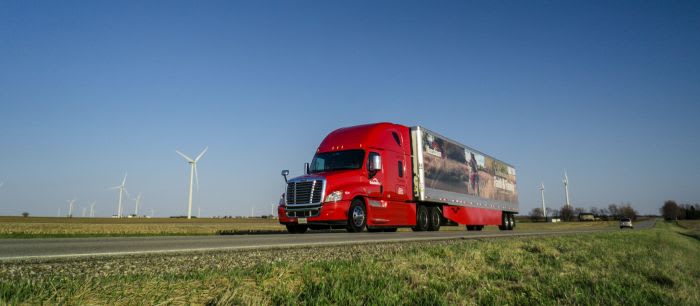
From a comprehensive orientation program to trucks spec’ed with high-tech safety systems and ongoing performance coaching, Nussbaum's safety and human resource efforts aim to make working conditions as safe and efficient as possible for Nussbaum’s drivers.
Photo: Nussbaum Transportation

HDT Executive Editor
David Cullen (right) presents Nussbaum Transportation’s Jeremy Stickling with the inaugural HDT Safety and Compliance Award.
Photo: Mark Campbell for Bobit Business Media
"Where our safety team excels is balancing the need for compliance and risk management with the human element,” says Jeremy Stickling, director of human resources and safety for Nussbaum Transportation Services, the inaugural recipient of HDT’s Safety & Compliance Award.
The Normal, Illinois-based truckload/dedicated operation prides itself on a top-down commitment to run with safety first in mind.
That’s obvious in the seemingly continuous investments Nussbaum makes in onboard safety technology, as well as in programs developed in-house to coach and incentivize drivers to perform safely and efficiently.
Through it all, from a comprehensive orientation program to trucks spec’ed with high-tech safety systems and ongoing performance coaching, the fleet’s safety and human resource efforts aim to make working conditions as safe and efficient as possible for Nussbaum’s drivers.
“It makes sense to have safety and HR under the same umbrella,” Stickling explains. “It’s all about dealing with people.
"Our safety team of six dedicated staffers is very hands-on to get drivers the training they need to operate safely and to communicate to them what they must do to follow the letter of the law and avoid risks. That helps them protect their individual driver record as the asset it is and to always get home safely.”
Safety is Part of Nussbaum's Custom Driver Scorecard
That approach is sharply reflected in Nussbaum’s signature safety initiative, the Driver Excelerator computerized scorecard system.
It assesses millions of data points the fleet collects and then converts the information into a points-based system designed to influence the safety, fuel economy and other performance factors of individual drivers.
“Nussbaum is very passionate about using engine/truck data and has built very extensive programs around telematics,” Stickling points out.
“Using performance data, engine data, and vehicle location data provided by PeopleNet, our talented IT staff custom-built our comprehensive driver scorecard program. Driver Excelerator, which launched in 2010, both measures and incentivize driver performance.”
The safety scorecard tracks six categories. Drivers review their safety performance via the scorecard monthly. Each month, Stickling holds a meeting with the fleet’s safety manager, operations manager and driver-performance coach to review the scores.
Using a Driver Scorecard to Coach Nussbaum Drivers
“Drivers with lower scores or ongoing problems are brought through for escalated training or corrective action,” he explains.
“This is in addition to our ‘standard’ progressive discipline practices and it enables us to consider the ‘soft’ factors at work in deciding which drivers to work with. The purpose is to improve drivers.”
Nussbaum’s performance coach is a former OTR driver who “exhibited very high skill and was asked to come off the road to develop drivers,” Stickling says. The coach conducts an average of five to seven such training sessions a week.
The scorecard also includes a grading mechanism to reward or hold accountable drivers who catch or miss equipment-related problems. Drivers who fail to report an equipment deficiency are contacted by the performance coach. Frequent problems will result in pre-trip training. But those who proactively find problems earn extra money and recognition via the scorecard.
How Nussbaum Lowered its CSA scores
Within eight months of launching a campaign to lower its two highest CSA scores, the fleet saw a reduction in every single category, with the most improvement occurring in those areas of greatest concern: its Unsafe Driving and Crash Indicator scores.
“This was accomplished to start with by having every new hire go through a face-to-face training session on CSA,” Stickling says. “Then, through our ongoing Communication Plan, we’re keeping our drivers updated on how our scores are trending and what is influencing them.”
A policy put in place to improve the Unsafe Driving score went after the most common offense: speeding violations. Any driver who gets a speeding ticket or CSA violation now has the governed speed on their tractor dropped from 65 mph to 61 mph for three months.
“We also leveraged our scorecard by making the point-loss for the bonus program more impactful – twice as many points deducted vs. other kinds of violations – for any Unsafe Driving violation recorded.”
Spec'ing Truck with the Latest Safety Technology
Nussbaum tractors are equipped with MeritorWabco’s electronic OnGuard collision mitigation system, OnLane lane-departure-warning and SmartTrac roll stability control. These systems are integrated with the fleet’s PeopleNet in-cab communications system.
Electronic logging is also done through PeopleNet, and the safety manager receives email alerts on any driver up against their drive time so they can be followed up with in real time.
What Safety Strategies and Technologies are Trucking Fleets Using in 2024?
Now Nussbaum is rolling out SmartDrive’s video event recorder system in its cabs.
“First and foremost,” Stickling emphasizes, “the recorders will be used for protection and exoneration of our drivers in the event of an accident. That’s to protect the driver’s and Nussbaum’s record from false witness reports or ‘he-said-she-said’ incidents.
“We’ll also build a comprehensive coaching program around the event recorders,” he continues. “A dedicated coach will counsel drivers when certain unsafe behaviors are noticed on the video footage.
"At this point, we also plan to coach the bottom 10%-15% of drivers each week, to try to raise our fleet performance to the next level, using the same concept as ‘game film’ review. Our hope is drivers will respond to coaching better with an objective film that we can review with them.”
Stickling adds that the fleet may dovetail this program with its scorecard. The fleet is also planning to leverage video highlights to recognize its best drivers.
“At Nussbaum, we want to celebrate and promote talented, skilled driving.”
More Safety & Compliance
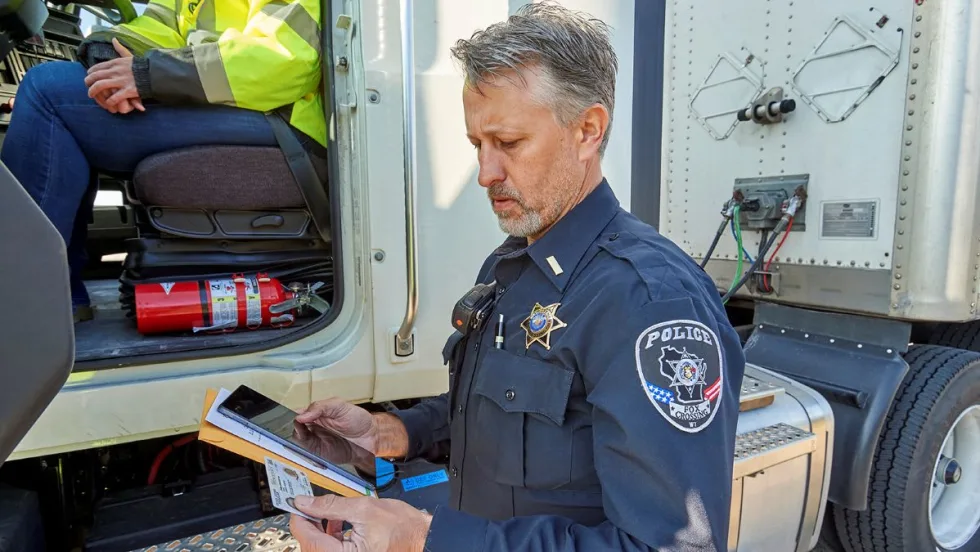
When Language Stops the Truck: The Return of ELP Out-of-Service Orders
English language proficiency rules for commercial drivers aren’t new, but renewed out-of-service enforcement has raised the stakes. Here’s what carriers need to know before a driver reaches a roadside inspection.
Read More →
A Camera Isn't a Safety Program. Here's What Brokers Are Screening for Now
Footage alone may not be enough to pass broker vetting processes. Here's what counts as a defensible safety program now.
Read More →
Marijuana and Trucking’s Drug-Testing Dilemma
Marijuana is getting stronger, laws are changing, and drug tests still can’t reliably establish impairment. What does that mean for truck drivers and the fleets that employ them?
Read More →
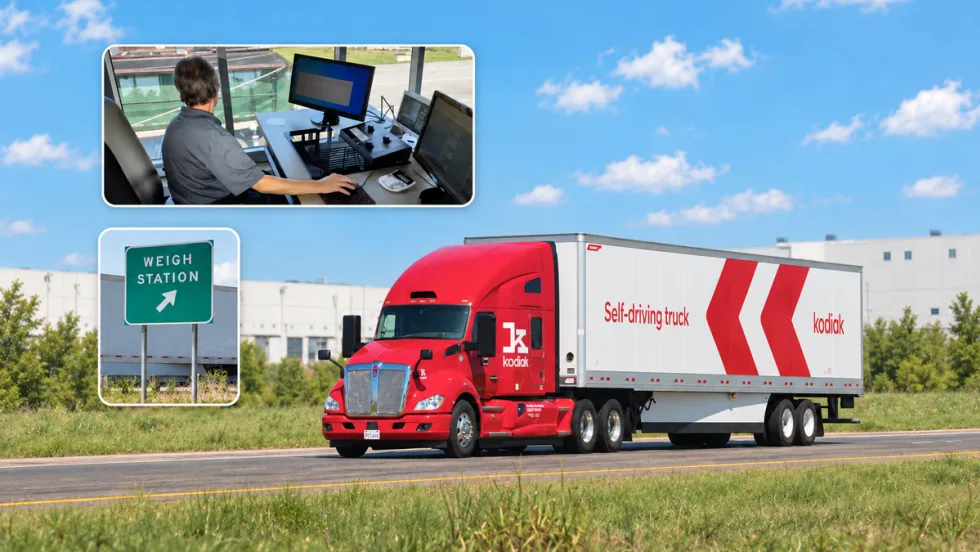
PrePass, Kodiak Connect Driverless Trucks to Roadside Enforcement
The system will allow enforcement agencies to verify Enhanced Inspection information and decide whether Kodiak’s autonomous trucks can bypass roadside screening sites.
Read More →
From One Generation to the Next: How Mentorship Builds Safer Truck Drivers
After three decades in trucking, Harold Perry shares what he's learned about driver safety, mentorship, and helping the next generation build confidence behind the wheel.
Read More →
FMCSA Pauses Biennial-Update Enforcement Amid Motus Transition
Carriers whose updates were due on or after June 1 have more time, while FMCSA works to stabilize its new registration system and warns of phishing sites impersonating its new carrier registration system, Motus.
Read More →
ZF Expands Commercial Vehicle Push in North America
ZF is expanding its North American commercial-vehicle presence with new transmission applications, electrification, trailer technology and autonomous-driving systems.
Read More →
Truck Drivers Need More Than Another Alert
Fleets have more visibility into truck health, safety events, and driver activity than ever. The next challenge is turning all that information into useful guidance for the person who has to decide what to do next.
Read More →
Tesla Wants a Self-Driving Semi. Are Cameras Enough?
Could Tesla’s camera-only autonomous driving technology work on an 80,000-pound Semi? In this commentary, HDT's Deborah Lockridge takes a look at Tesla, Cybercab, and how autonomous trucks see the road.
Read More →
What DOT’s Automated Vehicle Strategy Means for Trucking
The U.S. Department of Transportation issued a new automated-vehicle strategy that outlines plans for driverless-truck regulations, cross-state freight corridors, and federal safety standards.
Read More →