




Kodiak Integrates HAAS Alert’s Safety Cloud into Autonomous Trucking Platform
Kodiak has integrated HAAS Alert’s Safety Cloud platform into its autonomous vehicle control system to send real-time digital hazard alerts to nearby motorists.

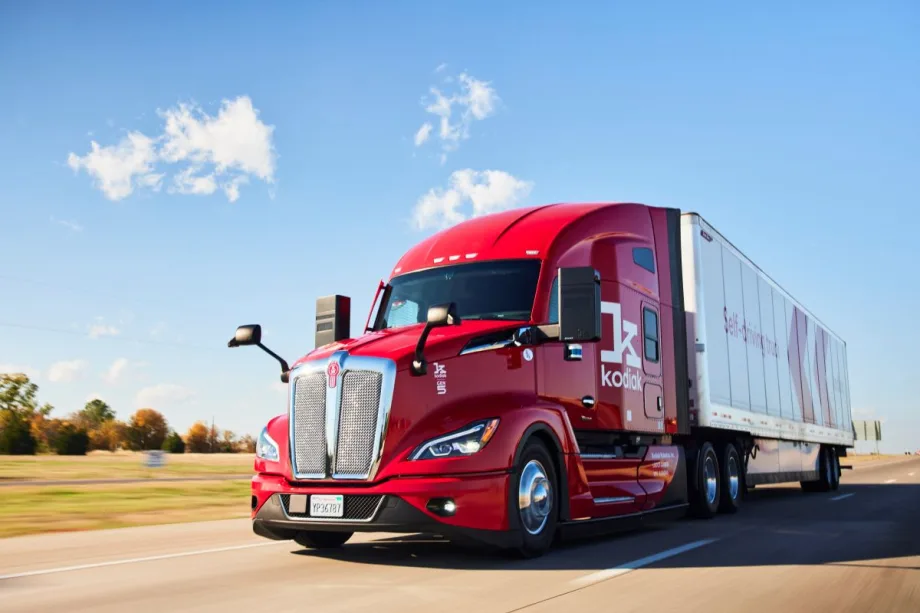
Kodiak autonomous trucks will include a vehicle-to-everything (V2X) alerting system designed to warn nearby motorists of roadway hazards in real time.
Kodiak AI
Kodiak Robotics is adding another digital safety layer to its autonomous trucking platform through a new integration with HAAS Alert’s Safety Cloud.
Safety Cloud is a vehicle-to-everything (V2X) alerting system designed to warn nearby motorists of roadway hazards in real time. The system will enable Kodiak-equipped autonomous trucks to automatically transmit digital alerts to approaching vehicles when a truck is stopped on the shoulder. Kodiak said that delivering beyond-line-of-sight notifications will enhance roadway safety.
Digital Alerts Delivered In-Vehicle and Via Navigation Apps
Safety Cloud uses cellular connectivity to send alerts directly to compatible vehicle infotainment systems and navigation apps. These include Stellantis brand vehicles (Chrysler, Dodge, Jeep, Ram and Alfa Romeo), as well as Waze and Apple Maps.
The alerts notify drivers of incidents or hazards ahead, giving them additional time to slow down or change lanes.
According to HAAS Alert, studies show drivers who receive Safety Cloud notifications reduce their speed by an average of 17%, potentially decreasing the risk of secondary crashes.
For Kodiak, the integration is designed to supplement its existing safety architecture as it scales commercial autonomous operations.
“Safety is the cornerstone of everything we do at Kodiak,” said Don Burnette, founder and CEO of Kodiak AI. “Our collaboration with HAAS Alert demonstrates our commitment to adapting innovative safety technologies that can enhance on-road safety. This technology provides an additional, complementary layer of protection.”
Complementing Recent FMCSA Policy
The announcement comes as federal regulators continue to adopt rules for autonomous trucking deployments.
In October 2025, the Federal Motor Carrier Safety Administration granted a waiver allowing autonomous trucks to use cab-mounted warning beacons in place of traditional reflective warning triangles when disabled.
HAAS Alert’s digital alerting capability is positioned as a complementary measure to that waiver, delivering hazard notifications directly into drivers’ line of sight through their vehicle displays or mobile devices.
Recent FMCSA policymaking has underscored regulators’ willingness to consider alternative safety approaches for autonomous vehicles, provided they meet or exceed existing safety standards.
By pairing physical warning beacons with digital notifications, Kodiak said it aims to add redundancy to its roadside safety procedures.
Expanding V2X Capabilities
In addition to transmitting alerts when a truck is stopped, Kodiak indicated it may eventually expand the integration. The company said its trucks could receive notifications from other connected vehicles and first responders and feed that data into its autonomous decision-making systems.
“HAAS Alert is proud to collaborate with Kodiak to bring Safety Cloud digital alerting to the autonomous trucking industry,” said Cory Hohs, CEO and co-founder of HAAS Alert. “By enhancing AV technology with connectivity, this partnership demonstrates how innovation can be incorporated on public roads in ways that make all driving safer.”
As Kodiak continues expanding its commercial autonomous freight operations, the companies say the integration strengthens protections not only for its trucks, but for the motoring public as well.
More Safety & Compliance

FMCSA Pauses Biennial-Update Enforcement Amid Motus Transition
Carriers whose updates were due on or after June 1 have more time, while FMCSA works to stabilize its new registration system and warns of phishing sites impersonating its new carrier registration system, Motus.
Read More →
ZF Expands Commercial Vehicle Push in North America
ZF is expanding its North American commercial-vehicle presence with new transmission applications, electrification, trailer technology and autonomous-driving systems.
Read More →
Truck Drivers Need More Than Another Alert
Fleets have more visibility into truck health, safety events, and driver activity than ever. The next challenge is turning all that information into useful guidance for the person who has to decide what to do next.
Read More →
Tesla Wants a Self-Driving Semi. Are Cameras Enough?
Could Tesla’s camera-only autonomous driving technology work on an 80,000-pound Semi? In this commentary, HDT's Deborah Lockridge takes a look at Tesla, Cybercab, and how autonomous trucks see the road.
Read More →
What DOT’s Automated Vehicle Strategy Means for Trucking
The U.S. Department of Transportation issued a new automated-vehicle strategy that outlines plans for driverless-truck regulations, cross-state freight corridors, and federal safety standards.
Read More →
NYC Expands Speed, Pedestrian Safety Tech Across Fleet
New York City is expanding intelligent speed assistance and pedestrian-alert systems across its municipal fleet, moving the technologies from pilot programs into vehicle procurement and retrofit requirements.
Read More →
FMCSA Removes 110 Truck Driver Training Schools from Certified ELDT List
Federal regulators also are targeting more than 160 additional training providers and launching a nationwide audit of third-party CDL skills testers as part of a broader crackdown on trucking fraud.
Read More →
Beyond DOT Compliance: What Makes a Trucking Fleet Truly Safe?
A trucking fleet can follow every rule and still make unsafe decisions. The real test comes when safety conflicts with freight, productivity, or cost.
Read More →
Hours of Service Pilot Programs: FMCSA Readies for 2027 Rollout
Two pilot programs could eventually reshape hours-of-service rules, giving truck drivers options to pause their 14-hour clock or use longer split sleeper rest periods.
Read More →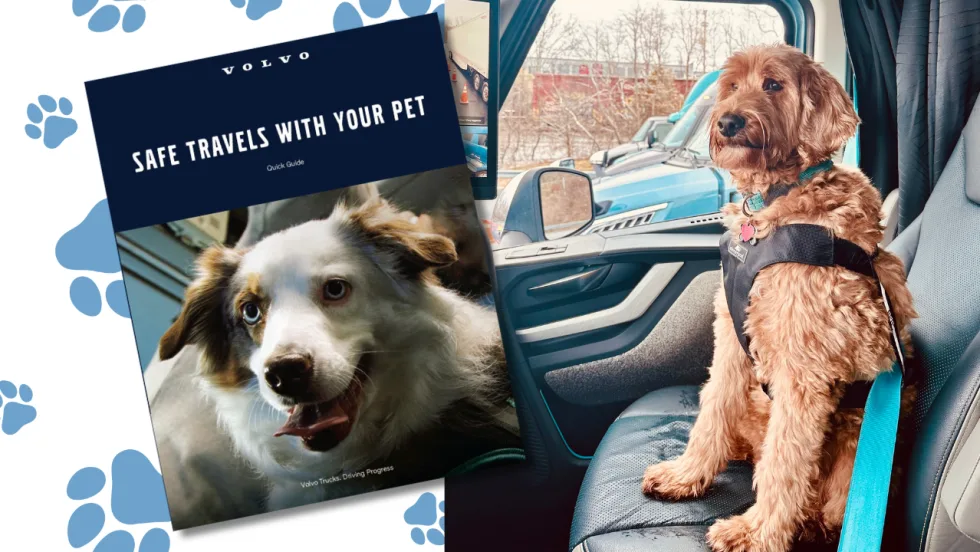
New Guide Offers Pet Safety Tips for Truck Drivers
Hundreds of thousands of pets travel in truck cabs. A new safety guide from Volvo Trucks and the Center for Pet Safety offers practical advice for truck drivers who bring dogs and cats along for the ride.
Read More →