




CVSA Issues New Inspection Guidance on ELD Tampering, False Logs
New guidance for commercial vehicle inspectors distinguishes between more traditional logbook violations and tampered ELD data that can result in mandatory 10-hour out-of-service orders.

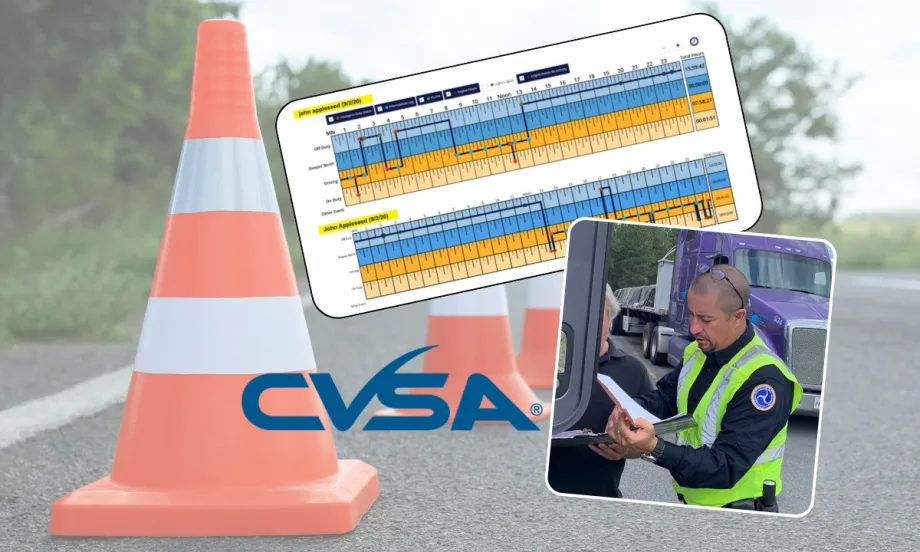
Commercial vehicle inspectors have new guidance on placing drivers out of service for falsified log violations.
HDT Graphic/CVSA
The Commercial Vehicle Safety Alliance issued new inspection guidance aimed at cracking down on falsified records of duty status (RODS, more commonly known as driver logs) and electronic logging device tampering.
The bulletin, effective April 1, outlines how inspectors should handle altered logs of driver hours of service.
The move comes ahead of CVSA's annual Roadcheck in May (where ELDs are a focus this year) and as the Federal Motor Carrier Safety Administration has been taking steps to crack down on fraudulent ELDs.
More traditional false log violations, such as misuse of personal conveyance or failure to log into the ELD, are typically easier for inspectors to detect.
If a driver is over hours at the time of inspection, CVSA explains, inspectors can usually determine how much rest was actually taken and whether the driver should be placed out of service.
ELD Tampering
More concerning, CVSA says inspectors are encountering RODS (records of duty status) that have been reengineered, reprogrammed or otherwise tampered with, and the bulk of the four-page guidance document is devoted to this topic.
These violations are harder for inspectors to identify and harder to determine whether drivers should be placed out of service.
CVSA gives an example of fraudulent use of driver credentials. A motor carrier created a fictitious ELD account using the same driver’s name but slightly altered credentials — such as changing a letter from uppercase to lowercase and modifying one digit in the CDL number.
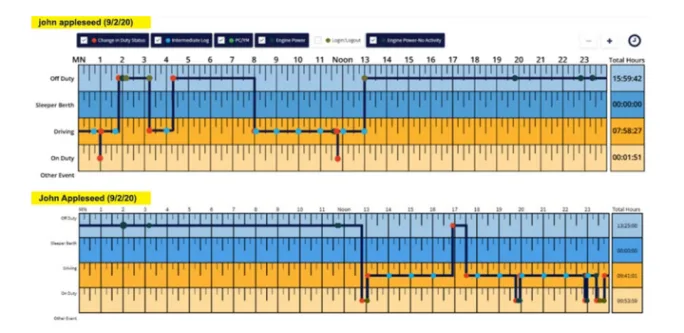
The fraudulent use of driver credentials is an unauthorized alteration of the ELD and therefore considered tampering. This example shows a motor carrier creating a fictitious driver ELD account.
CVSA
The driver alternated between the two accounts to continue driving after exceeding hours-of-service limits.
In another example cited by CVSA, a driver was shown as off duty in Tolleson, Arizona, at 9 p.m. on Aug. 10, 2024. However, a fuel receipt placed the driver in Strafford, Missouri, on Aug. 11 — more than 1,300 miles away.
Further review showed the RODS had been shifted back three days, concealing nearly 21 hours of driving time.
When Should Drivers Be Placed Out of Service for ELD Violations?
CVSA says the goal in enforcing ELD violations is to only place drivers OOS who pose an imminent hazard.
When it is possible for the inspector to determine when the falsification occurred, and the driver is not over hours at the time of inspection, CVSA tells inspectors to cite drivers under § 395.8(e)(1) and allow the driver to proceed.
If this is the case and a driver is over the HOS limits at the time of inspection, however, the driver should be placed out of service until he or she is eligible to drive again under hours-of-service rules.
For drivers whose RODS have been reengineered, reprogrammed or tampered with, and the ELD does not accurately record or retain required data, inspectors face a tougher job.
These altered logs may show no indication in the event details that any changes were made.
In such cases, inspectors must compare supporting documents, such as fuel receipts, to what's in the ELD record. Because the actual time, duration, and location of rest breaks cannot be determined, enforcement becomes more serious.
If it's not possible for the inspector to determine when driving occurred, CVSA says, the inspector should cite a § 395.8(e)(2) violation and place the driver out of service for 10 consecutive hours.
More Safety & Compliance

ZF Expands Commercial Vehicle Push in North America
ZF is expanding its North American commercial-vehicle presence with new transmission applications, electrification, trailer technology and autonomous-driving systems.
Read More →
Truck Drivers Need More Than Another Alert
Fleets have more visibility into truck health, safety events, and driver activity than ever. The next challenge is turning all that information into useful guidance for the person who has to decide what to do next.
Read More →
Tesla Wants a Self-Driving Semi. Are Cameras Enough?
Could Tesla’s camera-only autonomous driving technology work on an 80,000-pound Semi? In this commentary, HDT's Deborah Lockridge takes a look at Tesla, Cybercab, and how autonomous trucks see the road.
Read More →
What DOT’s Automated Vehicle Strategy Means for Trucking
The U.S. Department of Transportation issued a new automated-vehicle strategy that outlines plans for driverless-truck regulations, cross-state freight corridors, and federal safety standards.
Read More →
NYC Expands Speed, Pedestrian Safety Tech Across Fleet
New York City is expanding intelligent speed assistance and pedestrian-alert systems across its municipal fleet, moving the technologies from pilot programs into vehicle procurement and retrofit requirements.
Read More →
FMCSA Removes 110 Truck Driver Training Schools from Certified ELDT List
Federal regulators also are targeting more than 160 additional training providers and launching a nationwide audit of third-party CDL skills testers as part of a broader crackdown on trucking fraud.
Read More →
Beyond DOT Compliance: What Makes a Trucking Fleet Truly Safe?
A trucking fleet can follow every rule and still make unsafe decisions. The real test comes when safety conflicts with freight, productivity, or cost.
Read More →
Hours of Service Pilot Programs: FMCSA Readies for 2027 Rollout
Two pilot programs could eventually reshape hours-of-service rules, giving truck drivers options to pause their 14-hour clock or use longer split sleeper rest periods.
Read More →
New Guide Offers Pet Safety Tips for Truck Drivers
Hundreds of thousands of pets travel in truck cabs. A new safety guide from Volvo Trucks and the Center for Pet Safety offers practical advice for truck drivers who bring dogs and cats along for the ride.
Read More →
Medical Cards, English Proficiency Reshape Roadcheck Violations
Medical-card violations jumped to the top of the driver out-of-service list during CVSA’s 2026 International Roadcheck, while English-language proficiency violations appeared among the leading violations for the first time.
Read More →