





"Each year, roughly twice as many trucking companies enter the industry as regulators can audit."
New Entrants, Chameleon Carriers, and Safety: Is It Too Easy to Start a Trucking Company?
More than 100,000 new trucking companies enter the industry each year, but regulators manage to audit only a fraction of them. That churn creates opportunities for inexperienced startups — and for “chameleon carriers” that shut down after safety violations and reappear under new identities. Read more from Deborah Lockridge in this commentary.
March 17, 2026
Trucking safety is getting a lot of attention from the current administration. Scrutinizing carriers may be even more important than focusing on drivers.
Credit:
HDT Graphic
4 min to read
When Transportation Secretary Sean Duffy announced the department was going after “bad actors in trucking” last year, the DOT’s focus quickly turned to immigrant drivers and English proficiency.
But that raises the question: Who is hiring these drivers in the first place?
And more broadly: Is it just too easy to start a trucking company?
That question leads straight to chameleon carriers and new entrants, problems that have plagued the industry since deregulation in 1980.
The Rise of Chameleon Carriers
When the Federal Motor Carrier Safety Administration declares a carrier an “imminent hazard” and shuts it down, the same pattern appears again and again: usually very small trucking companies that either don’t understand federal safety regulations — or simply ignore them.
No safety programs, no drug testing programs, no maintenance programs, no driver background checks, and so on.
Many that are shut down by FMCSA or lose their insurance simply pop up again under a different identity. These “chameleon carriers” or “reincarnated carriers” may take over an existing DOT number to avoid new-entrant scrutiny, or register the company under a family member’s name while the same people remain behind the scenes.
New-entrant carriers and chameleon carriers are getting some long-overdue attention.
Deregulation Opened the Door to New Trucking Companies
The Motor Carrier Act of 1980 deregulated trucking to increase competition and lower costs. For decades before that, the Interstate Commerce Commission tightly controlled who could enter the market, which routes they could serve, and how much they could charge.
Deregulation dramatically lowered barriers to entry. It helped create today’s competitive truckload market and allowed many carriers to thrive. But it also opened the door to a constant wave of new operators — far more than regulators could keep up with.
Research has long shown a “safety learning curve” for new motor carriers, with startups experiencing higher crash rates and more regulatory violations during their first two years.
Trying to make those newbie trucking companies safer has been an ongoing concern.
New Motor Carriers Face a Safety Learning Curve
In the Motor Carrier Safety Improvement Act of 1999, Congress ordered the Department of Transportation to make new entrants prove they understand the safety rules. That same law created the Federal Motor Carrier Safety Administration.
In 2012, during the MAP-21 highway reauthorization, Congress again tried to address the problem. It told the DOT to establish a proficiency exam for motor carriers seeking to enter the business.
But FMCSA never implemented the exam. Instead, it relies on a safety audit during a carrier’s first year of operation through FMCSA’s New Entrant Safety Assurance Program.
In practice, agency data shows barely half are completed on time, largely because the number of new entrants has overwhelmed enforcement resources.
Each year, roughly twice as many trucking companies enter the industry as regulators can audit.
Could Higher Insurance Requirements Slow Unsafe Entrants?
In 1985, Congress passed a law requiring motor carriers to maintain at least $750,000 in liability insurance or reserves. That number hasn’t changed in more than 40 years. It would need to be about $2.3 million today.
In 2012, Congress called for the agency to address the insurance issue. That resulted in an FMCSA report to Congress two years later, which found that insurance minimums needed to be reevaluated. But rulemakings have gone nowhere.
Can FMCSA’s Motus Registration System Stop Reincarnated Carriers?
One thing that seems close to reality is Motus, FMCSA’s overhaul of its carrier registration system.
The new platform, rolling out this year, will replace the agency’s patchwork of aging databases with a single system for registering carriers, applying for authority, and updating company information.
By tying registrations more closely to verified individuals and business entities and improving how the agency checks addresses and ownership information, FMCSA hopes to spot chameleon carriers earlier and get more insight into new entrants.
None of this means trucking should go back to the days when regulators decided who could enter the industry. But the current system raises a legitimate question: Have the barriers become so low that they undermine safety?
Quick Answers
A 'chameleon carrier' or 'reincarnated carrier' is a trucking company that shuts down after facing safety violations and then reopens under a new identity to evade regulatory consequences.
*Summarized by AI
Subscribe to Our Newsletter
More Safety & Compliance
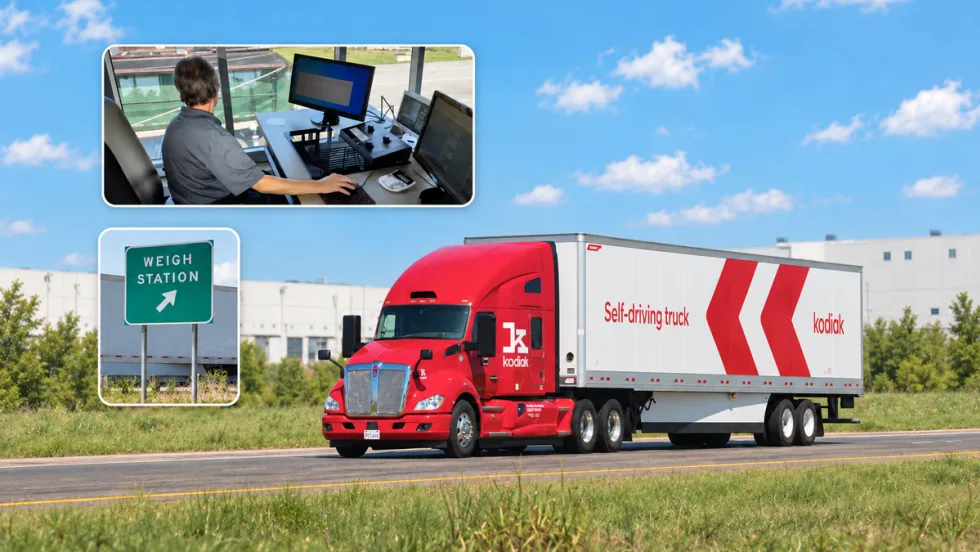
PrePass, Kodiak Connect Driverless Trucks to Roadside Enforcement
The system will allow enforcement agencies to verify Enhanced Inspection information and decide whether Kodiak’s autonomous trucks can bypass roadside screening sites.
Read More →
From One Generation to the Next: How Mentorship Builds Safer Truck Drivers
After three decades in trucking, Harold Perry shares what he's learned about driver safety, mentorship, and helping the next generation build confidence behind the wheel.
Read More →
FMCSA Pauses Biennial-Update Enforcement Amid Motus Transition
Carriers whose updates were due on or after June 1 have more time, while FMCSA works to stabilize its new registration system and warns of phishing sites impersonating its new carrier registration system, Motus.
Read More →
ZF Expands Commercial Vehicle Push in North America
ZF is expanding its North American commercial-vehicle presence with new transmission applications, electrification, trailer technology and autonomous-driving systems.
Read More →
Truck Drivers Need More Than Another Alert
Fleets have more visibility into truck health, safety events, and driver activity than ever. The next challenge is turning all that information into useful guidance for the person who has to decide what to do next.
Read More →
Tesla Wants a Self-Driving Semi. Are Cameras Enough?
Could Tesla’s camera-only autonomous driving technology work on an 80,000-pound Semi? In this commentary, HDT's Deborah Lockridge takes a look at Tesla, Cybercab, and how autonomous trucks see the road.
Read More →
What DOT’s Automated Vehicle Strategy Means for Trucking
The U.S. Department of Transportation issued a new automated-vehicle strategy that outlines plans for driverless-truck regulations, cross-state freight corridors, and federal safety standards.
Read More →
NYC Expands Speed, Pedestrian Safety Tech Across Fleet
New York City is expanding intelligent speed assistance and pedestrian-alert systems across its municipal fleet, moving the technologies from pilot programs into vehicle procurement and retrofit requirements.
Read More →
FMCSA Removes 110 Truck Driver Training Schools from Certified ELDT List
Federal regulators also are targeting more than 160 additional training providers and launching a nationwide audit of third-party CDL skills testers as part of a broader crackdown on trucking fraud.
Read More →
Beyond DOT Compliance: What Makes a Trucking Fleet Truly Safe?
A trucking fleet can follow every rule and still make unsafe decisions. The real test comes when safety conflicts with freight, productivity, or cost.
Read More →