




Aperia Expands Halo Platform with Steer-Tire Inflation System, Fifth-Wheel Integration
Aperia Technologies introduced a new automatic tire inflation system for steer axles and a partnership with Fontaine Fifth Wheel to integrate coupling status into its Halo Connect platform.

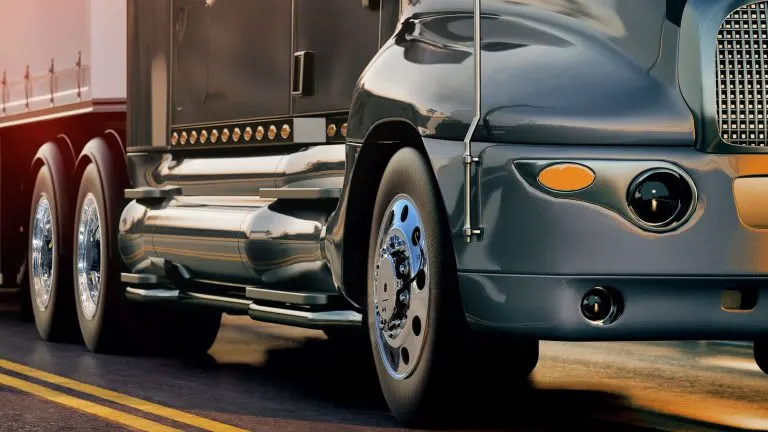
Aperia’s latest hardware expansion brings its automatic tire inflation technology -- long used on drive axles -- to the steer position.
Aperia
Aperia Technologies has announced two major new products: A new steer-axle automatic tire inflation system and a partnership with Fontaine Fifth Wheel to bring coupling-status data into its Halo Connect platform.
Aperia Technologies is extending its push to centralize critical truck data with two major developments: a new automatic tire inflation system for steer axles and a partnership with Fontaine Fifth Wheel to integrate coupling status into its Halo Connect platform.
The announcements, made around the Technology & Maintenance Council (TMC) Annual Meeting, reflect Aperia’s broader strategy to bring more safety- and maintenance-critical data into a single, actionable interface for fleets.
Steer Axle Inflation Targets Safety-Critical Gap
Aperia’s latest hardware expansion brings its automatic tire inflation technology -- long used on drive axles -- to the steer position.
Steer axles are widely considered the most safety-critical wheel end on a truck.
“This is probably something that’s been in the front of our minds for close to a decade,” said Ralph Dimenna, chief commercial officer at Aperia Technologies.
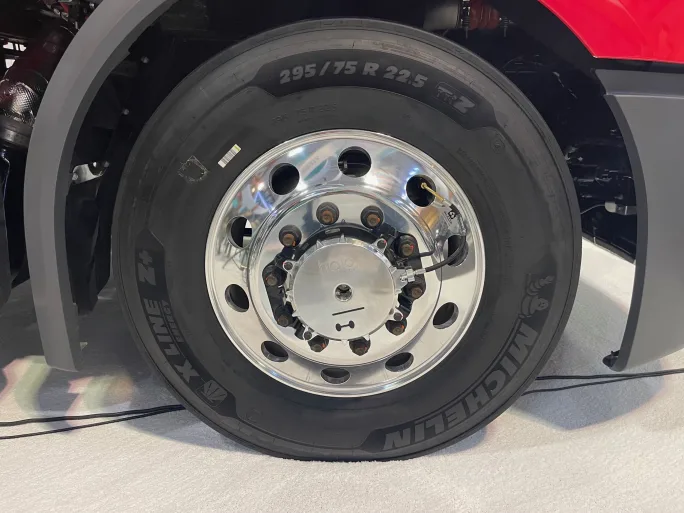
Closeup view of Aperia's new steer-position tire inflation system at the 2026 TMC Annual Meeting.
Jack Roberts
The new system uses the same core principle as Aperia’s Halo drive-axle product: a self-powered device that converts wheel rotation into energy to maintain optimal tire pressure. But it has been redesigned to fit the tighter packaging constraints of the steer axle, with a slimmer profile and a center opening that allows visibility of oil-filled hub sight glasses.
Like the existing Halo system, the steer-axle version is fully connected, enabling two-way communication with telematics systems. Fleets can remotely adjust pressure set points and monitor inflation performance in real time.
Underinflation Data Highlights Opportunity
Aperia is positioning the steer system primarily as a safety upgrade.
According to Dimenna, industry data shows tire inflation issues contribute to roughly 6%–8% of truck crashes, with about 70% of those tied to steer tires. Internal Aperia data suggests steer tires in the field are typically underinflated by 8 to 12 psi.
“That’s a significant gap, especially on the most safety-critical wheel position,” he said.
Based on its experience with drive-axle systems, Aperia expects the steer system to resolve more than 90% of underinflation issues. Early testing indicates fleets could see:
- 10%–15% improvement in tire life
- Additional fuel economy gains beyond drive-axle-only systems (estimated at roughly 30% incremental improvement contribution)
- Reduced roadside events and out-of-service violations
The system is currently in final validation, with commercial availability expected in the fourth quarter.
Halo Connect Expands into Predictive Intelligence
The steer-axle launch also coincides with enhancements to Aperia’s Halo Connect platform, which aggregates tire, temperature, and performance data into fleet-facing dashboards and driver apps.
A key differentiator, the company says, is its leak-detection algorithm. Instead of simply flagging low pressure, the system monitors inflation activity to detect leaks before they become visible.
“If the system is constantly working to maintain pressure, we can tell there’s a leak—even if the tire still reads at spec,” Dimenna said.
The platform is also designed to reduce alert fatigue. Aperia claims Halo generates two to three times fewer alerts than traditional TPMS systems by accounting for factors such as ambient temperature changes.
Newer capabilities include:
- Customizable alert thresholds and workflows
- Integration with ELD platforms and back-office systems via API
- A “nearby issues” mobile tool to pinpoint specific tires needing service
- Advanced diagnostics, including tread and alignment insights
Fontaine Partnership Adds Fifth-Wheel Visibility
In parallel, Aperia announced a new partnership with Fontaine Fifth Wheel to bring coupling-status data into the same Halo ecosystem.
Fontaine’s SmartConnect system monitors fifth-wheel lock position and confirms secure tractor-trailer coupling. Through the integration, that data will be displayed in Aperia’s Halo Connect platform and Halo Drive mobile app.
“By unifying fifth-wheel lock status with other mission-critical data, we’re giving drivers and fleet managers clearer, faster insight into every connection they make,” said Aaron Puckett, senior vice president of business development at Fontaine Fifth Wheel.
The companies plan to commercialize the integrated solution with fleets in 2026.
For Aperia, the move aligns with its goal of consolidating multiple safety signals into a single interface.
“Halo is designed to unify critical vehicle data in one place,” Dimenna said. “By visualizing SmartConnect information in our app and portal, we make it easier for drivers and fleet managers to act on that information quickly and confidently.”
Toward a Fully Connected Wheel End -- and Beyond
With steer, drive, and trailer tire inflation systems now in scope—and fifth-wheel data added, Aperia is positioning Halo as a centralized platform for managing vehicle health and safety.
The company says the combination of continuous inflation, predictive analytics, and integrated data can significantly reduce manual inspections, improve uptime, and give fleets more control over maintenance decisions
In all, Aperia's expanded Halo capabilities promise fleets fewer surprises and fewer roadside events. It also gives them a more proactive approach to managing some of the most failure-prone --and safety-critical -- components on a truck.
More Safety & Compliance

FMCSA Pauses Biennial-Update Enforcement Amid Motus Transition
Carriers whose updates were due on or after June 1 have more time, while FMCSA works to stabilize its new registration system and warns of phishing sites impersonating its new carrier registration system, Motus.
Read More →
ZF Expands Commercial Vehicle Push in North America
ZF is expanding its North American commercial-vehicle presence with new transmission applications, electrification, trailer technology and autonomous-driving systems.
Read More →
Truck Drivers Need More Than Another Alert
Fleets have more visibility into truck health, safety events, and driver activity than ever. The next challenge is turning all that information into useful guidance for the person who has to decide what to do next.
Read More →
Tesla Wants a Self-Driving Semi. Are Cameras Enough?
Could Tesla’s camera-only autonomous driving technology work on an 80,000-pound Semi? In this commentary, HDT's Deborah Lockridge takes a look at Tesla, Cybercab, and how autonomous trucks see the road.
Read More →
What DOT’s Automated Vehicle Strategy Means for Trucking
The U.S. Department of Transportation issued a new automated-vehicle strategy that outlines plans for driverless-truck regulations, cross-state freight corridors, and federal safety standards.
Read More →
NYC Expands Speed, Pedestrian Safety Tech Across Fleet
New York City is expanding intelligent speed assistance and pedestrian-alert systems across its municipal fleet, moving the technologies from pilot programs into vehicle procurement and retrofit requirements.
Read More →
FMCSA Removes 110 Truck Driver Training Schools from Certified ELDT List
Federal regulators also are targeting more than 160 additional training providers and launching a nationwide audit of third-party CDL skills testers as part of a broader crackdown on trucking fraud.
Read More →
Beyond DOT Compliance: What Makes a Trucking Fleet Truly Safe?
A trucking fleet can follow every rule and still make unsafe decisions. The real test comes when safety conflicts with freight, productivity, or cost.
Read More →
Hours of Service Pilot Programs: FMCSA Readies for 2027 Rollout
Two pilot programs could eventually reshape hours-of-service rules, giving truck drivers options to pause their 14-hour clock or use longer split sleeper rest periods.
Read More →
New Guide Offers Pet Safety Tips for Truck Drivers
Hundreds of thousands of pets travel in truck cabs. A new safety guide from Volvo Trucks and the Center for Pet Safety offers practical advice for truck drivers who bring dogs and cats along for the ride.
Read More →