





From the HDT Archives: The ABCs of DataQs Challenges
FMCSA Revamps DataQs to Improve Fairness, Speed of Reviews
New requirements add firm deadlines and independent review steps, addressing long-standing complaints about inconsistent rulings and slow response times.
April 15, 2026
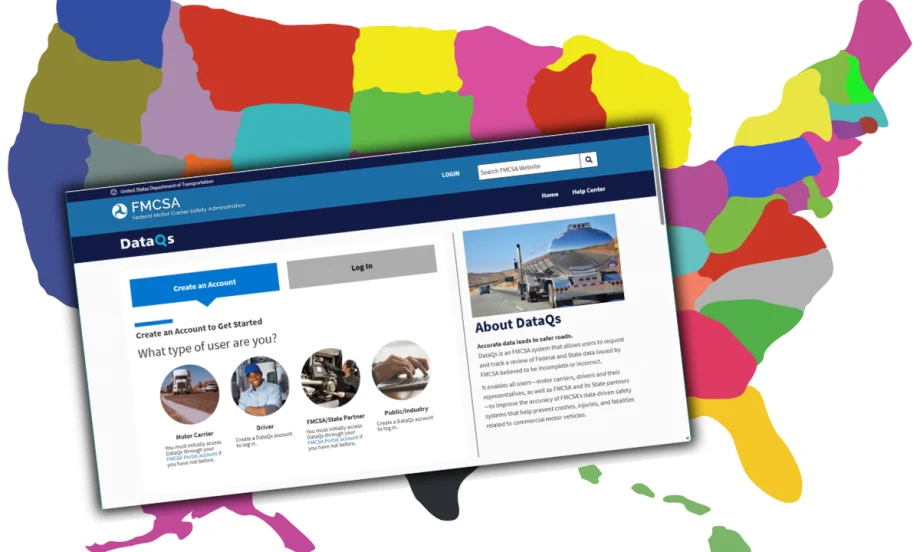
Motor carriers have complained that the DataQs process is often unfair, with some state reviews refusing to acknowledge evidence that a violation was in error.
Credit:
HDT Graphic
5 min to read
The Federal Motor Carrier Safety Administration announced updates to its DataQs program to improve turnaround times for truckers awaiting safety record corrections while addressing criticism of a lack of fairness.
FMCSA’s DataQs system allows motor carriers, commercial motor vehicle drivers, and other stakeholders to request a review of federal and state data they believe is incomplete or incorrect.
In 2024, DataQs processed more than 71,000 requests, including at least 8,300 related to crash data.
Under the new system announced on April 15, states must now meet strict deadlines and follow a three-step independent review process when handling requests to fix data on crashes, inspections, and violations, according to the announcement.
What's the Problem with DataQs?
Truckers and compliance consultants have complained about a lack of consistency in how Requests for Data Review (RDRs) are handled across different states, resulting in delays, discrepancies, and, at times, unfair outcomes.
FMCSA's DataQs system processed over 71,862 requests in 2024, including 8,314 crash data challenges and 63,548 inspection and violation appeals, notes safety and compliance consultant Brandon Wiseman in an article on his TruckSafe Consulting website.
"However, violation challenges remain the least successful category, with only 39% successfully changed according to FMCSA data, while professional service providers achieve closer to 60% success rates on crash-related challenges," Wiseman explained.
FMCSA published a notice in the Federal Register last July asking for feedback on its proposed revisions. It was considering a federal-level appeals board but shifted course after evaluating the public comments.
In its comment, Triple R Logistics LLC said, “As a carrier, we often feel that our side isn’t given fair consideration when we submit a DataQ request. Even when we provide solid proof that a violation was issued incorrectly, it seems like we’re immediately viewed with suspicion....
“More often than not, the response we get is simply that the violation was ‘observed by the officer,’ regardless of the evidence we provide."
He gave an example of a driver who was cited for not having a working ABS light.
“The driver recorded a video right after the inspection showing that the ABS light worked properly, and the truck was taken immediately to a mechanic who confirmed everything was functioning correctly. Despite that, our request was denied, and we were warned about a $10,000 fine for submitting ‘false documentation.'
“It often feels like the reviewers are automatically siding with the officer, rather than reviewing the information we submit with an open mind.”
Impartial Reviews Needed
Many commenters emphasized the need for the RDR process to be more impartial, citing examples where reviews were conducted by the same personnel who issued violations. The National Tank Truck Carriers noted instances in which inspectors refused to make corrections despite evidence of errors.
A comment from Panther Creek Transportation noted, “Most MCSAP entities send submitted DATAQs to the officer who entered the violation, who of course isn't going to admit he made the entry in error.”
A comment from Lindsey Petroleum Transport called the DataQs system biased and faulty.
“We currently have 2 accidents that were the fault of another party in which they were ticketed and their insurance paid damages / claims and both were denied removal from our accident BASICS. In addition, each time I have submitted a request via DATAQ, the reviewing officer sides with the officer issuing the warning / violation even if I have submitted evidence refuting the violation. It's a no-win situation for carriers, especially smaller carriers.”
On the other hand, a comment from the Nebraska State Patrol had a number of comments on the specific changes, and also asked, “Has there been any consideration given to limit who can request DataQs? Probably 1/3 of our requests come from a 3rd party who are log jamming the system with paid requests that don’t have any merit.”
For more information about changes to the DataQs program, read the full notice submitted by FMCSA to the Federal Register.
Key Enhancements to DataQs
The revised requirements establish a more streamlined framework for handling Requests for Data Review, specifically for states receiving Motor Carrier Safety Assistance Program funding from FMCSA.
General Requirements
- States must designate points of contact for crash and inspection RDRs.
- States are required to review requests submitted within three years of an inspection and within five years of a crash.
- All decisions, especially those where no data correction is made, must include detailed explanations, evidence reviewed, and clear next steps in the review process.
- States must participate in FMCSA program reviews and follow established policies, including those related to adjudicated citations.
Three-Stage Review Process: States must implement a multi-stage, independent review structure that includes:
- Initial Review – Ensures decisions are not made solely by the issuing officer when denying a correction.
- Reconsideration – Conducted by independent subject matter experts not involved in the initial decision.
- Final Review – Completed by a senior decision-maker or independent panel, ensuring an unbiased final determination.
Timeline Standards:
- Initial reviews must be completed within 21 days.
- Reconsideration decisions must be issued within 21 days.
- Final reviews must be completed within 45 days.
- State MCSAP Lead Agencies must submit DataQs Implementation Plans detailing how they will meet the new requirements, address backlogs, and prevent future delays. To promote transparency, all approved plans will be publicly available through the DataQs system.
“Accurate data keeps our roads safe,” said Derek Barrs, FMCSA administrator, in a news release.
“America's hardworking truck drivers deserve a system that treats them fairly. These updates guarantee due process by ensuring drivers who challenge an inspection or crash record receive an independent, unbiased, and completed review in a timely manner.”
Wiseman wrote that these changes "represent the most significant improvement to DataQs fairness and consistency since the system's creation, though not to the level that most carriers and service providers had hoped (i.e., true federal review).
"The mandatory independence requirements and structured timelines should reduce, though likely not eliminate, the rubber-stamp denials that have plagued the system. However, success will depend on implementation quality and state resource allocation."
The trucking attorneys at Scopelitis, Garvin, Light, Hanson & Feary, in an email alert, said the FMCSA will begin training and outreach this spring, with state implementation plans, system updates, and enforcement of the new requirements expected later this year.
They also advised motor carriers that "these changes heighten the importance of well-documented submissions when challenging inspections or crash data. Moving forward, carriers should reassess how DataQs requests are prepared, documented, and escalated."
More Safety & Compliance
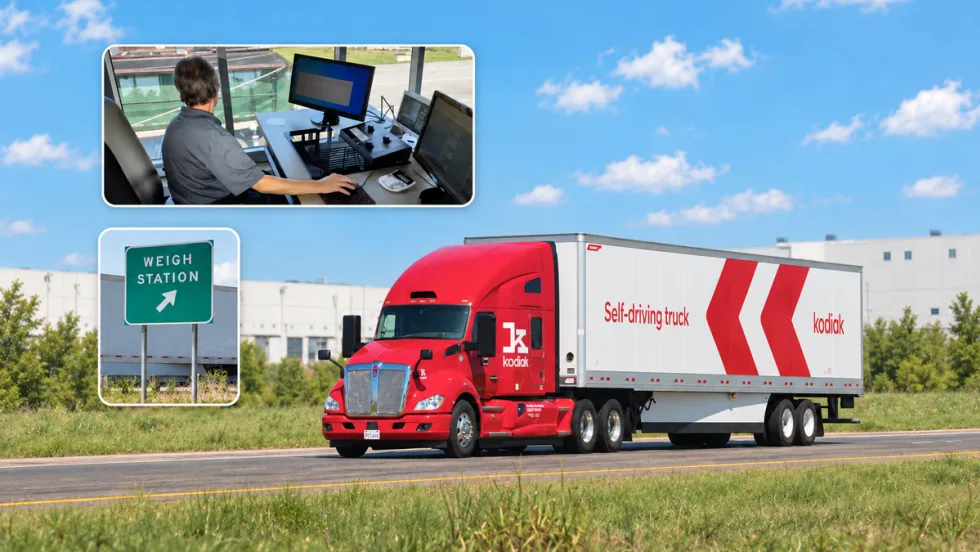
PrePass, Kodiak Connect Driverless Trucks to Roadside Enforcement
The system will allow enforcement agencies to verify Enhanced Inspection information and decide whether Kodiak’s autonomous trucks can bypass roadside screening sites.
Read More →
From One Generation to the Next: How Mentorship Builds Safer Truck Drivers
After three decades in trucking, Harold Perry shares what he's learned about driver safety, mentorship, and helping the next generation build confidence behind the wheel.
Read More →
FMCSA Pauses Biennial-Update Enforcement Amid Motus Transition
Carriers whose updates were due on or after June 1 have more time, while FMCSA works to stabilize its new registration system and warns of phishing sites impersonating its new carrier registration system, Motus.
Read More →
ZF Expands Commercial Vehicle Push in North America
ZF is expanding its North American commercial-vehicle presence with new transmission applications, electrification, trailer technology and autonomous-driving systems.
Read More →
Truck Drivers Need More Than Another Alert
Fleets have more visibility into truck health, safety events, and driver activity than ever. The next challenge is turning all that information into useful guidance for the person who has to decide what to do next.
Read More →
Tesla Wants a Self-Driving Semi. Are Cameras Enough?
Could Tesla’s camera-only autonomous driving technology work on an 80,000-pound Semi? In this commentary, HDT's Deborah Lockridge takes a look at Tesla, Cybercab, and how autonomous trucks see the road.
Read More →
What DOT’s Automated Vehicle Strategy Means for Trucking
The U.S. Department of Transportation issued a new automated-vehicle strategy that outlines plans for driverless-truck regulations, cross-state freight corridors, and federal safety standards.
Read More →
NYC Expands Speed, Pedestrian Safety Tech Across Fleet
New York City is expanding intelligent speed assistance and pedestrian-alert systems across its municipal fleet, moving the technologies from pilot programs into vehicle procurement and retrofit requirements.
Read More →
FMCSA Removes 110 Truck Driver Training Schools from Certified ELDT List
Federal regulators also are targeting more than 160 additional training providers and launching a nationwide audit of third-party CDL skills testers as part of a broader crackdown on trucking fraud.
Read More →
Beyond DOT Compliance: What Makes a Trucking Fleet Truly Safe?
A trucking fleet can follow every rule and still make unsafe decisions. The real test comes when safety conflicts with freight, productivity, or cost.
Read More →