




Recall of Fontaine Fusion Flatbeds Warns Owners Not to Use the Trailers
Some Fontaine Fusion flatbed trailer manufactured between February 2025, and March 2026 could have mainbeams weakened by hydrogen embrittlement because of a problem in the galvanizing process.


Fontaine Trailer will inspect and replace the trailers as necessary, free of charge.
HDT Graphic
Nearly 250 Fontaine Fusion flatbed trailers have been put under a “do not drive” recall warning because there may be a defect that could cause the main beams to crack.
The recall affects 247 trailers manufactured betweenFebruary 28, 2025, and March 31, 2026.
The affected trailers were manufactured using high-strength steel components that were subsequently hot-dip galvanized. Under certain processing conditions, hydrogen may have been introduced into the steel during the galvanizing process, potentially resulting in instances of hydrogen embrittlement.
While only a small number of trailers have to date exhibited hydrogen embrittlement, and those affected trailers have continued to operate with observed cracking, continued use may allow cracks to propagate, which could reduce the structural integrity of the trailer’s main beams, according to the recall notice.
Though it has not yet been observed in the field, if the cracking progresses, it may result in partial or complete fracturing of the main beam under load, potentially leading to loss of load support or structural failure during operation.
Owners are advised not to use their trailer until the remedy is completed. Fontaine Trailer will inspect and replace the trailers as necessary, free of charge. Owner notification letters were expected to be mailed on May 11, 2026. Owners may contact Fontaine Trailer customer service at 1-800-821-6535, option 5.
The National Highway Traffic Safety Administration’s recall ID number is26V291000.
More Safety & Compliance
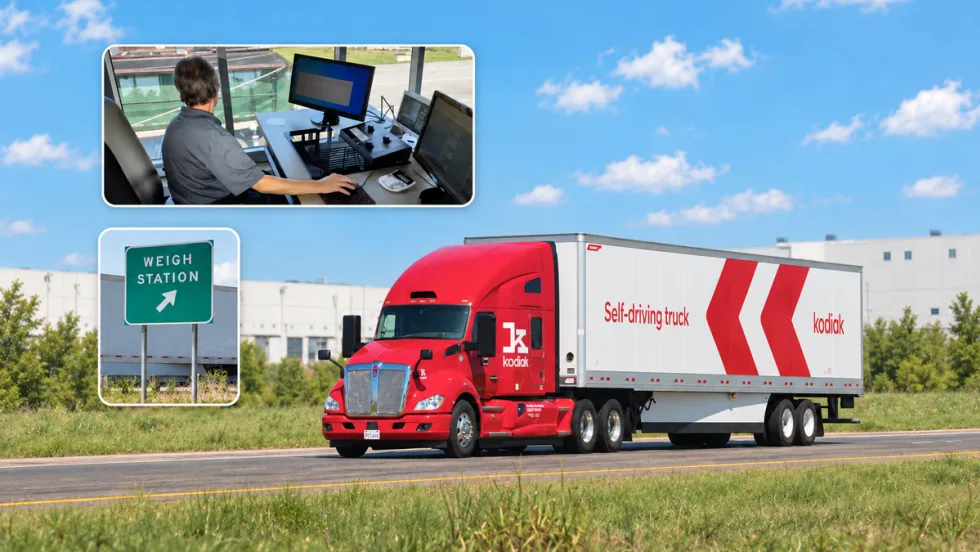
PrePass, Kodiak Connect Driverless Trucks to Roadside Enforcement
The system will allow enforcement agencies to verify Enhanced Inspection information and decide whether Kodiak’s autonomous trucks can bypass roadside screening sites.
Read More →
From One Generation to the Next: How Mentorship Builds Safer Truck Drivers
After three decades in trucking, Harold Perry shares what he's learned about driver safety, mentorship, and helping the next generation build confidence behind the wheel.
Read More →
FMCSA Pauses Biennial-Update Enforcement Amid Motus Transition
Carriers whose updates were due on or after June 1 have more time, while FMCSA works to stabilize its new registration system and warns of phishing sites impersonating its new carrier registration system, Motus.
Read More →
ZF Expands Commercial Vehicle Push in North America
ZF is expanding its North American commercial-vehicle presence with new transmission applications, electrification, trailer technology and autonomous-driving systems.
Read More →
Truck Drivers Need More Than Another Alert
Fleets have more visibility into truck health, safety events, and driver activity than ever. The next challenge is turning all that information into useful guidance for the person who has to decide what to do next.
Read More →
Tesla Wants a Self-Driving Semi. Are Cameras Enough?
Could Tesla’s camera-only autonomous driving technology work on an 80,000-pound Semi? In this commentary, HDT's Deborah Lockridge takes a look at Tesla, Cybercab, and how autonomous trucks see the road.
Read More →
What DOT’s Automated Vehicle Strategy Means for Trucking
The U.S. Department of Transportation issued a new automated-vehicle strategy that outlines plans for driverless-truck regulations, cross-state freight corridors, and federal safety standards.
Read More →
NYC Expands Speed, Pedestrian Safety Tech Across Fleet
New York City is expanding intelligent speed assistance and pedestrian-alert systems across its municipal fleet, moving the technologies from pilot programs into vehicle procurement and retrofit requirements.
Read More →
FMCSA Removes 110 Truck Driver Training Schools from Certified ELDT List
Federal regulators also are targeting more than 160 additional training providers and launching a nationwide audit of third-party CDL skills testers as part of a broader crackdown on trucking fraud.
Read More →
Beyond DOT Compliance: What Makes a Trucking Fleet Truly Safe?
A trucking fleet can follow every rule and still make unsafe decisions. The real test comes when safety conflicts with freight, productivity, or cost.
Read More →