





What Happens if a Freight Broker Can't Pay its Motor Carrier Bills?
Supreme Court Ruling Puts Freight Broker Vetting Practices in Spotlight
The unanimous SCOTUS ruling in the closely watched Montgomery v. Caribe case allows state negligence claims against freight brokers that hire unsafe motor carriers, raising new liability and vetting concerns among brokers.
May 14, 2026
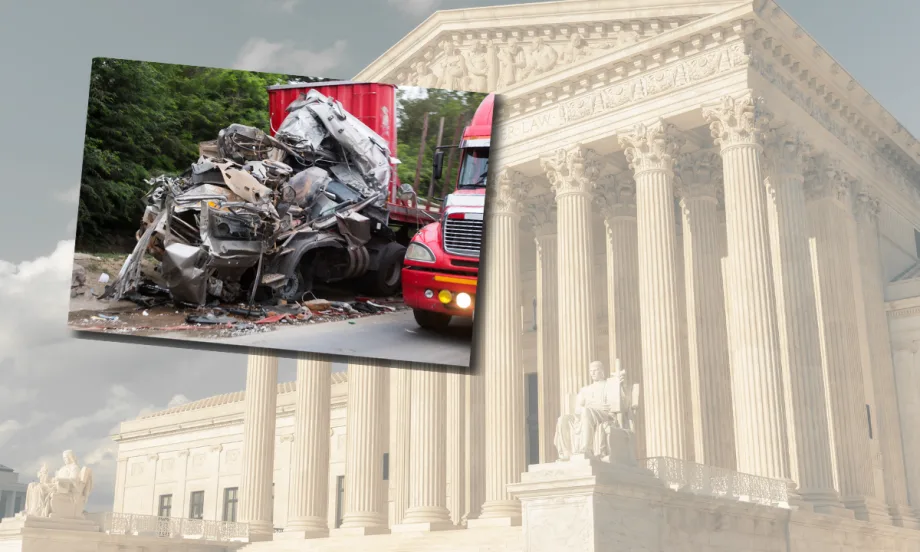
“The negligent-hiring tort against brokers, like the negligence tort against trucking companies, exists to keep unsafe trucks and unsafe drivers off America’s highways,” wrote Justice Kavanaugh in a concurring opinion.
Credit:
HDT Graphic
5 min to read
Who is ultimately responsible when freight brokers hire unsafe carriers that later cause catastrophic accidents? That's the question at the heart of a May 14 U.S. Supreme Court decision. In a unanimous decision, the court ruled that brokers can be sued under state law for negligently hiring unsafe motor carriers.
The closely watched case could affect how brokers vet the carriers they use.
In Montgomery v. Caribe Transport II, LLC, the Court held that the Federal Aviation Administration Authorization Act’s “safety exception” allows state-law negligence claims against brokers when they failed to use reasonable care in selecting a carrier.
The ruling stems from a crash in Illinois in which a truck operated by Caribe Transport II struck another tractor-trailer stopped on the roadside, severely injuring driver Shawn Montgomery and resulting in the amputation of his leg.
Freight broker C.H. Robinson Worldwide had arranged the shipment.
Montgomery alleged the broker should not have hired Caribe Transport because the carrier had a “conditional” FMCSA safety rating and a history of safety problems involving driver qualification, hours-of-service compliance, maintenance, and crash history.
Court: Safety Claims Are Not Preempted
The FAAAA broadly preempts state laws “related to a price, route, or service” of motor carriers and brokers. Congress enacted the law in the 1990s as part of a broader deregulation effort aimed at preventing states from imposing varying economic rules on the transportation industry.
The trucking industry has been involved in many a case challenging state laws and regulations that it perceived to be "preempted" by the FAAAA, often called "F4A."
Writing for the Court, Justice Amy Coney Barrett said the case centered on whether negligent hiring claims against brokers fall within the FAAAA’s exception allowing states to regulate safety “with respect to motor vehicles.”
The Court concluded they do.
“Montgomery alleged that C.H. Robinson failed to exercise reasonable care when it hired Caribe Transport,” Barrett wrote, adding that the claims directly concern the use of trucks on public highways.
But the Court emphasized that Congress preserved states’ traditional authority over highway safety.
Justice Brett Kavanaugh, joined by Justice Samuel Alito in a concurring opinion, described the issue as a “close one” but said the broader structure of federal trucking law ultimately supported allowing such lawsuits.
“The negligent-hiring tort against brokers, like the negligence tort against trucking companies, exists to keep unsafe trucks and unsafe drivers off America’s highways,” Kavanaugh wrote.
At the same time, Kavanaugh cautioned that the ruling should not be interpreted as exposing brokers to automatic liability after every crash.
“Brokers should be able to successfully defend against state tort suits if the brokers have acted reasonably and arranged transportation with reputable trucking companies,” he wrote.
Will the Ruling Mean More Litigation?
The ruling raised concerns among brokers about expanded litigation exposure, inconsistent state standards, and increased insurance pressure.
Transportation law firm Scopelitis, Garvin, Light, Hanson & Feary said the ruling effectively reverses prior protections recognized by the Seventh and Eleventh Circuit Courts of Appeal.
Industry observers say plaintiffs’ attorneys may more aggressively pursue negligent-selection claims after catastrophic crashes.
Harish Abbott, CEO and co-founder of Augment, said brokers are discussing how the decision could change operations.
“State-by-state standards for ‘reasonable care,’ greater litigation risk for brokers — especially smaller shops — likely insurance pressure, and new urgency around documenting carrier selection processes” are among the concerns he is hearing from brokerage leaders, Abbott said in an email.
He added that brokers need to focus on proving they exercised reasonable care.
“What brokers can control is knowing who they're putting on their loads and being able to prove it,” Abbott said. “The operational response is straightforward: tighten carrier selection, standardize the workflow, and make sure the audit trail holds up years from now.”
Effects on Freight Brokers
C.H. Robinson said it was disappointed in the ruling but emphasized its commitment to safety.
“Safety is foundational to who we are,” said Dorothy Capers, chief legal officer at C.H. Robinson. “While we are disappointed in the Court’s decision, we will continue to operate responsibly, support stronger federal enforcement, and work constructively with regulators, carriers, and customers to strengthen the national safety system.”
The Transportation Intermediaries Association (TIA), which represents freight brokers and third-party logistics providers, said the decision creates new uncertainty for the industry and could increase litigation exposure for brokers nationwide.
In a statement following the ruling, TIA said the decision “raises significant concerns” about inconsistent state-by-state liability standards and warned the outcome could increase costs throughout the supply chain. The organization also emphasized that brokers do not operate trucks or employ drivers directly, but instead connect shippers with federally licensed carriers.
“We are deeply disappointed with the decision, as the law and legal precedent for decades has given the federal government, not states, the responsibility for setting safety standards for motor carriers. To date, carriers, not brokers, have been responsible for complying with these standards,” TIA President & CEO Chris Burroughs said in a release.
TIA said brokers should continue to strengthen carrier selection and documentation procedures while the legal implications of the ruling develop in lower courts.
What Brokers Should Do Now
Legal experts say the ruling increases the importance of formal, documented carrier-vetting procedures.
Among the steps attorneys say brokers should consider:
- Reviewing FMCSA safety ratings and inspection histories
- Monitoring out-of-service and crash rates
- Documenting how safety red flags are evaluated
- Standardizing carrier-selection procedures
- Maintaining clear records showing why a carrier was approved
Texas-based law firm Galloway recommended brokers use “clear, objective vetting criteria” and carefully document how safety concerns are handled.
The firm also warned that insurers may tighten underwriting standards for brokers and scrutinize safety documentation more closely after the ruling.
Carriers, meanwhile, may face increased pressure to maintain clean safety records and proactively share corrective-action plans when issues arise.
Some Attorneys Say Impact May Be Limited
Not everyone believes the ruling dramatically changes the legal landscape.
Grace Keegan Johnson, a transportation attorney with Hall Estill, said many national brokers were already exposed to negligent-selection claims because they operate across multiple jurisdictions.
“This opinion confirms brokers have a duty and should be aware they can be sued and potentially held liable for not taking the extra steps necessary to ensure the carrier is authorized and has a good safety record,” Johnson said.
But she added that brokers operating nationwide likely already had compliance procedures in place because lawsuits could previously be filed in jurisdictions where such claims were allowed.
“For brokers who operate across the country, this opinion does not impact them much,” she said.
More Safety & Compliance
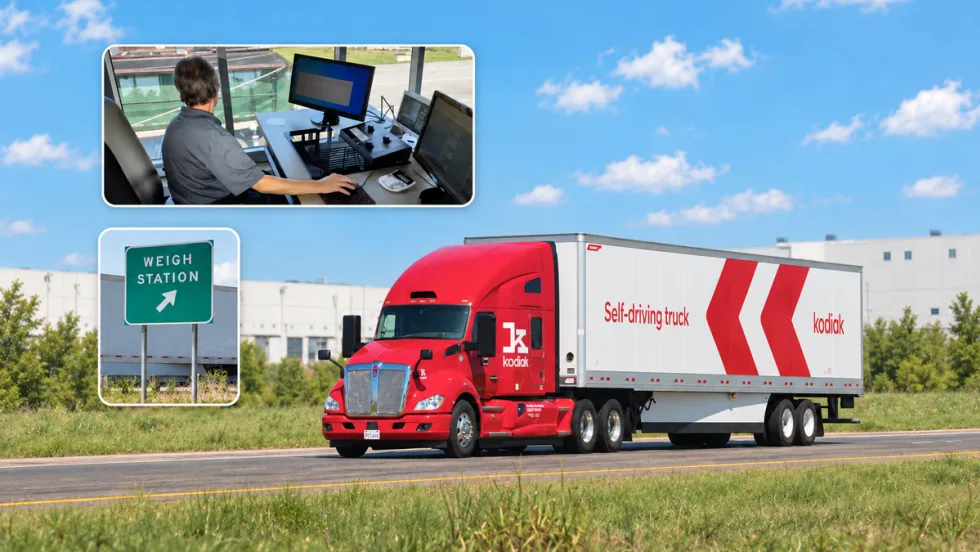
PrePass, Kodiak Connect Driverless Trucks to Roadside Enforcement
The system will allow enforcement agencies to verify Enhanced Inspection information and decide whether Kodiak’s autonomous trucks can bypass roadside screening sites.
Read More →
From One Generation to the Next: How Mentorship Builds Safer Truck Drivers
After three decades in trucking, Harold Perry shares what he's learned about driver safety, mentorship, and helping the next generation build confidence behind the wheel.
Read More →
FMCSA Pauses Biennial-Update Enforcement Amid Motus Transition
Carriers whose updates were due on or after June 1 have more time, while FMCSA works to stabilize its new registration system and warns of phishing sites impersonating its new carrier registration system, Motus.
Read More →
ZF Expands Commercial Vehicle Push in North America
ZF is expanding its North American commercial-vehicle presence with new transmission applications, electrification, trailer technology and autonomous-driving systems.
Read More →
Truck Drivers Need More Than Another Alert
Fleets have more visibility into truck health, safety events, and driver activity than ever. The next challenge is turning all that information into useful guidance for the person who has to decide what to do next.
Read More →
Tesla Wants a Self-Driving Semi. Are Cameras Enough?
Could Tesla’s camera-only autonomous driving technology work on an 80,000-pound Semi? In this commentary, HDT's Deborah Lockridge takes a look at Tesla, Cybercab, and how autonomous trucks see the road.
Read More →
What DOT’s Automated Vehicle Strategy Means for Trucking
The U.S. Department of Transportation issued a new automated-vehicle strategy that outlines plans for driverless-truck regulations, cross-state freight corridors, and federal safety standards.
Read More →
NYC Expands Speed, Pedestrian Safety Tech Across Fleet
New York City is expanding intelligent speed assistance and pedestrian-alert systems across its municipal fleet, moving the technologies from pilot programs into vehicle procurement and retrofit requirements.
Read More →
FMCSA Removes 110 Truck Driver Training Schools from Certified ELDT List
Federal regulators also are targeting more than 160 additional training providers and launching a nationwide audit of third-party CDL skills testers as part of a broader crackdown on trucking fraud.
Read More →
Beyond DOT Compliance: What Makes a Trucking Fleet Truly Safe?
A trucking fleet can follow every rule and still make unsafe decisions. The real test comes when safety conflicts with freight, productivity, or cost.
Read More →