




How the Supreme Court Broker Liability Ruling Could Reshape Trucking’s Safety Landscape
The Supreme Court’s May 11 broker-liability ruling may not radically rewrite transportation law overnight. But industry experts say it will intensify pressure on brokers, carriers, and shippers to prove they are prioritizing safety.

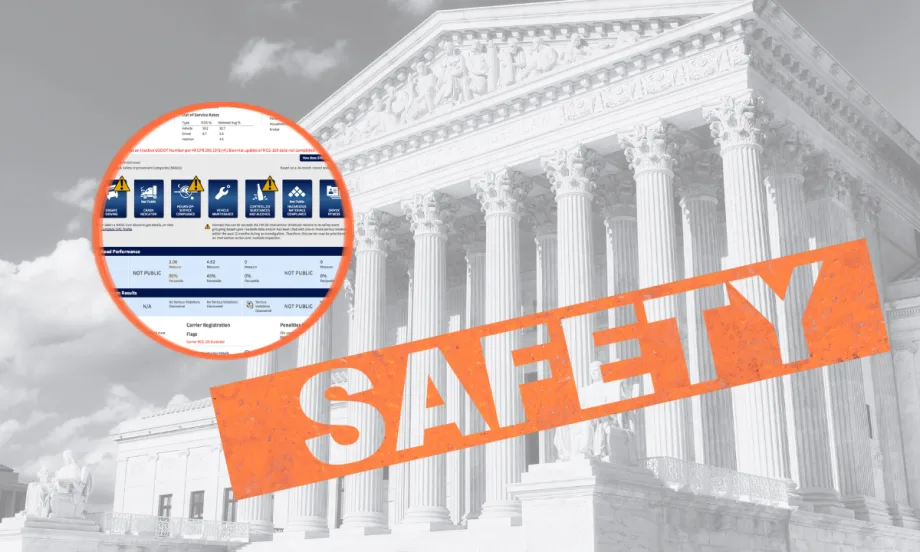
The Supreme Court has ruled that brokers can be held liable for truck accidents. Is that decision a positive, or a negative for the industry at large?
HDT/Canva
The Supreme Court of the United States may not have radically rewritten transportation law with its May 14 ruling on broker liability, but that verdict almost certainly accelerated a trend already reshaping trucking: Fleets, brokers, and shippers are all being pushed toward higher levels of measurable safety accountability.
While some owner-operators and small carriers fear the decision could squeeze marginal operators out of the freight market, others inside trucking are openly celebrating the ruling as a long-overdue correction to what they see as years of unchecked broker power.
Freight Brokers Held Responsible
The case centered on a highway crash involving a carrier hired by freight brokerage giant C.H. Robinson. At issue before the Supreme Court was whether freight brokers can be sued for negligent hiring if they select an unsafe carrier that later causes a serious crash.
The Court’s answer was yes.
“This comes out of a highway accident where C.H. Robinson brokered freight to a motor carrier by the name of Caribe Transport,” explained Greg Feary, president and managing partner of transportation law firm Scopelitis, Garvin, Light, Hanson & Feary, in an interview with HDT.
“The question became: Could negligent hiring — which is a tort that most states have — be preempted and not actually filed against and litigated against C.H. Robinson?”
At the center of the dispute was the Federal Aviation Administration Authorization Act (FAAAA). This set of regulations contains language preempting certain state laws affecting the prices, routes, and services of brokers and carriers.
For years, brokers argued that this federal preemption shielded them from negligent-hiring lawsuits.
But the Supreme Court ultimately ruled that the law’s “safety exception” also applies to brokers selecting motor carriers.
For many in trucking, the decision sounded like a legal earthquake. Feary, however, said the ruling is less revolutionary than many people think.
“What we have today is something that we’ve had as the law all the way up to 2023,” Feary said. “Only in the Seventh and Eleventh Circuits could you not sue a broker for that. This decision now says you can sue a broker for that cause of action in all states.”
In other words, the ruling largely restores a legal standard that already existed across most of the country before two federal circuits carved out temporary protections for brokers.
Still, Feary believes the ruling will have major practical consequences because of the attention surrounding it.
“It’s so highly publicized that you’re likely to see a larger volume of this type of allegation being filed by plaintiff’s attorneys,” he said.
And that is precisely where the trucking industry’s anxiety begins.
More Than Just Picking the Wrong Carrier
Legal experts stress the ruling does not mean brokers become automatically liable anytime a truck they hired gets into a crash.
Instead, the standard centers on whether a broker knew — or reasonably should have known — that a carrier posed a safety risk.
“It isn’t that the broker picked the carrier that got in an accident,” Feary said. “It’s that the broker picked a carrier that was reasonably likely to get in an accident, or that had the broker exercised reasonable care to look at how that carrier operates — what safety statistics and background they had — did they ignore that or did they not check?”
That distinction matters because it shifts attention toward carrier-vetting practices, safety data, and operational oversight.
And according to trucking safety consultant Rob Carpenter, the industry has been moving in this direction for years anyway.
“When you start thinking about it, due care has long existed before any of these regulations,” Carpenter told HDT in an interview. “When it comes down to just inherently doing your diligence to mitigate whatever issues come your way or come the way of others, that’s long been a principle of personal responsibility.”
But while Carpenter believes the ruling was predictable, he also believes its impact will vary dramatically depending on the type of carrier involved.
“It’s going to depend on whether you’re that owner-operator who relies 100% on the spot market and broker freight,” he said. “Then yeah, it’s probably going to hurt you a little bit.”
Larger carriers with established shipper relationships and documented safety programs may feel far less pressure, he added.
And that emerging divide — between fleets able to demonstrate strong safety performance and those that cannot — may become one of the ruling’s most significant long-term effects.
Safety as a Competitive Advantage
For Jamie Hagen, owner of Hell Bent Xpress, a small fleet running out of Aberdeen, South Dakota, the ruling is not necessarily bad news.
“Well, I guess they lose their ability to hide behind their exemption,” Hagen said of brokers. “Now they’re just as culpable as the rest of us.”
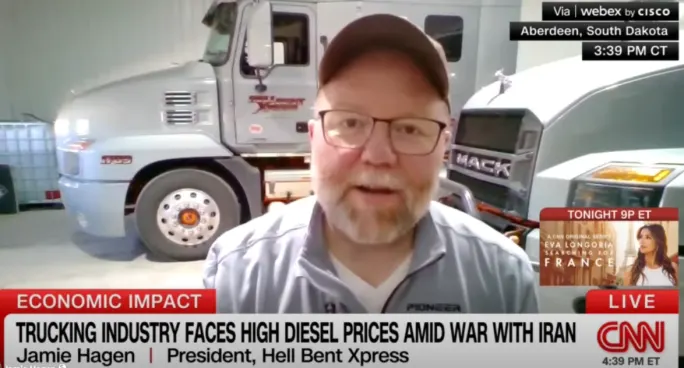
Jamie Hagen has appeared on CNN twice recently to discuss rising fuel prices impacting the trucking industry.
Screen grab: CNN/Jamie Hagen
Hagen told HDT in an interview that he sees the ruling as creating a more balanced environment where everyone involved in the freight chain shares risk.
“I like the idea that brokerages now have as much to lose as I do,” he explained. “Now, we both have skin in the game.”
That perspective may surprise some small-fleet operators who fear the decision could accelerate industry consolidation. Hagen understands those concerns -- especially among one-truck operators running older equipment. But, he said, trucking has been moving toward stricter safety expectations for years.
“A lot of one-truck operators may not even fully understand compliance,” Hagen said. “I know because I was one.”
He recalled discovering numerous compliance requirements only after his wife began helping manage the business full-time.
“The government will sell you an MC number for a few hundred bucks, then basically say, ‘Here you go -- now comply with all these rules,’” Hagen said.
Still, Hagen believes carriers willing to invest in safety and professionalism may actually benefit under the new legal environment.
His fleet recently invested in multiple new Mack Pioneer tractors equipped with advanced driver-assistance systems, including collision mitigation technology.
“Our trucks have all the latest safety stuff — cameras, systems, all that jazz,” he said. “And we hire good people. That’s our focus.”
Those investments may soon matter even more as brokers begin examining carrier safety profiles more aggressively.
Feary said brokers will likely begin demanding more documentation and formal safety metrics from carriers, including ISS scores, CSA BASIC scores and safety fitness determinations.
“A lot of small brokers don’t have vetting processes,” Feary said. “They’re going to have to start putting in place a carrier selection protocol that they can demonstrate to insurance underwriters.”
Carpenter believes that scrutiny will quickly extend far beyond simple satisfactory safety ratings.
“Now I think they’re going to start really getting into the weeds on SAFER ratings,” Carpenter said. “What are their out-of-service percentages? How many crashes? How many fatalities? What does their history look like?”
Brokers Under Pressure
Not everyone sees the ruling primarily as a safety issue.
Leander Richmond is another small fleet owner. His company, Eagle Express, runs out of Canton, Michigan. Richmond told Heavy Duty Trucking that he views the decision as overdue accountability for freight brokers that have steadily expanded their influence over trucking operations.
“The ruling, absolutely, 100%,” Richmond says when asked if he supports the Supreme Court’s decision.
Richmond argued that many brokers increasingly attempt to exert operational control over carriers while avoiding the legal responsibilities traditionally associated with that control.
“They want no accountability,” Richmond said. “If you tell my driver what to do and he does something wrong, now you’re going to be held accountable because you told him to do it.”
Richmond believes many safe small carriers are wrongly assuming the ruling threatens their survival.
“If you’re doing things right, this should not be any sort of a game changer,” he said.
Instead, Richmond argues the decision may actually help professional carriers by forcing brokers to focus more heavily on operational quality and safety performance.
“We need brokers to do what they’re supposed to do,” Richmond said. “The one thing that’s harming carriers more than anything else in this country is freight broker dominance. This is, in fact, a trucking industry, not a brokerage industry.”
Pressure on Smaller Operators
Even supporters of the ruling acknowledge the new environment could create real challenges for marginal carriers and small operators.
Carpenter believes brokers and shippers will likely tighten qualification standards significantly in the coming months.
“I think carriers are going to get hit initially on the spot market because brokers are going to start vetting people a lot more aggressively,” he said.
That could create a difficult cycle for carriers already struggling with weak safety scores or limited resources.
“It’s almost a catch-22,” Carpenter said. “You could run and improve your safety record, but no one will give you loads to run.”
Large carriers may hold an advantage because they possess the capital needed to invest in compliance systems, safety technologies, legal resources and insurance coverage.

Trucking safety consultant Rob Carpenter thinks brokers and shippers will likely tighten qualification standards significantly in the coming months.
Rob Carpenter
“I think it’ll benefit larger fleets because they have the capital to build these programs out and demonstrate compliance,” Carpenter added.
At the same time, the ruling arrives during a period of significant stress across trucking.
The industry is still recovering from a prolonged freight recession. Insurance costs remain elevated. Enforcement of English-language proficiency standards and tightening scrutiny of non-domiciled CDLs have already reduced available capacity in some freight segments.
“And now you’ve got this,” Carpenter said. “It’s almost like the market and the industry corrected itself in a year’s time.”
The Cost of Safety
Ultimately, many industry observers believe the ruling will accelerate investments in safety, compliance and operational oversight across the freight ecosystem.
But those investments will come at a price.
Feary believes brokers may eventually need higher insurance requirements, more robust vetting systems and stronger compliance infrastructure.
Carriers, meanwhile, may face growing pressure to adopt advanced safety systems, improve driver qualification procedures and document compliance more thoroughly.
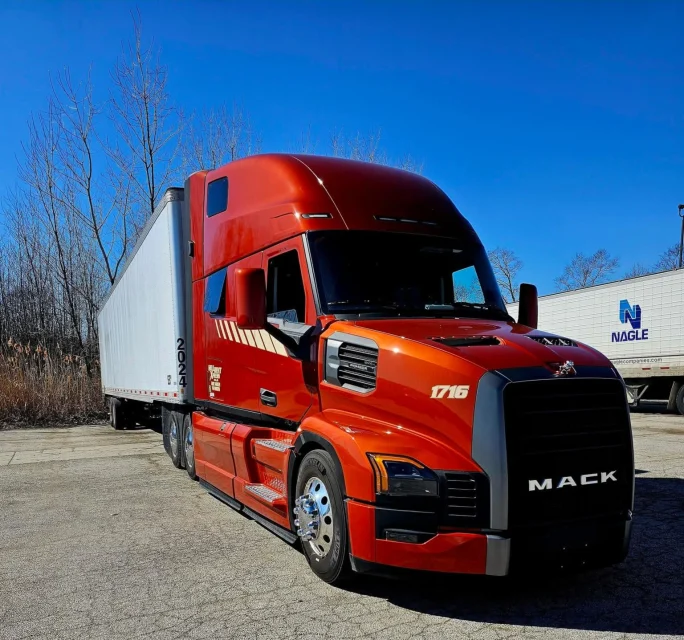
Jamie Hagen believes his leap of faith to purchase 11 new Mack Pioneers couldn't have been timed better given the current need for fuel efficiency and safety technology.
Jamie Hagen
And according to several sources interviewed for this article, those costs are unlikely to remain inside the trucking industry.
“Someone’s going to pay for it,” Carpenter said. “Brokers aren’t going to absorb all the cost. They’re going to pass those costs along somehow.”
Feary agrees.
“I think the new reality will be that shippers are going to have to pay more,” he said. “Brokers should be able to turn that into greater profit margins and be willing to pay smaller carriers more. And those smaller carriers will hopefully allocate some of that profit margin into safety equipment. Things like safety training, carrier selection protocol, driver selection protocol — all of that.”
For fleets already investing heavily in safety, technology and professional operations, the Supreme Court’s decision may ultimately reinforce a direction they believe trucking was already headed.
As Hagen put it, “Fuel economy and safety technology finally make financial sense.”
More Safety & Compliance
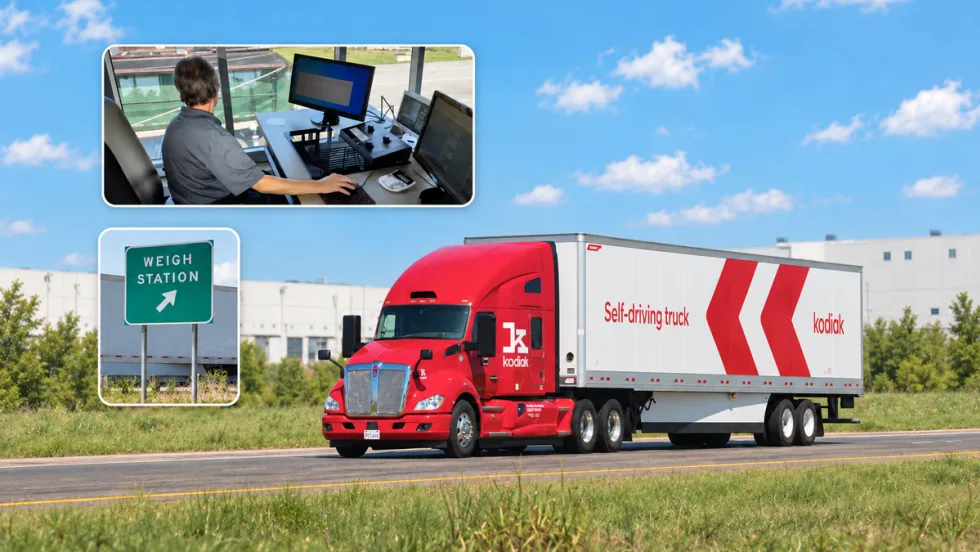
PrePass, Kodiak Connect Driverless Trucks to Roadside Enforcement
The system will allow enforcement agencies to verify Enhanced Inspection information and decide whether Kodiak’s autonomous trucks can bypass roadside screening sites.
Read More →
From One Generation to the Next: How Mentorship Builds Safer Truck Drivers
After three decades in trucking, Harold Perry shares what he's learned about driver safety, mentorship, and helping the next generation build confidence behind the wheel.
Read More →
FMCSA Pauses Biennial-Update Enforcement Amid Motus Transition
Carriers whose updates were due on or after June 1 have more time, while FMCSA works to stabilize its new registration system and warns of phishing sites impersonating its new carrier registration system, Motus.
Read More →
ZF Expands Commercial Vehicle Push in North America
ZF is expanding its North American commercial-vehicle presence with new transmission applications, electrification, trailer technology and autonomous-driving systems.
Read More →
Truck Drivers Need More Than Another Alert
Fleets have more visibility into truck health, safety events, and driver activity than ever. The next challenge is turning all that information into useful guidance for the person who has to decide what to do next.
Read More →
Tesla Wants a Self-Driving Semi. Are Cameras Enough?
Could Tesla’s camera-only autonomous driving technology work on an 80,000-pound Semi? In this commentary, HDT's Deborah Lockridge takes a look at Tesla, Cybercab, and how autonomous trucks see the road.
Read More →
What DOT’s Automated Vehicle Strategy Means for Trucking
The U.S. Department of Transportation issued a new automated-vehicle strategy that outlines plans for driverless-truck regulations, cross-state freight corridors, and federal safety standards.
Read More →
NYC Expands Speed, Pedestrian Safety Tech Across Fleet
New York City is expanding intelligent speed assistance and pedestrian-alert systems across its municipal fleet, moving the technologies from pilot programs into vehicle procurement and retrofit requirements.
Read More →
FMCSA Removes 110 Truck Driver Training Schools from Certified ELDT List
Federal regulators also are targeting more than 160 additional training providers and launching a nationwide audit of third-party CDL skills testers as part of a broader crackdown on trucking fraud.
Read More →
Beyond DOT Compliance: What Makes a Trucking Fleet Truly Safe?
A trucking fleet can follow every rule and still make unsafe decisions. The real test comes when safety conflicts with freight, productivity, or cost.
Read More →