




The ABCs of DataQs Challenges
DataQs, the online system for correcting CSA scoring, has the reputation of being cumbersome and unpredictable, but there’s a way for safety managers to get what they need from it. Call it the ABCs of DataQs.

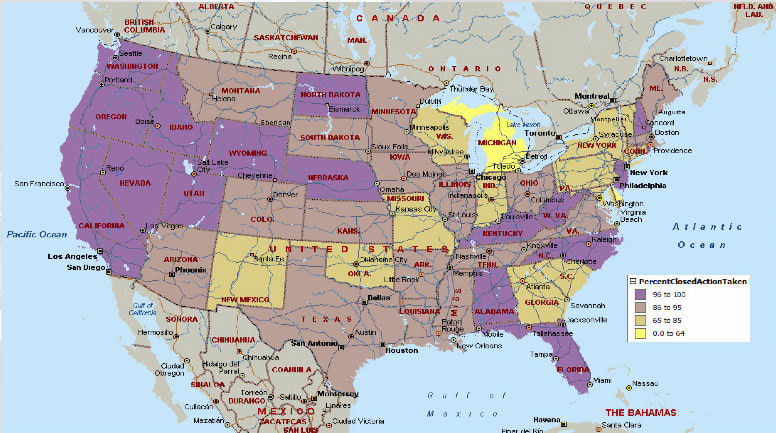
Data gathered by Vigillo shows a wide discrepancy in how states respond to DataQs challenges.
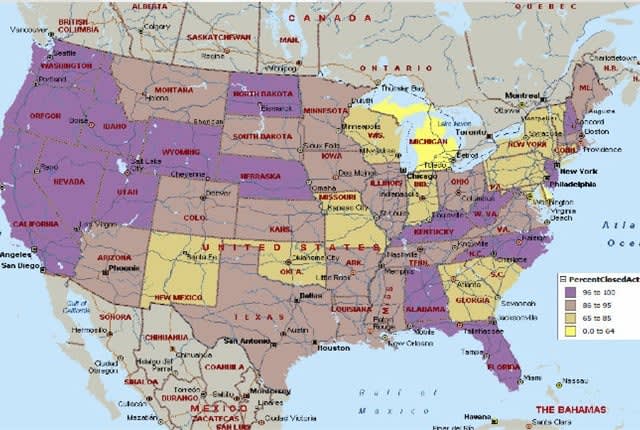
Data gathered by Vigillo shows a wide discrepancy in how states respond to DataQs challenges.
DataQs, the online system for correcting CSA scoring, has the reputation of being cumbersome and unpredictable, but there’s a way for safety managers to get what they need from it.
Call it the ABCs of DataQs.
Act quickly and consistently to fix incorrect information.
Be specific and factual when you present your case for the fix.
Contact the DataQs liaison in the states and establish a relationship.
A trio of experts laid out these fundamentals in a recent DataQs webinar hosted by the Truckload Carriers Association. On hand were Ron Cordova, a retired New Mexico Motor Transportation Police officer; Allan Hicks, vice president of safety, compliance and human resources for B.R. Williams Trucking, and Steve Bryan, CEO of Vigillo, the CSA service provider.
Act Quickly
Cordova and Hicks made the case for quick, consistent action to correct mistakes in CSA data.
Cordova counseled safety managers to move on a mistake within a week – “So it’s fresh on the mind of the inspector and he can move quickly.”
Hicks, providing the carrier perspective, said he reviews his company’s data every day. He goes to the Federal Motor Carrier Safety Administration’s Compass Portal, which with a single password and ID gives him access to a variety of federal truck safety databases, including DataQs.
A quick survey of the carriers attending the webinar indicated that close to 60% check their roadside inspection reports every day, and more than 30% do it at least once a week.
“It’s important that you get the process started as soon as possible,” Hicks said. If there are questions, he starts with the driver, and does not hesitate to call in his CSA service provider.
Be Specific and Factual
It is equally important that the request for a correction be factual and succinct.
“Homework is key,” said Cordova. Be sure to look up the applicable federal regulation, he said.
“Get the information from the regulations into the DataQs request to help the reviewer understand what the regulation says and what you are challenging.”
And don’t be distracted by unrelated information. “Do not attempt to provide a long dissertation concerning a violation.”
For example, if you are challenging a finding that the driver’s log is not current, explain exactly why the log was written the way it was, and why it is correct. It might help to have the driver photograph the log with his phone and email the photo so it can be part of the DataQs submission.
And think of the process in a strategic way. When state officials see that a particular officer is repeatedly being challenged on the same issue, it gives them a data trail that can guide improvements.
“You help us, we help you,” Cordova said.
It helps, for example, to understand how an inspector works. Suppose a driver is cited for having a cut in a brake service line, and for inoperative pushrods in the brakes.
It is normal for the inspector to flag the pushrods because they were not working, but clearly the cut line is the source of the problem.
“It’s worth a (DataQs) challenge,” Cordova said, “because if the line were not cut the brakes would be operative.”
Hicks said there’s an additional benefit from frequently checking your data through the Compass Portal: it gets your drivers’ attention when they realize you are keeping close tabs.
The flip side is that this can help with driver retention, he said. Fixing a CSA error through DataQs tells the driver that the company is paying attention on his behalf.
“It gives him a reason to stay,” he said. Plus, it gives the company feedback to improve training.
One frequent DataQs complaint is that it’s difficult to get the CSA record corrected after a court has dismissed a citation.
The problem arises, Cordova said, because of the disconnect between two different types of legal proceedings. The court action is criminal, while CSA and DataQs are administrative.
It’s a tough situation for the carrier because many jurisdictions are reluctant to overturn a violation that a court has dismissed. It’s best to take the same approach you take in a regular DataQs correction: be quick, specific, concise and factual.
Contact State Officials
Steve Bryan of Vigillo added the third fundamental: that while CSA is a federal program it is administered to some extent by 50 separate entities. Most people don’t look at DataQs as a state-specific system, but that’s what it is, Bryan said.
Vigillo’s data shows that the companies that are most successful in their DataQs challenges are the ones that know how each state handles the citations.
California, Kansas and Florida, for instance, are among those that often respond positively to DataQs challenges, while New Mexico, Missouri and Michigan are less responsive.
At the same time, some states have a tendency to make the same kind of mistake, such as assigning the inspection to the wrong carrier. Oddly, the same state may be better at assigning a crash to the right carrier.
In Bryan’s experience, the solution is to contact the state and get to know the people. From his customers he hears stories of two companies having completely opposite experiences in the same state.
“Getting a personal relationship developed with state people is key,” he said.
The best way to do that? Reach out to the Commercial Vehicle Safety Alliance, the enforcement-industry group that sets enforcement policy for North America, he said.
Cordova suggested joining CVSA as an associate member, but said in any event the group’s web site lists key state contacts.
Hicks added that he’s had success going directly to the source. His company was getting an unusual number of citations at a particular roadside inspection station, so he went there, met the personnel to learn how they were working, and got the situation turned around.
At the same time, it’s important not to waste energy where there’s little chance of success, Bryan said. If you fail to get a correction it makes sense to appeal if you have new information, but don’t pursue it just because it’s wrong.
“At the end of the day, the better strategy may be to look for other CSA points you can reduce,” he said.
More Safety & Compliance

Kodiak Lines Up Fleets for Driverless Trucking
An agreement for 75 trucks, a new Texas freight lane, and progress on safety validation move Kodiak closer to its planned driverless highway launch.
Read More →
More Trailer Data Through the Same Seven-Way [Video]
Can trucking’s standard seven-way connector handle more cameras and trailer data? Grote’s Adam Slade shows HDT how the company is using new technology with its 4See trailer system, not only to add a new backup camera but also to expand other capabilities — without adding another connection.
Read More →
PrePass Intelligence Mines Fleet Bypass, Toll and Safety Data
PrePass Intelligence helps fleets measure bypass savings, flag potential toll overcharges, and spot suspicious transactions by combining data from separate systems.
Read More →
Fatal Crash Exposes Toll Plaza Risks
An NTSB investigation found that last-minute lane changes and large speed differences at an Ohio toll plaza created a hazard the truck driver couldn't avoid in time.
Read More →
When Language Stops the Truck: The Return of ELP Out-of-Service Orders
English language proficiency rules for commercial drivers aren’t new, but renewed out-of-service enforcement has raised the stakes. Here’s what carriers need to know before a driver reaches a roadside inspection.
Read More →
A Camera Isn't a Safety Program. Here's What Brokers Are Screening for Now
Footage alone may not be enough to pass broker vetting processes. Here's what counts as a defensible safety program now.
Read More →
Marijuana and Trucking’s Drug-Testing Dilemma
Marijuana is getting stronger, laws are changing, and drug tests still can’t reliably establish impairment. What does that mean for truck drivers and the fleets that employ them?
Read More →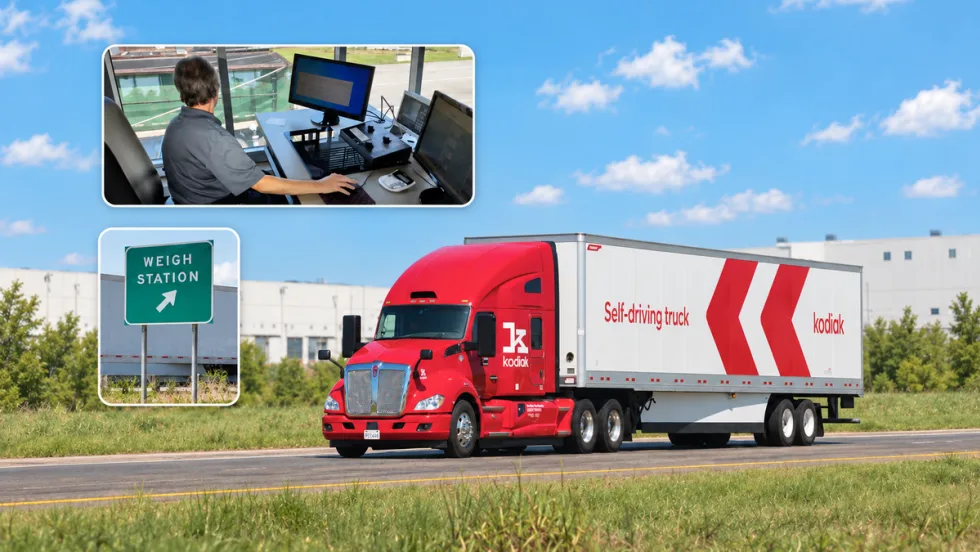
PrePass, Kodiak Connect Driverless Trucks to Roadside Enforcement
The system will allow enforcement agencies to verify Enhanced Inspection information and decide whether Kodiak’s autonomous trucks can bypass roadside screening sites.
Read More →
From One Generation to the Next: How Mentorship Builds Safer Truck Drivers
After three decades in trucking, Harold Perry shares what he's learned about driver safety, mentorship, and helping the next generation build confidence behind the wheel.
Read More →
FMCSA Pauses Biennial-Update Enforcement Amid Motus Transition
Carriers whose updates were due on or after June 1 have more time, while FMCSA works to stabilize its new registration system and warns of phishing sites impersonating its new carrier registration system, Motus.
Read More →