




Kodiak Lines Up Fleets for Driverless Trucking
An agreement for 75 trucks, a new Texas freight lane, and progress on safety validation move Kodiak closer to its planned driverless highway launch.
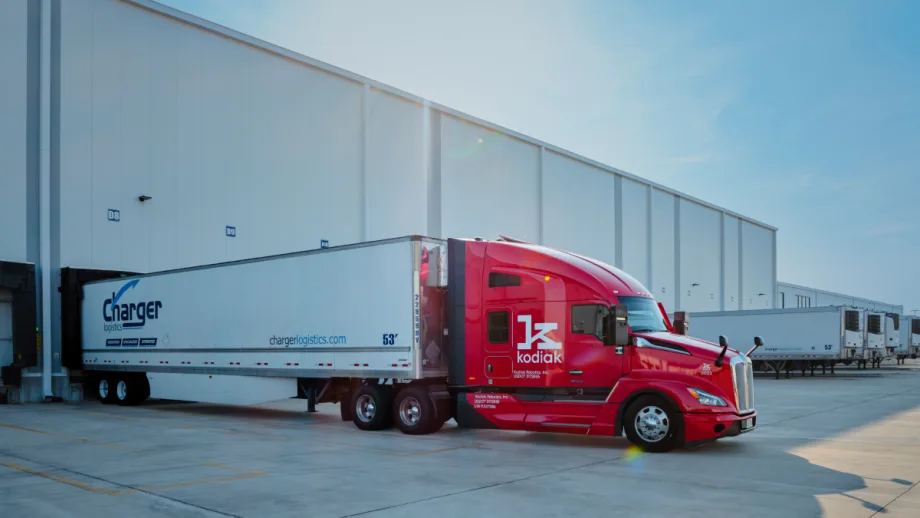
Kodiak has begun hauling freight for Charger USA on a 435-mile lane between the carrier’s Dallas and Laredo, Texas, terminals.
Kodiak
Kodiak AI has signed a binding agreement to equip 75 DTL Transport trucks with its autonomous driving system as the company prepares to launch commercial driverless highway service before the end of 2026.
The agreement caps a series of announcements about Kodiak’s customers, operations, and safety testing.
On October 30, Kodiak reported that its measure of progress toward completing its long-haul safety case had reached 99%, up from 96% at the end of September and up from 93% announced in early September. That is the company’s documented, evidence-backed argument that its system can operate safely within a defined operating environment.
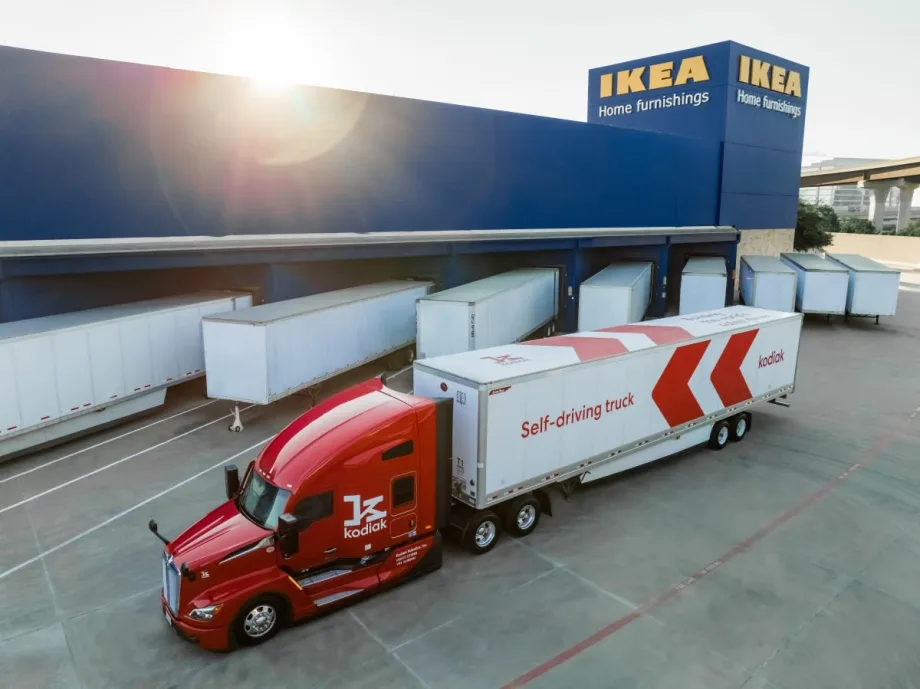
Kodiak also plans to begin highway operations with no one in the cab hauling IKEA freight between the Dallas and Houston areas. That launch remains contingent on completing its safety case.
DTL Commits to 75 Trucks
Under the agreement announced October 28, California-based DTL will own and operate the trucks and pay Kodiak a per-mile fee for its autonomous driving technology.
Kodiak described the deal as the first publicly announced definitive agreement by an interstate trucking carrier to operate driverless trucks within its own fleet under a driver-as-a-service model.
DTL specializes in cross-country team runs and hauls produce for major grocery customers. Its initial driverless routes are planned between Dallas and El Paso, Texas, and between Dallas and Atlanta, with additional lanes to follow. The announcement did not specify a deployment schedule for the 75 trucks.
The agreement follows a September pilot in which Kodiak-equipped trucks hauled perishable goods for DTL between Fresno and Los Angeles under a California autonomous-vehicle testing permit. That pilot was separate from the planned driverless service.
IKEA Launch Comes First
IKEA will be the shipper for Kodiak’s initial driverless highway service, building on four years of deliveries with a safety observer aboard.
In its September 29 announcement, Kodiak said it had hauled more than 1,300 IKEA loads and logged more than 750,000 miles carrying the retailer’s goods.
The initial driverless segment will cover 219 miles, primarily along Interstate 45 between Kodiak’s Houston- and Dallas-area facilities. It is part of an existing 292-mile delivery route connecting IKEA’s distribution center in Baytown, Texas, with its store in Frisco.
The companies’ preparation has included coordinating departure and arrival times, scheduling unloading, and using predictive maintenance data to plan truck service.
Charger Adds Laredo Lane
Kodiak also has begun hauling freight for Charger USA on a 435-mile lane between the carrier’s Dallas and Laredo, Texas, terminals.
The trucks carry refrigerated and dry freight for consumer packaged goods and food and beverage customers. Their first delivery was September 8; the companies announced the collaboration October 8.
Those operations currently have a safety driver behind the wheel. The companies intend to transition the lane to driverless service after Kodiak completes the applicable safety case.
The route is Kodiak’s first serving Laredo, a major gateway for U.S.-Mexico freight. The companies expect to add lanes as Charger integrates Kodiak’s technology into its fleet.
Safety Validation Nears Completion
Kodiak’s 99% Autonomy Readiness Measure tracks the percentage of safety-case claims and supporting evidence that the company considers materially complete. It measures progress on that work, rather than the percentage of driving situations the system can handle.
“We’ve identified and scheduled the remaining engineering verification and validation milestones needed. This is the home stretch,” said Don Burnette, Kodiak’s founder and CEO.
Part of that work uses BreakPoint, Kodiak’s simulation tool, to search for unusual scenarios that could challenge the autonomous driving system.
BreakPoint introduces realistic errors into simulated system signals and searches for combinations that could lead to a collision. Kodiak uses those results to help quantify risk and evaluate the system’s performance.
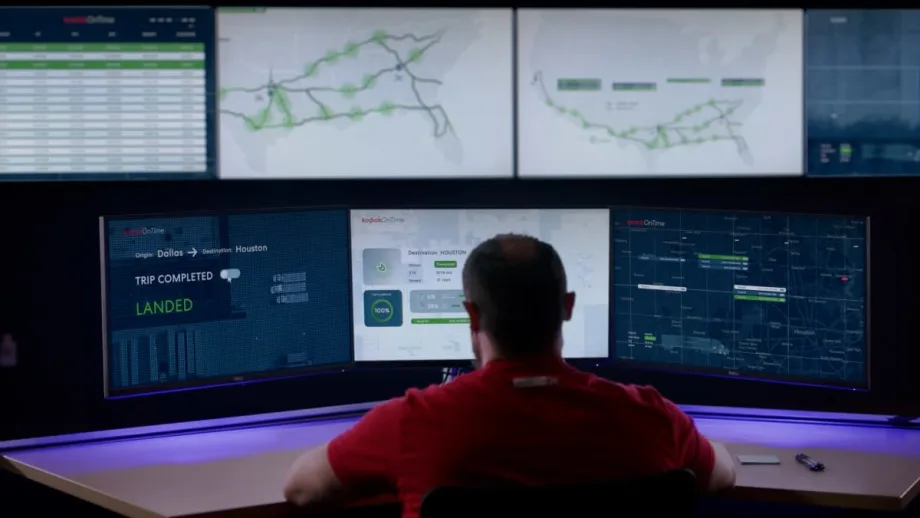
In an October 1 announcement, Kodiak identified Amazon Web Services as its primary cloud provider for simulation, AI model development, data storage, and operations-center software.
Industrial Fleet Builds Experience
While its driverless highway launch is still ahead, Kodiak already has commercial experience operating without anyone in the cab in the Permian Basin.
On October 20, the company reported that one truck achieved 64 consecutive days of uptime, from June 30 through September 1, without powering down or restarting. Kodiak said both the truck and autonomy system remained running and available for service during that period.
Five additional trucks exceeded 45 consecutive days of uptime.
As of June 30, Atlas Energy Solutions owned and operated 35 Kodiak-equipped driverless trucks, and the fleet had accumulated more than 40,000 hours of paid driverless operation. Kodiak has committed to expanding that fleet to 100 trucks by mid-2027.
Solving Issues Beyond the Truck
The Federal Motor Carrier Safety Administration granted Aurora and Kodiak a five-year exemption allowing driverless trucks to use cab-mounted warning beacons instead of the reflective triangles a human driver must place within 10 minutes of a breakdown. The move also applies to other operators of Level 4 autonomous trucks if they notify the FMCSA. It took effect October 7.
In September, PrePass and Kodiak announced they had developed a system that will allow enforcement agencies to verify Enhanced Inspection information and decide whether Kodiak’s autonomous trucks can bypass roadside screening sites.
More Fleet Management

ITS Logistics Settles Religious Harassment Case
The Nevada-based logistics firm agreed to pay more than $396,000 to settle a religious harassment charge involving an employee's Jewish identity.
Read More →
Your Trucks Are Busy. That Doesn’t Mean They’re Winning.
High utilization doesn’t always mean strong margins. Looking beyond the current load can help fleets make better dispatch decisions and get more value from each truck’s time.
Read More →
Why This Trucking Recovery Is Different
Freight demand remains sluggish, but rising costs and tougher enforcement have taken enough capacity out of the market to change the outlook for motor carriers.
Read More →
Platform Science Adds Dispatch and Safety Tools
Four additions to PS Fleet help fleets monitor loads, manage driver coaching, share truck locations and adjust video system settings.
Read More →
PrePass Intelligence Mines Fleet Bypass, Toll and Safety Data
PrePass Intelligence helps fleets measure bypass savings, flag potential toll overcharges, and spot suspicious transactions by combining data from separate systems.
Read More →
Motive Adds AI Agents for Fleet Operations
New tools automate follow-up on fleet data, from maintenance work orders to driver alerts, with two-way voice conversations planned for later this year.
Read More →
Can You Beat Our Trucking Trivia Challenge?
Test your truck knowledge with 19 trivia questions from Heavy Duty Trucking Exchange. Can you keep up with the fleet pros?
Read More →
BeyondTrucks Adds Rules Checks to Dispatch
New Compatibility Engine checks driver qualifications, equipment requirements and fleet policies before loads are dispatched.
Read More →
Diesel Prices Hijack Trucking’s Worry List
ATRI’s annual survey finds cautious optimism about freight, but diesel costs, litigation, and insurance continue to squeeze fleets. Drivers have different priorities on several issues.
Read More →
Nomination Deadline Extended for HDT Emerging Leaders
Just a few more days to nominate accomplished trucking fleet professionals under 40 who are making an impact and helping lead the industry forward for the HDT Emerging Leaders award. Deadline extended to October 20!
Read More →