




What an Out-of-Service Order Really Costs, and How to Plan for One
When Language Stops the Truck: The Return of ELP Out-of-Service Orders
English language proficiency rules for commercial drivers aren’t new, but renewed out-of-service enforcement has raised the stakes. Here’s what carriers need to know before a driver reaches a roadside inspection.
by Tim Adam, J.J. Keller
October 15, 2026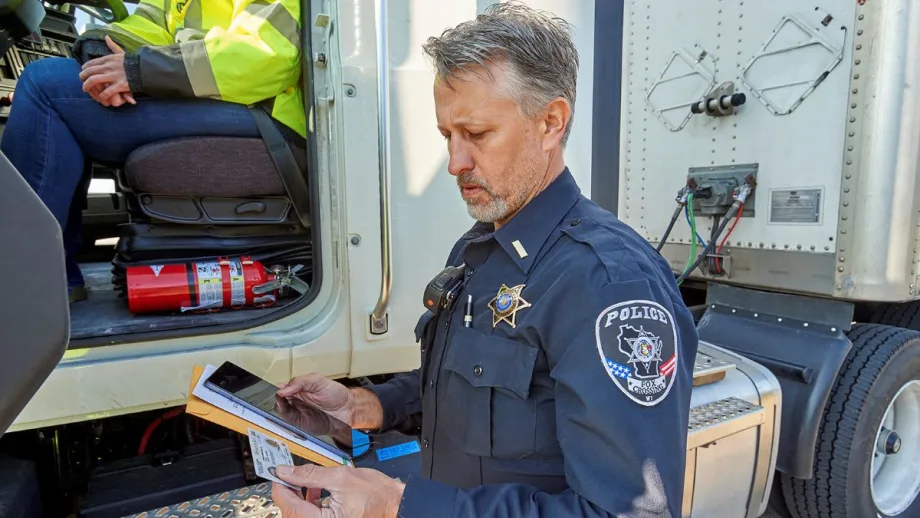
Truck drivers are not expected to speak perfect English. Instead, the assessment focuses on functional communication directly related to commercial vehicle operations and highway safety.
Credit:
J.J. Keller
7 min to read
For decades, federal regulations have required commercial motor vehicle drivers to be able to read and speak English. The issue became national news in 2025 following President Trump's Executive Order, Enforcing Commonsense Rules of the Road for America's Truck Drivers.
This order reversed a policy that reduced enforcement of this regulation for nearly a decade. As a result, carriers are reevaluating hiring and qualification practices to ensure compliance.
ELP is Not a New Regulation
The English Language Proficiency (ELP) requirement found in 49 CFR 391.11(b)(2) is not a new regulation. In fact, its roots trace back to the Interstate Commerce Commission (ICC), which first established English language requirements for interstate commercial drivers in 1937.
While the requirement has remained part of the Federal Motor Carrier Safety Regulations (FMCSRs) since then, enforcement has not always been consistent.
A significant shift occurred in April 2005 when the Commercial Vehicle Safety Alliance added ELP violations to its North American Standard Out-of-Service Criteria.
Under this approach, roadside inspectors who determined that a driver could not sufficiently communicate in English or understand highway signs and official inquiries could place that driver out of service. The Federal Motor Carrier Safety Administration later issued guidance and assessment procedures to help inspectors evaluate a driver's ability.
That enforcement approach changed in 2015. In April 2015, CVSA removed ELP violations from its Out-of-Service Criteria. The regulation itself remained in place, and drivers could still be cited for violating 391.11(b)(2). However, a driver could no longer be placed out of service solely for failing to meet the English language requirement.
The pendulum swung again in 2025 following President Trump’s Executive Order. Effective June 25, 2025, CVSA reinstated ELP violations as an out-of-service condition. As a result, drivers who cannot demonstrate sufficient English proficiency may once again be placed out of service.
This back-and-forth enforcement history has created considerable uncertainty within the trucking industry. While the underlying regulation has remained largely unchanged for nearly nine decades, the consequences for non-compliance have varied significantly.
For motor carriers and drivers alike, understanding not only the regulation itself, but also how it is being enforced, has become increasingly important.
What Happens During the Inspection?
A common misconception surrounding the renewed enforcement of the ELP requirement is that drivers will be required to take a formal language exam. In reality, roadside inspections focus on a driver's ability to function safely and effectively in a commercial driving environment.
The goal is not to evaluate grammar, vocabulary, or accent, but rather to determine whether the driver can communicate sufficiently to comply with the requirement and safely operate a commercial motor vehicle.
The regulation requires a driver to be able to read and speak English sufficiently to converse with the general public, understand highway traffic signs and signals, respond to official inquiries, and make entries on reports and records. These four abilities form the basis of the roadside assessment used to evaluate compliance with the requirement.
During a roadside inspection, an enforcement official will begin by communicating with the driver in English. The inspector may ask routine questions about the trip, vehicle, cargo, logs, shipping papers, or other transportation documents.
The driver must be able to understand and respond appropriately without relying on an interpreter, translation app, cue cards, or other assistance. Inspectors may also evaluate whether the driver can understand instructions related to the inspection process and discuss required transportation records or shipping documentation.
It is important to understand what the assessment is not.
It is not a grammar test, an accent test, or a measure of a driver's citizenship or national origin. Drivers are not expected to speak perfect English. Instead, the assessment focuses on functional communication directly related to commercial vehicle operations and highway safety. The key question is whether the driver can understand and respond to official inquiries and operate safely in an English-speaking transportation environment.
If an inspector determines that a driver cannot meet the ELP requirements, the driver may be placed OOS. This order prohibits the driver from continuing to operate the commercial motor vehicle until the condition has been corrected and the driver is legally qualified to resume driving.
How an English Language Proficiency OOS Order Can Affect Carriers
For motor carriers, the consequences can extend far beyond the individual driver.
An OOS order may cause delayed deliveries, missed appointments, customer service issues, and the need to find a qualified replacement driver on short notice.
Carriers may also experience compliance-related consequences, including potential impacts on their safety performance records and Compliance, Safety, Accountability (CSA) data.
Perhaps most significantly, a driver placed out of service hundreds of miles from a terminal or customer location can create substantial operational disruptions and unexpected costs.
For these reasons, many carriers are reviewing hiring, onboarding, and qualification practices to ensure drivers can satisfy the ELP requirements before being dispatched.
What Happens When a Driver is Placed Out-of-Service?
An OOS order is more than a warning or citation. It means the driver cannot simply finish the trip and address the issue later. The driver is prohibited from continuing to operate the CMV while the condition remains in effect.
That can leave a carrier with a truck and shipment sitting at or near the inspection location while it determines how to legally continue the trip.
There can also be compliance consequences. An ELP violation discovered during a roadside inspection becomes part of the carrier’s inspection history. As a result, carriers should view English proficiency as a driver qualification and roadside enforcement issue, not simply a communication concern.
Most importantly, carriers should address ELP compliance before the driver reaches the roadside inspection. If a driver cannot meet the requirements of §391.11(b)(2), discovering that problem during an inspection is already too late. The carrier may suddenly be dealing with an OOS driver, a stranded load, and the operational consequences that follow.
On August 10, 2026, the FMCSA proposed to expressly codify ELP as an OOS violation in the FMCSRs. The comment period ran through October 9, 2026. According to the FMCSA, the proposal would update the FMCSRs to recognize an ELP violation as an OOS violation and thereby ensure uniform enforcement.
The Road Ahead for English Language Proficiency Enforcement
The change in enforcement policy has had a significant and measurable impact. Prior to the return of OOS enforcement, ELP violations rarely resulted in drivers being placed out of service. According to the FMCSA, inspectors issued 7,812 ELP violations between January 1 and June 24, 2025, but only 33 resulted in out-of-service orders.
That changed dramatically after June 25, 2025, when ELP violations were restored to the OOS Criteria.
Between June 25, 2025, and March 19, 2026, inspectors issued over 60,000 ELP violations, with roughly 19,000 resulting in OOS orders. The FMCSA specifically attributes the increase in ELP violations and OOS orders to the change in CVSA's enforcement tolerances during the summer of 2025.
There is a caveat to those numbers. The FMCSA reported that the 19,000 ELP violations resulting in OOS orders occurred outside U.S.-Mexico border commercial zones. Many additional ELP violations occurred within those zones without an OOS order under the enforcement policy applicable during that period.
What Should Motor Carriers Do About English Language Proficiency Changes?
The numbers make it clear that ELP is no longer a qualification requirement that receives little attention at roadside. Carriers should have procedures in place for determining whether drivers meet the requirements of 391.11(b)(2) before putting them behind the wheel.
The FMCSA does not require motor carriers to provide English-language training. The agency does, however, state that motor carriers are ultimately responsible for ensuring their drivers are qualified before the next dispatch. Carriers may establish their own internal training programs or use existing training materials.
The results of the 2026 International Roadcheck provide another indication of how significant ELP enforcement has become. During the Roadcheck 2026 inspection initiative, held May 12-14, 2026, over 360 ELP out-of-service violations were recorded, accounting for 9.1% of driver OOS violations.
For motor carriers, that should reinforce a simple message: Do not wait for a roadside inspector to determine whether your driver meets the ELP requirement.
A violation discovered during a roadside inspection is no longer just a paperwork issue. It can result in an out-of-service driver, a delayed shipment, increased costs, and an operational disruption.
The time to evaluate English language proficiency is before the driver is dispatched, not after the truck is stopped.

Tim Adam
Credit:
J.J. Keller
About the Author: Tim Adam is an Industry Business Advisor with J.J. Keller & Associates, Inc. He has over 20 years of experience in the trucking industry. Starting out as a driver, Adam gained valuable real-life on-road experience. He eventually became a safety trainer who was responsible for driver recruiting, driver onboarding, and driver safety training. His primary areas of expertise include hours of service, vehicle inspections, and entry-level driver training.
Subscribe to Our Newsletter
More Articles
Volvo Unveils New VNX Heavy-Haul and Vocational Truck
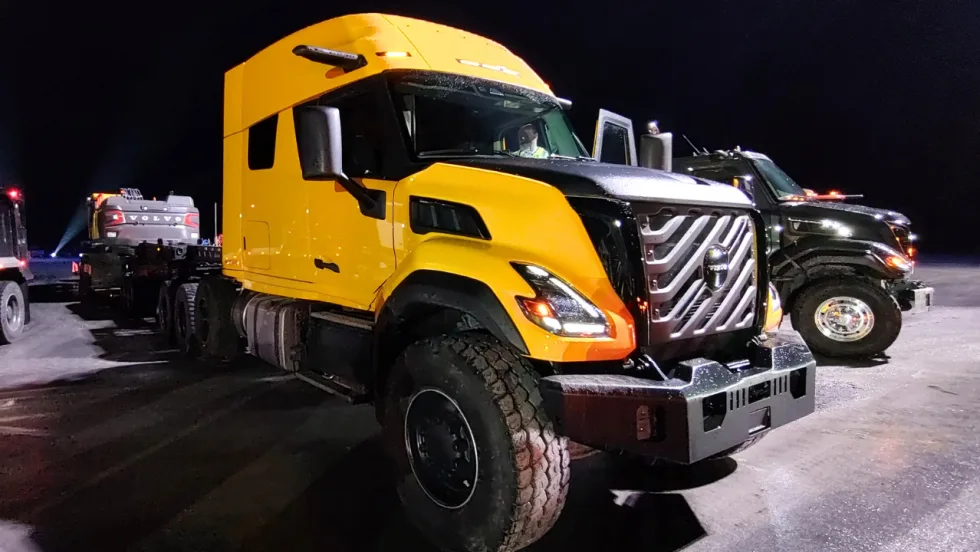
Volvo Trucks has launched the VNX, a new vocational truck also available as a tractor in day cab and two sleeper configurations, with one heavy-haul model. The Volvo VNX is powered by Volvo's D13 platform, which delivers up to 540 horsepower and 1,950 pound-feet of torque and is EPA 2027-compliant.
Read More →
Why Diesel Price Relief Efforts May Fall Short
Diesel prices have eased from September’s record high, but doubts about additional Russian supply and limits on dyed-diesel tax relief mean trucking fleets still face expensive fuel. And prices could go higher.
Read More →
Volvo, Waabi Start Commercial Autonomous Operations in Texas
Volvo VNL Autonomous trucks, powered by the Waabi Driver, are hauling freight directly to third-party facilities for a customer in Texas.
Read More →


Samsara Launches Custom AI Agent Builder
Agent Studio lets fleets create AI tools for hours-of-service monitoring, reporting and driver support, including agents that communicate by phone.
Read More →
Why Small Fuel Savings Matter in Trucking
Can better fuel economy help pay for driver raises? In this podcast, GP Transco explains how small efficiency gains create room to reinvest in its people.
Read More →
How GP Transco Cuts Trucking Fuel Costs, a Tenth of a Gallon at a Time
What’s another tenth of a mile per gallon worth? GP Transco shares how equipment upgrades and driver coaching turn small gains into meaningful fuel savings.
Read More →
Einride Driverless Electric Trucks Begin Daily Freight Operations in Ohio
Two cabless electric trucks are hauling freight between EASE Logistics facilities in Marysville, Ohio, as part of a multi-state truck automation project.
Read More →
Sponsored•October 6, 2026
A Camera Isn't a Safety Program. Here's What Brokers Are Screening for Now
Footage alone may not be enough to pass broker vetting processes. Here's what counts as a defensible safety program now.
Read More →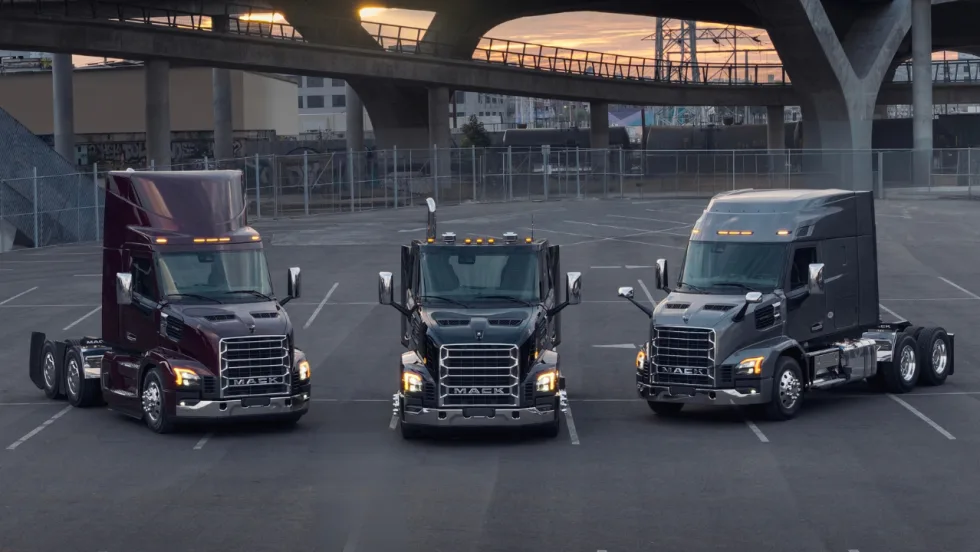
Mack Expands Extended Coverage With Four Chassis System Plans
Mack Trucks' new system-specific coverage options allow heavy-duty fleets to select protection for driveline, cab, HVAC, electronics, and advanced safety components.
Read More →
Electric Yard Tractors Move Beyond Pilots
Operating-cost savings have overtaken sustainability goals as the leading reason surveyed fleets are adopting battery-electric terminal tractors, according to new NACFE research.
Read More →