




What an Out-of-Service Order Really Costs, and How to Plan for One
The repair invoice is the first number you see — and often one of the smallest. Here’s what else an out-of-service order can cost a fleet, and how planning can reduce the damage.
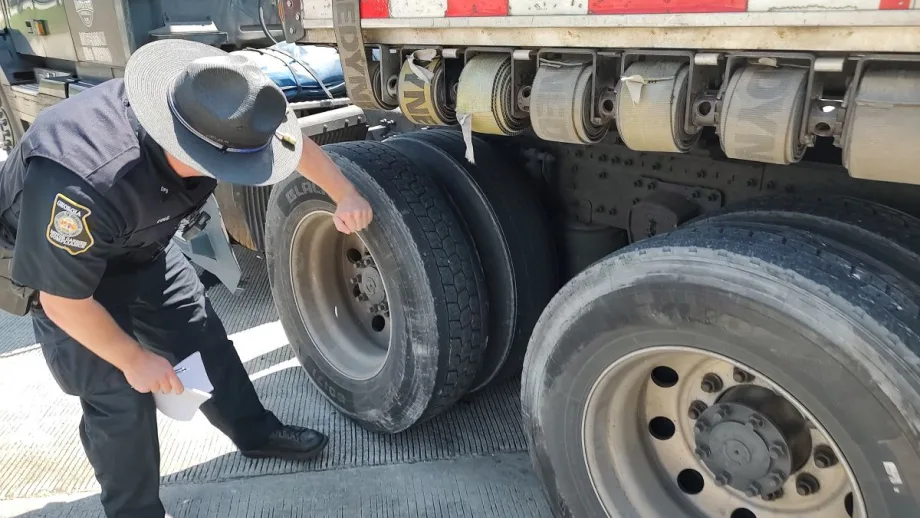
If a truck is ordered out of service, the cost to a fleet can far exceed the citation amount.
Wayne Parham
The call comes in at 6:40 on a Tuesday evening. A driver is standing on the apron of a scale house on I-40, a state inspector has a flashlight under the tractor, and two brake chambers have pushrod travel past the adjustment limit. The truck is not moving until the problem is fixed.
What happens over the next two hours will determine much of what the incident costs. Not just the violation itself, but how the fleet responds.
Ask that fleet a week later what the incident cost, and you will probably get one number: the repair invoice. It is the figure that arrives with a total printed on it. The rest shows up in pieces, on separate invoices, in different weeks and charged to different accounts. Much of it may never get added back to the truck or event that caused it.
That is the part worth pricing.
What Does an Out-of-Service Order Cost?
Until recently, estimates of what an out-of-service event costs a fleet were largely industry figures. Now one of those estimates is showing up in a federal regulatory analysis.
On August 10, 2026, the Federal Motor Carrier Safety Administration published its proposed rule on English language proficiency, which would codify ELP violations as an out-of-service condition.
In its regulatory analysis, FMCSA assumes roughly 9,000 drivers would be placed OOS annually in the border commercial zones, at a cost of $800 per day for an average of two days. That produces an estimated annual cost to motor carriers of $14.4 million.
The $800 estimate is worth a closer look. FMCSA cites industry sources putting daily vehicle downtime costs between $448 and $760, then uses $800 to account for additional costs. The two-day assumption comes from agency subject-matter expertise rather than carrier data. The agency also notes that it is unclear whether the underlying cost estimates include the costs of locating and dispatching a replacement driver.
One of the industry sources FMCSA cites for the downtime estimate is a previous analysis published by Millennials Maintenance.
FMCSA's estimate applies specifically to driver OOS orders under the proposed ELP rule, rather than mechanical OOS violations like the brake example above. Costs can differ considerably depending on whether an order sidelines the truck, the driver, or both. But many of the resulting costs — including delays, missed deliveries and recovery expenses — overlap.
FMCSA is asking the industry for better information. The comment period, which closes October 9, specifically requests data on how long drivers remain out of service for ELP violations and what the resulting delays actually cost.
The problem is that many fleets may not know their own number.
Breaking Down the Cost of an OOS Order
International Roadcheck offers a sense of fleets' exposure to OOS violations. During the 2026 three-day inspection campaign, inspectors conducted nearly 55,000 inspections. They placed 19% of vehicles and 5.8% of drivers out of service.
Whatever you extrapolate from a 72-hour enforcement event, OOS violations are not rare occurrences.
Here is what one can cost, roughly in the order the money leaves.
The repair. The fleet pays whatever labor rate is available where the truck happens to be sitting, often at a shop with which it has no established relationship.
The roadside premium. Mobile service and after-hours emergency work are typically priced differently from a scheduled shop visit. Fleets may be able to reduce at least some of that premium through advance planning.
The tow. If the violation means the unit cannot move under its own power, towing can quickly become a significant additional expense. ATRI reported repair and maintenance costs of 21.5 cents per mile in 2025, up 8.6% year over year. Those costs include parts, labor, and roadside service but do not include towing and recovery.
The driver. There may be driver pay, detention, a hotel if the delay runs overnight, and hours-of-service implications. A driver who spends nine hours parked at a scale house has still lost those nine hours. If the OOS order is against the driver rather than the vehicle, the fleet may need to send another driver to recover a truck that is otherwise perfectly operable.
The load. A missed appointment can lead to detention, redelivery charges, or a receiver giving away the scheduled door. FMCSA's analysis cites shipper charges of $50 to $100 an hour for late arrivals, or charges based on a percentage of shipment value. A four-hour delay on a flexible drop-and-hook operation may be manageable. The same delay on a tightly scheduled delivery can derail the day.
The recovery. If the freight still has to move, another tractor or driver may have to be pulled from a different assignment. That creates a second disruption, and the costs may be charged elsewhere in the operation rather than tied back to the original OOS event.
The CSA consequences. Out-of-service violations can have consequences for a carrier's Safety Measurement System performance and future inspection exposure. Fleets working to improve their CSA performance know that the effects of violations can remain visible long after the truck returns to service.
Insurance and customer scorecards. These effects are slower to appear and harder to attribute to any single event. But a pattern of violations can eventually affect insurance costs and customer relationships.
The repair invoice is simply the easiest cost to see.
Fleets trying to establish their own OOS cost can start by tracking repair or tow expenses, driver costs, lost revenue, customer charges, recovery equipment and labor, and the total time the truck or driver remained unavailable.
Why Some Fleets Recover Faster
Two fleets can face the same violation in the same corridor and have very different outcomes. One may be back under load in four hours while the other loses a day or more.
The nature of the defect, parts availability, and location all matter. But the systems a fleet has in place before the call comes in can make a major difference.
Four factors are especially important.
- Speed to a competent decision. That is not necessarily the same as speed to an answer. A bad decision can be expensive: ordering a tow for something a mobile technician could have repaired quickly, for example, or dispatching a technician to a repair that could never have been completed roadside.
- Whether pricing was established in advance. A repair provider quoting a stranded truck late at night knows the customer has limited alternatives. Fleets with established service relationships and negotiated pricing may have more control over those costs.
- Whether the shop has access to the unit's history. A technician who can review recent PM records, fault codes, and previous repairs has more information to work with. Without that information, diagnosis may take longer.
- Whether someone is authorized to act. An after-hours repair can become an overnight delay simply because no one available has the authority to approve the work. Fleets should decide in advance who can make those decisions and how much they can authorize.
How Fleets Can Prepare for an OOS Event
Several arrangements can reduce the cost and disruption of an out-of-service event.
- Establish service relationships along your most-traveled corridors. Review prior roadside events and look for geographic patterns. Then identify service providers, establish contacts, and negotiate pricing where possible before a truck is stranded.
- Set a written authorization threshold. Establish a dollar amount that a driver, dispatcher, or after-hours coordinator can approve without escalating the decision. Occasionally paying somewhat more for a quick repair may still cost less than losing an entire shift waiting for approval.
- Make unit history accessible. PM records, recent fault codes, and previous repairs should be available in a form that can be sent to a shop that has never seen the truck. If the information is only available at the terminal, it may not be much help during an after-hours roadside event.
- Document when to use mobile repair versus towing. Identify which types of problems can typically be repaired in the field that require towing, who makes the decision, and what information that person needs.
- Focus preventive maintenance on the violations most likely to put a truck OOS.Brakes remain the leading source of vehicle out-of-service violations. During the 2026 International Roadcheck, brake-system and 20%-defective-brake violations together accounted for nearly four in 10 vehicle OOS violations. Whatever else a fleet's preventive maintenance program covers, brakes deserve close attention.
The common thread is that these are arrangements rather than purchases. They can be made relatively easily on a Tuesday afternoon and become much more expensive to figure out at midnight.
Know Your Fleet's OOS Cost
FMCSA's $14.4 million estimate rests on an $800-per-day assumption and limited industry data. The agency is asking carriers for more detailed information because the true cost of an OOS event is difficult to quantify.
For an individual fleet, the more useful number is its own.
An OOS event can result in very different costs depending on the violation, location, and circumstances. But some of that variation can be reduced through planning.
A fleet that tracks what these events actually cost — and understands what drives those costs — is in a much better position to reduce them.
About the Author: Dan Mladenovic is the sales team lead at Millennials Maintenance, a nationwide fleet maintenance coordination company partnering with U.S. trucking fleets to keep commercial vehicles operational through 24/7 dispatch, preventive maintenance programs, and access to a vetted network of repair shops across 48 states.
This article was authored and edited according to Heavy Duty Trucking’s editorial standards and style to provide useful information to our readers. Opinions expressed may not reflect those of HDT.
More Maintenance
Mack Expands Extended Coverage With Four Chassis System Plans
Mack Trucks' new system-specific coverage options allow heavy-duty fleets to select protection for driveline, cab, HVAC, electronics, and advanced safety components.
Read More →
International Launches Online Truck Parts Store
Fleetrite.com lets fleets and repair shops find OEM and all-makes parts, check prices and availability, and order without calling a parts counter.
Read More →
Continental Introduces New Regional Truck Tires
Continental says its new Generation 5 steer and drive tires for regional operations offer longer tread life, with estimated mileage gains of 22% and 19%, respectively.
Read More →

How AI Can Help Your Techs’ Efficiency
The technician shortage isn't going away, and no single fix can close the gap on its own. Trent Broberg makes the case that AI's real job in the shop is protecting the billable hours and job satisfaction of the techs you already have, not asking them to work faster.
Read More →
Color Match Smarter: Tools That Restore & Perform
For fleet managers and collision repair professionals keeping heavy-duty trucks on the road, getting the color right the first time isn't just about appearance — it's about efficiency, turnaround time, and bottom-line results. Discover how today's digital color tools are transforming the repair process from guesswork to precision.
Read More →
Wrong Repair Prompts Recall of Freightliner, Western Star 4x2 Trucks
DTNA is recalling more than 2,400 trucks that received an incompatible software fix instead of the hardware repair required to address brake valve corrosion.
Read More →
Truck Drivers Need More Than Another Alert
Fleets have more visibility into truck health, safety events, and driver activity than ever. The next challenge is turning all that information into useful guidance for the person who has to decide what to do next.
Read More →
The Maintenance Checks Trucking Fleets Should Prioritize Before Fall Freight Picks Up
Making it through August isn’t the same as being ready for the next several months of operation. Find out what systems may have suffered from summer heat and need to be checked out before fall.
Read More →
What Three Fleets Are Doing Differently When Buying Truck Parts in 2026
With freight improving but costs still climbing, fleet maintenance executives explain how they're balancing price, quality, and supplier relationships.
Read More →
Paccar Recalls 2027 Trucks Built This Summer for Possible Electrical Problem
The nearly 6,000 Kenworth and Peterbilt trucks in the recall could potentially lose engine power, among other things.
Read More →