




Color Match Smarter: Tools That Restore & Perform
For fleet managers and collision repair professionals keeping heavy-duty trucks on the road, getting the color right the first time isn't just about appearance — it's about efficiency, turnaround time, and bottom-line results. Discover how today's digital color tools are transforming the repair process from guesswork to precision.

PPG Industries

- Digital color tools enhance efficiency and precision in heavy-duty truck repairs by achieving accurate color matches on the first try.
- Correct color matching reduces the turnaround time for repairs, benefiting fleet management operations.
- Precision in color matching positively impacts the financial outcomes for collision repair services by minimizing guesswork.
*Summarized by AI
Every minute a commercial truck sits in a repair bay is a minute it isn't generating revenue. For fleet operators and the collision repair shops that serve them, speed and accuracy aren't just operational goals — they're business imperatives. Yet one of the most time-consuming steps in the repair process has historically been one of the most analog: finding the right color match.
That's changing fast.
The collision repair industry is in the middle of a quiet but significant digital transformation, and color identification is at the center of it. The tools available today don't just make color matching easier — they make the entire repair workflow smarter, faster, and more consistent. For shops handling heavy-duty trucks and commercial fleets, where vehicles come in a wide range of fleet colors, custom liveries, and aged finishes, that precision matters more than ever.
From Guesswork to Data-Driven Accuracy
Traditional color matching relied heavily on technician experience, physical color chips, and a fair amount of trial and error. Test panels were sprayed, evaluated, adjusted, and re-sprayed — a process that consumed time, materials, and labor. Today, digital tools are replacing that cycle with a more streamlined, data-driven approach.
PPG Industries
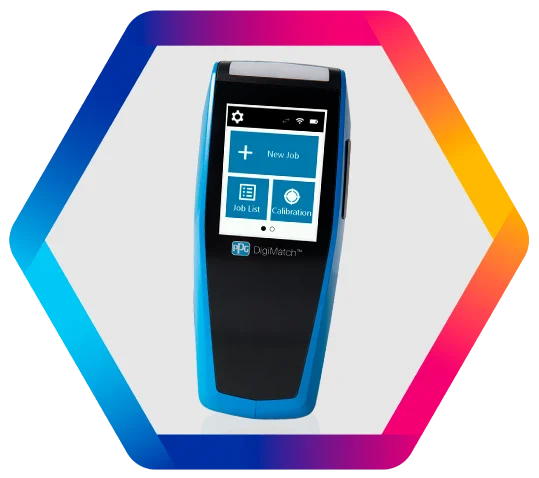
PPG DigiMatch, a digital spectrophotometer, takes the subjectivity out of color identification. By scanning the vehicle's existing finish, it captures precise color data and cross-references it against an extensive formula database to identify the closest match — quickly and accurately. For fleet vehicles that may have experienced years of sun exposure, weathering, or prior repaints, this kind of precision is invaluable. Fewer test panels mean less wasted product, less technician time, and faster cycle times.
Seeing the Color Before You Spray
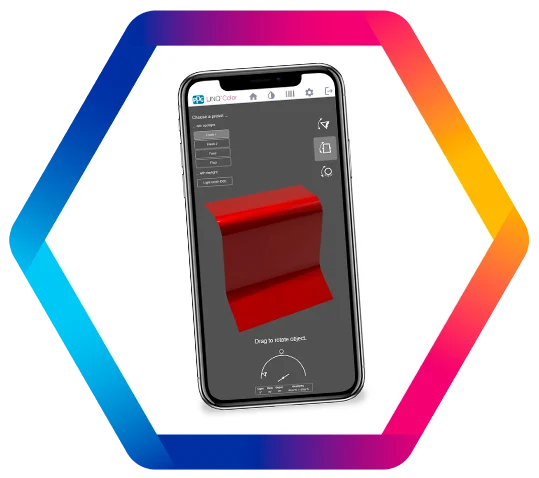
One of the most powerful shifts in modern refinish workflows is the ability to visualize a color match before a single drop of paint is applied. PPG VisualizID is a 3D color visualization software that allows technicians to see how a color will appear on a vehicle's surface — accounting for the complex interplay of light, geometry, and finish — before committing to a formula. This capability
PPG Industries
dramatically reduces the number of physical test panels needed, cutting material waste and accelerating the approval process.
For shops managing multiple fleet vehicles at once, this kind of upfront confidence translates directly into throughput. When technicians can verify a match digitally, they move to the spray booth sooner and with greater certainty.
A Connected Workflow, End to End
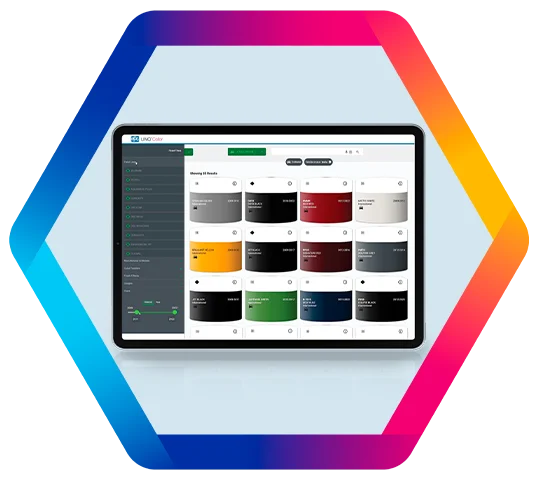
Individual tools are powerful, but their real value is amplified when they work together as part of a connected system. PPG LINQ™ Color, a cloud-based digital color software platform, serves as the connective tissue of the modern refinish workflow. It enables technicians to identify the right color formula, access up-to-date mixing data, and send formulas wirelessly to mixing equipment — all from a single interface.
PPG Industries
Together, PPG DigiMatch, PPG VisualizID, and PPG LINQ Color form the color identification and management core of the broader PPG LINQ™ digital ecosystem — an end-to-end platform designed to digitalize body shop operations from intake to final finish. Shops that have integrated these tools have reported measurable gains in key-to-key productivity, with some seeing improvements of up to 15%.
Why It Matters for Heavy-Duty Repair
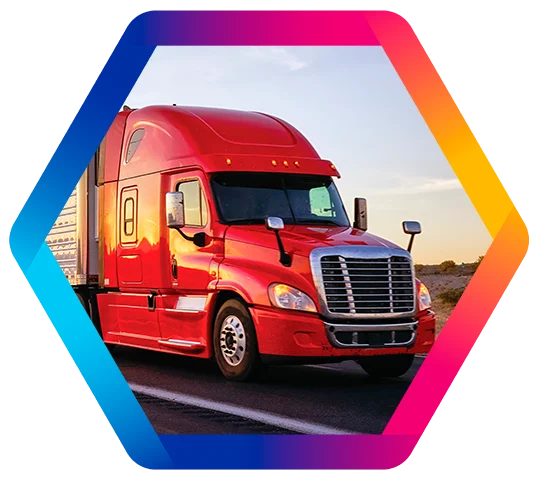
Commercial trucks present unique color challenges. Fleet operators often maintain strict brand standards for vehicle livery, and a mismatched repair on a branded truck is immediately visible — and reflects poorly on the fleet's image. At the same time, the sheer volume of vehicles in a commercial fleet means repair shops need to move efficiently without sacrificing quality.
Digital color tools address both sides of that equation. They help ensure that every repaired vehicle leaves the shop looking consistent with the rest of the fleet, while also helping shops process more vehicles in less time. That's a win for the shop, and a win for the fleet operator whose trucks need to get back on the road.
PPG Industries
The Bigger Picture
The digitalization of the refinish process isn't a trend — it's a fundamental shift in how the industry operates. Shops that embrace connected, data-driven workflows are better positioned to meet the demands of a competitive market, attract and retain skilled technicians, and deliver the kind of consistent, high-quality results that keep fleet customers coming back.
Color matching may seem like a small part of the repair process, but it's often the step that determines whether a job is done right — or done twice. With the right digital tools in place, shops can make sure it's always done right the first time.
This article reflects the views of PPG Industries and does not necessarily represent the views of Heavy Duty Trucking or Bobit Business Media.
Quick Answers
Getting the color right the first time is crucial for fleet managers because it impacts efficiency, reduces turnaround time, and improves bottom-line results.
*Summarized by AI
More Fleet Management

FMCSA Pauses Biennial-Update Enforcement Amid Motus Transition
Carriers whose updates were due on or after June 1 have more time, while FMCSA works to stabilize its new registration system and warns of phishing sites impersonating its new carrier registration system, Motus.
Read More →
2026 Blueprint for Countering Smarter Supply Chain Theft
Cargo theft is no longer just the cost of doing business. It's a multi-billion-dollar criminal enterprise exploiting vulnerabilities across your fleet, drivers, and supply chain.
Read More →
How Telematics Improves Visibility, Control, and Performance in Refrigerated Fleets
Explore how telematics help refrigerated fleets improve visibility, uptime, efficiency, compliance, and cargo protection across connected cold chain operations.
Read More →


What the U.S.-Canada Trade War Means for Trucking
Escalating U.S.-Canada tariffs could disrupt cross-border freight, reduce truck volumes, raise costs, and create new uncertainty for carriers on both sides of the border.
Read More →
What Are Trucking’s Top Concerns for 2026?
The American Transportation Research Institute wants to know what's worrying trucking fleet managers, drivers, and other stakeholders in its annual Industry Issues survey.
Read More →
American Trucking Associations Looks for a New Leader
ATA President and CEO Chris Spear abruptly left his job at the association on August 21, at a pivotal time for the trucking industry.
Read More →
Public Wi-Fi Cybersecurity Risks: How Truck Drivers and Fleets Can Protect Their Data
Public Wi-Fi can expose truck drivers and fleets to credential theft, malware, and other cyber threats. Here’s how to reduce the risk on the road.
Read More →
For Nicky Cupp, Fleet Innovation Starts With Frustration
HDT Truck Fleet Innovator Nicky Cupp turns everyday pain points at Fraley & Schilling into opportunities for better technology and smarter processes.
Read More →
Adam Buttgenbach’s Approach to Electric Trucks: Start With Where They Fit
HDT Truck Fleet Innovator Adam Buttgenbach helped PepsiCo build one of North America’s largest EV fleets by focusing on where electric trucks make operational sense.
Read More →
Deen Albert: Let Automation Do the Math, People Make the Decisions
HDT Truck Fleet Innovator Deen Albert makes sure people are still at the heart of operations at Grand Island Express, even while adopting artificial intelligence tools. AI-assisted dispatch helped boost revenue 25% with the same number of trucks.
Read More →