




How AI Can Help Your Techs’ Efficiency
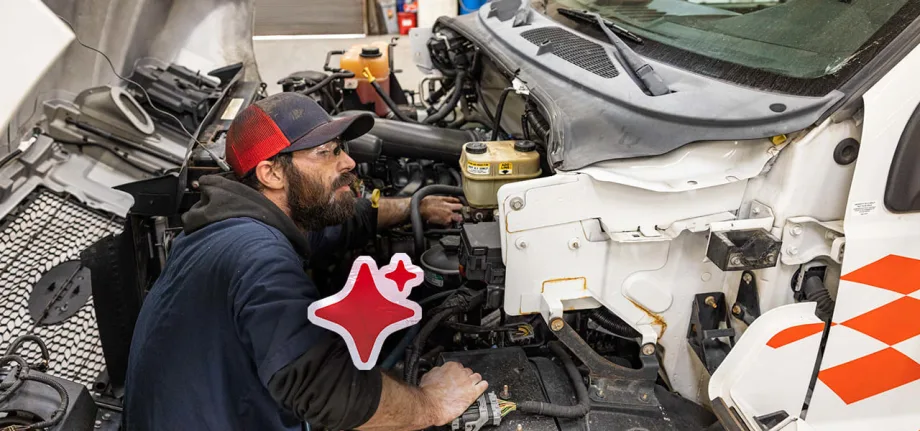
The technician shortage isn't going away, and no single fix can close the gap on its own. Trent Broberg makes the case that AI's real job in the shop is protecting the billable hours and job satisfaction of the techs you already have, not asking them to work faster.
Fullbay

- AI plays a crucial role in preserving the billable hours and enhancing the job satisfaction of existing technicians.
- The objective of integrating AI is not to increase the speed of technicians but to optimize their efficiency.
- Addressing the technician shortage requires innovative solutions like AI rather than expecting a single remedy.
*Summarized by AI
The tech shortage isn’t new to anyone in heavy-duty repair. Shops have been struggling to find qualified techs for years, and there’s little reason to believe that challenge is going away anytime soon. According to the American Transportation Research Institute (ATRI), 65.5% of heavy-duty repair shops reported being understaffed in 2025.
We absolutely need better recruiting, better training, and clearer career paths for the next generation of technicians. But none of those things solve the problem a shop owner or manager has today: There’s work that needs to get done, and they may not have enough people to do it. That makes the time of the techs they already have incredibly valuable.
The question I think shops need to be asking is not, “How do I get my technicians to work harder?” It’s, “How much of their day is actually spent on billable hours?”
Diagnosing a difficult problem requires skill. Inspecting a unit and making the repair requires skill. Cleaning up notes and working through administrative tasks shouldn’t take skilled time away from that work.
This is where we see AI making an enormous difference in shops that have adopted it.
Protect Wrench Time
The best use of AI in the shop is to reduce or remove non-billable work for the technician.
A tech finishes a job and has to clean up notes before they’re sent to the customer. This is often the least favorite part of their job. They have to spend time digging through service information or trying to make sense of a long list of fault codes. They stop what they are doing to track down information that may already exist somewhere else in the system.
None of those steps sound like a major productivity problem on their own. But five minutes here, 10 minutes there — across multiple jobs and multiple technicians — adds up quickly.
AI can help eliminate some of that friction. A tech can record rough notes, whether spoken into the system or typed, and have AI turn them into clear documentation for review. AI can help organize repair information, surface relevant history and narrow down the data a tech needs to look at instead of making them sort through everything themselves.
This is especially important on the diagnostic side. The tech still makes the diagnosis; AI simply helps them get to the useful information faster.
45 Minutes Per Work Order Saved
We’ve already seen shops using AI-assisted workflows save around 45 minutes per work order. That time comes from removing steps that slow them down and that they frankly don’t want to do in the first place. Think cleaning up notes, searching for information, and handling tasks that can be streamlined with the right tools.
Now multiply that across a full day and a full week. Those small gains stop being small and start impacting your job satisfaction and overall capacity. This is why we believe AI works best when it is built directly into the tools technicians already use. With Fullbay Next, for example, AI-powered features are part of the shop workflow instead of something a tech has to open in a separate application.
When hiring is difficult, job satisfaction as well as extra capacity matters. You may not be able to add another technician tomorrow, but you can make sure the ones you already have stay happy and efficient.
We’re still early in what AI can do for heavy-duty repair, and it won’t solve the tech shortage on its own. But if we can use it to remove friction and keep skilled people focused on billable work, we can make every hour in the bay happier and healthier.
If you’re interested in putting more of this into practice, Fullbay Next brings AI-powered tools directly into the shop workflow. Our goal is simple: remove friction, protect tech time, and help your team get more done with the folks you have.
This article reflects the views of Fullbay and does not necessarily represent the views of Heavy Duty Trucking or Bobit Business Media.
Quick Answers
AI can optimize workflows, manage schedules, and automate routine tasks, allowing technicians to focus on critical activities that enhance productivity.
*Summarized by AI
More Maintenance

Color Match Smarter: Tools That Restore & Perform
For fleet managers and collision repair professionals keeping heavy-duty trucks on the road, getting the color right the first time isn't just about appearance — it's about efficiency, turnaround time, and bottom-line results. Discover how today's digital color tools are transforming the repair process from guesswork to precision.
Read More →
Wrong Repair Prompts Recall of Freightliner, Western Star 4x2 Trucks
DTNA is recalling more than 2,400 trucks that received an incompatible software fix instead of the hardware repair required to address brake valve corrosion.
Read More →
Truck Drivers Need More Than Another Alert
Fleets have more visibility into truck health, safety events, and driver activity than ever. The next challenge is turning all that information into useful guidance for the person who has to decide what to do next.
Read More →

The Maintenance Checks Trucking Fleets Should Prioritize Before Fall Freight Picks Up
Making it through August isn’t the same as being ready for the next several months of operation. Find out what systems may have suffered from summer heat and need to be checked out before fall.
Read More →
What Three Fleets Are Doing Differently When Buying Truck Parts in 2026
With freight improving but costs still climbing, fleet maintenance executives explain how they're balancing price, quality, and supplier relationships.
Read More →
Paccar Recalls 2027 Trucks Built This Summer for Possible Electrical Problem
The nearly 6,000 Kenworth and Peterbilt trucks in the recall could potentially lose engine power, among other things.
Read More →
Could New Engine Oils Mean Longer Drain Intervals?
New CL-4 and FB-4 engine oils are coming in 2027. Foodliner wants to know whether they could support longer oil drains, but it won’t change its maintenance schedule without data from its own trucks.
Read More →
Brake Safety Week to Focus on Drums and Rotors
Commercial vehicle inspectors are focusing on truck brakes during CVSA's Brake Safety Week, August 23-29.
Read More →
Possible Battery-Cable Fires Prompt Recall of 15,000+ International MV and HV Trucks
On the recalled vehicles, manufacturing variations can cause the battery interconnect cable to contact the auxiliary stud and hold down the bracket.
Read More →
Rush, MCT Team Up to Grow Refrigeration Service Network
The joint venture will operate MCT's network of Carrier Transicold dealerships and mobile service locations, with the companies promising greater service capacity and uptime for refrigerated fleets.
Read More →