The cost of choosing safety is often immediate and visible. The payoff may not be.
Credit:
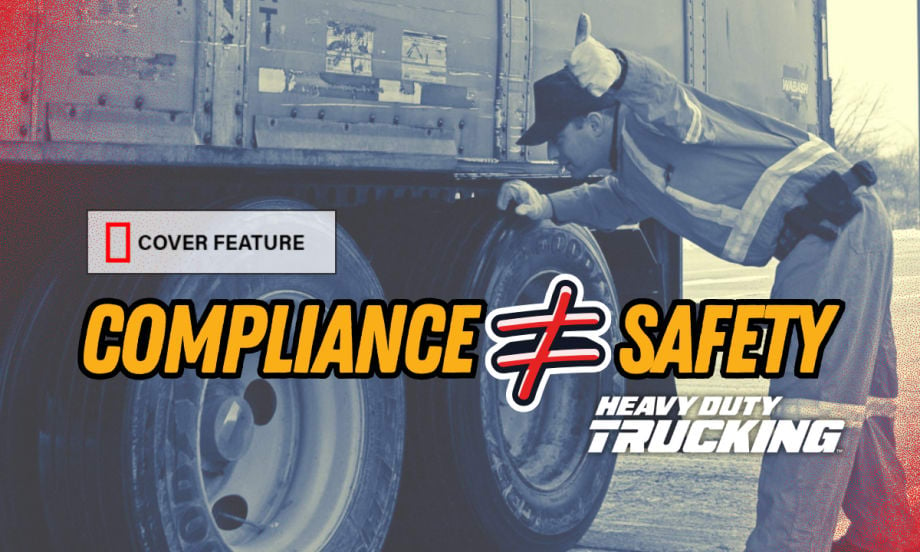
HDT graphic/Jim Park photo
8 min to read
Compliance and safety aren’t the same thing. Federal Motor Carrier Safety regulations are intended to improve safety, but there’s only so much they can do.
Many trucking fleets operate in a way that’s compliant with federal regulations – but they still aren’t operating safely.
Ad Loading...
Compliance tells a fleet what it is legally required to do. Safety is revealed by the decisions it makes when the regulations don't provide the answer. Regulations are designed to establish minimum acceptable behavior, not to make every operational decision for a fleet.
Driver Fatigue and Hours of Service
One of the clearest examples of the difference between compliance and safety are the hours of service regulations and driver fatigue.
You can’t force someone to sleep.
What Fleets Should Know
Regulatory compliance doesn't necessarily mean a driver or operation is safe.
Hours-of-servicerules cannot account for whether a driver actually slept.
Litigation may examine whether a fleet exercised reasonable care beyond minimum regulatory requirements.
Safety culture becomes visible when safety conflicts with production, utilization or revenue.
Investments in training, technology and safety culture can affect crash risk, litigation exposure, insurance and driver retention.
One of the first fleets I spoke to about this was Dupre Logistics. The company was having too many crashes, some of them fatal. At the suggestion of its insurer, the Louisiana-based carrier turned to Circadian Technologies, a Boston-based consultancy, for an analysis.
The culprit? Driver fatigue. Despite the fact that DOT had reviewed the severe accidents and found the company’s drivers were in compliance with hours-of-service rules.
What the company learned was that, among other problems, it had a scheduling system that caused fatigue.
It was not unusual for a Dupre driver to work a week of days, followed by a week of nights and so on, back and forth. That scrambles your circadian rhythms. And Dupre drivers often started their day shifts before 5 a.m. The earlier you start your shift, the harder it is to get good sleep.
In another example, you may remember the publicity in 2013, when comedian Tracy Morgan was critically injured and a fellow comedian was killed when a tractor-trailer driver crashed into their limo, triggering a six-car pileup on the New Jersey Turnpike.
The National Transportation Safety Board determined that driver fatigue played a role. The truck driver was on hour 13 of a 14-hour shift, but he had driven for 12 hours from his home in Georgia to Delaware to start his route. He had been awake for more than 24 hours.
The driver had legal hours available. That didn’t mean he was fit to drive.
Why Going Beyond DOT Compliance Matters More Than Ever
The government can determine whether you’re compliant. But increasingly, everyone else — juries, insurers, brokers, customers, and even drivers — may be judging whether you’re actually safe.
And those audiences aren’t necessarily using the federal regulations as their only measuring stick.
Compliance with hours of service doesn't automatically prevent truck driver fatigue.
Credit:
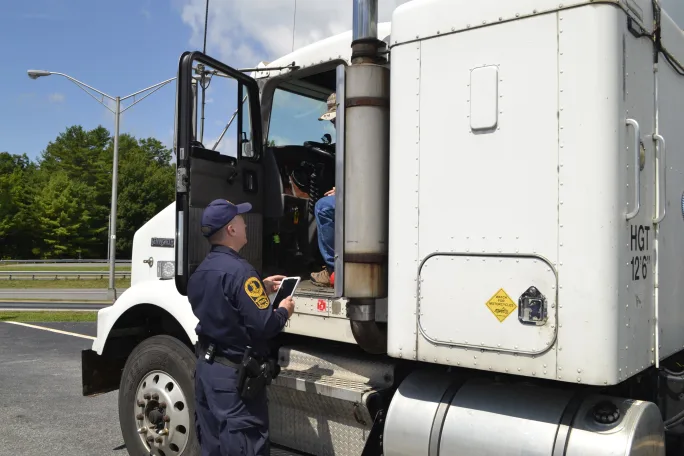
CVSA
FMCSA Safety Ratings May Not Tell the Whole Story
In a recent lawsuit against broker C.H. Robinson, the motor carrier in question held a Satisfactory FMCSA rating when the broker selected it – and remained Satisfactory following a federal review of the crash.
A federal Satisfactory rating may no longer be sufficient evidence, by itself, that a carrier is safe enough for everyone who is evaluating it.
The federal government’s safety ratings, or safety fitness determinations, are a problematic way to gauge a carrier’s safety. Carriers may go years between compliance reviews, and some small carriers don’t have a rating at all.
A Satisfactory federal safety rating is evidence of regulatory compliance at a particular point in time; it isn't a guarantee of how safely a carrier is operating today.
How Fleet Safety Affects Trucking Insurance Costs
Trucking fleets are paying record-high liability insurance costs even as crash rates decline, according to new research from the American Transportation Research Institute.
ATRI’s latest insurance study found that average liability premiums climbed nearly 38% between 2015 and 2024, reaching 10.2 cents per mile.
Insurance pricing is driven by a mix of crash trends, economic conditions, litigation, and what the industry calls “social inflation” — rising claim costs fueled partly by larger verdicts and more aggressive legal tactics.
It follows, then, that having fewer crashes and attracting fewer lawsuits could help address insurance costs.
ATRI reported that investments in safety culture, safety technology and training were among the most effective steps fleets could take to influence insurance costs.
Since 2014, the estimated number of filed cases has risen at an average rate of 3.7% per year. And the median award amount for cases of $1 million or more has increased at an average rate of more than $59,000 per year since 2011.
These cases are filed on the basis of a plaintiff alleging negligence on the part of a defendant. That’s understood as a failure to exercise reasonable care, whether by action or inaction, that leads to injury or harm.
To prove negligence, in court, a plaintiff's attorney will go well beyond the facts surrounding a crash and try to paint a picture of broader, systemic negligence within a company. And it doesn’t necessarily mean that regulations were broken.
For instance, attorneys have argued that a trucking company should have equipped its trucks with the latest safety technologies, even though such technologies are not mandated by regulations.
If compliance isn't the standard, what is? There’s no cut-and-dried answer.
What constitutes “reasonable care”?
How far beyond regulatory requirements should a fleet go?
Does industry best practice eventually become the de facto expectation?
How does a fleet decide which technologies or policies are prudent rather than merely possible?
A fleet cannot eliminate every risk. It can't adopt every technology. It can't prevent every driver from making a mistake. “Go beyond compliance” sounds simple until somebody has to decide how far beyond, at what cost, based on what evidence.
Building a Culture of Safety
“Every fleet has a safety culture,” says Chris Woody, director of safety for M&W Logistics Group. “The question is: Is it a good safety culture or a bad safety culture? The measure for this leads to another question: What level does safety influence areas of the business?”
Though FMCSA takes safety seriously in the form of regulations, the organization doesn’t define safety culture, according to trucking attorney Brandon Wiseman, who owns Trucksafe Consulting and is a partner in Childress Law.
The U.S. Department of Transportation, however, defines a safety culture as “shared values, actions and behaviors that show a commitment to safety over competing goals and demands.”
“Safety culture” is an overused phrase, and Wiseman acknowledges that it can become meaningless business-speak. The real test isn't what a company says about safety. It's what happens when safety competes with another business priority.
Doug Marcello, a transportation attorney with Saxton & Stump, says safety culture is "what you do when no one is watching. It’s about doing the right things all the time, even if it works to your disadvantage.”
A Culture of Safety Isn’t Easy
Establishing a safety culture takes time, Wiseman says.
“It will not happen overnight. There is no webinar you can watch or safety expert you can bring on to make it happen instantly,” he says.
“You build it brick by brick until it becomes something. Once you get there, you will have an easy time holding onto drivers, and they will refer others to drive for you. And your customers will refer you to other customers. That’s the advantage of doing things the right way.”
Woody echoes this sentiment: “You can make policy in a conference room, but you cannot create safety culture there,” he says. “It’s got to be something that permeates every part of your business. You’ve got to do it right every single day and build it brick by brick.”
What Happens When Fleet Safety Conflicts With Operations?
What happens when safety and the needs of the business conflict?
A driver says he's too tired to continue, even though he has legal hours, or wants to pull over to wait out a snowstorm. But dispatch has a customer screaming about a late load.
You have to turn down freight because you don’t have enough drivers to fill empty trucks. It’s tempting to loosen your hiring standards and fill trucks with drivers who meet the legal criteria but may be less safe.
Operations has an incentive tied to utilization or on-time delivery. Safety has an incentive tied to crash reduction.
Who wins those arguments at your company?
Those are the situations where “compliance versus safety” stops being philosophical and becomes a management problem.
A Different Way to Look at the Accounting Ledger
The difficulty is that the cost of choosing safety is often immediate and visible. The payoff may not be.
Woody says fleets have to “get their mind right.”
“Safety is something that many trucking companies think of as a liability, as far as the accounting ledger goes,” he wrote in a guest article for HDT about safety culture. “We buy equipment and spend time and money training our employees. If we look at safety as an investment and even a profit center, the medicine starts to go down a little easier.”
He says this is a challenge for many fleets, because it seems counterintuitive.
“Hauling the freight is what brings in the money. While that’s true, a well-run, strong safety program will allow you to keep more of that money.”
Fleets who have made that shift in focus have found that it can save them money in downtime, repairs, insurance, and litigation, and that it helps them attract and retain safe drivers.
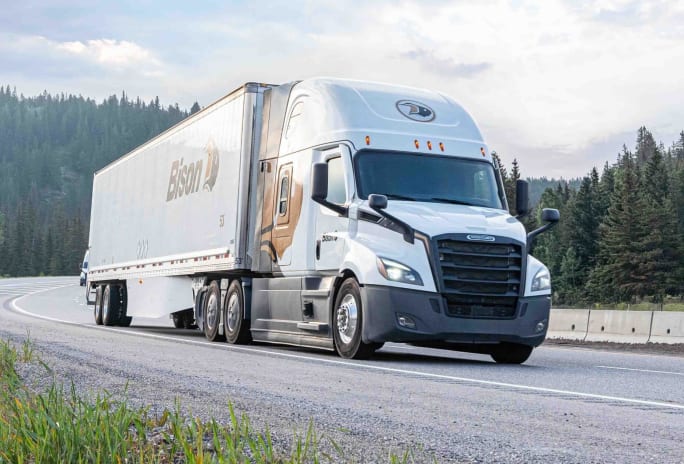
Bison Transport turned its fleet safety record around by focusing on giving its drivers the tools they needed to drive safely, rather than expecting regulatory compliance alone to make them a safe carrier.
Credit:
Bison Transport
A Safety Transformation
About 25 years ago, Canada-based truckload carrier Bison Transport believed that compliance with safety regulations would make them a safer fleet. But it wasn’t working. So Bison decided to transform its business and become a company that was both compliant and safe.
That’s what Garth Pitzel, associate vice president of safety and driver development, told me when I interviewed him for the HDT Truck Fleet Innovators awards in 2023.
“We said we were going to design what we thought was the best safety toolbox a professional driver could have, give them the best and safest equipment, give them the best training and skills development, and give them the best policy to support safe driving.”
“In the '90s and early 2000s, our safety program was the number one reason drivers were leaving our business, because we were just focused on compliance,” Pitzel says. “Today, the number one reason that our drivers come to our business is because of our safety program.”
Quick Answers
Compliance ensures adherence to regulations, but true safety requires proactive decisions beyond these rules, often requiring considerations of risks and long-term benefits.
Examples include choosing safer routes, conducting voluntary training sessions, and investing in advanced safety technologies that may not be required by law.
Prioritizing safety can lead to short-term costs such as increased freight time or financial expenses, but these measures can prevent costly accidents and enhance long-term efficiency.
Factors include the desire to protect human life, minimize liability, enhance company reputation, and potentially reduce insurance premiums.
Fleets can ensure this by fostering a safety-first culture, regularly reviewing and updating safety policies, and educating drivers about the importance of making safe decisions even when not mandated.
Marijuana is getting stronger, laws are changing, and drug tests still can’t reliably establish impairment. What does that mean for truck drivers and the fleets that employ them?
New CL-4 and FB-4 engine oils are coming in 2027. Foodliner wants to know whether they could support longer oil drains, but it won’t change its maintenance schedule without data from its own trucks.
As the pace of change accelerates in trucking, the fleets that adapt best have more than the latest technology. They have cultures that embrace improvement.
After more than 20 years as a CDL holder, HDT Executive Editor Jack Roberts is letting his commercial license expire. Not because he wants to — but because trucking's nuclear verdict crisis has made the risks of public-road test drives too great for editors, manufacturers, and everyone involved.
Relying on diesel alone exposes fleets to fuel price volatility. Here’s why diversification with electric, natural gas, and renewable fuels can reduce risk.
Cargo theft is evolving from regional smash-and-grab operations to sophisticated fraud schemes. Strategic theft now accounts for roughly a third of cargo crime, with incidents rising sharply in recent years. Here’s how the schemes work — and what fleets can do to protect themselves.
With copper-free brake standards taking effect, suppliers are reengineering friction materials, and fleets are weighing what the change means for air disc brake performance on the road. Find out more in this Heavy Duty Trucking Digital Cover Story for March 2026.
For the first time, heavy-duty trucking fleet managers and technicians can actually partner with intelligent machines to predict failures and manage vehicle uptime.