




Safety & Compliance
Beyond DOT Compliance: What Makes a Trucking Fleet Truly Safe?
A trucking fleet can follow every rule and still make unsafe decisions. The real test comes when safety conflicts with freight, productivity, or cost.
 MENU
MENU SEARCH
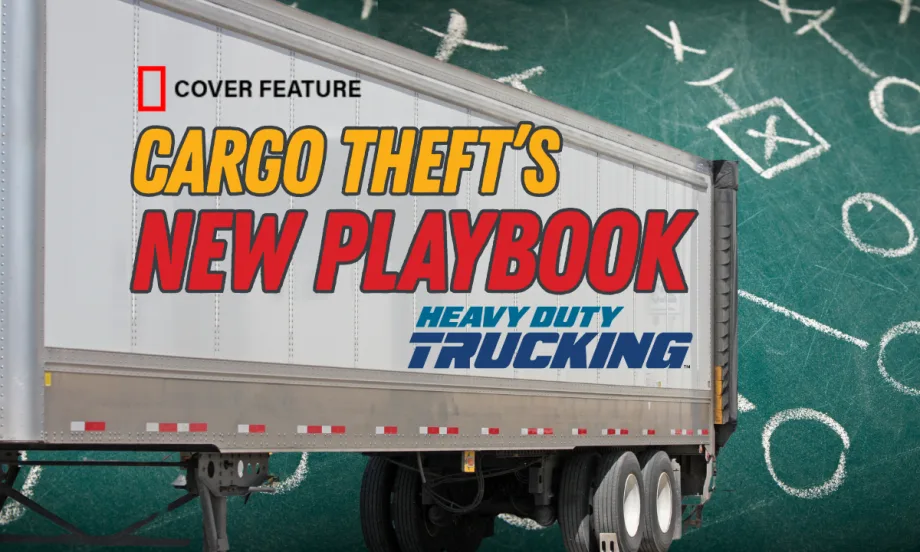
Cargo theft is evolving from regional smash-and-grab operations to sophisticated fraud schemes. Strategic theft now accounts for roughly a third of cargo crime, with incidents rising sharply in recent years. Here’s how the schemes work — and what fleets can do to protect themselves.
According to year-end numbers from Verisk CargoNet, estimated cargo theft losses surged to nearly $725 million last year. That is a 60% increase from 2024.
HDT Graphic
*Summarized by AI
Adam Blanchard is no stranger to cargo theft and fraud.
“I have been a victim of freight fraud numerous times, and unfortunately there is virtually no recourse for me or my company,” said Blanchard, principal and CEO of Texas-based Tanager Logistics and Double Diamond Transport. The companies operate 90 trucks and employ more than 20 freight brokers.
Blanchard was testifying at a recent Senate subcommittee hearing on cargo theft, describing how criminals stole his company’s identity in a scheme that highlights the growing threat of strategic cargo theft and freight fraud targeting trucking companies.
Identity thieves first tendered a load to Tanager on behalf of a trucking company, then impersonated Tanager to broker that and other loads to motor carriers.
“They brokered loads under our name, deceiving both shippers and carriers. This led to massive business disruptions, with angry trucking companies calling us and demanding payment for loads that the real Tanager Logistics did not broker or authorize.”
The fraudsters used Tanager’s identity to steal high-value freight, including truckloads of Red Bull, which were diverted to warehouses in California and apparently shipped out of the country. They used VPNs and domain spoofing to avoid getting caught.
“Despite reaching out to our insurance provider, law enforcement, and even the Department of Homeland Security, we were met with indifference and red tape,” Blanchard testified.
What happened to Tanager Logistics reflects a broader shift in cargo crime, as strategic cargo theft and freight fraud become major threats to trucking companies.
“Cargo theft in the United States fundamentally changed between 2020 and 2022,” says Scott Cornell, a longtime cargo security expert, crime and theft specialist for LogistIQ Insurance Solutions. He's also chairman of the Transported Asset Protection Association, a supply chain security organization that works with law enforcement and industry to prevent cargo theft.
Cornell has investigated cargo theft for more than three decades. For most of that time, the criminals were familiar.
Before 2020, he says, cargo theft was mostly the work of small regional crews, often family-based. In fact, he says, it wasn’t unusual for those investigating cargo thefts to recognize suspects on security camera footage and know how they typically disposed of their hauls.
They physically stole freight. They cut seals. They broke into trailers. They fenced goods locally to flea markets, small retailers, and online marketplaces.
“Between 2020 and 2022, cargo theft in the United States went international,” Cornell says, driven by sophisticated organized crime rings operating from dozens of countries. Much of the stolen freight is quickly moved overseas, shrinking the window for recovery.
A 2025 American Transportation Research Institute Report found that cargo theft results in a $520,000 average annual loss per carrier – and 75% of motor carrier cargo is never recovered.
According to year-end numbers from Verisk CargoNet, estimated cargo theft losses surged to nearly $725 million last year. That is a 60% increase from 2024. In comparison, confirmed cargo theft incidents rose 18%, climbing from 2,243 to 2,646.
“This ability to be anywhere and target freight anywhere has seen cargo theft really seep into all parts of the United States,” Cornell says. “It's all over the country now. So it doesn't matter if you're in Wyoming or Iowa or Nebraska, cargo theft is coming.”
The method of choice for these international crime rings is “strategic theft,” as in the case of Tanager Logistics.
Experts say the rise of strategic cargo theft — including double brokering, identity theft, and cyber-enabled fraud — is transforming how freight crime targets trucking companies.
What we traditionally think of as cargo theft is called “straight theft.” Thieves break into a trailer and take the cargo out of it. They back a tractor under a dropped trailer and make off with the entire trailer, often disabling tracking devices.
Traditional cargo theft was often opportunistic, with cargo thieves targeting unsecured locations, predictable routes, or isolated insider access.
Strategic theft — which Cornell describes as “the use of deception to trick a member of the supply chain into giving them the freight unknowingly but willingly” — began gaining traction around 2010. Today, organized criminal networks study freight flows, dispatch processes, and verification gaps before exploiting them at scale, and have adopted cybercrime tactics to gain access to company information, passwords, and more.
Strategic theft has grown from less than 5% of all cargo theft to roughly a third, Cornell says.
And between 2022 and 2024, while cargo theft overall rose 93%, strategic theft rose 1,475%.
One of the most common strategic theft schemes is double brokering. Criminals steal a legitimate carrier’s identity, pass a broker’s vetting process, and secure a load. Then they pose as a broker and hire an unsuspecting motor carrier to haul it.
Instead of delivering to the intended consignee, the freight may be routed to a cross-dock, Cornell says, where it is relabeled and redistributed. What begins as brand-name televisions may exit as generic “electronics,” then later as “freight of all kinds.”
“As advanced as the supply chain gets, there are still some archaic aspects to it,” Cornell says. “The bill of lading is the most glaring example.”
If the paperwork says “freight of all kinds,” that’s what everyone assumes is in the trailer — even when it isn’t.
This may be a common scenario, but Cornell says strategic theft doesn’t rely on a single tactic.
“There’s probably 20 to 25 different methods in that strategic theft category now, and phishing emails and social engineering emails are a big part of that.”
Other variations follow similar logic, such as:
Cargo theft and cybercrime are increasingly intertwined.
“Modern security incidents often don’t begin with a bang,” says Ben Wilkens of the National Motor Freight Traffic Association. “They begin quietly — with a compromised login, a spoofed email, or a manipulated business process that looks legitimate on the surface.”
He points out that trucking companies may be particularly vulnerable to cyber-enabled cargo theft.
Trucking operates at a relentless pace and is built on long-standing relationships and trust, making users more likely to overlook red flags and skip verification procedures.
“Today’s cargo thieves routinely use the same cyber-enabled techniques that traditional cybercriminals have relied on for years — and they are using them with devastating effectiveness,” Wilkens says.
Thanks to phishing and social engineering attacks, unseen problems such as stolen credentials, compromised dispatch systems, and manipulated digital records often precede the physical disappearance of a load.
“By the time data is stolen or a trailer goes missing, it’s too late for prevention. All that is left is to minimize the damage,” he says.
Global Positioning System (GPS) spoofing allows criminals to manipulate location data and conceal unauthorized route changes. Stolen credentials to tracking portals enable real-time monitoring and targeting of shipments. Identity fraud allows criminals to impersonate legitimate carriers, brokers, or drivers with an alarming degree of credibility.
The result? Missing trailers that did not disappear because of an unfenced drop yard or a cut padlock. They disappeared because a digital identity was compromised days or weeks earlier.
That’s why many fleets are surprised when theft occurs, Wilkens says. The systems didn’t fail in obvious ways.
“No alarm bells rang, and the processes worked — for the wrong people,” he says.
Cornell outlines an example of a social-engineering cyberattack involving cargo theft.
Fraudsters send an email that appears to be from a familiar load board, with a message such as, “Due to recent cargo theft attacks, you need to reset your password.”
The unsuspecting email recipient clicks on the link. It takes them to a cloned website that looks like the load board it’s impersonating. But when you put in the information to change your password, the cyberthieves now have access to help perpetrate a strategic cargo theft.
Here’s a recent example of how these schemes play out.
A New York man was recently arrested and charged with allegedly stealing more than 33,000 pounds of frozen snow crab, along with pallets of blueberries and more than $400,000 worth of designer cologne.
According to the Justice Department, the scheme involved infiltrating the email accounts of legitimate truckload carriers and using those accounts, pretending to work for the carrier, to book freight with shippers. Those loads never reached their intended destinations and were instead sold by the cargo thieves for profit.
In one instance last July, a co-conspirator allegedly hacked into a motor carrier’s email account and used it to arrange the shipment of 33,750 pounds of frozen snow crab, valued at about $325,000, from a warehouse in Worcester, Massachusetts, to a customer in Florida.
The defendant then allegedly arrived at the warehouse posing as the legitimate carrier, picked up the load, and drove away. Instead of delivering the shipment, authorities said, he transported the seafood to a grocery business in Queens, New York, where it was sold.
Cases like this illustrate how cargo theft increasingly relies on identity theft and compromised digital systems.
All this means that when it comes to security risks, whether it’s cargo theft, cyberattacks or other threats, fleets need to view security as a single system — not separate silos.
If your cargo theft prevention strategies are the responsibility of your safety/security team and your cybersecurity efforts are all about the IT department, you’re leaving big holes.
A phishing email can trigger a fraudulent pickup. A weak vendor onboarding process can enable a stolen load. A delay in recognizing suspicious activity can turn a recoverable incident into a total loss.
Cybersecurity is too often viewed as an IT responsibility rather than an operational one.
“This is one of the most dangerous assumptions in transportation security,” Wilkens says. “Cybersecurity, operational security, and physical security can no longer be treated as separate problems."
Trucking fleets that are successfully reducing cargo crime and data theft approach security as a shared responsibility, Wilkens says.
Cyber, operations, safety, and leadership work from the same playbook. Employees understand why verification matters and feel empowered to question anomalies. Reporting is encouraged early, not after the damage is done.
Experts say preventing cargo theft now requires a combination of operational procedures, cybersecurity controls, driver training, and cargo tracking technology.
Some of the most effective cargo-theft prevention steps look like disciplined business processes and procedures, Wilkens says:
Education is key. Don't concentrate knowledge about cargo theft solely in your risk department. Don't concentrate cybersecurity training in the IT department.
Train drivers on best practices, including following company-established parking and trailer drop guidelines.
Educate your frontline staff who deal with bad actors calling or emailing them, pretending to be legitimate carriers or brokers.
Training should focus on role-based, real-world training in the processes at your company and on the tactics bad actors use to attack trucking fleets.
For example, if all users know that IT will never ask them for a set of credentials, and IT knows never to ask an end user for a set of credentials, then if a bad actor calls or emails claiming to be from IT and asks for credentials, they will unmask themselves as a malicious actor.
Part of that is encouraging people to simply slow down and think, Cornell says. In his investigations, he has often been able to quickly spot a change to an email address in a phishing attack.
Some of them aren’t even that hard to spot if you know what to look for.
“If they're using AI to create these emails and just blast them out thousands of times a day or something like that, they only need to get it right once,” Cornell says.
“People always say, 'How much money am I expected to invest in this?'” Cornell says. “The good process and procedures part is free. So that's always the beginning.”
Despite the skyrocketing growth of strategic theft, you still need to protect your freight from straight theft.
That includes hardened yards, perimeter fencing, and surveillance systems.
For the vehicle, this means hard locking devices, such as high-security rear door locks that marry the left and right doors on the back of the trailer, as well as landing gear locks and air cuff locks.
Cargo thieves have many ways they can defeat tracking systems, Cornell says, which is why he recommends redundancy with multiple layers of tracking methods.
“Any tracking is better than no tracking, most of the time. But if you’re depending heavily on phone-based tracking, the bad guy is either going to turn that tracking off almost immediately or they're going to spoof that location.”
Sophisticated cargo thieves know where to look for tracking devices, even small covert devices hidden in the cargo.
There also are a growing number of technology companies that offer tools to help freight brokers vet carriers and vice versa.
Technology should enhance what you're already doing in cargo theft prevention, Cornell says.
“Whether it's a vetting technology on the strategic theft side or tracking technology on the straight theft side, if you think that that's going to solve everything, it's just not.”
No matter how disciplined a fleet may be, it doesn’t operate in a vacuum. And many in trucking say the federal response hasn’t kept pace with the sophistication of modern cargo theft.
Adam Blanchard told lawmakers that after Tanager Logistics’ identity was stolen, he sought help from insurers and federal authorities — only to encounter what he described as “indifference and red tape.” To this day, he testified, the fraudulent version of Tanager remains listed on FMCSA’s SAFER website.
Lewie Pugh of the Owner-Operator Independent Drivers Association told lawmakers that FMCSA lacks the authority to independently investigate and issue penalties in freight fraud cases. As a result, cases are often referred to the Department of Justice, where they can stall.
Trucking companies, he said, are frequently directed to local law enforcement agencies that may not have the resources or jurisdiction to pursue schemes spanning multiple states — or multiple countries. Many states don’t even have “cargo theft” as a specific category for crime reports.
As Pugh put it, fraud complaints can end up bouncing “from agency to agency without anyone taking responsibility.”
Another criticism is that FMCSA’s National Consumer Complaint Database isn’t an effective tool for reporting freight fraud.
A 2023 Government Accountability Office review found weaknesses in how complaints were reviewed and categorized. Although FMCSA agreed to improvements, launched a Registration Fraud Team, and has been modernizing its registration system to improve verification, witnesses questioned whether the agency has the authority, staffing, and technological capacity to keep pace with increasingly organized and international criminal networks.
“FMCSA and other regulatory bodies need stronger mechanisms to detect and respond to these scams in real-time,” Blanchard said in his testimony.
“More importantly, federal agencies must prioritize cyber capabilities to track and shut down these criminals before they can continue defrauding legitimate businesses like mine.”
Cargo theft has changed. It is more strategic, more digital, and more organized than it's ever been.
But the industry's response is changing, as well. At one time, trucking companies hesitated to share their experiences with cargo theft or cyber attacks, fearing that sharing weaknesses could give bad actors ideas or that they would lead to mistrust among their customers.
Today, we are seeing broader participation across the supply chain, with carriers, brokers, and shippers sharing intelligence and tightening processes together through security conferences and associations.
“Everybody’s trying to cooperate. They’re all trying to work together,” Cornell said.
In a freight economy built on trust, that kind of cooperation could be the most powerful countermeasure of all.
Loading data...

Safety & Compliance
A trucking fleet can follow every rule and still make unsafe decisions. The real test comes when safety conflicts with freight, productivity, or cost.








Maintenance
The new API PC-12 heavy-duty engine oil category reflects the changing demands of modern diesel engines. But fleets like Foodliner are looking to getting their own data before making decisions on adopting the new oils and questions such as extending oil drain intervals.
Fleet Management
As the pace of change accelerates in trucking, the fleets that adapt best have more than the latest technology. They have cultures that embrace improvement.
Drivers
After more than 20 years as a CDL holder, HDT Executive Editor Jack Roberts is letting his commercial license expire. Not because he wants to — but because trucking's nuclear verdict crisis has made the risks of public-road test drives too great for editors, manufacturers, and everyone involved.
Fleet Management
Fleets fear falling behind if they don’t adopt AI quickly enough. They also fear what happens if the technology makes the wrong decision.
Fuel Smarts
Relying on diesel alone exposes fleets to fuel price volatility. Here’s why diversification with electric, natural gas, and renewable fuels can reduce risk.
Fleet Management
Cargo theft is evolving from regional smash-and-grab operations to sophisticated fraud schemes. Strategic theft now accounts for roughly a third of cargo crime, with incidents rising sharply in recent years. Here’s how the schemes work — and what fleets can do to protect themselves.
Maintenance
With copper-free brake standards taking effect, suppliers are reengineering friction materials, and fleets are weighing what the change means for air disc brake performance on the road. Find out more in this Heavy Duty Trucking Digital Cover Story for March 2026.
Maintenance
For the first time, heavy-duty trucking fleet managers and technicians can actually partner with intelligent machines to predict failures and manage vehicle uptime.
Fleet Management
2026 looks like it could be a bumpy ride for motor carriers. Is your heavy-duty trucking fleet ready for whatever is coming your way?