




FMCSA Moves to Codify English Language Requirements for Commercial Drivers
By changing regulations on English-language proficiency requirements for commercial drivers, rather than relying on a guidance memo, the FMCSA said future administrations won't be able to walk back the Trump administration's stricter enforcement with just a memo.

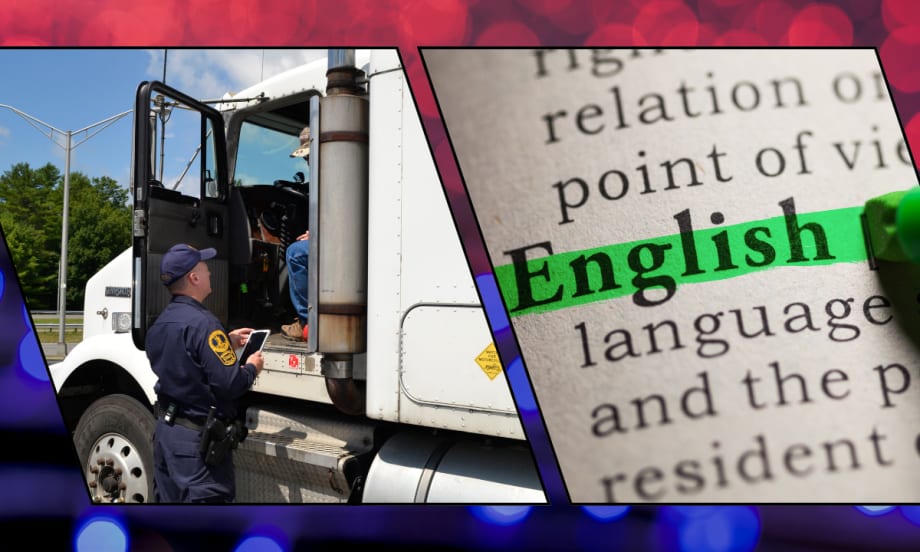
HDT/CVSA
The Federal Motor Carrier Safety Administration has proposed a rule that would make its guidance on truck driver English language proficiency a regulation, seeking to avoid another administration coming in and changing the guidance again.
What’s the difference? Regulations, and changes to regulations, by law must go through a formal rulemaking process.
Guidance on how those regulations are enforced, however, is not.
Enforcing the English Language Requirement
Federal regulations can be vague or confusing when it comes to how they are actually enforced or interpreted.
There has long been a requirement in federal regulations for commercial motor vehicle drivers to be able to speak English, dating back to 1937. Those said drivers must be able to speak and read English satisfactorily to:
- Converse with the general public.
- Understand traffic signs and signals.
- Respond to official questions.
- Make legible entries on reports and records.
In 2016, under the Obama administration issued a memorandum, or guidance, that allowed more leeway in interpreting the language.
In that memo, inspectors were instructed not to issue a violation for ELP if the driver was able to communicate using tools such as smartphone applications or interpreters.
Shortly after taking office in 2025, President Trump issued an executive order declaring English to be the official language of the United States, and in April issued an executive order instructing the FMCSA to replace the Obama-era guidance with stricter standards.
Not only would drivers who couldn’t pass an English-language proficiency test be cited for an ELP violation, but they would also be placed out of service.
The Role of the Commercial Vehicle Safety Alliance
Commercial vehicle enforcement is the bailiwick of CVSA, which writes the out-of-service criteria for law enforcement conducting CMV inspections.
Not long after Trump’s executive order, the group added ELP to the out-of-service criteria in response to the administration’s request.
Last October, CVSA petitioned FMCSA to update the regulations to identify noncompliance with English-language proficiency as an out-of-service condition.
In the new proposed rule, FMCSA seeks to revise the Federal Motor Carrier Safety Regulations to reflect the current practice of placing drivers out of service for violations of the ELP requirements, except when the driver's current trip would not involve transportation in the United States that would take the driver outside of the U.S.-Mexico border commercial zones.
What Changed in 2016?
Back in 2015, CVSA removed section 391.11(b)(2), the English-language proficiency requirements, from its out-of-service criteria.
About a year later, FMCSA issued a policy memorandum providing guidance to FMCSA personnel conducting safety investigations, audits, and inspections of CMVs and drivers.
The policy removed the requirement that FMCSA personnel place drivers out of service for ELP violations and changed the agency's standard for determining noncompliance with ELP requirements.
Under the 2016 policy, FMCSA personnel were directed to cite drivers for violations of the English-language requirement but not to place them OOS, consistent with CVSA's change to the enforcement tolerances used by personnel conducting CMV inspections.
Preventing Future Flip-Flops
By turning the Trump administration's new enforcement guidance into a codified rule, the FMCSA said, future administrations will not be able to weaken ELP requirements as they said happened during the Obama administration.
By codifying the out-of-service condition in the Federal Motor Carrier Safety Regulations, the agency explained, states will be required to adopt a compatible requirement into their state law, regardless of any future revisions to CVSA’s out-of-service criteria.
“This would ensure uniform enforcement of ELP violations beyond state use of the North American Standard Out-of-Service Criteria,” the administration said.
“When a driver can't read a 'Steep Grade,' 'Runaway Truck Ramp,' or 'Do Not Enter' sign, people die,” said FMCSA Administrator Derek D. Barrs.
“Since reinvigorating strict ELP checks, we have already pulled over 26,000 unqualified drivers off the road. This rule ensures that roadside inspectors will always have the full force of federal regulation behind them to issue immediate out-of-service orders whenever an unqualified driver is detected.”
You can read the full proposal and submit comments by October 9.
More Safety & Compliance
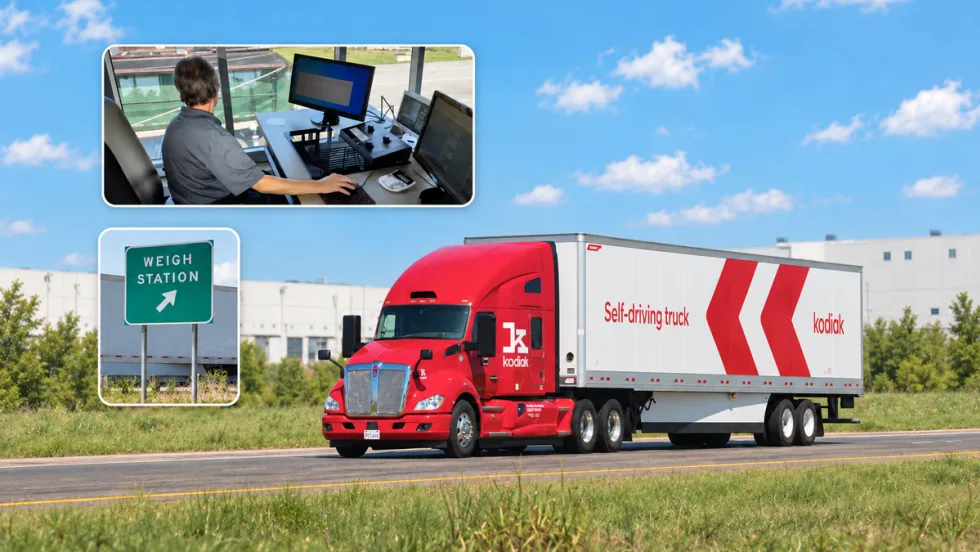
PrePass, Kodiak Connect Driverless Trucks to Roadside Enforcement
The system will allow enforcement agencies to verify Enhanced Inspection information and decide whether Kodiak’s autonomous trucks can bypass roadside screening sites.
Read More →
From One Generation to the Next: How Mentorship Builds Safer Truck Drivers
After three decades in trucking, Harold Perry shares what he's learned about driver safety, mentorship, and helping the next generation build confidence behind the wheel.
Read More →
FMCSA Pauses Biennial-Update Enforcement Amid Motus Transition
Carriers whose updates were due on or after June 1 have more time, while FMCSA works to stabilize its new registration system and warns of phishing sites impersonating its new carrier registration system, Motus.
Read More →
ZF Expands Commercial Vehicle Push in North America
ZF is expanding its North American commercial-vehicle presence with new transmission applications, electrification, trailer technology and autonomous-driving systems.
Read More →
Truck Drivers Need More Than Another Alert
Fleets have more visibility into truck health, safety events, and driver activity than ever. The next challenge is turning all that information into useful guidance for the person who has to decide what to do next.
Read More →
Tesla Wants a Self-Driving Semi. Are Cameras Enough?
Could Tesla’s camera-only autonomous driving technology work on an 80,000-pound Semi? In this commentary, HDT's Deborah Lockridge takes a look at Tesla, Cybercab, and how autonomous trucks see the road.
Read More →
What DOT’s Automated Vehicle Strategy Means for Trucking
The U.S. Department of Transportation issued a new automated-vehicle strategy that outlines plans for driverless-truck regulations, cross-state freight corridors, and federal safety standards.
Read More →
NYC Expands Speed, Pedestrian Safety Tech Across Fleet
New York City is expanding intelligent speed assistance and pedestrian-alert systems across its municipal fleet, moving the technologies from pilot programs into vehicle procurement and retrofit requirements.
Read More →
FMCSA Removes 110 Truck Driver Training Schools from Certified ELDT List
Federal regulators also are targeting more than 160 additional training providers and launching a nationwide audit of third-party CDL skills testers as part of a broader crackdown on trucking fraud.
Read More →
Beyond DOT Compliance: What Makes a Trucking Fleet Truly Safe?
A trucking fleet can follow every rule and still make unsafe decisions. The real test comes when safety conflicts with freight, productivity, or cost.
Read More →