6 Regulatory Changes for Trucking to Watch in 2026
After a year of what safety and compliance expert Brandon Wiseman calls “regulatory turbulence,” what should trucking companies be keeping an eye on in 2026 when it comes to federal safety regulations?
One theme that arose in 2025 to continue watching in 2026? A focus on greater enforcement of federal trucking safety regulations.
Credit: HDT
10 min to read
After a year of what safety and compliance expert Brandon Wiseman calls “regulatory turbulence,” what should trucking companies be keeping an eye on in 2026 when it comes to federal safety regulations?
Ad Loading...
Heavy Duty Trucking recently spoke to Wiseman, a transportation attorney and president of TruckSafe Consulting, about trends to watch from federal safety regulators.
When the Trump administration came into office, focusing a lot of attention on “deregulatory” actions across federal agencies, most people in trucking would not have expected 2025 to unfold the way it did in the regulatory arena.
Wiseman explained that some of the controversial changes weren’t new regulations, but changes in the enforcement of existing ones.
“For many years, you could argue that we've had fairly lax enforcement on many of these issues,” he said, such as the English language proficiency rules for truck drivers, certification of electronic logging devices, and entry-level driver training rules.
“And that's been true under both Republican and Democratic administrations. So I'm not blaming one or the other. And so what we have seen more than anything else, I would characterize as a crackdown on enforcement.”
Wiseman believes two of the most significant developments to be aware of in 2026 are both ones that have come about in part because of the Trump administration’s focus on illegal immigrants.
1. English Language Proficiency
After President Trump issued an executive order regarding English proficiency for commercial drivers, the Department of Transportation in late June started putting drivers out of service who couldn’t pass an English language proficiency test.
Ad Loading...
“Over the last few decades, we've seen some ebbs and flows in terms of how strictly it's enforced,” Wiseman explained. “And for the last 10 years or so leading up to 2025, even though it was on the books, English language proficiency was not considered what's called an out-of-service violation, meaning that even if drivers were tagged with that violation during a roadside inspection, they were permitted to continue operating their trucks.”
Now that the standard has changed, by the end of 2025, around 10,000 commercial drivers will have been put out of service for failing to meet ELP standards.
2. Non-Domiciled CDLs
The issue of non-domiciled CDLs was fueled by a highly publicized crash in August in Florida. A truck driver was making an illegal U-turn, his trailer blocking the road, when a car smashed into the side of the trailer in a fatal crash.
The truck driver was an Indian national who had been issued a non-domiciled CDL by California, even though he reportedly crossed the California border into the U.S. illegally in 2018.
States may issue a non-domiciled CDL to someone who is legally allowed to work in the U.S. but doesn’t permanently live in the state issuing the license — often foreign nationals working under temporary U.S. work authorization.
Ad Loading...
FMCSA tried to short-circuit the normal rulemaking process by issuing an emergency interim final rule that took effect immediately, which limited who is eligible to get these licenses going forward.
FMCSA was then sued for not following the required rulemaking process, and the DC Circuit Court of Appeals issued a temporary stay.
Wiseman believes the FMCSA most likely will review the approximately 8,000 comments submitted in that IFR and decide to go through the full rulemaking process, potentially with some changes to the proposal.
Both the ELP and non-domiciled CDL changes were controversial. Immigrant advocates were concerned that the policies could be used to advance the administration's aggressive anti-immigrant policies and racially profile truck drivers.
Take Action on English Proficiency and Non-Domiciled CDLs
Wiseman warned that motor carriers need to take action regarding the ELP and non-domiciled CDL issues if they haven’t already.
Ad Loading...
“Those in my view are the things you need to be focusing on immediately, because they are tremendous sources of exposure for you,” he said.
“If you are a carrier that has drivers that struggle with English language proficiency or that are operating on non-domiciled CDLs, you run a pretty serious risk not only on the regulatory side of things.
If they get stopped and placed out of service, that's a problem for you and your customers, obviously. Or if they're on a non-domiciled CDL and there's the potential that it gets yanked from them here in the near future, that's going to also cause you regulatory problems.
But putting those aside, the highway accident exposure that this is creating for you is noteworthy. Just look at some of those high-profile cases that we saw in the news, the Florida U-turn crash, for example, and the tremendous amount of publicity that it got.
“If you're not put to trial for those issues in a court of law, you're going to be put on trial in the public media. Many carriers can't survive that type of thing.”
Ad Loading...
If you have drivers who aren’t fluent in English, he said, you should provide some English as a second language training.
There’s not a lot you can do if you have drivers with non-domiciled CDLs that could be at risk, but you need to at least take a look at your records and see if any are working for you.
3. Electronic Logging Device Certification
Two more announcements from 2025 that we’re watching in 2026 are related to the FMCSA’s apparent fondness for self-certification.
FMCSA is going to tighten oversight over the electronic logging devices that are allowed to appear on the agency’s list of “certified” ELDs.
ELDs were mandated in an effort to crack down on fraud, as truck drivers were known to “fudge” paper logs to drive longer than what was allowed under federal hours of service regulations.
Ad Loading...
The ELD mandate, however, did not eliminate hours-of-service fraud. In recent years, there have been complaints of not only drivers and motor carriers cheating with the use of tactics such as fake co-drivers, but also allegations that some ELD manufacturers themselves are helping make this possible.
The FMCSA set up technical specifications for ELDs when it issued the mandate. But unlike Canada, which set up a third-party certification process for devices, the U.S. chose to use a self-certification process. ELD manufacturers themselves certify that their devices meet the technical specifications before they're allowed on the list of self-certified devices.
“Of course, you could see the problem with this, right?” Wiseman said. “Because it's like a, ‘Trust me’ type deal.
“As we've seen over the last several years, it turns out that several devices, even though they have been self-certified as compliant, are not compliant, and they get removed from the list by FMCSA following an investigation.”
Chameleon ELDs
But those removed from the list, or “revoked,” don’t always stay off the list. Wiseman described them as “chameleon devices, where they're on the list, they get taken off for noncompliance, and then they just rebrand under a new name and they put it right back up on the list. That's been a big problem.”
Ad Loading...
“So long story short here, FMCSA is recognizing that there are problems with this approach,” Wiseman said. “I don't think it was any secret.”
In a 2025 notice, the FMCSA said it was adding steps to further vet the validity of ELDs before they get put on the list.
“It’s still going to be a self-certification process, but there's going to be some additional vetting that goes on,” Wiseman said.
“We don't have a whole lot of details yet about what all that entails. But I think the important point for now is that this is not a government-certified program that we're moving to. We're not going towards a system like Canada's.”
4. Entry Level Driver Training
Another issue where self-certification is a problem is in entry-level driver training providers.
Ad Loading...
The ELDT rules, which went into effect in 2022, mandated entry-level driver training for those seeking a CDL for the first time or certain upgrades to their existing CDLs.
“It was clearly a step in the right direction,” Wiseman said.
But in a move that was controversial at the time, the DOT did not set any requirements for the time spent on entry-level training.
“It leaves it up to the training providers largely to develop whatever type of program they see fit, as long as they hit on all of those required topic areas,” Wiseman said.
“The problem is you end up with some training providers that have been legitimate training providers for years, that have a proven method that ends up with hours and hours of detailed training on these topics for drivers.
Ad Loading...
“But then on the other end of the spectrum, you end up with training providers that are just doing the bare minimum. They are covering the topics, but we're talking a day or two worth of training.”
In December, following a review of the 16,000 training providers on the list, FMCSA removed nearly 3,000 CDL training providers and said another 4,000 were put on notice due to potential non-compliance.
“Does that really address the underlying issue here? Probably not,” Wiseman said. “Again, it's a step in the right direction to get bad actors out of the industry, but it doesn't really, in my opinion, get to the root of the problem.
"We need a more thorough framework through which we are going to require these training providers to provide to their students, and we probably need some more oversight before we allow any of these training providers on the registry, frankly.”
5. Changes to How Motor Carrier Safety is Measured
Wiseman is also on the watch for the advancement of two interrelated regulations regarding how motor carrier safety is determined by the federal government that have been in the works for some time.
Safety Fitness Determinations currently are determined based on an analysis of existing motor carrier data and data collected during an investigation (referred to as a “compliance review” or more casually as a “DOT audit.”)
The agency has long hoped to link its Compliance, Safety, Accountability program and its Safety Measurement System to fitness reviews. The SMS is FMCSA’s prioritization system to identify motor carriers for investigation, which went into effect in 2010.
But there were complaints about the accuracy and fairness of how the SMS scores are calculated. So many, in fact, that Congress directed the DOT to have the issue studied by the National Academy of Sciences (NAS). NAS recommended using what it said was a better statistical model, Item Response Theory, but FMCSA said after modeling IRT it found it wasn’t the answer.
In early 2023, FMCSA published its own proposal, and announced in late 2024 that it was going ahead with the new SMS system – but didn’t announce an effective date.
Ad Loading...
Many expected it to go into effect sometime last year, potentially with very little warning.
“I would have expected those to already have gone into effect,” Wiseman said. “I've been saying this for the last three years, but I would think that those would be coming into effect this year, along with potential rulemaking on the safety rating process.”
6. Autonomous Trucks
“We are getting to a point where we have to come up with some rules on autonomous trucks,” Wiseman said.
“The technology is obviously progressing very quickly in that arena... And right now we have no regulations on the books whatsoever governing the operation of autonomous trucks in the country.”
Any regulations currently governing autonomous trucks are state by state.
Ad Loading...
“So FMCSA and NHTSA for their part have started to think about this,” Wiseman said. “I have to imagine that that is going to be coming in the near future just to try and get ahead of the issue before it really blows up into something bigger.”
Other Trucking Safety Regulations to Watch in 2026:
There are many other regulatory issues that may see action this year, among them:
Changes to drug testing regulations following President Trump’s order to reclassify marijuana as a less dangerous drug under the Controlled Substances Act. There also could be action on hair testing for drugs.
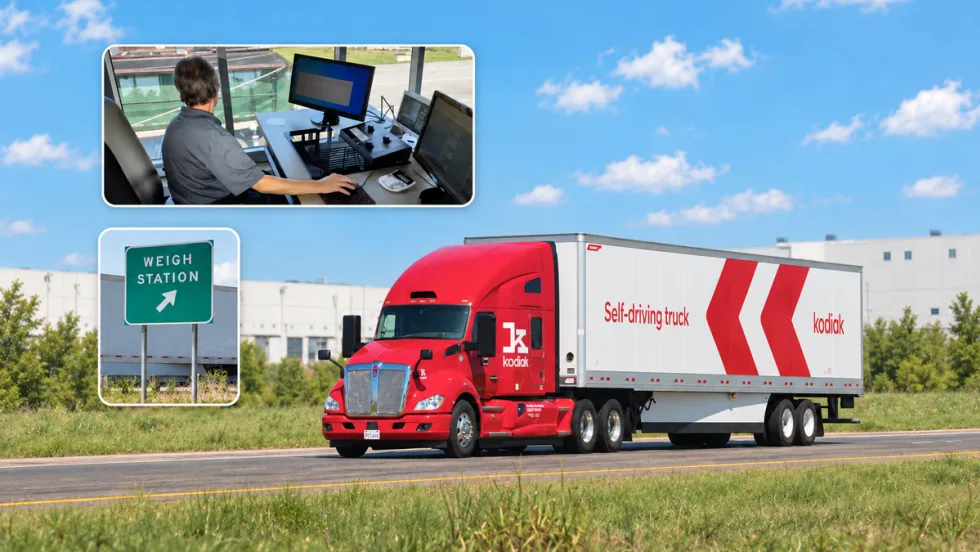
The system will allow enforcement agencies to verify Enhanced Inspection information and decide whether Kodiak’s autonomous trucks can bypass roadside screening sites.
After three decades in trucking, Harold Perry shares what he's learned about driver safety, mentorship, and helping the next generation build confidence behind the wheel.
Carriers whose updates were due on or after June 1 have more time, while FMCSA works to stabilize its new registration system and warns of phishing sites impersonating its new carrier registration system, Motus.
ZF is expanding its North American commercial-vehicle presence with new transmission applications, electrification, trailer technology and autonomous-driving systems.
Fleets have more visibility into truck health, safety events, and driver activity than ever. The next challenge is turning all that information into useful guidance for the person who has to decide what to do next.
Could Tesla’s camera-only autonomous driving technology work on an 80,000-pound Semi? In this commentary, HDT's Deborah Lockridge takes a look at Tesla, Cybercab, and how autonomous trucks see the road.
The U.S. Department of Transportation issued a new automated-vehicle strategy that outlines plans for driverless-truck regulations, cross-state freight corridors, and federal safety standards.
New York City is expanding intelligent speed assistance and pedestrian-alert systems across its municipal fleet, moving the technologies from pilot programs into vehicle procurement and retrofit requirements.
Federal regulators also are targeting more than 160 additional training providers and launching a nationwide audit of third-party CDL skills testers as part of a broader crackdown on trucking fraud.