





Transportation Secretary Promises to Go After 'Bad Actors' in Trucking
FMCSA Probes Fatal Florida U-Turn Crash Amid CDL and Safety Oversight Concerns
A truck driver involved in a deadly Florida Turnpike crash held a valid CDL despite failing an English proficiency test and being in the U.S. illegally. FMCSA has launched an investigation into the driver and his carrier, sparking fresh debate over driver licensing, training, and more.
August 20, 2025

News continues to come out regarding a fatal Florida truck crash involving an illegal U-turn and an illegal immigrant driver.
Image: HDT Graphic
3 min to read
A fatal truck crash in Florida has raised questions about commercial driver’s licensing, illegal immigrants, English language proficiency and more, as details continue to emerge and the federal government has opened an investigation.
The crash has made national headlines, ignited anger and debate inside and outside the trucking industry, and added fuel to the fire between the Trump administration and California.
The August 12 crash happened on the northbound lanes of Florida's Turnpike in Fort Pierce. The truck driver made an illegal U-turn on the turnpike, blocking all lanes. A minivan traveling at speed hit the side of the rig and went under the trailer, killing all three occupants.
The truck driver, Harjinger Singh, an Indian national, reportedly crossed the California border into the U.S. illegally in 2018 and has been in immigration proceedings ever since. Yet despite being in the country illegally, Singh held a California CDL, adding fuel to the ongoing battle between the Trump administration and California.
Singh faces three counts of vehicular homicide and will likely be deported.
Fatal Truck U-Turn Crash Caught on In-Cab Camera
Video from the truck’s in-cab camera catches the crash through the driver’s side window, and the footage has sparked outrage. Among other things, the video shows virtually no reaction from the driver in response to the crash.
FMCSA Launches Investigation into Fatal Florida Truck Crash
On August 19, the Federal Motor Carrier Safety Administration announced it had launched an investigation into the crash, focusing on the driver involved in the crash and the motor carrier, White Hawk Carriers Inc.
FMCSA investigators began an on-site compliance investigation on August 14 at the motor carrier's California premises. Investigators reviewed driver qualification files, obtained in-cab and forward-facing video footage of the crash, and conducted interviews with key personnel including the crash-involved driver, according to FMCSA.
During FMCSA’s interview with the driver, investigators administered an English Language Proficiency (ELP) assessment in accordance with FMCSA guidance. The driver failed the assessment, providing correct responses to just two of 12 verbal questions and only accurately identifying one of four highway traffic signs.
That investigation also found that on July 3, the New Mexico State Police conducted a roadside inspection of the driver and issued a speeding ticket, but there is no indication that an English Language Proficiency assessment was administered.
The agency only recently changed enforcement guidance on federal English language requirements for commercial drivers. Since 2016, FMCSA guidance had advised that violators of the English language requirements were no longer to be placed out of service. In May, FMCSA reversed that guidance, and as of June 25, drivers failing an English Language Proficiency assessment were to be put out of service.
Truck Driver Commercial Licensing and Training Standards
Despite more than 30 years of the federal government working to tighten up commercial driver licensing and entry-level driver training, there still seem to be too many people driving 18-wheelers who shouldn’t be behind the wheel.
Rob Carpenter, a truck safety and DOT compliance expert with Trucksafe and Epic Insurance, said on LinkedIn, “Who we put on our highways and how we put them there is our biggest issue.”
Carpenter added, "California’s AB 60 enables undocumented drivers to get a regular DL, and with it, a CDL, even without lawful presence. Yes, undocumented operators can legally drive commercial vehicles yet they often don't have critical real-world training."
Carpenter also raised the question of whether side underride guards could have mitigated the severity of the crash.
American Trucking Associations Chief Operating Officer Dan Horvath said in a statement that “this incident underscores the importance and urgency of the work that the Trump Administration is doing to audit CDL issuances nationwide, in addition to its enhanced enforcement of English language proficiency.
“ATA believes robust entry-level driver training standards are critically important to preventing accidents like this one, but we remain concerned that fraudulent and non-compliant entities continue to fast-track CDL applicants with minimal, if any, training.”
More Safety & Compliance
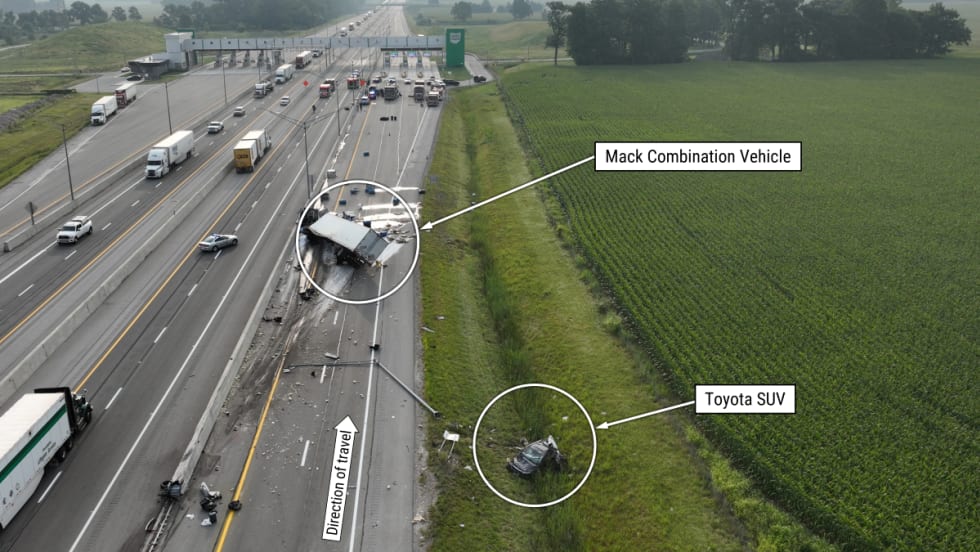
Fatal Crash Exposes Toll Plaza Risks
An NTSB investigation found that last-minute lane changes and large speed differences at an Ohio toll plaza created a hazard the truck driver couldn't avoid in time.
Read More →
When Language Stops the Truck: The Return of ELP Out-of-Service Orders
English language proficiency rules for commercial drivers aren’t new, but renewed out-of-service enforcement has raised the stakes. Here’s what carriers need to know before a driver reaches a roadside inspection.
Read More →
Sponsored•October 6, 2026
A Camera Isn't a Safety Program. Here's What Brokers Are Screening for Now
Footage alone may not be enough to pass broker vetting processes. Here's what counts as a defensible safety program now.
Read More →

Marijuana and Trucking’s Drug-Testing Dilemma
Marijuana is getting stronger, laws are changing, and drug tests still can’t reliably establish impairment. What does that mean for truck drivers and the fleets that employ them?
Read More →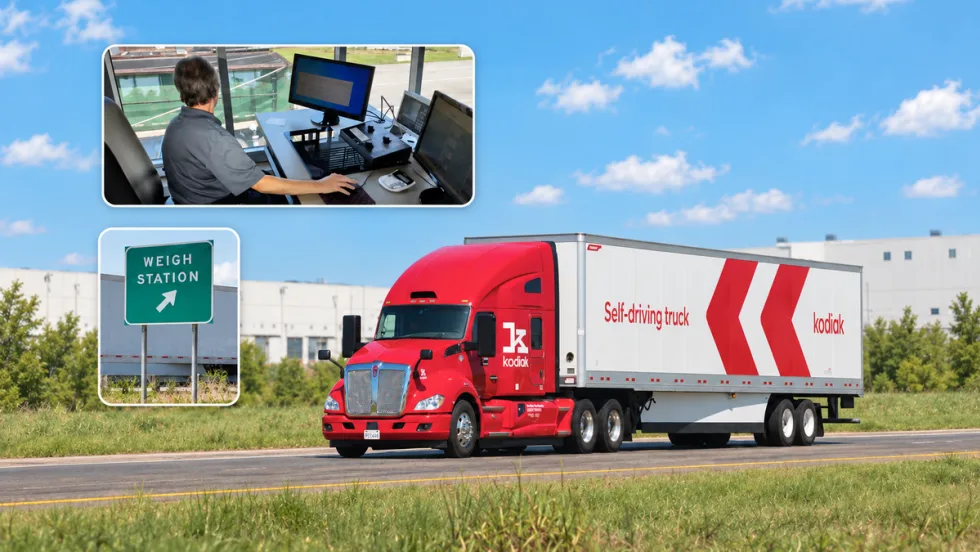
PrePass, Kodiak Connect Driverless Trucks to Roadside Enforcement
The system will allow enforcement agencies to verify Enhanced Inspection information and decide whether Kodiak’s autonomous trucks can bypass roadside screening sites.
Read More →
From One Generation to the Next: How Mentorship Builds Safer Truck Drivers
After three decades in trucking, Harold Perry shares what he's learned about driver safety, mentorship, and helping the next generation build confidence behind the wheel.
Read More →
FMCSA Pauses Biennial-Update Enforcement Amid Motus Transition
Carriers whose updates were due on or after June 1 have more time, while FMCSA works to stabilize its new registration system and warns of phishing sites impersonating its new carrier registration system, Motus.
Read More →
ZF Expands Commercial Vehicle Push in North America
ZF is expanding its North American commercial-vehicle presence with new transmission applications, electrification, trailer technology and autonomous-driving systems.
Read More →
Truck Drivers Need More Than Another Alert
Fleets have more visibility into truck health, safety events, and driver activity than ever. The next challenge is turning all that information into useful guidance for the person who has to decide what to do next.
Read More →
Tesla Wants a Self-Driving Semi. Are Cameras Enough?
Could Tesla’s camera-only autonomous driving technology work on an 80,000-pound Semi? In this commentary, HDT's Deborah Lockridge takes a look at Tesla, Cybercab, and how autonomous trucks see the road.
Read More →