




Brake Safety Week Is On: Here are Some Tips
Today's Trucking---30,000 brakes will be inspected on trucks across North America this week, and not all will pass. The annual Brake Safety Week held by the Commercial Vehicle Safety Alliance will see inspectors taking a closer look at brake systems on your trucks.
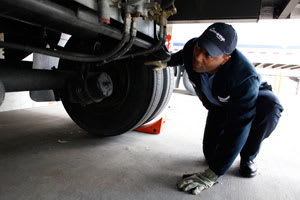
Today's Trucking---30,000 brakes will be inspected on trucks across North America through Saturday, and not all will pass.
The annual Brake Safety Week held by the Commercial Vehicle Safety Alliance will see inspectors taking a closer look at brake systems on your trucks.
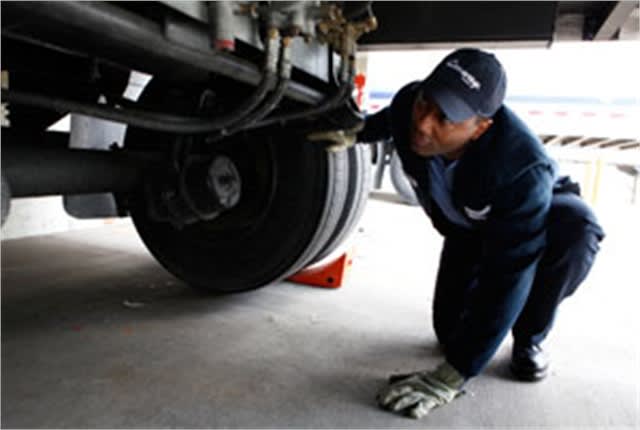
Six specific items will be targeted for inspection: driver’s license, registration, low air warning device pushrod travel (adjustment), brake linings/drums, leaks/air loss rate, and tractor protection system.
It's not just inspections that will be happening this week, either. According to CVSA, the primary causes for drivers not adjusting brakes is a lack of education and not having the proper commitment to safety. Dubbed Operation Air Brake, inspectors from various jurisdication will also be handing out educational material to drivers and fleets.
There's lots of educational resources online, too. For one, Bendix has a couple of educational videos you can download here.
Moreover, Bendix offered some advice to carriers:
“With the federal Reduced Stopping Distance mandate now in full effect, fleets need to pay close attention to the issue of replacement brake lining performance and RSD compliance,” said Gary Ganaway, director of marketing and global customer solutions for Bendix Spicer Foundation Brake LLC Ganaway. “Because not all replacement friction marketed as acceptable under RSD will actually perform to the standard, fleets should ask for evidence of compliance from their friction supplier when replacing the friction on their RSD-equipped trucks.”
Bendix measured the 60 mph stopping distance of a mandate-compliant vehicle with OEM brakes and high performance linings. They then replaced the friction with multiple non-high performance original equipment and aftermarket materials that had passed the FMVSS 121 dyno test, but were not suitable for mandate compliance.
"With nothing else changed, the vehicle’s stopping distance increased from 215 feet using the high performance friction to 311 feet with the worst-performing aftermarket replacement friction — a stunning 45 percent decrease in performance," Bendix noted. That's a 96-foot difference.
Bendix also recommended protecting a vehicle’s air system from contamination as being crucial to maintaining a safe and effective air brake system.
"Oil, in particular, can be very harmful to an air system, contributing to premature damage in a variety of components such as spring brake modulating valves and brake chamber diaphragms. And oil-deteriorated seals can cause air system leaks – a target of Operation Air Brake inspections."
And if you're brake systems are in working order, you can also read owner-operator Dan Dickey's blog on not using your brakes.
Brake Safety Week runs from September 8 to 14. You can find out more at the CVSA website here.
More Drivers

Truck Drivers Need More Than Another Alert
Fleets have more visibility into truck health, safety events, and driver activity than ever. The next challenge is turning all that information into useful guidance for the person who has to decide what to do next.
Read More →
FMCSA Removes 110 Truck Driver Training Schools from Certified ELDT List
Federal regulators also are targeting more than 160 additional training providers and launching a nationwide audit of third-party CDL skills testers as part of a broader crackdown on trucking fraud.
Read More →
Hours of Service Pilot Programs: FMCSA Readies for 2027 Rollout
Two pilot programs could eventually reshape hours-of-service rules, giving truck drivers options to pause their 14-hour clock or use longer split sleeper rest periods.
Read More →
Medical Cards, English Proficiency Reshape Roadcheck Violations
Medical-card violations jumped to the top of the driver out-of-service list during CVSA’s 2026 International Roadcheck, while English-language proficiency violations appeared among the leading violations for the first time.
Read More →
Driver Trust Can Make or Break the Success of Fleet Safety Technology
New Teletrac Navman research suggests that onboarding, transparency about driver data, and positive feedback can play a significant role in how commercial drivers respond to safety and coaching technology.
Read More →
EEOC Sues KLLM Over Alleged Sex Discrimination in Driver Training
KLLM is facing a federal sex-discrimination lawsuit over policies the EEOC alleges put female truck driver trainees at a disadvantage.
Read More →
FMCSA Moves to Codify English Language Requirements for Commercial Drivers
By changing regulations on English-language proficiency requirements for commercial drivers, rather than relying on a guidance memo, the FMCSA said future administrations won't be able to walk back the Trump administration's stricter enforcement with just a memo.
Read More →
Drivers Put Western Star Trucks to the Test at Star Nation Experience
Watch to get an inside look at the Western Star trucks, technology, and community behind the Star Nation Experience 2026!
Read More →
Trump Administration Looks to Put More Veterans Behind the Wheel
The Freedom Haulers program pulls together existing and expanded programs at several federal agencies to recruit veterans to drive commercial heavy-duty trucks and cut the red tape for them to get a CDL, training, and employment.
Read More →
Putting Mack’s Command Steer to the Test
A test drive of Mack’s Command Steer active steering system evaluates how it can make truck driving easier and less tiring.
Read More →