





ATRI Report: How Can States Help Alleviate the Truck Parking Shortage?
Third 'Jason's Law' Truck Parking Survey Under Way
The Federal Highway Administration is asking motor carriers and truck drivers to give input on where and when drivers have difficulty finding truck parking, and on how drivers prefer to get information on available parking.
January 15, 2026
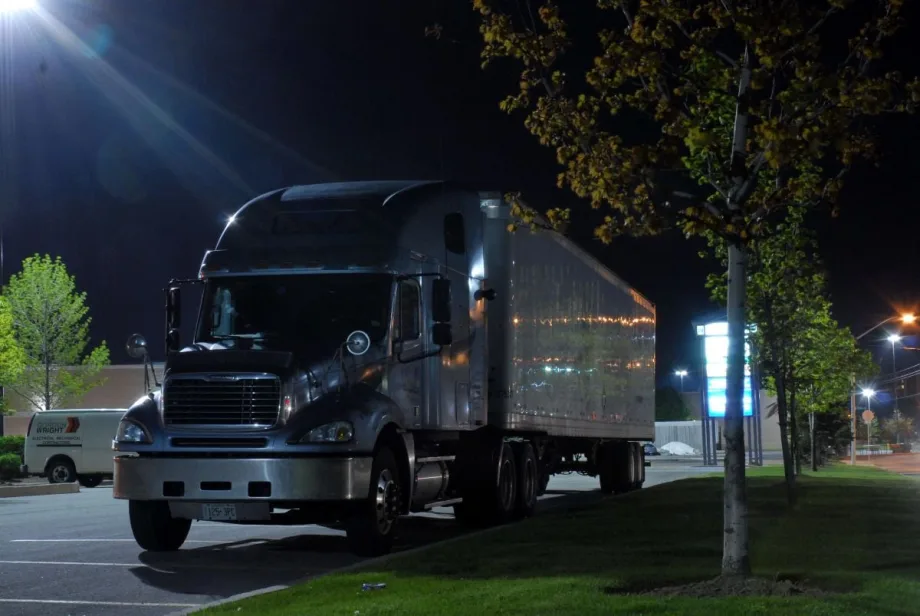
A new Federal Highway Administration survey asks where and when truck drivers have difficulty finding truck parking,
Photo: Jim Park
2 min to read
The federal government has launched the third periodic truck parking survey required by what's known as "Jason’s Law."
That's a provision of the 2012 highway authorization law known as MAP-21. It required the U.S. Department of Transportation to assess the volume of truck parking in each state and to develop a system of metrics to measure the adequacy of truck parking on a periodic basis.
The provision is named in honor of trucker Jason Rivenburg, who was shot to death in 2009 during a robbery attempt while resting at an abandoned gas station in South Carolina.
Surveys were previously conducted in 2015 and 2019.
After the first survey, the DOT launched the National Coalition on Truck Parking to work on how best to address truck-parking problems across the country.
What to Expect from the Truck Parking Survey
The new Federal Highway Administration survey questions cover where and when drivers have difficulty finding truck parking, how drivers prefer to get information on available parking, plus a question for motor carriers regarding route scheduling.
Addressing the parking shortage is a long-standing priority for the trucking industry, and the survey results will support advocacy efforts for additional federal and state funding.
Truck parking was number four on the list of top trucking priorities in the American Transportation Research Institute's Top Industry Issues report released last fall. For truck drivers, it was number 2 on the list. For motor carriers, it was number 9 on the list.
Congress is likely to consider truck parking legislation as part of highway reauthorization over the next 12 to 18 months. The FHWA anticipates publishing its survey results and analysis within the coming year.
Survey responses are due by February 27.
2025 Trucking Industry Professionals – Jason's Law Truck Parking Survey
2025 Truck Drivers Survey – Jason's Law Truck Parking Survey
NATSO Wants Truck Parking Research to Go Further
NATSO, the organization of truck stop and travel plaza operators, said it has urged the agency to go further and include questions such as:
Whether trucking companies reimburse their drivers for truck parking.
How frequently trucking companies include truck parking in their negotiations on fuel purchase agreements.
NATSO also requested that DOT officials be surveyed about the degree to which truck parking is considered when new regulations are being proposed for the trucking industry.
More Drivers

Truck Drivers Need More Than Another Alert
Fleets have more visibility into truck health, safety events, and driver activity than ever. The next challenge is turning all that information into useful guidance for the person who has to decide what to do next.
Read More →
FMCSA Removes 110 Truck Driver Training Schools from Certified ELDT List
Federal regulators also are targeting more than 160 additional training providers and launching a nationwide audit of third-party CDL skills testers as part of a broader crackdown on trucking fraud.
Read More →
Hours of Service Pilot Programs: FMCSA Readies for 2027 Rollout
Two pilot programs could eventually reshape hours-of-service rules, giving truck drivers options to pause their 14-hour clock or use longer split sleeper rest periods.
Read More →
Medical Cards, English Proficiency Reshape Roadcheck Violations
Medical-card violations jumped to the top of the driver out-of-service list during CVSA’s 2026 International Roadcheck, while English-language proficiency violations appeared among the leading violations for the first time.
Read More →
Driver Trust Can Make or Break the Success of Fleet Safety Technology
New Teletrac Navman research suggests that onboarding, transparency about driver data, and positive feedback can play a significant role in how commercial drivers respond to safety and coaching technology.
Read More →
EEOC Sues KLLM Over Alleged Sex Discrimination in Driver Training
KLLM is facing a federal sex-discrimination lawsuit over policies the EEOC alleges put female truck driver trainees at a disadvantage.
Read More →
FMCSA Moves to Codify English Language Requirements for Commercial Drivers
By changing regulations on English-language proficiency requirements for commercial drivers, rather than relying on a guidance memo, the FMCSA said future administrations won't be able to walk back the Trump administration's stricter enforcement with just a memo.
Read More →
Drivers Put Western Star Trucks to the Test at Star Nation Experience
Watch to get an inside look at the Western Star trucks, technology, and community behind the Star Nation Experience 2026!
Read More →
Trump Administration Looks to Put More Veterans Behind the Wheel
The Freedom Haulers program pulls together existing and expanded programs at several federal agencies to recruit veterans to drive commercial heavy-duty trucks and cut the red tape for them to get a CDL, training, and employment.
Read More →
Putting Mack’s Command Steer to the Test
A test drive of Mack’s Command Steer active steering system evaluates how it can make truck driving easier and less tiring.
Read More →