





Related from the archives: Death of Trucker Prompts Truck Parking Bill
DOT Report Rounds Up Truck Parking Solutions
A report on the first year’s activities of the public-private National Coalition on Truck Parking presents suggestions from trucking stakeholders from several regional meetings held in 2016 on how best to address truck-parking problems across the country.
July 10, 2017
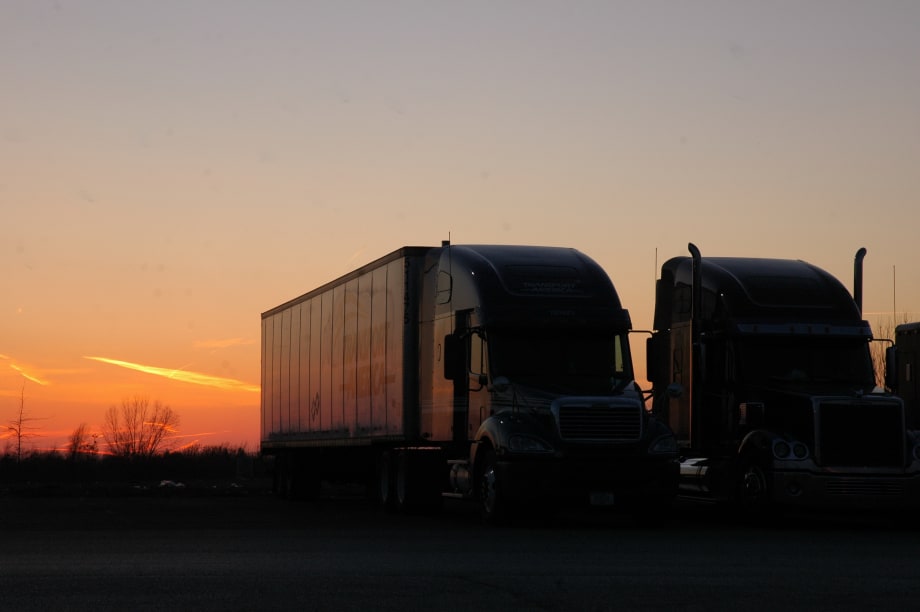
Truck parking shortages exist in many parts of the country, threatening driver safety.
Photo: Jim Park
4 min to read
A report on the first year’s activities of the public-private National Coalition on Truck Parking presents suggestions from trucking stakeholders from several regional meetings held in 2016 on how best to address truck-parking problems across the country.
Published by the Department of Transportation, the report notes that the coalition launched with a kickoff meeting at DOT in November 2015. Then four regional meetings were held in 2016 to get input from key stakeholders on “creative and innovative approaches” to solve the nation's truck parking problem.
The meetings were conducted by the Federal Highway Administration with participation by the Federal Motor Carrier Safety Administration, the Maritime Administration, and the five core Coalition partners:
American Association of State Highway and Transportation Officials
American Trucking Associations
Owner-Operator Independent Driver Association
National Association of Truck Stop Operators
Commercial Vehicle Safety Alliance
Key suggestions developed for each of four discussion areas are described in the report, including the following points:
Parking Capacity
Develop additional truck parking capacity through the creative use of public land within highway rights-of-way.
Develop an updated national design standard for parking facilities, considering the needs of oversized trucks, security, and lighting needs while also maximizing the capacity of a truck parking area within the highway right-of-way.
Integrate shippers/receivers into the conversation to address truck parking needs at industrial sites.
Address truck parking needs in the context of improving the efficiency of the entire supply chain.
Technology and Data
Develop interoperable tools to disseminate real-time information about parking availability at highway rest areas and private truck stops.
Incorporate truck parking technology into trip planning and reservation services using existing fleet/vehicle management software.
Build parking availability and reservation capabilities into connected vehicle and vehicle-to-infrastructure (V2I) technology.
Funding, Finance and Regulations
Establish a dedicated funding source to support capital projects and maintenance for public rest areas and truck parking facilities on the national highway network.
Promote innovative local land-use controls and funding mechanisms such as industrial park co-operatives or industrial tax districts for pooled parking in industrial areas.
Promote and support public-private partnerships for new or expanded parking facilities.
Study financial models for truck parking fees to provide a source of capital and operating revenue for truck parking facilities.
State/Regional/Local Coordination
Encourage states and metropolitan planning organizations to address truck parking and similar issues in state and regional freight plans.
Conduct outreach on truck parking and other important trucking industry issues through MPOs, regional councils, economic development authorities, and national industry organizations.
Involve trucking and truck stop industries in state and MPO freight or transportation advisory committees to address truck parking needs.
Develop a public relations campaign to educate the public and elected officials about the importance of truck parking in freight transportation and industrial development.
DOT pointed out in the report that “nearly all of the proposed initiatives to address truck parking needs can only be implemented through a collaborative effort among various coalition member organizations.
“While federal funding eligibility for truck parking projects has expanded considerably in successive federal transportation authorization laws over the years,” the agency added, “the U.S. DOT is not an implementing agency for transportation projects, and truck parking projects compete for highway funding with other transportation needs such as pavement and bridge maintenance, other safety improvements, and capacity enhancements.”
Therefore, according to DOT, the initiatives discussed by the coalition and raised in the 2016 regional meetings will “require ongoing collaboration among state departments of transportation, the trucking and truck stop industries, law enforcement and highway safety officials, the shippers whose business activities drive the operations of the nation's trucking industry, and the various public agencies that implement land use regulations at the local level.”
Next Steps for Truck Parking Group
As for next steps, DOT said the coalition’s member organizations identified the following three near-term activities:
The coalition will convene working groups for each of the four major topic areas (Parking Capacity, Technology & Data, Funding/Finance & Regulation, and State/Regional/Local Government Coordination) in 2017. Work will focus on developing implementation strategies for various initiatives that came out of the regional meetings.
Industry involvement in state and metropolitan planning organization freight planning processes can begin immediately and be ongoing, as public agencies develop and update their freight plans.
FHWA intends to conduct a second round of the Jason's Law Survey on truck parking, as mandated by Section 1401 of MAP-21. The survey is estimated to be administered in 2018.
More Drivers

Truck Drivers Need More Than Another Alert
Fleets have more visibility into truck health, safety events, and driver activity than ever. The next challenge is turning all that information into useful guidance for the person who has to decide what to do next.
Read More →
FMCSA Removes 110 Truck Driver Training Schools from Certified ELDT List
Federal regulators also are targeting more than 160 additional training providers and launching a nationwide audit of third-party CDL skills testers as part of a broader crackdown on trucking fraud.
Read More →
Hours of Service Pilot Programs: FMCSA Readies for 2027 Rollout
Two pilot programs could eventually reshape hours-of-service rules, giving truck drivers options to pause their 14-hour clock or use longer split sleeper rest periods.
Read More →
Medical Cards, English Proficiency Reshape Roadcheck Violations
Medical-card violations jumped to the top of the driver out-of-service list during CVSA’s 2026 International Roadcheck, while English-language proficiency violations appeared among the leading violations for the first time.
Read More →
Driver Trust Can Make or Break the Success of Fleet Safety Technology
New Teletrac Navman research suggests that onboarding, transparency about driver data, and positive feedback can play a significant role in how commercial drivers respond to safety and coaching technology.
Read More →
EEOC Sues KLLM Over Alleged Sex Discrimination in Driver Training
KLLM is facing a federal sex-discrimination lawsuit over policies the EEOC alleges put female truck driver trainees at a disadvantage.
Read More →
FMCSA Moves to Codify English Language Requirements for Commercial Drivers
By changing regulations on English-language proficiency requirements for commercial drivers, rather than relying on a guidance memo, the FMCSA said future administrations won't be able to walk back the Trump administration's stricter enforcement with just a memo.
Read More →
Drivers Put Western Star Trucks to the Test at Star Nation Experience
Watch to get an inside look at the Western Star trucks, technology, and community behind the Star Nation Experience 2026!
Read More →
Trump Administration Looks to Put More Veterans Behind the Wheel
The Freedom Haulers program pulls together existing and expanded programs at several federal agencies to recruit veterans to drive commercial heavy-duty trucks and cut the red tape for them to get a CDL, training, and employment.
Read More →
Putting Mack’s Command Steer to the Test
A test drive of Mack’s Command Steer active steering system evaluates how it can make truck driving easier and less tiring.
Read More →