





Top Green Fleets 2026: How Fleets Are Reducing Emissions in the Real World
Electric Yard Tractors Move Beyond Pilots
Operating-cost savings have overtaken sustainability goals as the leading reason surveyed fleets are adopting battery-electric terminal tractors, according to new NACFE research.
October 6, 2026
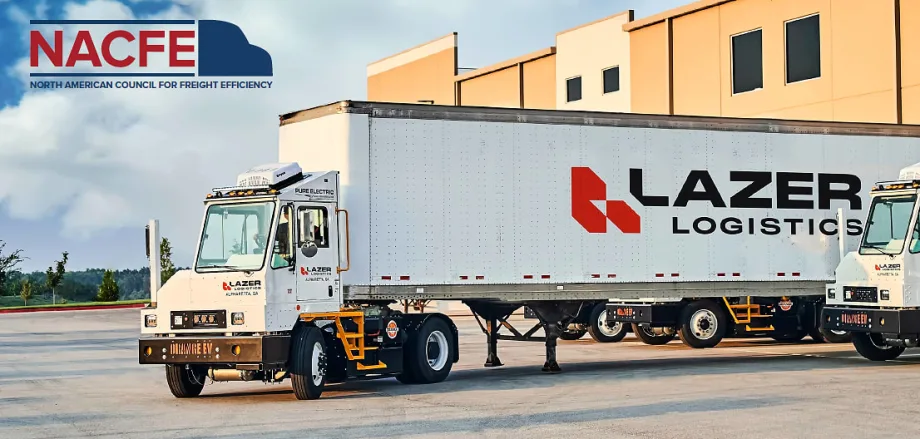
More than half of the fleets NACFE surveyed about electric yard tractors said they had moved beyond pilot to partial deployment or full standardization.
Credit:
Orange EV | NACFE
4 min to read
Electric terminal tractors are emerging as one of the Class 8 applications where battery-electric trucks can move beyond demonstration projects and become standard fleet equipment.
A new report from the North American Council for Freight Efficiency found that 76% of surveyed fleet operators reported at least moderate operating-cost savings from electric terminal tractors compared with diesel models.
More than half — 54% — said they had progressed beyond a pilot into partial deployment or full standardization.
NACFE’s report, "Beyond the Pilot: Electric Terminal Tractor Adoption, Four Years Later," updates the organization’s 2022 research on electric yard trucks. That earlier report concluded that the predictable, low-mileage duty cycles of terminal tractors made them a strong early application for truck electrification.
The new report looks at whether fleet experience since then has supported that assessment.
“NACFE gathered insights about fleet procurement behavior and preferences related to electric terminal tractors and found that today terminal tractors are a proven option for a growing number of fleets,” said Bruce Stockton, NACFE senior fleet consultant and one of the report’s authors.
Electric-Truck Economics Gain Importance
Direct financial benefit was the most commonly cited reason for adopting electric terminal tractors, selected by 60% of the fleet operators surveyed.
Corporate sustainability goals followed closely at 57%. But the results suggest sustainability alone no longer drives fleet interest in these trucks.
Reduced maintenance and energy expenses were among the most commonly reported financial benefits.
One fleet included in the report had nearly a decade of side-by-side operating data for diesel and electric yard tractors. It reported approximately 50% lower maintenance costs per operating hour and energy costs that were 75% to 95% lower per operating hour with the electric equipment.
NACFE said that the fleet’s combined savings had exceeded $5 million.
Those figures represent one operation's experience, not an average across all respondents. The survey asked fleets to report their own cost experience; it was not an independent audit of maintenance expenses, electricity costs, or return on investment.
Why Electric Yard Tractors Work
Terminal tractors avoid several of the challenges that complicate battery-electric trucks in over-the-road operations.
They generally work within a single yard or distribution center, follow repetitive duty cycles, and return regularly to a central parking location. That gives fleets more control over charging and reduces concerns about vehicle range and public charging availability.
The yard also can become a fleet’s introduction to electric-vehicle operations.
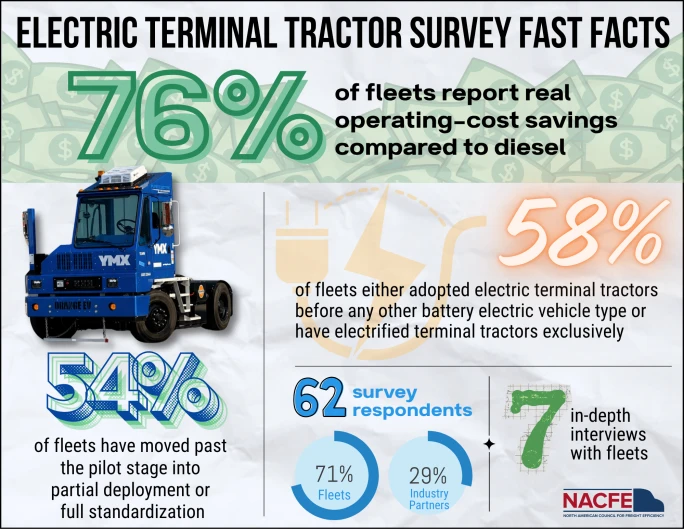
NACFE surveyed 62 members of its fleet and industry-partner network. The respondents included 44 fleet operators and 18 industry partners. he organization supplemented the survey with seven in-depth interviews, seven fleet case studies, and additional research.
Credit:
NACFE | Orange EV
Among the fleet operators surveyed, 58% either adopted electric terminal tractors before adding any other type of battery-electric vehicle or used electric terminal tractors as their only battery-electric equipment.
That allows fleets to gain experience with charging infrastructure, technician training, driver acceptance, and electric-vehicle maintenance before considering more complex on-road applications.
The report includes seven case studies representing a range of outcomes, from fleets that standardized on electric terminal tractors to operations that decided the technology was not the right fit.
Fleets Still Need the Right Operation
NACFE did not suggest electric terminal tractors will work for every fleet or every yard.
The organization developed an online readiness tool that asks fleets to evaluate seven factors:
- Daily duty cycle
- Access to capital
- Regulatory or corporate sustainability requirements
- Available incentives
- Power and charging infrastructure
- Previous electric-vehicle experience
- Control of the operating site
Site control can be particularly important. A fleet that owns its yard may be better positioned to install charging infrastructure than one operating at a leased or customer-owned facility.
Capital availability and incentives also can affect the business case. Even when an electric tractor produces lower energy and maintenance costs, the fleet must be able to absorb the higher initial vehicle and infrastructure investment.
The readiness tool is intended to start an internal discussion, NACFE said. It is not a financial model or a guarantee that a fleet will save money.
Who Participated in the Research?
NACFE surveyed 62 members of its fleet and industry-partner network. The respondents included 44 fleet operators and 18 industry partners.
The organization supplemented the survey with seven in-depth interviews, seven fleet case studies, and additional research.
The sample is relatively small and was drawn from organizations familiar with NACFE. The original survey invitation also targeted fleets evaluating or already operating electric terminal tractors, along with companies supporting those deployments. That may make the respondents more engaged with electrification than the overall terminal-tractor market.
Orange EV, which manufactures electric terminal tractors, helped fund the research, connect NACFE with some interview and survey participants, promote the survey and provide a manufacturer’s perspective. NACFE said Orange EV did not write the report or provide its data.
Those limitations do not erase the fleet experiences documented in the report. But they do mean the percentages should be viewed as findings from this group of respondents, rather than an industrywide adoption rate.
For fleets evaluating their first battery-electric Class 8 equipment, NACFE’s findings point to the yard as a practical place to start — provided the duty cycle, infrastructure, and economics work for the individual operation.
More Equipment
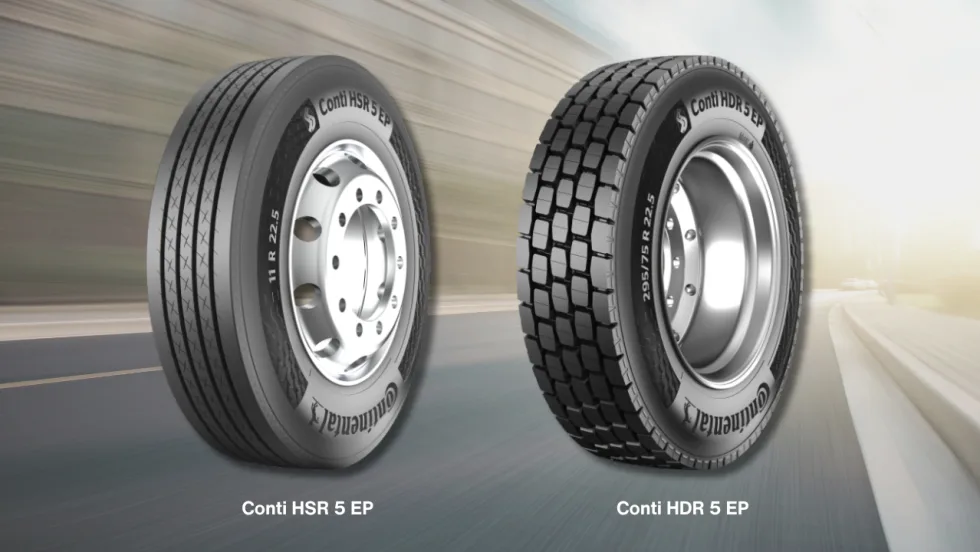
Continental Introduces New Regional Truck Tires
Continental says its new Generation 5 steer and drive tires for regional operations offer longer tread life, with estimated mileage gains of 22% and 19%, respectively.
Read More →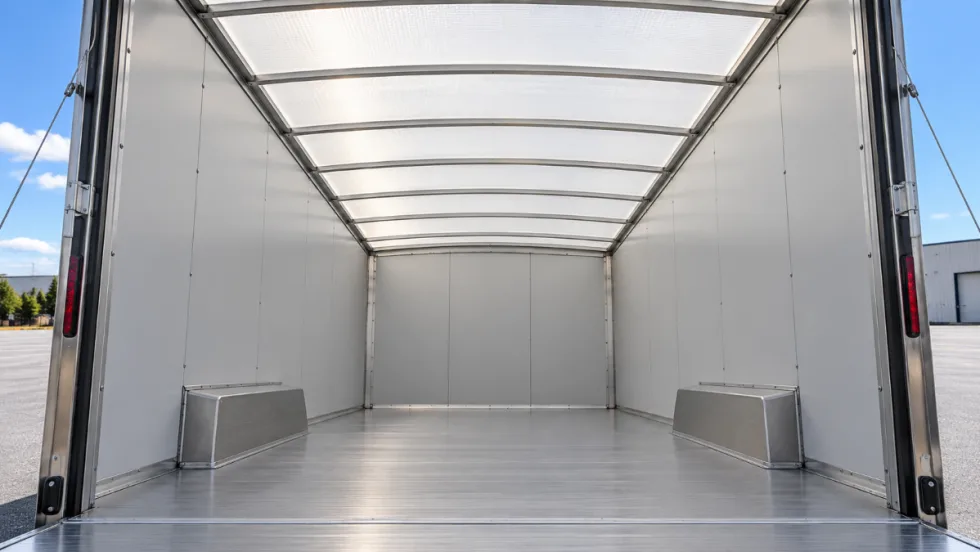
Tekmodo Introduces CargoBright Brand for Translucent Trailer Roofs
CargoBright is designed to diffuse daylight across the cargo area while performing as a working vehicle roof.
Read More →
Fleet Economics Shape Electric Truck Outlook
ACT Research expects costs, charging infrastructure, and technology improvements to drive zero-emission commercial vehicle adoption as federal regulations and incentives retreat.
Read More →
Kodiak Targets Dallas–Houston for Driverless Trucks
The company says its autonomous trucks are completing the I-45 run without a safety observer taking control. It plans to remove the observer by the end of 2026.
Read More →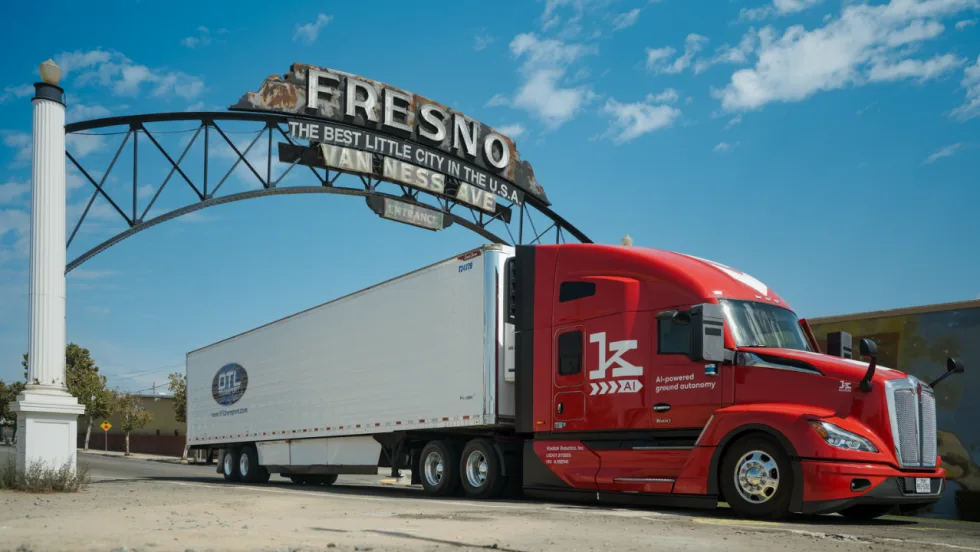
Kodiak Hauls Produce in California Autonomous Truck Pilot
Kodiak AI and DTL Transport have begun hauling produce between Fresno and Los Angeles under California’s new rules for testing heavy-duty autonomous trucks. A safety driver remains behind the wheel.
Read More →
Used-Truck Remarketing Math Is Changing
Used-truck value is no longer just a concern at trade-in. Decisions made throughout a truck’s first life can influence what it’s worth years later.
Read More →
How Volvo Updated Its D13 for EPA 2027 [Watch]
Volvo’s updated D13 promises lower emissions without sacrificing performance or fuel economy. Take a closer look at what changed inside the engine in this HDT Spotlight video.
Read More →
Michelin Tire Improves Efficiency and Durability for Regional Fleets
The Michelin X Multi Energy D2 is a regional haul drive tire engineered to help fleets improve fuel efficiency, durability and traction in demanding stop-and-go operations.
Read More →
ZF Expands Commercial Vehicle Push in North America
ZF is expanding its North American commercial-vehicle presence with new transmission applications, electrification, trailer technology and autonomous-driving systems.
Read More →
Tesla Wants a Self-Driving Semi. Are Cameras Enough?
Could Tesla’s camera-only autonomous driving technology work on an 80,000-pound Semi? In this commentary, HDT's Deborah Lockridge takes a look at Tesla, Cybercab, and how autonomous trucks see the road.
Read More →