





A Tough But Rewarding Journey: 4Gen’s Path to All-Electric Trucks
Top Green Fleets 2026: How Fleets Are Reducing Emissions in the Real World
What works in sustainable trucking today? Heavy Duty Trucking's Top Green Fleets are finding practical ways to cut fuel use, reduce emissions, and keep freight moving.
May 18, 2026
HDT's 2026 Top Green Fleets have been using data-driven strategies to improve freight efficiency.
Credit:
HDT Graphic
14 min to read
- The "Top Green Fleets 2026" highlights practical strategies in sustainable trucking that reduce fuel consumption and emissions.
- Heavy Duty Trucking's featured fleets demonstrate effective methods to maintain freight efficiency while lowering environmental impact.
- The real-world examples provide actionable insights for emissions reductions across the trucking industry.
*Summarized by AI
There’s no single path to sustainability in trucking, and this year’s Top Green Fleets make that clearer than ever. Yes, there’s more electrification. Yes, alternative fuels continue to gain ground. But what really stands out in 2026 is how fleets are getting smarter about the basics.
Across operations of all sizes, there’s a growing emphasis on using data to move more freight with fewer miles and less fuel, through technologies such as route optimization, load planning, and real-time performance tracking.
This year’s list also shows that you don’t have to be a mega-fleet to make meaningful progress. Some of the smaller fleets are making headway through disciplined operations, driver engagement, and a willingness to test and improve.
At the same time, the industry is still very much in what’s often called the “messy middle.” Diesel efficiency, renewable fuels, natural gas, and zero-emission trucks are all in play — sometimes within the same fleet. What works in one operation or lane doesn’t always translate to another.
What these fleets have in common is a practical, persistent approach to reducing emissions and protecting the environment while keeping freight moving.
How the Top Green Fleets Are Chosen
Each year, Heavy Duty Trucking’s editors invite nominations and submissions for the Top Green Fleets. We evaluate factors such as alternative fuels and powertrains, fuel economy, freight efficiency, facility improvements, and overall sustainability goals.
We also look at recent progress, plans for the future, and a fleet’s willingness to share what’s working.
For 2026, we selected 20 fleets of varying sizes and operations that are demonstrating leadership in sustainable trucking. As always, fleets are listed in alphabetical order.
4 Gen Logistics, Rialto, California
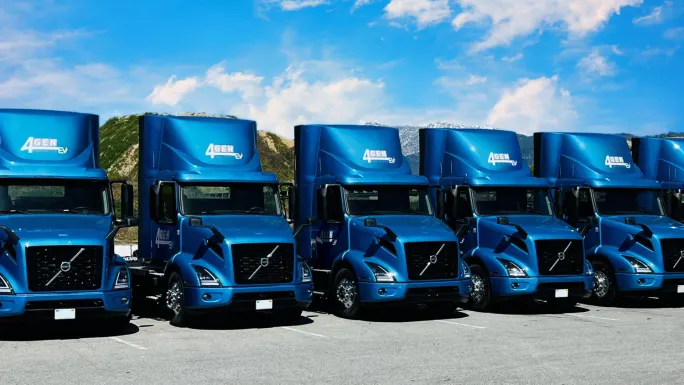
4 Gen was recently recognized by the Port of Long Beach as the first fully zero-emissions drayage fleet in the U.S.
Credit:
4 Gen Logistics
4 Gen Logistics has gone all-in on zero emissions. The California drayage carrier now operates a 100% zero-emission fleet, with its 79 Class 8 trucks powered by battery-electric and hydrogen fuel cell technology.
That transition isn’t just about the trucks. The company has built out its own charging infrastructure and is already planning for the next step — megawatt charging — to support future growth.
Even as policy and market conditions shift, 4 Gen has stayed committed to electrification, focusing on delivering ZEV freight for customers looking to cut emissions in port and regional operations.
What’s Next: Expanding charging capacity, evaluating new OEMs, and growing the ZEV fleet while helping customers meet sustainability targets.
A. Duie Pyle, West Chester, Pennsylvania
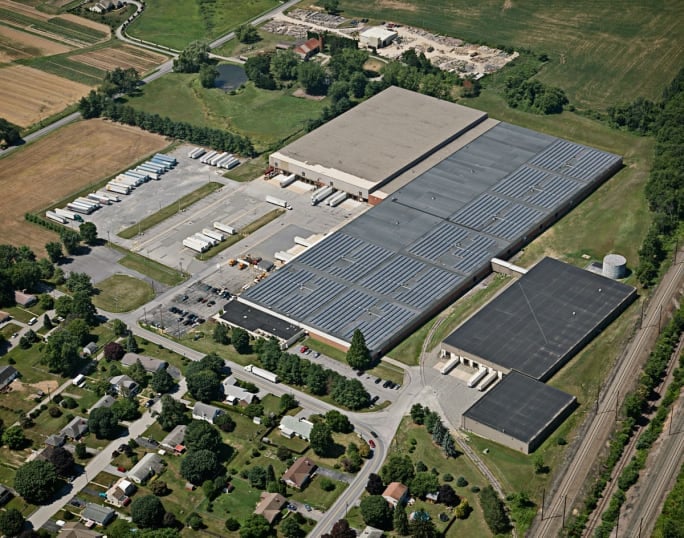
A. Duie Pyle has installed solar panels at its Parkesburg, Pennsylvania, warehouse.
Credit:
A. Duie Pyle
A. Duie Pyle, which operates more than 1,800 heavy-duty trucks, takes a layered approach to sustainability, starting with the basics of fuel economy and freight efficiency and building from there.
The LTL and dedicated carrier leans heavily on data to optimize routing, reduce idle time, and improve driver performance, while spec’ing equipment with aerodynamics, speed controls, and tire technologies that deliver steady fuel savings.
A standout effort is its CleanJourney Renewable Diesel Program, which uses a book-and-claim model to help customers reduce emissions without changing operations. The program has already been applied to more than 10,000 shipments, cutting over 225,000 pounds of CO₂e.
The company is also investing beyond the truck, with energy-efficient facilities—including a large solar-powered warehouse—and a growing share of electric forklifts.
What sets Pyle apart is how it connects all of this back to the customer, with detailed, shipment-level emissions tracking that adds transparency in an LTL environment where that’s not easy.
What’s Next: Expanding the CleanJourney program, adding more fuel-efficient equipment, and continuing facility upgrades aimed at reducing energy and resource use.
Averitt Express, Cookeville, Tennessee
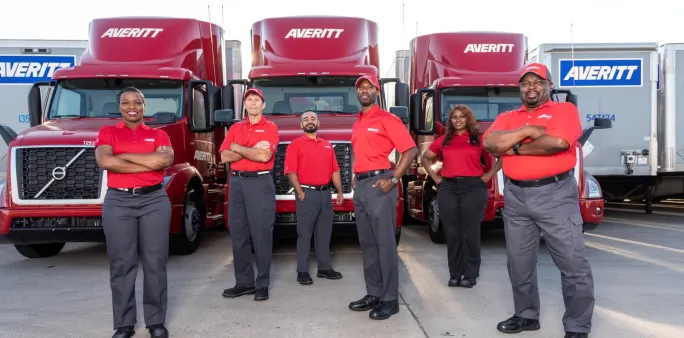
Averitt Express approaches sustainability with a combination of fleet technology, alternative fuels, and efficiency-driven operations.
Credit:
Averitt
Averitt Express continues to show the impact of getting the fundamentals right. Through network optimization and smarter routing of its 4,000-truck fleet, the carrier has cut both fuel use and total miles by about 16%, improving freight efficiency and lowering emissions.
Long-term, those efforts add up. Since 2004, Averitt has reduced CO₂e emissions by 36% and NOx by 84% as part of its SmartWay participation.
The fleet supports that progress with proven technologies such as trailer skirts, tire inflation systems, and auxiliary power units, as well as a steady shift toward alternative fuels, including biodiesel and renewable diesel. Electric yard tractors and fully electric warehouse forklifts extend those gains beyond the road.
Averitt also leans into circular practices, from recycling tires and oil to reclaiming nearly all water used in truck washes.
What’s Next: Expanding Scope 3 emissions tracking, continuing electrification where it makes sense, and building on efficiency gains across the network.
B-H Transfer, Sandersville, Georgia
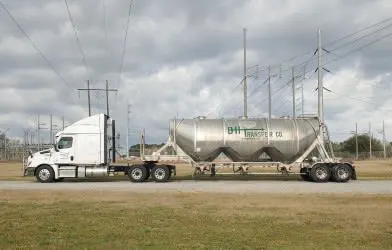
B-H Transfer is working to better track fuel usage, idle time, and overall fleet performance to help it make more data-driven decisions.
Credit:
B-H Transfer
B-H Transfer’s approach is straightforward: run a tighter operation and the sustainability gains follow. The bulk carrier has nearly 300 trucks and focuses on reducing empty miles, improving backhauls, and aligning freight with its network to cut unnecessary miles.
Driver engagement plays a big role. Performance-based incentives tied to fuel economy, idle time, and safety, combined with technologies such as electric APUs and automatic tire inflation, have helped reduce idle time by 30% and boost fuel economy by more than 1 mpg.
The company is also making practical facility and maintenance improvements, including LED lighting, water-saving efforts in wash operations, and expanded tire retreading to reduce waste.
While not yet heavily invested in alternative fuels, B-H is exploring biodiesel and renewable diesel options as availability improves.
What’s Next: Building better data tracking around fuel and performance, refining network planning to further reduce empty miles, and continuing incremental equipment and efficiency upgrades.
Detmar Logistics, San Antonio, Texas
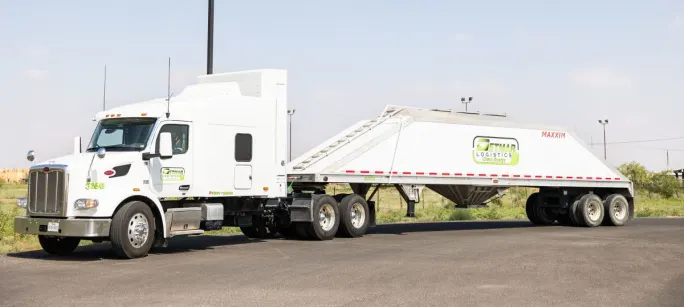
Detmar Logistics established its own vertically integrated fueling station for natural gas.
Photo: Detmar Logistics
Detmar Logistics is building its sustainability strategy around natural gas, with not only trucks but also fueling infrastructure. The regional carrier operates 180 heavy-duty trucks and is expanding its CNG fleet from 60 to 80, including new units powered by Cummins’ 15-liter natural gas engine.
A key differentiator is vertical integration. Detmar has developed its own CNG fueling infrastructure and is working on a second station, helping stabilize fuel costs while pairing with renewable natural gas to lower emissions.
On the efficiency side, the fleet relies on APUs to cut idle time and speed limiters set at 67 mph to reduce fuel burn across operations.
What’s Next: Expanding its CNG fleet and fueling network while scaling renewable natural gas use to further reduce both fuel costs and emissions.
FTC Transportation, Oklahoma City, Oklahoma
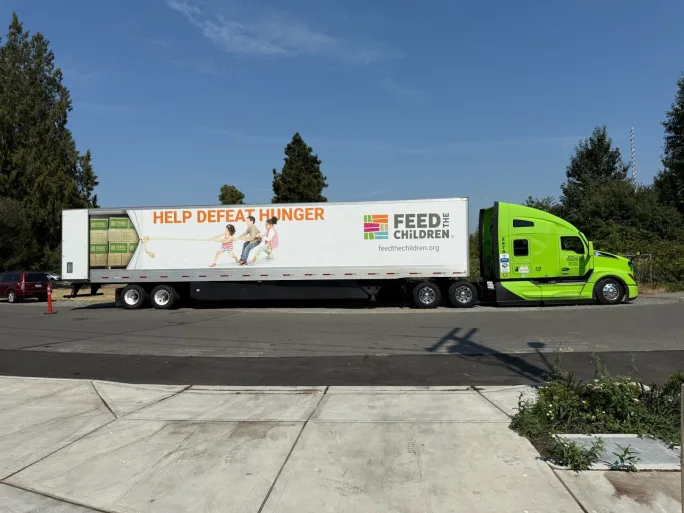
FTC has installed trailer side skirts, under-trailer air deflectors, low-rolling-resistance tires, and tire inflation systems on its trailers to help save fuel.
Credit:
FTC Transportation
FTC Transportation focuses on proven, practical ways to improve fuel efficiency across a smaller long-haul fleet. With just 25 trucks, the company uses newer equipment to meet current emissions standards and adds aerodynamic upgrades, low-rolling-resistance tires, and tire-inflation systems to improve performance.
Every tractor is equipped with an APU to reduce idling, and trucks are governed at 68 mph to balance safety and fuel economy. Driver coaching, with incentives tied to fuel performance, play a central role, helping the fleet steadily improve MPG year over year.
FTC also emphasizes recycling across its maintenance operations, from oil and tires to scrap materials and cardboard.
What’s Next: Continuing to refine driver performance, reduce idle time, and build incremental gains in fuel economy year after year.
Knight-Swift Transportation, Phoenix, Arizona
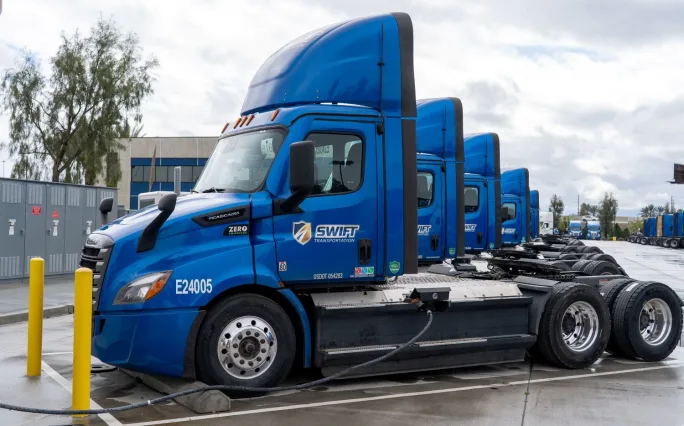
Knight-Swift recently completed its on-site infrastructure supporting its electric dray cabs and yard trucks in southern California.
Credit:
Knight-Swift
Knight-Swift continues to take a broad, data-driven approach to reducing emissions across one of the industry's largest fleets, with some 25,000 heavy-duty trucks. Since 2019, the company has cut CO₂ emissions per mile by 9%, driven by improvements in fuel economy, network efficiency, and equipment technology.
A key tool is its in-house Environmental Management System, which evaluates the real-world impact of different technologies—from renewable diesel to battery-electric trucks—across its operations.
The fleet is also advancing electrification, with charging infrastructure and a microgrid in Southern California supporting electric trucks and yard operations. At the same time, it continues to expand the use of renewable diesel and biodiesel wherever feasible.
Beyond the truck, Knight-Swift invests in solar generation, energy efficiency, and recycling programs across its facilities.
What’s Next: Continuing to test and scale a wide range of technologies while working toward its goal of a 50% reduction in CO₂ emissions per mile by 2035.
Nevoya, San Francisco, California
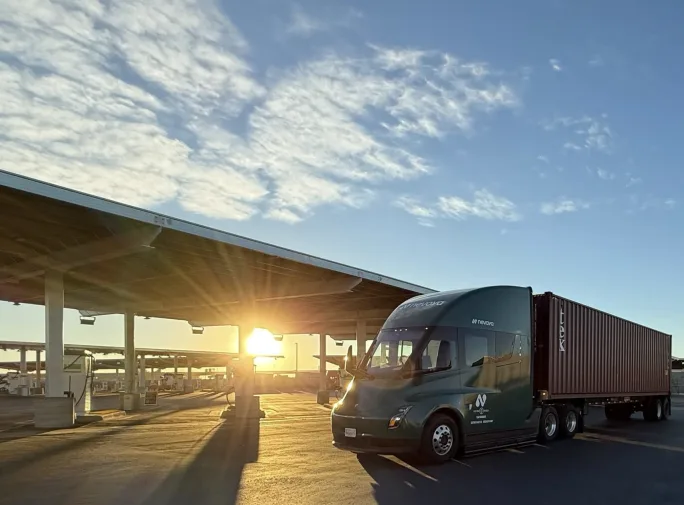
Nevoya is a full electric motor carrier operating approximately 30 trucks, including the Tesla Semi, Freightliner eCascadia, and Volvo VNR Electric.
Credit:
Nevoya
Nevoya is a young fleet that's building operations specifically around electric vehicles from the ground up. It operates a fully electric fleet of about 30 trucks, using a mix of Tesla, Freightliner, and Volvo models across regional and drayage routes.
What makes Nevoya stand out is its AI-driven operating model. Its proprietary platform continuously optimizes routing, charging, and utilization in real time, helping offset the complexity of EV operations while improving efficiency and uptime.
The company is part of a major new initiative in Texas that will deploy approximately 50 electric trucks along a high-volume freight corridor, backed by a book-and-claim framework to help shippers reduce Scope 3 emissions.
What’s Next: Scaling its electric fleet and AI platform into new markets while expanding partnerships tied to large-scale zero-emission freight deployment.
NFI, Camden, New Jersey
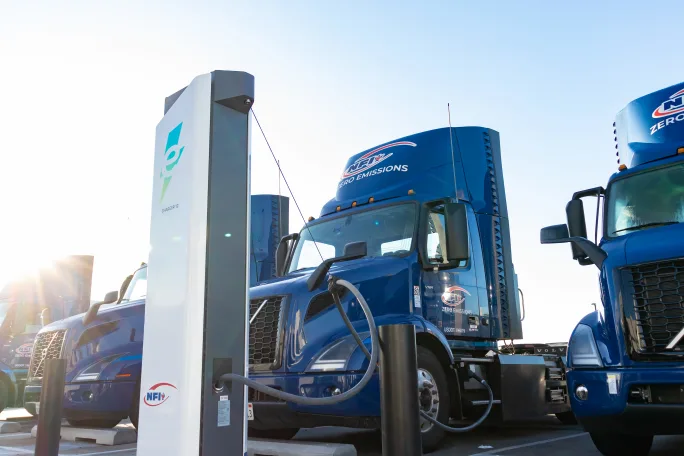
NFI is focused on deploying long-range battery-electric trucks, expanding electric yard tractors, and plans to pilot at eTRU.
Credit:
NFI
NFI continues to build out a diverse mix of alternative fuels and electrification across its national network of about 5,100 Class 8 trucks.
The fleet includes more than 100 battery-electric trucks, along with biodiesel, renewable diesel, and natural gas vehicles, supported by growing charging infrastructure in multiple regions.
The company is pairing that expansion with a strong focus on operational efficiency. Its Fleet View platform and business intelligence tools track metrics such as MPG, idle time, and out-of-route miles, helping identify opportunities to reduce fuel consumption.
Recent testing of automatic tire inflation systems showed measurable gains in MPG, leading to a broader rollout across the fleet.
NFI is also investing beyond transportation, with hundreds of electric forklifts in its warehouses and ongoing improvements in facility efficiency.
What’s Next: Deploying long-range electric trucks, expanding EV yard operations, piloting electric refrigeration units, and continuing to align fleet strategy with customer sustainability goals.
Nussbaum Transportation, Hudson, Illinois
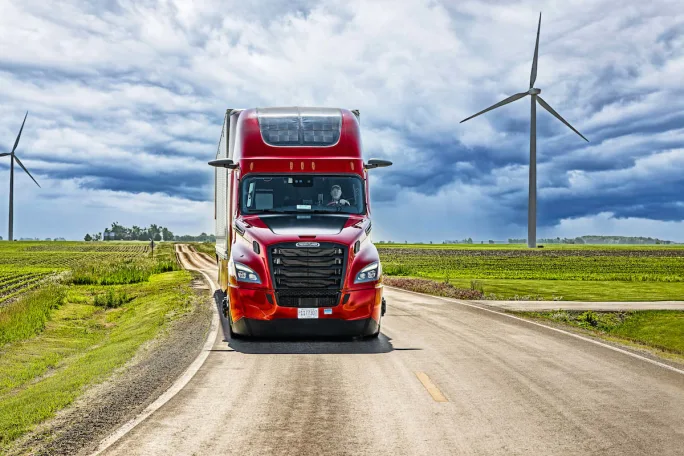
Nussbaum trucks feature solar panels, which reduce the need for idle. The fleet averages over 9 mph and is going for 10.
Credit:
Nussbaum
Nussbaum Transportation continues to push fuel efficiency through disciplined operations and detailed performance tracking. The nearly 600-truck fleet averaged 9.27 mpg in 2025, with a long-term goal of reaching 10 mpg.
Driver behavior is a major focus. High cruise control usage (well above industry averages), combined with low idle rates and ongoing coaching, helps drive consistent gains in fuel economy.
The company is also testing new technologies, including lithium battery systems that significantly reduce idling and improve efficiency, the latest aerodynamic upgrades and optimized drivetrain specs.
Beyond fuel, Nussbaum is extending equipment lifecycles, improving maintenance practices, and reducing waste through initiatives like longer oil change intervals and tire optimization.
What’s Next: Continuing to test new efficiency technologies, expand solar energy at facilities, and push toward higher MPG and lower idle across the fleet.
Old Dominion Freight Line, Thomasville, North Carolina
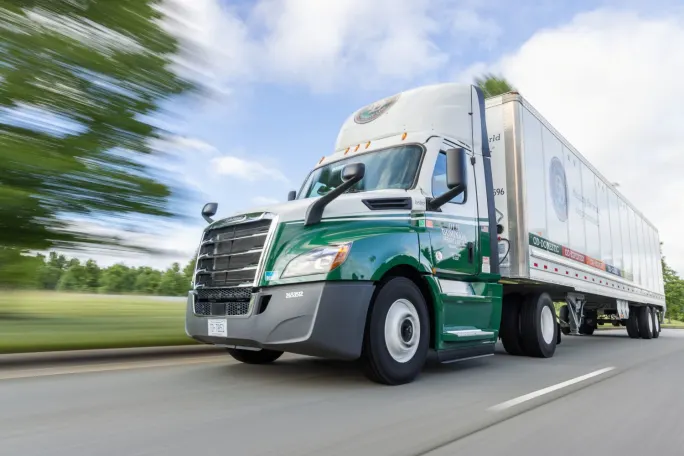
Since 2020, Old Dominion has increased its use of renewable diesel and biodiesel by 49%
Credit:
Old Dominion Freight Line
Old Dominion Freight Line continues to focus on efficiency at scale with its 10,000-truck fleet, investing in newer equipment, routing technology, and facility design to reduce emissions across its LTL network. Regular tractor replacement and ongoing spec improvements help keep fuel economy trending in the right direction.
The company is also expanding its use of renewable diesel and biodiesel, supported by a growing network of on-site fueling locations that reduce out-of-route miles and improve fuel quality control.
Operationally, OD leans on routing and planning tools to minimize empty miles and improve freight flow, while facility design improvements reduce yard movements and equipment use.
Electric equipment such as forklifts, yard trucks, and select vehicles is being deployed where it makes sense.
What’s Next: Continuing fleet modernization, expanding renewable fuel use, and evaluating zero-emission equipment as the technology matures.
Paper Transport, De Pere, Wisconsin
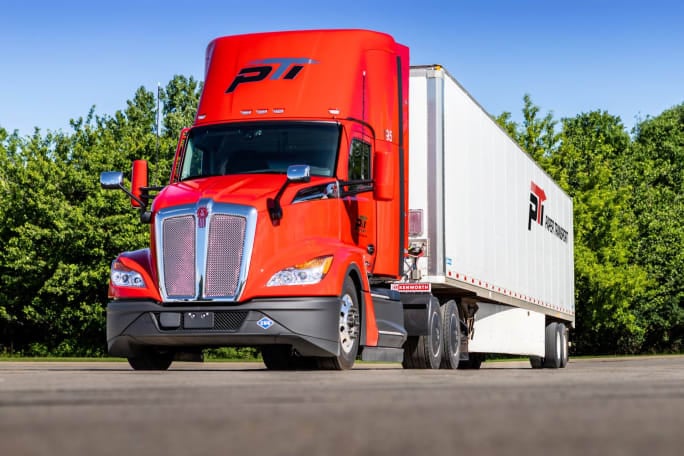
Paper Transport has surpassed 85 million cumulative natural g
Credit:
Paper Transport Inc.
Paper Transport, with about 800 heavy-duty trucks, has built its sustainability strategy around renewable natural gas, scaling one of the more established RNG programs in trucking. The fleet has logged more than 85 million natural gas miles, displacing over 13 million gallons of diesel.
That alternative fuel strategy is paired with a strong focus on freight efficiency. Through network design, analytics, and a contract-based model, PTI reduces empty miles and improves asset utilization, cutting fuel use regardless of powertrain.
Driver coaching, telematics, and equipment spec optimization further support fuel savings, while a continuous improvement mindset keeps efficiency as a core KPI.
What’s Next: Expanding RNG operations, deepening shipper partnerships, and continuing to refine network optimization tools to drive additional efficiency gains.
Pitt Ohio, Pittsburgh, Pennsylvania
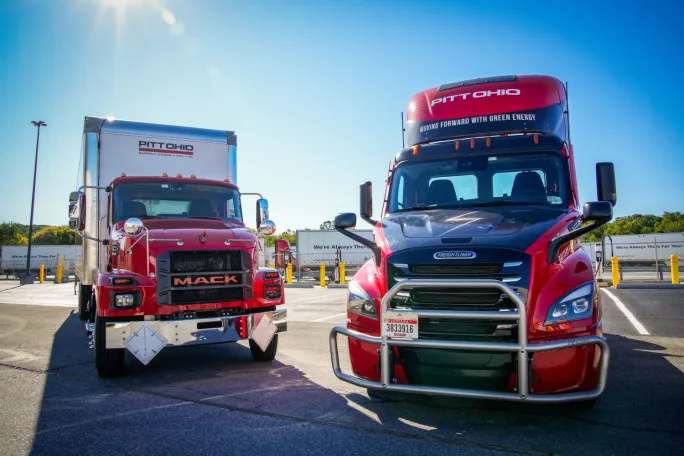
Pitt Ohio is implementing electric trucks such as the Mack MD Electric and the Freightliner eCascadia. It is using data tracking to help it in future deployments.
Credit:
Pitt Ohio
Pitt Ohio is taking a measured approach to electrification, combining pilot programs with major infrastructure investments. A recent project at its Harrisburg terminal added charging capacity for trucks, forklifts, and other equipment, supported by a full electrical upgrade and backup power systems.
The fleet, with about 650 Class 8 trucks as well as some medium-duty trucks, now includes a mix of electric and alternative-fuel vehicles, along with electric forklifts across operations.
At the same time, the company continues to emphasize fundamentals such as MPG improvements through tire programs, maintenance, and driver training, recognizing that efficiency still delivers the biggest gains.
What’s Next: Tracking performance data from new EV deployments, expanding charging capacity, and using those insights to guide future fleet decisions.
Ruan Transportation Management Systems, Des Moines, Iowa
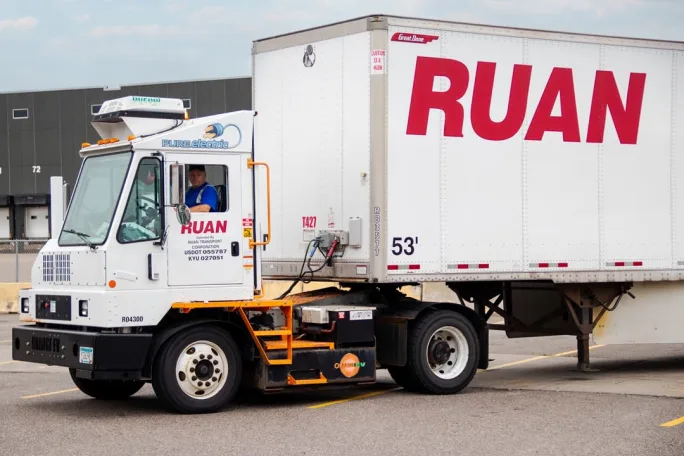
Ruan is transitioning to electric material handling equipment and exploring solar-powered trailer liftgates and pallet jack charging.
Credit:
Ruan
Ruan is steadily expanding its use of alternative fuels among its nearly 3,400-truck fleet, while maintaining a focus on overall fleet efficiency. The company operates a large biodiesel fleet, along with a growing number of electric vehicles and its own network of alternative fuel stations.
Beyond on-road equipment, Ruan is transitioning material-handling operations to electric and exploring new ideas such as solar-powered trailer liftgates and solar charging solutions.
The company’s approach centers on keeping the fleet modern, efficient, and aligned with evolving emissions standards, while maintaining reliability across a wide range of operations.
What’s Next: Expanding electric equipment, exploring new energy applications, and continuing to integrate lower-emission technologies across the fleet.
Schneider, Green Bay, Wisconsin
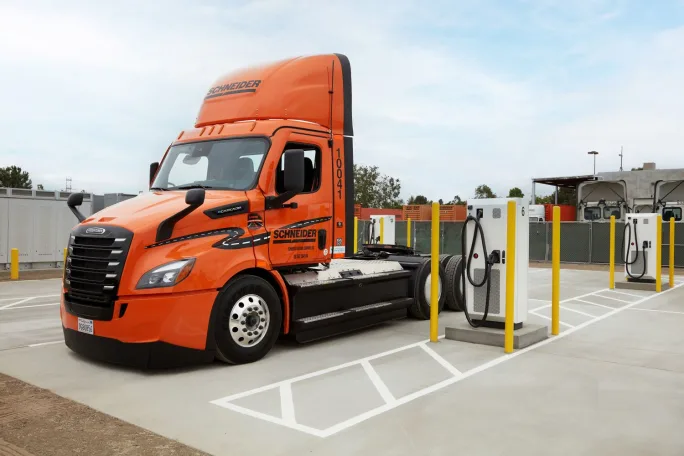
Schneider has nearly 100 battery-electric heavy-duty trucks and is exploring other solutions such as renewable natural gas.
Credit:
Schneider
Schneider continues to balance large-scale efficiency improvements with aggressive zero-emission deployment. It operates about 12,400 Class 8 trucks.
The fleet now operates nearly 100 battery-electric trucks and recently surpassed 10 million zero-emission miles, avoiding more than 33 million pounds of CO₂.
At the same time, Schneider maintains a diversified energy strategy, using biodiesel across most of its fleet while exploring CNG and other alternatives.
Efficiency remains a major focus. Aerodynamic improvements, lightweight equipment, and driver training programs help reduce fuel use, while intermodal offerings provide a lower-emissions option for long-haul freight.
The company also works closely with customers, using data tools to identify ways to cut emissions across entire supply chains.
What’s Next: Expanding BEV deployments, continuing fuel efficiency gains, and growing intermodal solutions to reduce overall carbon impact.
System Freight Inc., Jamesburg, New Jersey
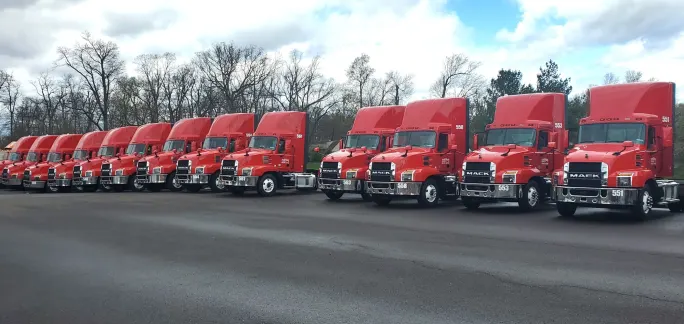
System Freight Inc. has been focused on reducing empty miles, but in the second half of 2026, it plas to deploy 75 new, more fuel-efficient trucks.
Credit:
System Freight Inc.
System Freight is proving that operational discipline can drive meaningful sustainability gains even without major capital investment. The company has focused on reducing empty miles and improving load planning for its 450-truck fleet, cutting empty mileage by about 5% and boosting overall efficiency.
Rather than relying solely on new equipment, the fleet emphasizes smarter routing, better backhaul strategies, and tighter coordination across operations to improve fuel use per mile.
That approach is complemented by targeted investments in fuel-efficient equipment and ongoing collaboration with OEMs on specs and performance.
What’s Next: Adding new, more fuel-efficient trucks while continuing to refine network efficiency and reduce empty miles across the fleet.
TCI Transportation, Commerce, California
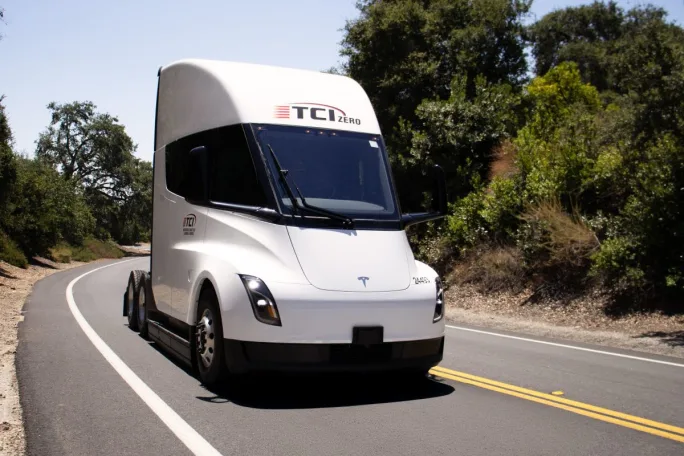
TCI Transportation has deployed multiple Tesla Semi electric tractors, as well as many electric medium-duty and yard trucks.
Credit:
TCI
TCI Transportation operates about 1,800 Class 8 trucks. It's accelerating its transition to lower-emission operations through a mix of electrification, infrastructure investment, and renewable energy. The fleet includes both battery-electric and natural gas trucks, supported by expanding charging capabilities across key facilities.
Recent deployments of electric tractors—along with additional charging stations and on-site solar—are helping reduce diesel use while building long-term capacity for zero-emission operations.
TCI is also working closely with customers, helping them develop their own infrastructure and better understand emerging technologies.
What’s Next: Scaling EV adoption, expanding charging and solar capacity, and continuing to leverage grants and partnerships to support fleet electrification.
TForce Freight, Memphis, Tennessee
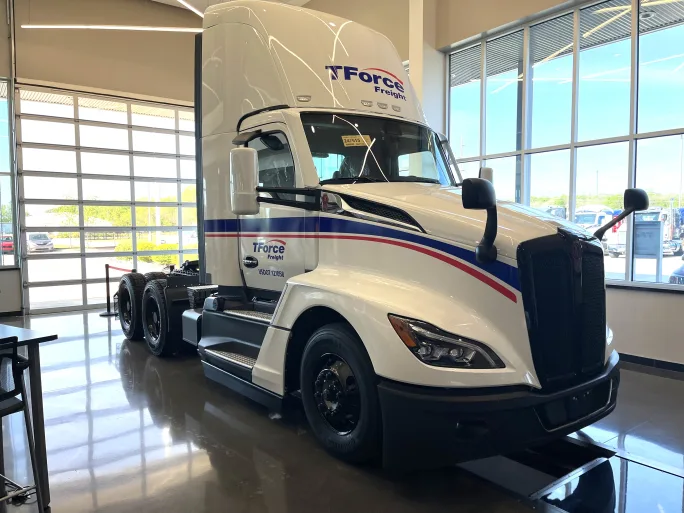
TForce Freight is replacing 365 older tractors with new fuel-efficient models like this Kenworth.
Credit:
TForce
TForce Freight is focusing on large-scale equipment upgrades to drive efficiency across its LTL network. The company, which operates about 3,300 Class 8 trucks, is investing in hundreds of new tractors and thousands of trailers equipped with aerodynamic features and tire inflation systems.
Fleet-wide technologies, including speed management, cruise control incentives, and optimized drivetrain specs, help improve fuel economy. SmartWay participation reinforces its sustainability efforts.
Facility upgrades, including LED lighting and electric material handling equipment, further reduce energy use across operations.
What’s Next: Continuing fleet modernization, with new equipment expected to significantly reduce fuel consumption and emissions across the network.
Werner Enterprises, Omaha, Nebraska
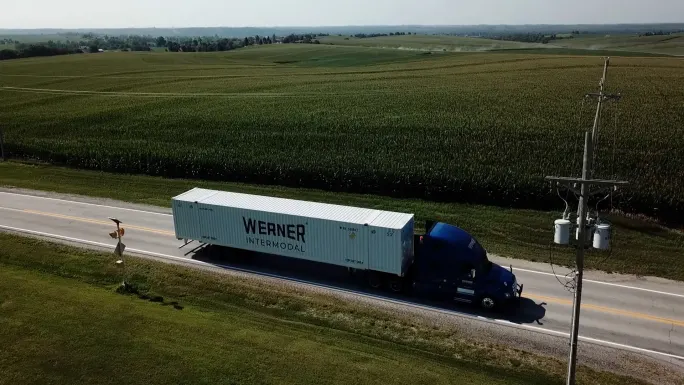
One of Werner's goals is to double the use of intermodal transport by 2030, which significantly reduces the carbon footprint compared to long-haul trucking.
Credit:
Werner Enterprises
Werner continues to tie sustainability closely to business performance, focusing on efficiency, alternative fuels, and data-driven operations across its 6,700-truck fleet.
Werner uses biodiesel extensively and is actively testing a range of lower-emission technologies, including natural gas, electric and hydrogen trucks.
Operationally, the company emphasizes network optimization and asset utilization, using advanced platforms to reduce empty miles and improve load efficiency.
Werner has also introduced a book-and-claim program to help customers access lower-carbon fuel options, along with expanded emissions tracking and reporting capabilities.
What’s Next: Working toward a 55% reduction in CO₂ emissions by 2035, expanding intermodal use, and continuing to scale alternative fuel and efficiency initiatives.
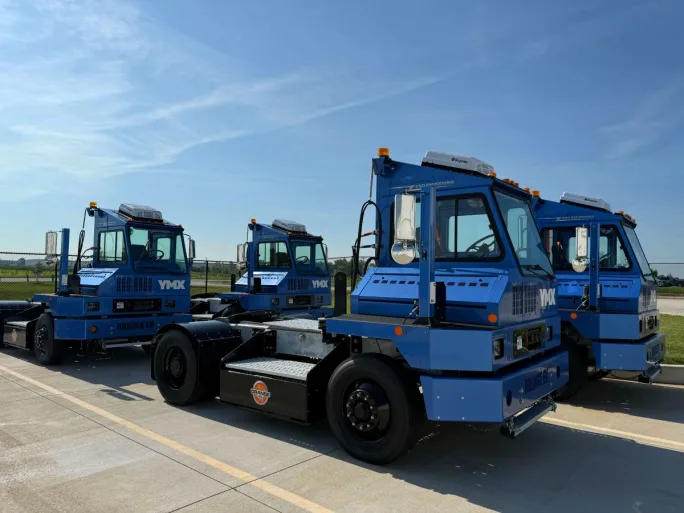
Over the past year, YMX has expanded the deployment of electric yard trucks across customer sites, reducing emissions, noise, and fuel consumption in high-density distribution environments. What differentiates YMX’s approach is how those vehicles are integrated into daily operations.
Credit:
YMX Logistics
YMX Logistics, Henderson, Nevada
YMX Logistics takes a different angle on sustainability, focusing on yard operations rather than over-the-road trucking. The company manages yard fleets for customers, including both diesel and electric yard trucks, and emphasizes operational efficiency as the key to reducing emissions.
By standardizing processes and improving coordination between yard and dock activity, YMX reduces unnecessary moves, idle time, and congestion, cutting fuel use and improving throughput at the same time.
The company is also helping customers deploy electric yard trucks, integrating charging and operational planning to ensure those assets perform reliably in real-world conditions.
What’s Next: Expanding electric yard deployments and continuing to refine operating models that improve efficiency while supporting customers’ sustainability goals.
Subscribe to Our Newsletter
More Fuel Smarts

Wex Adds Cardless Fuel Payments for Over-the-Road Customers
A new fuel card feature for Wex customers offers convenience and security.
Read More →
New California Law Could Shed Light on Electric Truck Prices
Why do battery-electric Class 8 trucks remain so expensive? A California bill signed by Gov. Gavin Newsom would give fleets and state agencies more visibility into what manufacturers charge.
Read More →
How Volvo Updated Its D13 for EPA 2027 [Watch]
Volvo’s updated D13 promises lower emissions without sacrificing performance or fuel economy. Take a closer look at what changed inside the engine in this HDT Spotlight video.
Read More →

Diesel Price Spike Shortens Payback for Natural Gas Trucks, Report Says
Energy Vision estimates fleets could recover the higher purchase price of an RNG-fueled Class 8 tractor in 1.3 to 2.8 years under current fuel-price scenarios.
Read More →
Calstart Becomes Catalyst Mobility, Reflecting Broader Focus
Calstart is now Catalyst Mobility, reflecting the nonprofit’s growing national role in clean transportation, including zero-emission trucks, infrastructure and incentive programs.
Read More →
Record Diesel Prices Squeeze Trucking Fleets
Average U.S. diesel prices have climbed to nearly $6 a gallon, surpassing the 2022 record as tight refinery capacity and Middle East disruptions keep fuel costs elevated.
Read More →
Sponsored•September 9, 2026
How Fuel Delivery Shapes Engine Performance
Fuel delivery depends on more than what happens at the injector. For fleet, maintenance and technical professionals, looking at the full path from pump to injector can provide useful context for understanding engine performance.
Read More →
East Coast Port Launches $45M Electric Truck Push
The Port Authority of New York and New Jersey announced millions in incentives for zero-emission drayage trucks, yard tractors, and new charging hubs near the port.
Read More →
Detroit Opens Orders for EPA 2027 Engines
Detroit isn’t starting from scratch to meet EPA 2027 diesel emissions standards. Its Gen 6 DD13 and DD15 engines keep much of today’s platform while updating the fuel and aftertreatment systems.
Read More →
Zero-Emission Truck Corridor Planned for West Coast
California, Oregon, Washington, British Columbia and Baja California are coordinating plans for truck charging and hydrogen fueling from Canada to Mexico.
Read More →