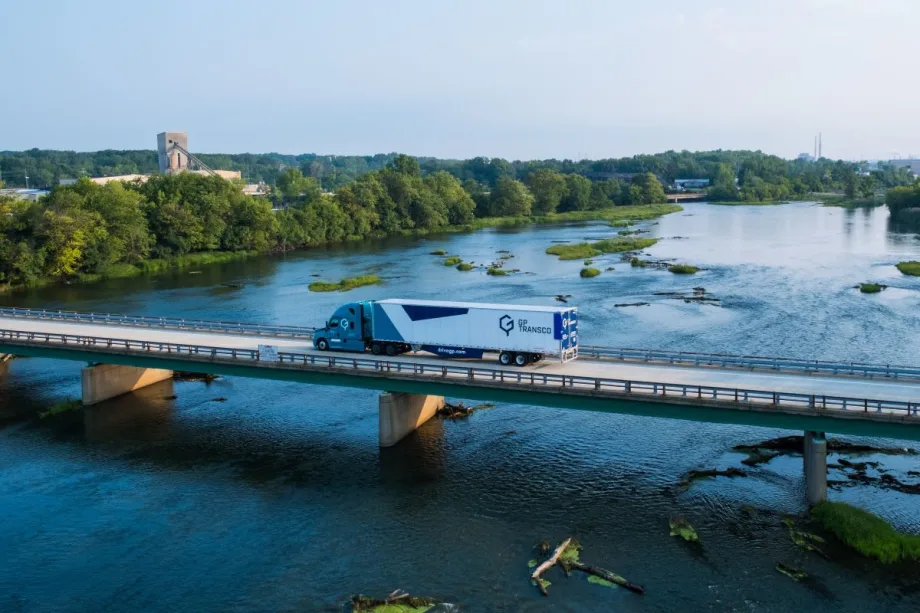
GP Transco makes aerodynamic equipment part of its standard truck and trailer specs, putting fuel-saving features to work as soon as new equipment hits the road.
Credit:
GP Transco
5 min to read
GP Transco utilizes aerodynamic specs, solar panels, and driver incentives to achieve fuel savings, allowing reinvestment in its workforce.
The fleet consists of 500–600 Freightliner power units and over 1,200 trailers, operating across the lower 48 states and Canada.
GP Transco offers an online 3D shop walkthrough for visitors to explore their trucks and trailers and learn about their features.
*Summarized by AI
A tenth of a mile per gallon in improved fuel efficiency may not sound like much. But Alex Gorno sees it as money GP Transco can put back into its people.
Ad Loading...
The Joliet, Illinois-based fleet combines aerodynamic equipment, idle reduction technology, and driver coaching to chip away at fuel costs. Gorno, who is vice president of maintenance, says those savings help the company afford driver pay increases, office staff raises, and bonuses.
It’s more than just choosing a fuel-saving device. GP Transco has made efficiency part of its equipment specifications, delivery process, driver orientation, and incentive program. Every fraction of a gallon layers on top of the others and can add up to something significant.
Ad Loading...
Make Efficiency Standard Equipment
For Gorno, fuel efficiency fits naturally into the maintenance department’s responsibility to control costs. An improvement of 0.1 or 0.2 mpg becomes much more meaningful when multiplied across tens of millions of miles.
FLEET SNAPSHOT
Who: GP Transco
Where: Joliet, Illinois
Fleet: 500–600 power units, almost exclusively Freightliner, plus 1,200-plus trailers.
Operations: Hauls general dry-van freight across the lower 48 states and Canada.
Fun Fact: The fleet offers an online 3D shop walkthrough where visitors can explore a truck and trailer and learn about their equipment features.
Challenge: Saving fuel while keeping equipment practical to maintain and drivers comfortable.
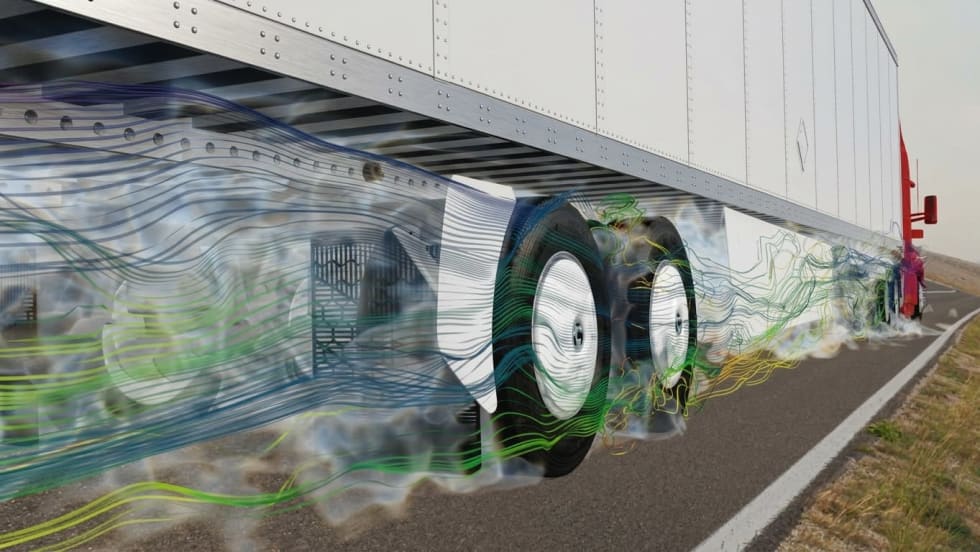
GP Transco’s tractor specifications include FlowBelow wheel covers and aerodynamic fairings around the drive axles. Trailers have Transtex Top Edge kits to reduce rear drag, along with trailer skirts.
Rather than treating those devices as separate projects each time equipment arrives, the fleet has worked them into its purchasing and delivery process.
The fleet handled earlier installations internally. Today, Gorno says, the aerodynamic equipment is specified through manufacturers or installed before delivery. Solar panels, for instance, are installed at the dealer during the pre-delivery inspection.
This means equipment can start working without first coming through the company’s shop for those installations. Some trailers begin hauling freight before they ever return to headquarters, Gorno says.
Ad Loading...
Standardization also helps. GP Transco previously operated a wider mix of makes and models but has consolidated primarily around Freightliner. That gives technicians a more familiar platform and simplifies parts inventory.
“It's not a mystery every time we look at a new truck,” Gorno says.
Account for Repairs, Too
Fuel-saving equipment still has to survive daily operations. Fairings and wheel covers can get hit, just like other truck components.
Gorno says GP Transco has not seen a recurring, systemic damage problem with its aerodynamic equipment.
By standardizing the fleet aero specs and using products commonly used in the industry, they can be repaired over the road or the fleet can handle them in-house.
Ad Loading...
“The parts are readily available and easily replaceable, because Some components are designed to break away when struck, helping limit damage to surrounding equipment and making replacement straightforward, he explains. “If the aero devices, if the wheel covers get hit, they come off. It’s kind of a break-free technology. So it's not going to take the wheel with it, it's not going to take the bumper with it.”
Use Solar Energy to Reduce Restarts
GP Transco’s solar panel rollout illustrates how it moves from trying a technology to making it part of the spec.
The fleet started a pilot program a couple of years ago, installing Merlin 500W solar kits on a limited number of trucks. The solar panels are mounted across the tractor’s roof fairing. The power generated by the solar panels helps maintain battery charge during a driver’s break, reducing the need to restart the engine overnight.
Drivers reported that the panels reduced restarts. Gorno remembers individual examples of drivers reporting that overnight restarts fell from four to one, or from three to two. Those kinds of examples helped convince GP Transco to expand the installation.
The rest of the fleet’s 2024 trucks and its 2025 trucks were equipped with the panels.
Ad Loading...
This year, GP Transco also has been piloting lithium batteries to extend how long trucks can support hotel loads without restarting. The goal is to let drivers run heating and cooling, refrigerators, and other equipment during their breaks while burning less fuel.
Give Drivers a Stake in Savings
Equipment is only part of GP Transco’s approach. Fuel efficiency is a significant part of its two-day driver orientation, with instruction on idling, acceleration, and anticipating braking.
Coaching continues after orientation. When a driver’s performance shows room for improvement, the company reviews the trends, discusses changes, and sets up a plan to monitor progress.
GP Transco also connects performance to pay through its Elite score, which combines multiple driver metrics. Fuel economy and idle percentage are major components, Gorno says.
Drivers who meet the program’s criteria qualify for a bonus applied to the miles they drove during the previous month. Reducing idle percentage below a specified threshold can help drivers earn additional cents per mile.
Ad Loading...
A leaderboard adds competition, but the financial incentive gives drivers a direct reason to participate.
Gorno also connects the broader fuel-efficiency effort to a separate, fleetwide driver pay increase of 5 cents per mile. Savings across the operation help make investments like that possible, he says.
Start With What Has Worked
GP Transco is willing to pilot technology, but Gorno advises fleets beginning their efficiency efforts to start with established equipment and proven approaches.
“We've kind of set ourselves up in such a way that we're able to pilot new technologies and get new things into the fleet and we could be the guinea pig for other fleets,” Gorno says.
But not every fleet has that ability.
Ad Loading...
“If you're just getting into it, I would not pilot,” he says. “I'd go with the standard and see what has already worked and has been proven.”
“And I wouldn't discount anything,” he advises. “You know, the little improvements … it might sound like a small number of 0.1 or 0.2 mpg improvement, but you annualize that across 40, 50, or 60 million miles, it allows for downstream effects in a positive way.”
Higher diesel prices have shortened the payback period for GP Transco’s efficiency investments, Gorno says, but the fleet still sees value in them when fuel prices ease.
The lighter trailer aerodynamic system installs in less than 45 minutes, according to the company, with potential payback in under a year depending on fuel prices and trailer mileage.
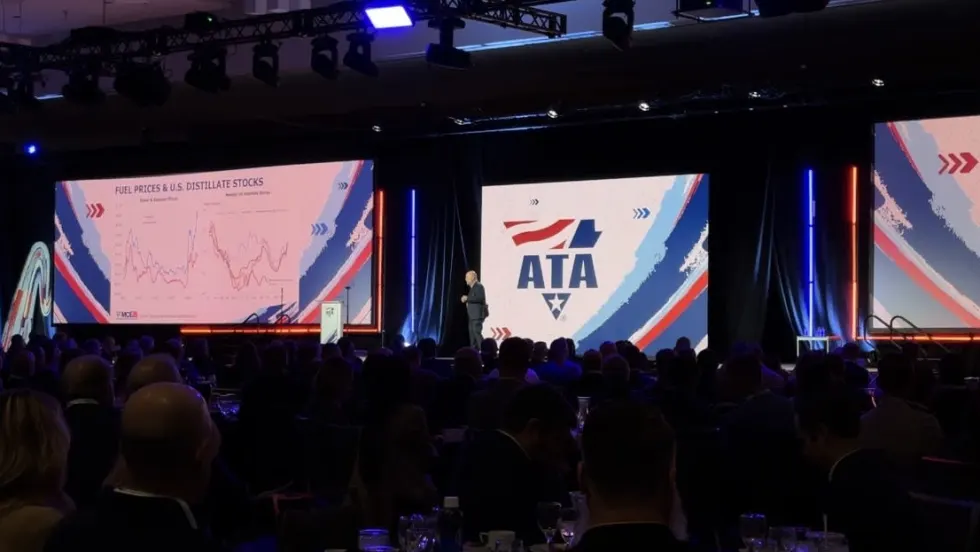
Diesel prices have eased from September’s record high, but doubts about additional Russian supply and limits on dyed-diesel tax relief mean trucking fleets still face expensive fuel. And prices could go higher.
Can better fuel economy help pay for driver raises? In this podcast, GP Transco explains how small efficiency gains create room to reinvest in its people.
What’s another tenth of a mile per gallon worth? GP Transco shares how equipment upgrades and driver coaching turn small gains into meaningful fuel savings.
Operating-cost savings have overtaken sustainability goals as the leading reason surveyed fleets are adopting battery-electric terminal tractors, according to new NACFE research.
The new card combines fuel discounts with telematics-based purchase controls. Geotab’s analysis also points to potential savings from choosing lower-priced fuel stops.
ACT Research expects costs, charging infrastructure, and technology improvements to drive zero-emission commercial vehicle adoption as federal regulations and incentives retreat.
Why do battery-electric Class 8 trucks remain so expensive? A California bill signed by Gov. Gavin Newsom would give fleets and state agencies more visibility into what manufacturers charge.