





Watch the webinar on-demand: Coaching and Incentivizing Drivers for Higher MPG
How to Coach and Motivate Drivers for Fuel Savings
Reduce the pain of high diesel prices by coaching and motivating drivers to get the most miles out of every gallon.
June 30, 2022
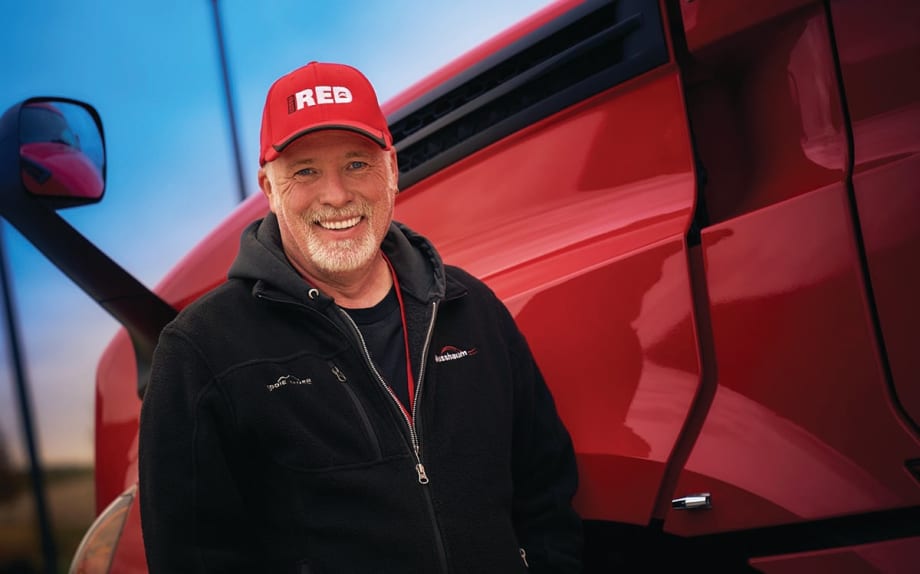
Clark Reed says slowing down and taking the time to let traffic situations sort themselves out on their own is one way to avoid unnecessary stops and the fuel burn required to get a tractor-trailer up and under way again.
HDT File Photo: Nussbaum Transportation
5 min to read
The pain at the pump is unflinching as the cost of diesel just keeps soaring. But there’s one strategy that fleets can put into place far more quickly than spec’ing new fuel-efficient equipment: coaching and motivating drivers to get the most miles out of every gallon.
This was the focus of a recent HDT webinar, “Coaching and Incentivizing Drivers for Higher MPG,” produced by the editors of Heavy Duty Trucking and moderated by HDT Business & Washington Contributing Editor David Cullen.
Expert speakers Aaron Patterson, director of operations for Defiance, Ohio-based Keller Trucking, and Mike Roeth, executive director of the North American Council for Freight Efficiency, explored ways to coach drivers on fuel efficiency and manage incentives for mpg performance.
How Driver Scores Can Incentivize Fuel-Efficient Behaviors
Keller operates 275 tractors with 100 drivers in the Midwest, Northeast, and Southwest, and for five years in a row has been named a TCA “Best Fleet to Drive For.”
“How we coach and incentivize our drivers comes down to their scores and how to interpret them,” he said. “Our drivers are scored daily and monthly, based on [factors such as] driving performance, mpg, idle time, use of cruise control.”
Drivers are ranked from zero to 100. When they see their score, “the first question they ask is, ‘What does my score mean? How can I improve my score?’ That's where the relationship between our drivers and fleet managers really comes into play. Our fleet managers are well coached on our scoring system and they discuss areas [drivers] can improve and what they’re doing well on.”
That’s important, he says, to praise what drivers are doing right, as well as what they can improve. “That's been the biggest thing with our drivers — not just seeing a number, but what it tells them. This results from our having a flexible program. It’s not cut and dried, so drivers don’t have to fit into a box. For example, we can program score-carding based on the truck’s operation, whether local or OTR. We don't just roll something out to our drivers and tell them, ‘This is what you have to use.’”
Patterson says when Keller incentivizes drivers, “they understand what they're being incentivized for. We examine the drivers’ mpg scoring to determine who will be our drivers of the week and of the month; all are rewarded with what we call Keller Perks Points.”
As with credit card rewards, drivers build up points in their profile to redeem things, such as televisions.
“This is based directly off how they're performing out on the road, how they’re adhering to our standards for mpg, fuel compliance, etc.” The weekly and monthly winners are selected “straight from our fuel rankings, who has scored the highest cruise control, limited their idle time, even such things as how much out of route.”
Fuel-Efficient Driving Can Mean Big Savings for Fleets
Roeth cautioned against an attitude of fuel as “just a cost of doing business,” or that fuel surcharges make it less of an issue.
“At NACFE, we argue that you can go ahead and get your revenue with higher rates, but also improve your mpg with technologies and coaching drivers, like Aaron does, and you’ll lower your fuel costs and make more money while you’re at it.”
He highlighted the Run on Less events NACFE has been conducting every other year since 2017.
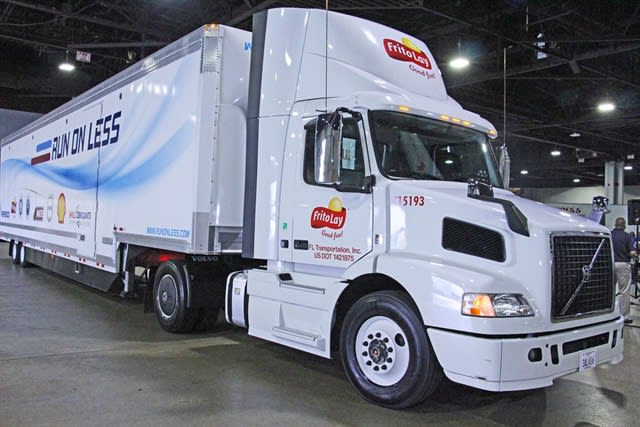
PepsiCo was one of the participating fleets in NACFE's first Run on Less fuel-economy road show.
HDT File Photo: Evan Lockridge
“In 2017, we brought together seven drivers with seven trucks from seven different fleets,” Roeth said. “While completing their normal routes, they averaged 10.1 mpg. Again, that was back in 2017, and some of today’s equipment is even more capable of fuel efficiency. But the point remains — drivers can make a huge difference.
Among those drivers were three top over-the-road drivers — Henry Albert, Joel Morrow, and Clark Reed — who are well-known for turning out high mpg numbers.
“We learned a lot from the event because we were able to dig in deep with some of the best-of-the-best drivers while also working with fleets by asking questions about their use of incentives, etc.”
NACFE offers 12 tips that will help drivers save fuel.
“Many of our mpg tips, like watching your speed and driving slower if you can, can save a lot. With big trucks, there’s a lot of aerodynamic drag. And the [mpg] difference between 75 mpg and 65 and from 65 to 55 is huge — in excess of a mile per gallon.”
Slow and Easy for Higher MPGs
“So, we're talking about thousands of dollars if not $10,000 saved at lower speeds,” Roeth continued. “Now some will say, ‘Well, Mike, we can't drive slow all the time. There’s freight to haul and he’s got to get to the truck stop to make sure there’s a place to park. We can’t drive slow.’ I get that. But it can be very expensive getting to that truck stop one hour early in terms of the fuel you burn. That’s something to pay attention to. And then there's the constant speeding and braking and starting from running fast. These trucks take a lot of energy to get back up to speed.”
Roeth related how one of the drivers who took part in the Run On Less Regional event said in an interview something that he can’t get out of his head.
“She said she drives like she's on ice… all year round. That puts it into her head that she has to be careful. What that does is get her to maintain her following distance. And that lets her drive without that braking and keeps the shifting in the sweet spot. That makes a big difference in saving fuel.”
Subscribe to Our Newsletter
More Fuel Smarts

How Volvo Updated Its D13 for EPA 2027 [Watch]
Volvo’s updated D13 promises lower emissions without sacrificing performance or fuel economy. Take a closer look at what changed inside the engine in this HDT Spotlight video.
Read More →
Diesel Price Spike Shortens Payback for Natural Gas Trucks, Report Says
Energy Vision estimates fleets could recover the higher purchase price of an RNG-fueled Class 8 tractor in 1.3 to 2.8 years under current fuel-price scenarios.
Read More →
Calstart Becomes Catalyst Mobility, Reflecting Broader Focus
Calstart is now Catalyst Mobility, reflecting the nonprofit’s growing national role in clean transportation, including zero-emission trucks, infrastructure and incentive programs.
Read More →

Record Diesel Prices Squeeze Trucking Fleets
Average U.S. diesel prices have climbed to nearly $6 a gallon, surpassing the 2022 record as tight refinery capacity and Middle East disruptions keep fuel costs elevated.
Read More →
Sponsored•September 9, 2026
How Fuel Delivery Shapes Engine Performance
Fuel delivery depends on more than what happens at the injector. For fleet, maintenance and technical professionals, looking at the full path from pump to injector can provide useful context for understanding engine performance.
Read More →
East Coast Port Launches $45M Electric Truck Push
The Port Authority of New York and New Jersey announced millions in incentives for zero-emission drayage trucks, yard tractors, and new charging hubs near the port.
Read More →
California Bill Could Shed Light on Electric Truck Prices
Why do battery-electric Class 8 trucks remain so expensive? A California bill headed to Gov. Gavin Newsom would give fleets and state agencies more visibility into what manufacturers charge.
Read More →
Detroit Opens Orders for EPA 2027 Engines
Detroit isn’t starting from scratch to meet EPA 2027 diesel emissions standards. Its Gen 6 DD13 and DD15 engines keep much of today’s platform while updating the fuel and aftertreatment systems.
Read More →
Zero-Emission Truck Corridor Planned for West Coast
California, Oregon, Washington, British Columbia and Baja California are coordinating plans for truck charging and hydrogen fueling from Canada to Mexico.
Read More →
A Closer Look at Kenworth’s Electric T880E Vocational Truck [Video]
Learn more about Kenworth's T880E battery-electric vocational truck at the Paccar Technical Center, including its range, applications, upfitting considerations, and PTO options, in this HDT Spotlight video.
Read More →