





More from Costello at ATA: Why This Trucking Recovery Is Different
Trucking’s Diesel Squeeze Isn’t Letting Up
With diesel topping $6 a gallon nationally, ATA's Bob Costello explains why fleets should prepare for continued pressure at the pump.
October 20, 2026

Current distillate stocks are historically low for this time of year, which could signal higher diesel prices, said ATA Chief Economist Bob Costello during the association's annual meeting.
Credit:
Deborah Lockridge (video still)
3 min to read
Don’t expect diesel prices to drop anytime soon.
That’s what Bob Costello, chief economist of the American Trucking Associations, told an audience during ATA’s Management Conference & Exhibition in Charlotte, North Carolina.
“I’m not saying you’re going to see a big spike here, but I don’t think there’s gonna be much relief.”
The average price of a gallon of diesel fuel nationwide was $6.276 as of the Energy Department’s October 19 numbers, up nearly 10 cents over the previous week and $2.656 higher than a year ago.
California saw prices rise to $8.242 a gallon, up 15 cents from the previous week and $3.344 higher than a year ago.
The American Transportation Research Institute’s annual top industry issues survey, released during the ATA conference, found fuel prices were the number one concern.
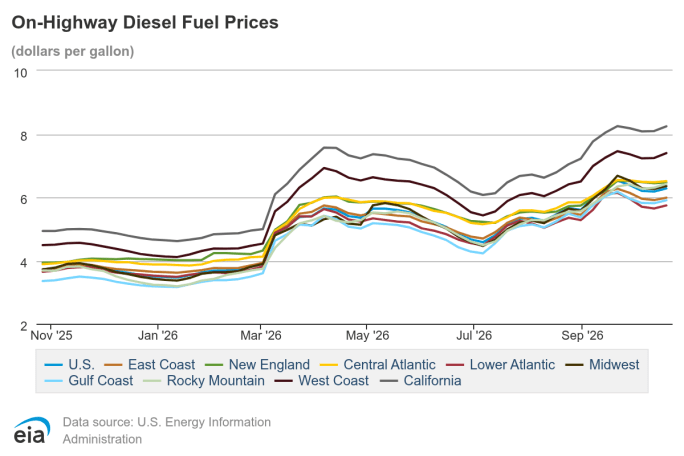
Diesel prices remain stubbornly high
Credit:
U.S. Energy Information Administration
It’s just the fourth time in the 22-year history of the survey that fuel prices have been on top of the list. First ranked as the industry’s top concern in the inaugural survey in 2005, the cost of diesel also topped the list in 2008 and 2022.
As one of the industry’s largest cost centers, diesel prices rise and motor carriers’ costs increase immediately, pressuring profit margins across all fleets, especially small- to mid-size fleets.
Why Are Diesel Prices So High?
Current distillate stocks are historically low for this time of year, which could signal higher diesel prices, Costello said.
“That does not bode well for the prices going into this fall freight season and later on this year,” he said.
And the continuing global oil crisis may get worse as countries run out of oil reserves to put into the market.
Costello pointed out that the previous week, on October 15, Brent crude oil prices reached more than $109 a barrel.
“I will tell you that that number should be closer to $130 a barrel,” he said. “And the reason it's not is because the U.S., and also other countries around the world, are dumping oil or had been dumping oil into the market.”
The Strategic Petroleum Reserve
But at the same time, last week, stocks of crude oil in the U.S. Strategic Petroleum Reserve fell to 282.9 million barrels — the lowest level since October 1982.
“We drew it down during the invasion of Ukraine, and then we were building it up a little bit, and then it's come back down,” Costello said.
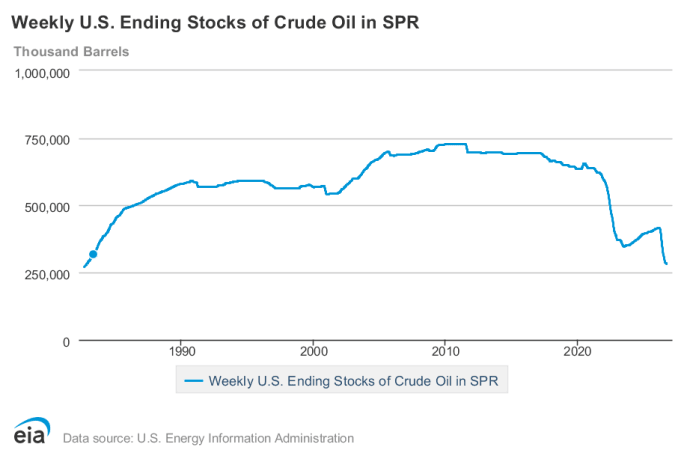
“At some point, we’re going to stop putting more oil onto the open market, and we are likely to see an increase in the price of crude oil," said ATA Chief Economist Bob Costello.
Credit:
U.S. Energy Information Administration
But wait, the Energy Department says there’s still nearly 40% of the SPR’s maximum capacity.
“They can't take it to zero,” Costello said. “First of all, apparently some of the oil down in there is not good stuff, right? That it's been there so long that you wouldn't use it.”
On top of that, rapid drawdowns of the reserves stored in the underground salt caverns in Texas and Louisiana can thinthe salt walls and risk structural collapse.
“So we're about as low as we can get,” Costello said. “At some point, we’re going to stop putting more oil onto the open market, and we are likely to see an increase in the price of crude oil.”
And, while there are other factors affecting the price of diesel fuel, the price of crude oil is a major part of the price of a gallon of fuel.
Economist and podcaster Peter Schiff, in a social post on X, predicted that crude oil prices could hit $150 per barrel after the midterm elections.
Oil is above $100. The main reason it's not closer to $150 is all the oil being released from the Strategic Petroleum Reserve. That will stop after the midterms. When it becomes obvious that inflation will outpace Fed rate hikes, the dollar will fall, sending oil prices soaring.
— Peter Schiff (@PeterSchiff) October 16, 2026
More Fuel Smarts
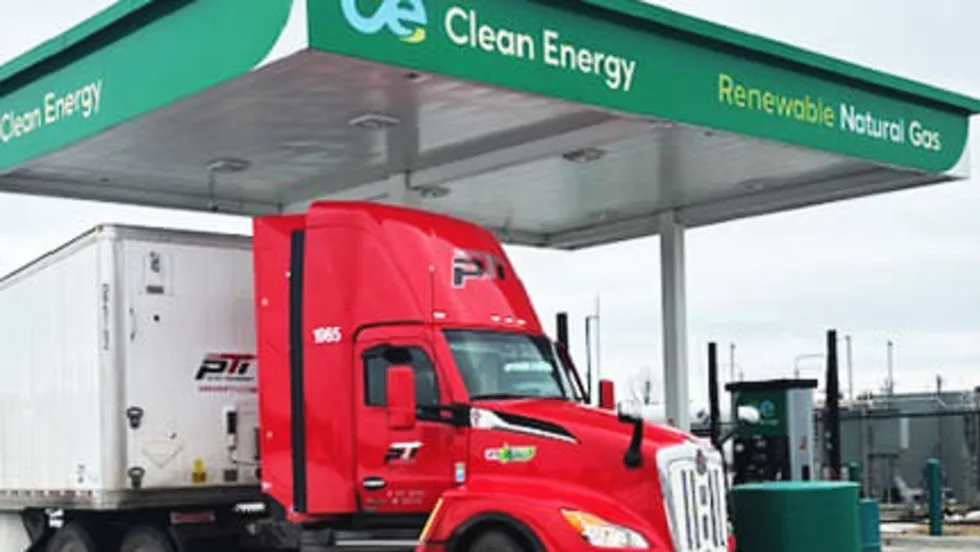
Paper Transport Puts RNG to Work for Shipper
Eight renewable natural gas trucks are hauling freight for Graphic Packaging, part of Paper Transport’s growing mix of alternative-fuel transportation options that also includes a Tesla Semi pilot.
Read More →
Fleet Costs Shape ACT Expo 2027 Agenda
With diesel prices high and operating expenses under pressure, ACT Expo's 2027 agenda emphasizes fuel efficiency, AI, safety and the return on fleet technology investments.
Read More →
How GP Transco Builds Fuel Savings a Fraction at a Time
Aerodynamic specs, solar panels, and driver incentives help GP Transco turn small efficiency gains into savings it can reinvest in its people.
Read More →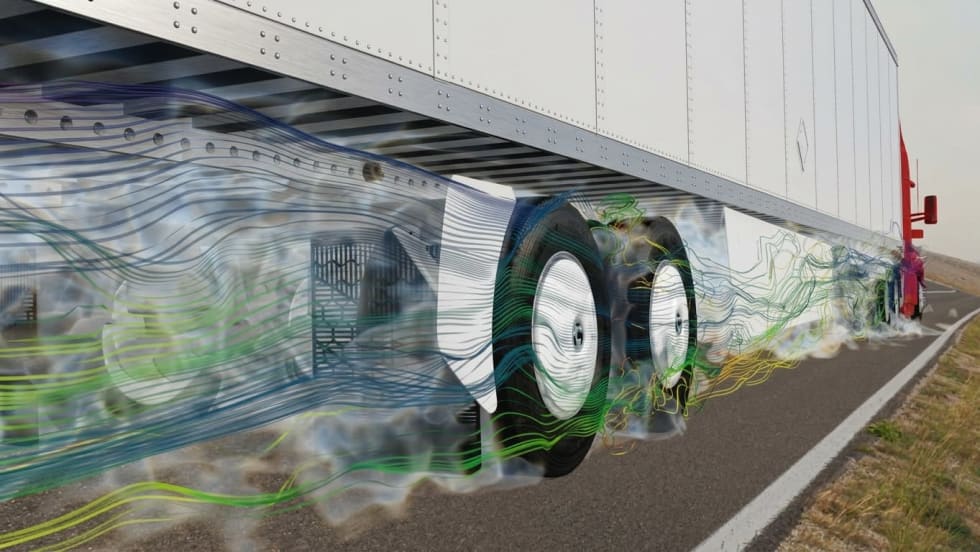
FlowBelow Redesigns Trailer AeroSlider to Cut Fuel Use
The lighter trailer aerodynamic system installs in less than 45 minutes, according to the company, with potential payback in under a year depending on fuel prices and trailer mileage.
Read More →
Why Diesel Price Relief Efforts May Fall Short
Diesel prices have eased from September’s record high, but doubts about additional Russian supply and limits on dyed-diesel tax relief mean trucking fleets still face expensive fuel. And prices could go higher.
Read More →
Why Small Fuel Savings Matter in Trucking [Podcast]
Can better fuel economy help pay for driver raises? In this episode of the HDT Talks Trucking podcast, GP Transco explains how small efficiency gains create room to reinvest in its people.
Read More →
How GP Transco Cuts Trucking Fuel Costs, a Tenth of a Gallon at a Time
What’s another tenth of a mile per gallon worth? GP Transco shares how equipment upgrades and driver coaching turn small gains into meaningful fuel savings.
Read More →
Electric Yard Tractors Move Beyond Pilots
Operating-cost savings have overtaken sustainability goals as the leading reason surveyed fleets are adopting battery-electric terminal tractors, according to new NACFE research.
Read More →
Geotab Links Fleet Card to Vehicle Data
The new card combines fuel discounts with telematics-based purchase controls. Geotab’s analysis also points to potential savings from choosing lower-priced fuel stops.
Read More →
Fleet Economics Shape Electric Truck Outlook
ACT Research expects costs, charging infrastructure, and technology improvements to drive zero-emission commercial vehicle adoption as federal regulations and incentives retreat.
Read More →