





Find more on electric terminal tractors: Zero-Emission Trucks: Poised for Growth
Electric Terminal Tractors: Stepping-Stone to a New Era?
Why electric terminal tractors may be the perfect way for fleets to test and become familiar with battery-electric technology in commercial vehicles.
March 6, 2022
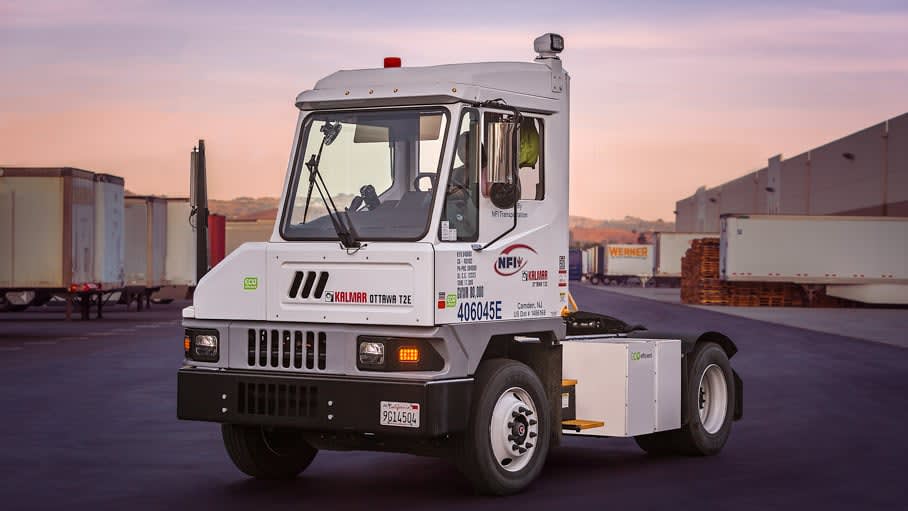
Electric terminal tractors, like this Ottawa used by NFI, proved themselves in NACFE's Run on Less Electric.
Photo: NACFE
3 min to read
Despite a long career in the trucking industry, Mike Roeth admits, he was largely “ignorant” about yard tractors deployed by fleets to spot and move trailers in large freight depots.
“I knew they existed. I’d seem them around. But I hadn’t given them a lot of thought,” the executive director of the North American Council for Freight Efficiency told reporters in a March 6 briefing at the American Trucking Associations’ Technology & Maintenance Council meeting in Orlando, Florida.
That changed after NACFE wrapped up its Run on Less Electric fleet efficiency demonstration late last year. Run on Less Electric tracked 13 North American fleets using battery-electric vehicles to do their daily work. This included everything from small box vans all the way up to Class 8 electric trucks. And the study included electric yard tractor operations, as well.
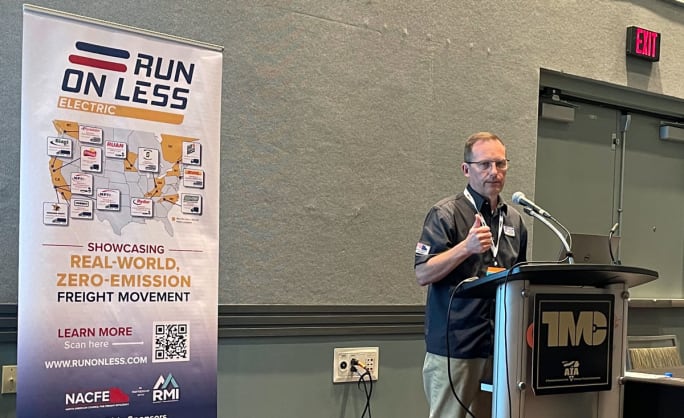
NACFE's Mike Roeth said new EPA emissions regulations could drive interest in more electric yard tractors.
Photo: Jack Roberts
After Run on Less Electric concluded, Roeth and other NAFCE analysts concluded that electric yard tractors may be a great first step for fleets interested in learning more about electrification in commercial vehicle applications.
Roeth noted that the timing is important as well. Yard tractors will soon be subjected to emissions regulations that require the use of selective catalytic reduction exhaust systems to remove NOX emissions from diesel exhaust similar to those for on-road trucks.
“We found that terminal tractors is a tough duty cycle for exhaust aftertreatment,” Roeth said. “That may very well affect the life of these trucks to the point that fleets will not be able to get as many years of service out of them as they do on prior generations of diesel-powered yard tractors. Electric powertrains may be the perfect solution to that problem.”
Additionally, because electric yard tractors typically spend their entire lives working at one domicile, they’re easier for fleets to study, perform maintenance on and generally get a feel for how the technology performs. And they won’t be stranded in the middle of nowhere without a charge.
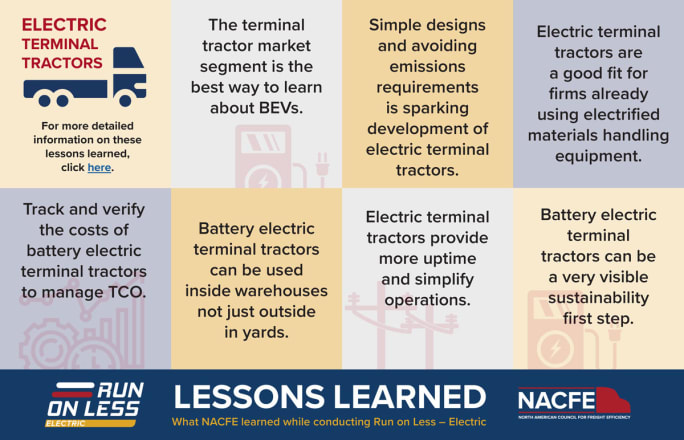
Key lessons learned about battery-electric terminal tractors.
Source: NACFE
Roeth listed four key points on why NACFE thinks yard tractors make sense as a stepping-stone for fleets interested in BEVs for fleet applications:
Simplified vehicle designs and avoiding emissions regulations is driving development and acceptance of electric terminal tractors.
Battery electric terminal tractors can be used inside warehouses and not just outside in yards.
Electric terminal tractors provide more uptime and simplify operations.
Electric terminal tractors are a good fit for firms already using electric material handling equipment.
One big takeaway from Run on Less Electric for using electric terminal tractors successfully is the use of “opportunity charging,” Roeth added.
“That’s a term we really like a lot,” he said. “It simply means taking every available opportunity you can to charge an electric truck during the day or during a shift. If a truck pulls into a grocery store, that can mean a half an hour to an hour of charging time while the groceries are being unloaded.
“For an electric terminal tractor, that can mean operating for three hours and then charging for 20 minutes. We found many fleets running them have set up charging stations near their offices or driver break rooms. That enables opportunity charging during restroom, meal or snack breaks, or while the driver is doing paperwork. That can go a long way and make a big difference toward extending the daily range capabilities for these trucks.”
More Fuel Smarts

How Volvo Updated Its D13 for EPA 2027 [Watch]
Volvo’s updated D13 promises lower emissions without sacrificing performance or fuel economy. Take a closer look at what changed inside the engine in this HDT Spotlight video.
Read More →
Diesel Price Spike Shortens Payback for Natural Gas Trucks, Report Says
Energy Vision estimates fleets could recover the higher purchase price of an RNG-fueled Class 8 tractor in 1.3 to 2.8 years under current fuel-price scenarios.
Read More →
Calstart Becomes Catalyst Mobility, Reflecting Broader Focus
Calstart is now Catalyst Mobility, reflecting the nonprofit’s growing national role in clean transportation, including zero-emission trucks, infrastructure and incentive programs.
Read More →

Record Diesel Prices Squeeze Trucking Fleets
Average U.S. diesel prices have climbed to nearly $6 a gallon, surpassing the 2022 record as tight refinery capacity and Middle East disruptions keep fuel costs elevated.
Read More →
Sponsored•September 9, 2026
How Fuel Delivery Shapes Engine Performance
Fuel delivery depends on more than what happens at the injector. For fleet, maintenance and technical professionals, looking at the full path from pump to injector can provide useful context for understanding engine performance.
Read More →
East Coast Port Launches $45M Electric Truck Push
The Port Authority of New York and New Jersey announced millions in incentives for zero-emission drayage trucks, yard tractors, and new charging hubs near the port.
Read More →
California Bill Could Shed Light on Electric Truck Prices
Why do battery-electric Class 8 trucks remain so expensive? A California bill headed to Gov. Gavin Newsom would give fleets and state agencies more visibility into what manufacturers charge.
Read More →
Detroit Opens Orders for EPA 2027 Engines
Detroit isn’t starting from scratch to meet EPA 2027 diesel emissions standards. Its Gen 6 DD13 and DD15 engines keep much of today’s platform while updating the fuel and aftertreatment systems.
Read More →
Zero-Emission Truck Corridor Planned for West Coast
California, Oregon, Washington, British Columbia and Baja California are coordinating plans for truck charging and hydrogen fueling from Canada to Mexico.
Read More →
A Closer Look at Kenworth’s Electric T880E Vocational Truck [Video]
Learn more about Kenworth's T880E battery-electric vocational truck at the Paccar Technical Center, including its range, applications, upfitting considerations, and PTO options, in this HDT Spotlight video.
Read More →