




Roadside Inspections: They're Not Random
Have you ever wondered why one truck is selected for a roadside inspection while another is waved on without a second glance? You no doubt know that the selection process isn’t random, but you may not
Have you ever wondered why one truck is selected for a roadside inspection while another is waved on without a second glance? You no doubt know that the selection process isn’t random, but you may not realize how scientific it has become.
In order to maximize scarce resources, federal and state agencies use an automated roadside system to guide the selection of vehicles and drivers for roadside inspections.
The primary objective of the Inspection Selection System (ISS) is to recommend vehicles for inspections based on one or both of the following:
1. Poor prior safety performance evidenced by an unsatisfactory safety compliance fitness rating and/or higher than average driver/vehicle out-of-service rates.
2. Very few or no roadside inspections in the previous 2 years relative to the carrier’s size.
The selection process begins when an inspector enters a truck’s DOT or ICC number into the computer.
ISS then generates an inspection value based upon the carrier’s safety performance history. It also highlights areas of potential deficiencies found in past inspections of the carrier’s vehicles.
It’s important to note that inspection values are carrier specific. The system doesn’t identify specific vehicles or drivers with past problems. Furthermore, the ISS is only a tool for the inspectors. In the end, they decide whether or not a truck will be pulled over.
Department of Transportation data confirms that out-of-service rates are substantially higher when an inspection is recommended by the ISS. Analyzing data from almost 40,000 roadside inspections conducted in 10 states during the first 8 months of 1996, the OOS rate was 33.7% for vehicles recommended for inspection by the ISS and 20.0% for those the ISS did not recommend. The driver OOS rate was 13.5% for ISS recommended inspections and 9.9% for those not recommended.
Clearly, ISS helps the inspectors target unsafe carriers and reduces the inspection burden on proven safe carriers. Yet despite the systematic selection process and despite nationwide out-of-service criteria, there is a troubling lack of uniformity among the states when we look at final inspection results.
We looked at the results of several hundred inspections done during International Highway Transportation Safety Week, June 1-6, 1998.
In Arkansas, 16.9% of the trucks inspected and 5.4% of the drivers pulled over were ordered out of service. In California the OOS rates were 24.4% of trucks and 3.4% of drivers. In New York it was 37.5% of trucks and 9.2% of drivers. In Texas it was 38% of trucks, 9.3% of drivers.
As you can see, a truck is more than twice as likely to be declared out-of-service in New York or Texas than in Arkansas. The chances of a vehicle being declared out-of-service in Texas are 55% greater than in California. Drivers in New York are being ordered out-of-service nearly 3 times more often than in California. It seems highly unlikely that differences of this magnitude can be explained by differences in the population of trucks and drivers.
Inspection statistics also provide clues to areas that should receive priority attention if you want to avoid inspection problems.
It’s no surprise that brake violations are most common. Brakes were found to be out of adjustment in 16.9% of 59,555 inspections. Damaged brake hoses or tubing were found in 7.1% of those inspections, other brake deficiencies were found in 9.2% of the vehicles.
Lights and lighting are another problem area. Citations for inoperable lamps were issued in 10.5% of the inspections, defective turn or hazard lamps in 5.6%, stop lamps in 5%. Finally, inadequate tire tread depth in one or more tires was cited in 7.2% of the vehicles.
The ultimate payoff for a well-managed safety program is avoidance of the catastrophic costs associated with many truck accidents. But carriers with good safety systems also reduce the chances that one of their vehicles will be targeted for inspection -- or that it will be sitting out-of-service alongside the road.
More Safety & Compliance
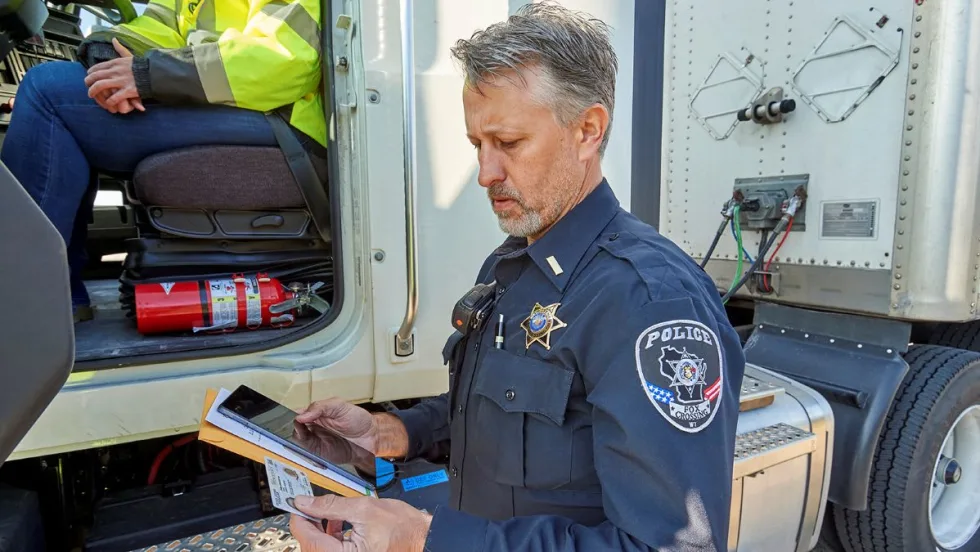
When Language Stops the Truck: The Return of ELP Out-of-Service Orders
English language proficiency rules for commercial drivers aren’t new, but renewed out-of-service enforcement has raised the stakes. Here’s what carriers need to know before a driver reaches a roadside inspection.
Read More →
A Camera Isn't a Safety Program. Here's What Brokers Are Screening for Now
Footage alone may not be enough to pass broker vetting processes. Here's what counts as a defensible safety program now.
Read More →
Marijuana and Trucking’s Drug-Testing Dilemma
Marijuana is getting stronger, laws are changing, and drug tests still can’t reliably establish impairment. What does that mean for truck drivers and the fleets that employ them?
Read More →
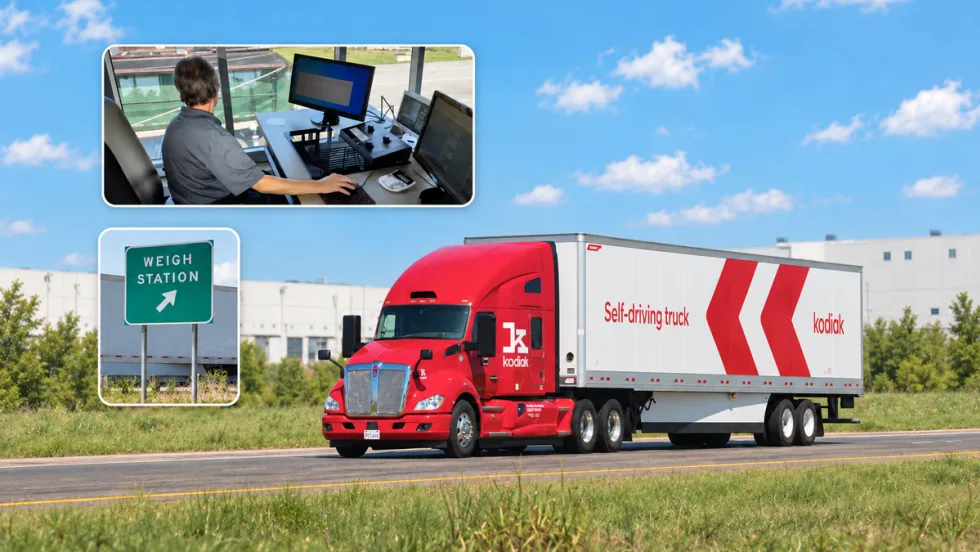
PrePass, Kodiak Connect Driverless Trucks to Roadside Enforcement
The system will allow enforcement agencies to verify Enhanced Inspection information and decide whether Kodiak’s autonomous trucks can bypass roadside screening sites.
Read More →
From One Generation to the Next: How Mentorship Builds Safer Truck Drivers
After three decades in trucking, Harold Perry shares what he's learned about driver safety, mentorship, and helping the next generation build confidence behind the wheel.
Read More →
FMCSA Pauses Biennial-Update Enforcement Amid Motus Transition
Carriers whose updates were due on or after June 1 have more time, while FMCSA works to stabilize its new registration system and warns of phishing sites impersonating its new carrier registration system, Motus.
Read More →
ZF Expands Commercial Vehicle Push in North America
ZF is expanding its North American commercial-vehicle presence with new transmission applications, electrification, trailer technology and autonomous-driving systems.
Read More →
Truck Drivers Need More Than Another Alert
Fleets have more visibility into truck health, safety events, and driver activity than ever. The next challenge is turning all that information into useful guidance for the person who has to decide what to do next.
Read More →
Tesla Wants a Self-Driving Semi. Are Cameras Enough?
Could Tesla’s camera-only autonomous driving technology work on an 80,000-pound Semi? In this commentary, HDT's Deborah Lockridge takes a look at Tesla, Cybercab, and how autonomous trucks see the road.
Read More →
What DOT’s Automated Vehicle Strategy Means for Trucking
The U.S. Department of Transportation issued a new automated-vehicle strategy that outlines plans for driverless-truck regulations, cross-state freight corridors, and federal safety standards.
Read More →