




ZF Expands Commercial Vehicle Push in North America
ZF is expanding its North American commercial-vehicle presence with new transmission applications, electrification, trailer technology and autonomous-driving systems.

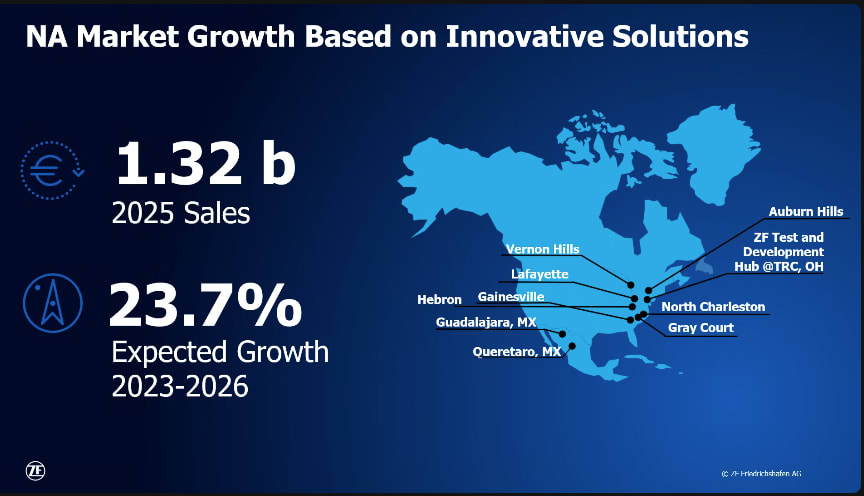
ZF is focused on safety and total cost of ownership as it expands its reach in the North American commercial vehicle market.
ZF
ZF — or “Zed-Eff,” as they pronounce it in its home country of Germany — is putting a bigger emphasis on commercial vehicles and expanding its presence in North America.
During a virtual press conference ahead of the IAA Transportation show, company officials said ZF is reshaping its business to be more agile in a volatile economic and geopolitical environment.
“ZF has fundamentally changed the approach to CVS [Commercial Vehicle Solutions] and industry business, including aftermarket, versus the past,” said Fabian Schlegel, head of global sales for CVS.
The company historically came from a heavily passenger-car-dominated business, he said, but now sees a need for a better balance between automotive and industrial businesses, including commercial vehicles.
That shift is particularly visible in North America, where ZF says demand has strengthened sharply since the second quarter.
ZF Expands Commercial-Vehicle Footprint
ZF has been talking for several years about bringing its PowerLine eight-speed automatic transmission to North America. Now it has.
The transmission is available with Paccar engines and in Ram heavy-duty pickups. It also is coming to medium-duty Daimler Truck North America models equipped with Cummins’ new B6.7 Octane gasoline engine, and ZF is working with Capacity Trucks to bring PowerLine to yard tractors.
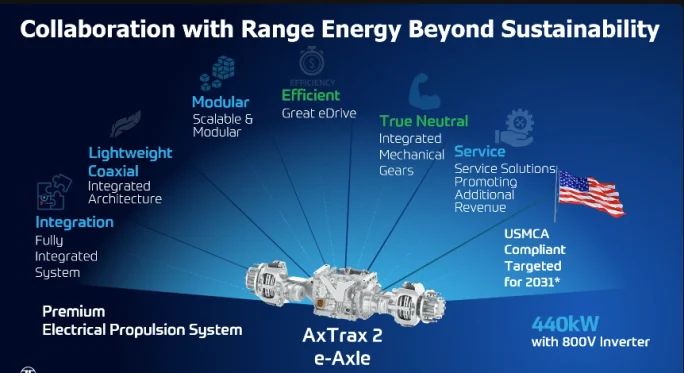
ZF is working to produce its AxTrax 2 electric axle in the United States, with a goal of making it USMCA-compliant by 2031.
ZF
Dirk Wohltmann, who heads ZF’s North American commercial vehicle systems operations, said the goal was to bring more of a passenger-car driving feel to commercial vehicles.
“That’s exactly the feedback we get from our end customers whenever they drive it,” he said.
But driving feel is only part of the equation. For fleets, he said, total cost of ownership, fuel efficiency, and uptime remain critical.
ZF is also working to localize production of its AxTrax 2 electric axle in the United States, with a goal of making it USMCA-compliant by 2031.
Wohltmann highlighted the e-axle’s compact, integrated design and scalability. The company also is looking at integrating electronic braking, or brake-by-wire, as another step in combining drivetrain and safety technologies.
Company officials said all this technology to enable the commercial vehicles of the future plays into its vision: “zero accidents, zero emissions.” It is doing this through commercial vehicles that are software-defined, fully electric, and fully autonomous.
But they said much of the progress is stepwise rather than linear.
Staying Close to Customers
The North American expansion reflects a broader ZF strategy of being closer to the customers that build and operate trucks, buses and trailers.
“We need to be regionally present; we are there where our customers are producing their trucks, buses and trailers,” Schlegel said.
ZF has operations in 28 countries and more than 40 production sites.
Wohltmann made a similar point about customer relationships: ZF needs to be where customers are, listen to what they need, and develop technologies for those markets.
ZF reported North American commercial-vehicle sales of $1.32 billion in 2025 and projects North American market growth will grow 23.7% between 2023 and 2026.
The company also recently renewed its partnership with Cummins to supply air compressors for Cummins engines.
ZF says artificial intelligence will play a growing role in lowering fleet operating costs as well. AI can support predictive maintenance and uptime management, while ZF’s mix of powertrain, braking and safety technologies gives it the ability to integrate systems that many suppliers offer separately.
ZF Bets on Hybrid Trucks
ZF also is making a bigger push into hybrid-electric commercial-vehicle technology.
One reason, company officials said, is that charging infrastructure for fully electric trucks remains limited in many parts of the world.
At IAA, ZF plans to demonstrate a hybrid transmission that draws on components from its electrified drivetrains. The company said it expects to announce its first customer for the technology soon.
ZF also is working with Range Energy to integrate an electric-driven axle into a trailer.
The system can capture energy through regenerative braking to charge batteries that power trailer refrigeration equipment. It also can provide propulsion assistance to the tractor.
ZF says the integrated design can reduce maintenance and simplify installation by reducing the amount of high-voltage cabling running through the trailer.
The company plans to manufacture the system in the United States and make it USMCA-compliant, Wohltmann said.
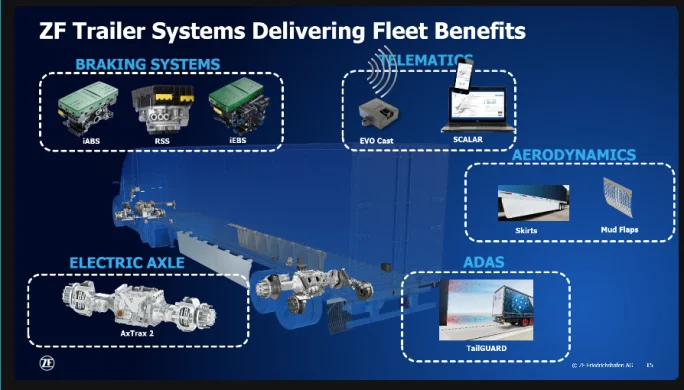
ZF's trailer products range from intelligent antilock braking systems and roll stability support to aerodynamic components and backup-assistance technology.
ZF
ZF’s Trailer Technology
ZF’s commercial-vehicle business extends well beyond trucks. Wohltmann estimates that at least three-quarters of trailers contain some type of ZF technology.
Its trailer products range from intelligent antilock braking systems and roll stability support to aerodynamic components and backup-assistance technology.
One example is TailGuard, which uses sensors to detect obstacles behind a trailer while backing.
“TailGuard is the eyes behind the trailer,” Wohltmann said. The system can stop the vehicle before it backs into an obstacle or loading dock.
Another is Scalar, an ABS-based smart trailer telematics solution. And trailer roll stability support for trailers can prevent rollovers.
"A lot of fleets are starting to look into that trailer technology, because of nuclear verdicts," he said. Doesn't matter if the safety tech isn't mandated; if it's being used in the industry and working well for fleets, a plaintiff's attorney will ask why your fleet didn't have it. If the technology is available, lawyers will go after you.
The broader goal, he said, is to help fleets operate trailers more safely, reliably and cost-effectively.
Building Blocks for Autonomous Trucks
Autonomous driving is another area where ZF is expanding. The company recently signed an agreement with autonomous-truck developer Kodiak AI.
ZF already supplies many of the technologies needed for increasingly automated trucks, including advanced driver-assistance systems, steering, and braking.
Schlegel said those technologies provide building blocks for higher levels of automation as ZF continues expanding its commercial-vehicle business in North America.
More Equipment
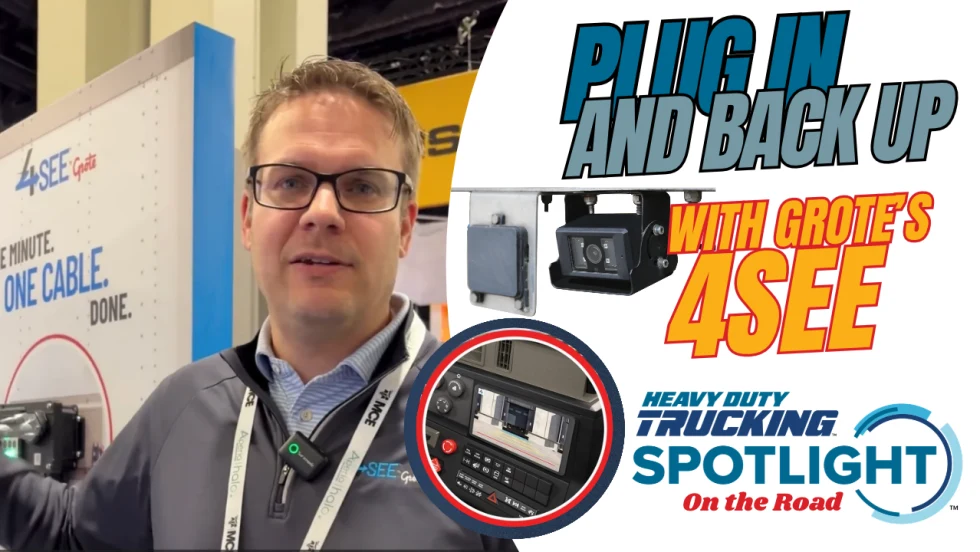
More Trailer Data Through the Same Seven-Way [Video]
Can trucking’s standard seven-way connector handle more cameras and trailer data? Grote’s Adam Slade shows HDT how the company is using new technology with its 4See trailer system, not only to add a new backup camera but also to expand other capabilities — without adding another connection.
Read More →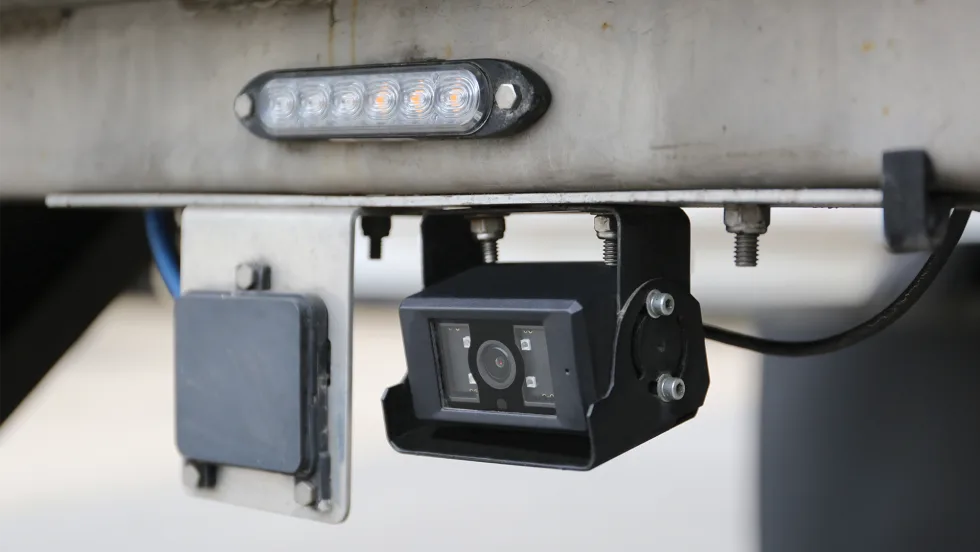
Grote: More Cameras, Same Seven-Way Connector
The next-generation 4See rear-view backup camera from Grote uses the standard seven-way connector and supports additional cameras and other trailer data.
Read More →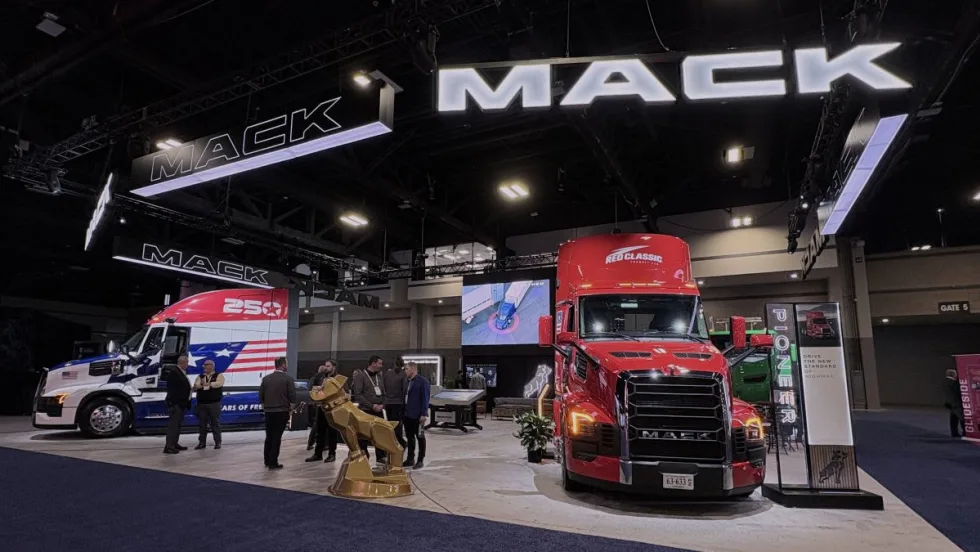
Trucks at ATA's 2026 MC&E in Charlotte, North Carolina [Photos]
From rigs decked out in patriotic America's 250 paint schemes to autonomous trucks and more, check out these photos from ATA's 2026 Management Conference & Exhibition.
Read More →
Help HDT Find Trucking’s Top Products
Have you come across a new product that could make a difference for trucking fleets? Nominate it for HDT’s 2027 Top 20 Products Awards by November 9.
Read More →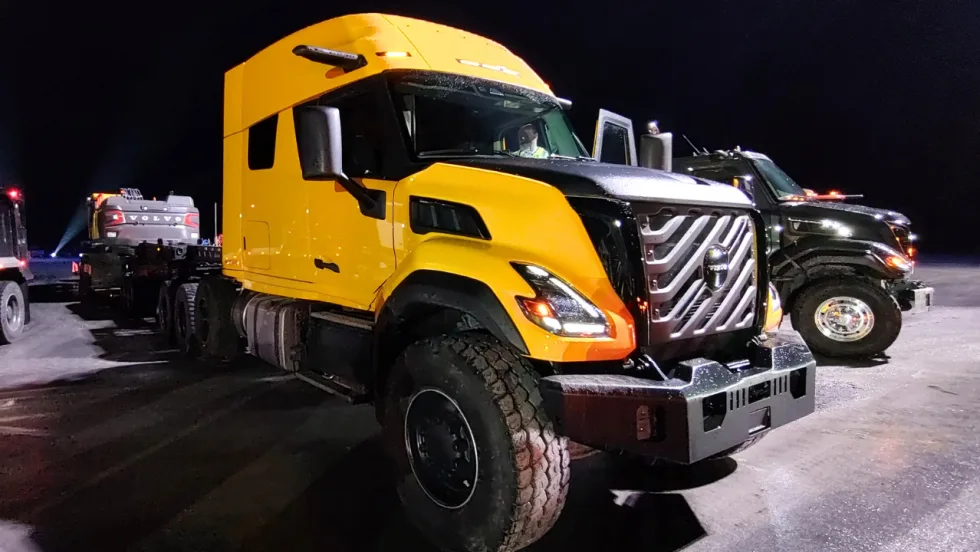
Volvo Unveils New VNX Heavy-Haul and Vocational Truck
Volvo Trucks has launched the VNX, a new vocational truck also available as a tractor in day cab and two sleeper configurations, with one heavy-haul model. The Volvo VNX is powered by Volvo's D13 platform, which delivers up to 540 horsepower and 1,950 pound-feet of torque and is EPA 2027-compliant.
Read More →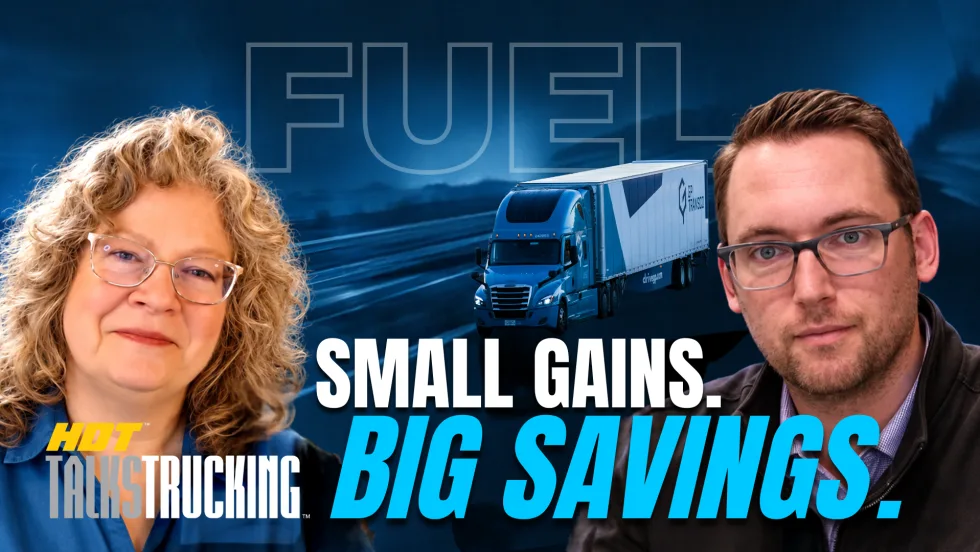
How GP Transco Cuts Trucking Fuel Costs, a Tenth of a Gallon at a Time
What’s another tenth of a mile per gallon worth? GP Transco shares how equipment upgrades and driver coaching turn small gains into meaningful fuel savings.
Read More →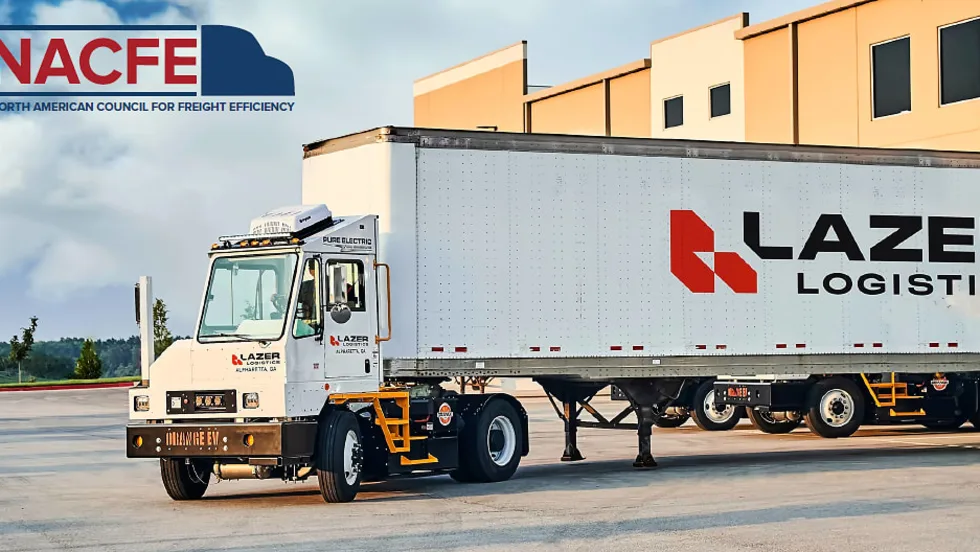
Electric Yard Tractors Move Beyond Pilots
Operating-cost savings have overtaken sustainability goals as the leading reason surveyed fleets are adopting battery-electric terminal tractors, according to new NACFE research.
Read More →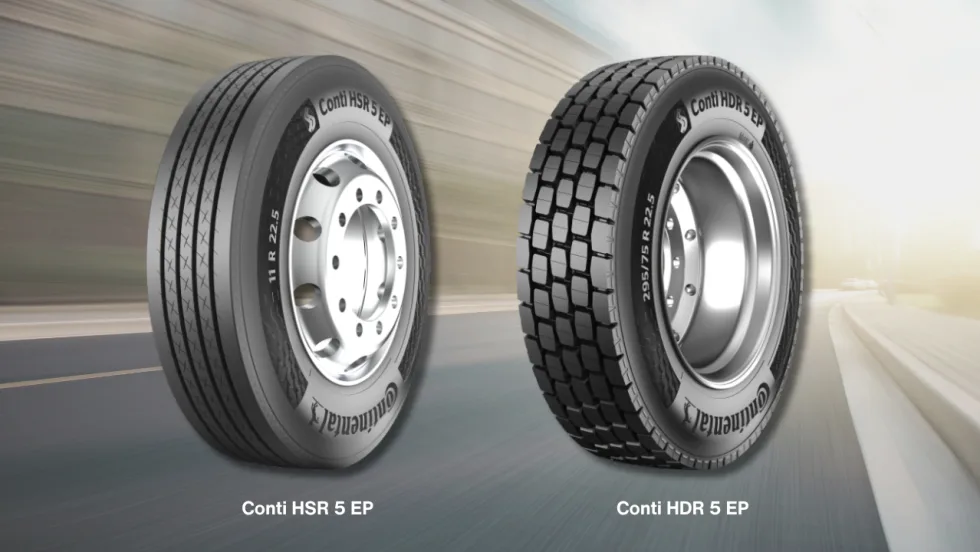
Continental Introduces New Regional Truck Tires
Continental says its new Generation 5 steer and drive tires for regional operations offer longer tread life, with estimated mileage gains of 22% and 19%, respectively.
Read More →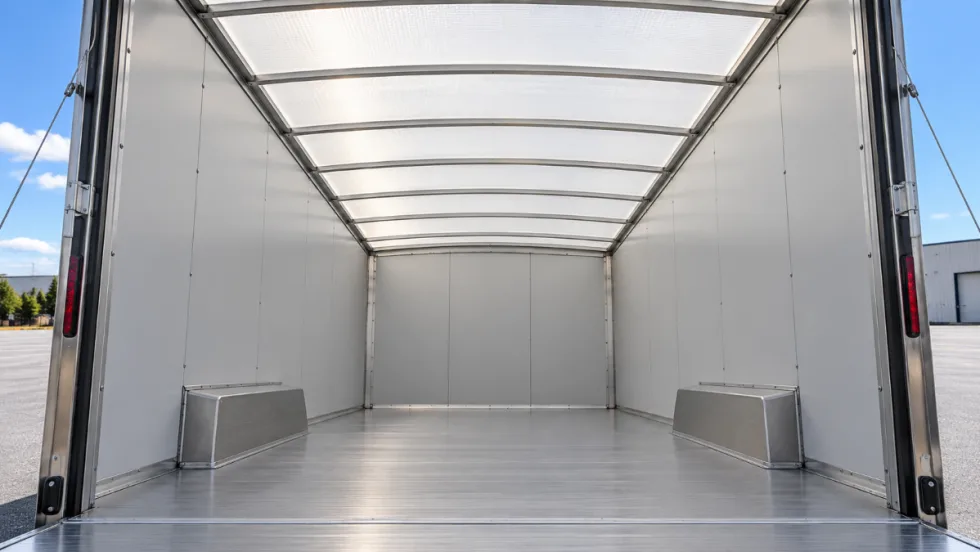
Tekmodo Introduces CargoBright Brand for Translucent Trailer Roofs
CargoBright is designed to diffuse daylight across the cargo area while performing as a working vehicle roof.
Read More →
Fleet Economics Shape Electric Truck Outlook
ACT Research expects costs, charging infrastructure, and technology improvements to drive zero-emission commercial vehicle adoption as federal regulations and incentives retreat.
Read More →