




5 Steps to Avoid Common Mistakes When Implementing In-Cab Cameras
4 Ways Fleets Can Address Truck Driver Privacy Concerns About Dash Cams
Dual-facing in-cab cameras offer a host of safety benefits for trucking fleets. How can fleet managers soothe truck driver privacy concerns when using driver-facing dash cams?
by Lucero Truszkowski, J.J. Keller & Associates
May 13, 2025
Biometric data such as facial geometry, fingerprints, digital voiceprints, and iris scans are often used to access in-cab technology securely — but they may create driver privacy concerns.
Image: HDT Graphic
4 min to read
Dual-facing in-cab cameras offer a host of safety benefits for trucking fleets. However, truck drivers often are worried about their privacy when trucking fleets use driver-facing dash cams.
Motor carriers should address these privacy concerns to increase the potential for maximizing the return on investment in in-cab video systems.
Below are four strategies to reduce truck driver objections to road- and driver-facing dash cams.
1. Use Facts and Testimonials About In-Cab Cameras
Start by presenting your drivers with facts and other driver testimonials (if available).
Share that the passenger car driver is at fault in at least 70% of fatal truck-passenger-vehicle-involved crashes. This fact can help your drivers see how they may be found not at fault based on video footage that proves they were in the right during such a collision.
Compelling data comes from the April 2023 American Transportation Research Institute’s (ATRI) Issues and Opportunities with Driver-Facing Camerasstudy, which found:
DFC footage helps exonerate commercial truck drivers in 49% of litigation cases and 52% of insurance claims where video footage was available.
Approval of driver-facing cameras was 87% higher when carriers used in-cab video footage for safety programs, driver coaching, and training than when there was no proactive safety use.
The widespread use of dash cams in private fleets is also a positive indicator.
The National Private Truck Council's 2022 Benchmarking Survey confirmed that 72% of NPTC’s member fleets have adopted dash cam systems. Of those, 56% use dual road- and driver-facing cameras. Only 28% use road-facing cameras alone.
2. Implement Protections for Biometric Data
Drivers may also have concerns regarding their personal data being used or misused.
Biometric data such as facial geometry, fingerprints, digital voiceprints, and iris scans are often used to access in-cab technology securely. Many artificial intelligence-powered dash cams also use and store facial geometry data to detect unsafe driving behaviors.
Several states have privacy laws requiring consent before collecting or storing biometric data.
Keep in mind that as a carrier, you may be the target of litigation that has nothing to do with a crash if you don’t get driver approval for the dash cam and meet other requirements.
Critical state legal requirements to protect privacy include:
Informing the person of the purposes and retention period of biometric information.
Receiving written consent to collect or disclose biometric information.
Implementing reasonable security procedures and practices.
Maintaining a written policy with a retention schedule and guidelines for permanently destroying biometric identifiers and information.
These steps help reassure drivers that plans are in place to protect their personal and biometric data.
3. Update Your Dash Cam Policy
Your trucking fleet’s dash cam policy should contain critical system-use details to avoid surprises for drivers.
Another essential purpose is to provide privacy assurances.
Things to consider when creating or updating a fleet policy on the use of in-cab video:
Obtaining written driver consent before collecting, storing, or using video clips or biometric data.
Including how and when drivers will be recognized and rewarded for safe driving habits.
Identifying and prioritizing the focus behaviors (such as distracted or drowsy driving and seat belt use).
Avoiding excessive coaching for minor incidents.
Recording video clips for a set amount of time before and after a triggered event for coaching or legal defense and avoiding continuous recording.
Limiting video access to safety personnel only and securing it from unauthorized access.
Providing initial and ongoing training to driver coaches on their approach to drivers and privacy.
Refraining from monitoring drivers in real time except in an emergency.
Prohibiting audio recordings to avoid legal issues in dual-party consent states.
4. Use Dash Cams to Enhance Bonus and Recognition Programs
Drivers care about improving their behavior and skills. The most effective incentives are often money in a driver's paycheck and recognition for desired behavior changes.
Make sure drivers can easily understand safety incentive and recognition program criteria and that they see the program criteria as fair.
Focusing on these four key steps can help carriers proactively address driver privacy concerns, which helps to maximize dash cam ROI and avoid legal issues with biometric data, if applicable.
With the right approach, your drivers should believe in your dash cam system as much as you do.

About the Author: Lucero Truszkowski joined safety and compliance consulting firm J.J. Keller & Associates as an associate editor in 2022. Her expertise includes process documentation, plain-English writing, and translating complex concepts for customers across a spectrum of subjects, including transportation, human resources, and driver training.This article was authored and edited according to Heavy Duty Trucking’s editorial standards and style to provide useful information to our readers. Opinions expressed may not reflect those of HDT.
Subscribe to Our Newsletter
More Safety & Compliance

Marijuana and Trucking’s Drug-Testing Dilemma
Marijuana is getting stronger, laws are changing, and drug tests still can’t reliably establish impairment. What does that mean for truck drivers and the fleets that employ them?
Read More →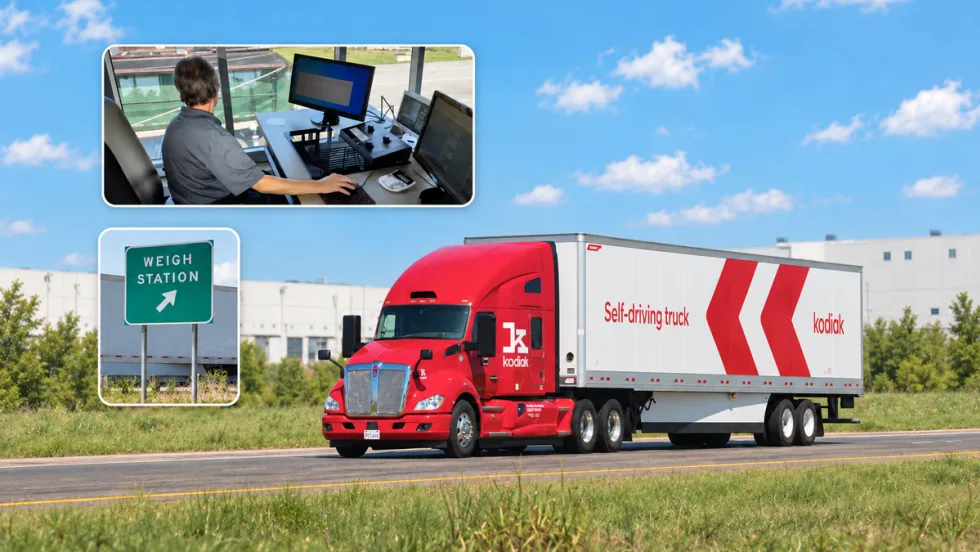
PrePass, Kodiak Connect Driverless Trucks to Roadside Enforcement
The system will allow enforcement agencies to verify Enhanced Inspection information and decide whether Kodiak’s autonomous trucks can bypass roadside screening sites.
Read More →
From One Generation to the Next: How Mentorship Builds Safer Truck Drivers
After three decades in trucking, Harold Perry shares what he's learned about driver safety, mentorship, and helping the next generation build confidence behind the wheel.
Read More →
FMCSA Pauses Biennial-Update Enforcement Amid Motus Transition
Carriers whose updates were due on or after June 1 have more time, while FMCSA works to stabilize its new registration system and warns of phishing sites impersonating its new carrier registration system, Motus.
Read More →
ZF Expands Commercial Vehicle Push in North America
ZF is expanding its North American commercial-vehicle presence with new transmission applications, electrification, trailer technology and autonomous-driving systems.
Read More →
Truck Drivers Need More Than Another Alert
Fleets have more visibility into truck health, safety events, and driver activity than ever. The next challenge is turning all that information into useful guidance for the person who has to decide what to do next.
Read More →
Tesla Wants a Self-Driving Semi. Are Cameras Enough?
Could Tesla’s camera-only autonomous driving technology work on an 80,000-pound Semi? In this commentary, HDT's Deborah Lockridge takes a look at Tesla, Cybercab, and how autonomous trucks see the road.
Read More →
What DOT’s Automated Vehicle Strategy Means for Trucking
The U.S. Department of Transportation issued a new automated-vehicle strategy that outlines plans for driverless-truck regulations, cross-state freight corridors, and federal safety standards.
Read More →
NYC Expands Speed, Pedestrian Safety Tech Across Fleet
New York City is expanding intelligent speed assistance and pedestrian-alert systems across its municipal fleet, moving the technologies from pilot programs into vehicle procurement and retrofit requirements.
Read More →
FMCSA Removes 110 Truck Driver Training Schools from Certified ELDT List
Federal regulators also are targeting more than 160 additional training providers and launching a nationwide audit of third-party CDL skills testers as part of a broader crackdown on trucking fraud.
Read More →