




How ATA Wants to Fix ELD Certification
ATA's new roadmap calls for independent ELD certification, better fraud detection and closer oversight of providers. Here's how the proposed system would work.

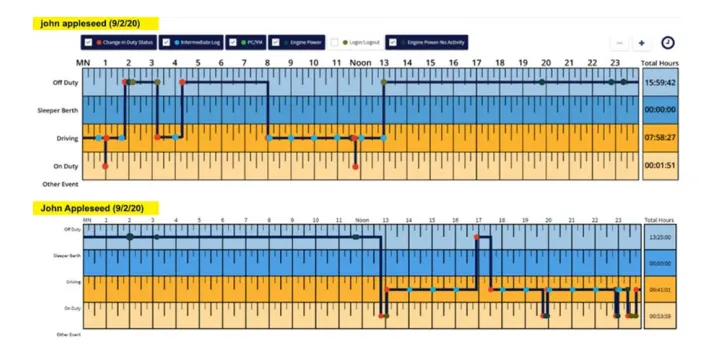
A fake co-driver is one of the ways ELDs are manipulated in order to cheat on hours-of-service regulations.
CVSA
The American Trucking Associations has laid out a plan to overhaul how electronic logging devices are certified, aiming to make ELD fraud harder to commit and easier to catch.
The centerpiece is a move away from the current system, where ELD manufacturers certify their own devices meet federal requirements, and toward independent, third-party certification such as they have in Canada.
But ATA isn't suggesting that the Federal Motor Carrier Safety Administration wait for a new certification system before taking further action.
Its new report, "The Road to ELD Certification: Recommendations of ATA's Working Group on ELD Fraud," outlines six recommendations, including three that ATA believes FMCSA could implement relatively quickly without new regulations.
The report comes just days after FMCSA removed 133 ELDs from its registry, part of an ongoing crackdown on noncompliant devices and electronic log manipulation.
Nearly a year ago, amid rising complaints about faked driver logs and unscrupulous ELD providers, FMCSA announced a change in how electronic logging devices get approved. That added new safeguards but did not go as far as third-party certification.
Why ELD Fraud Matters
ELDs were supposed to make it harder to falsify drivers' hours-of-service records than paper logs, which were often characterized as "comic books."
But investigators have uncovered more sophisticated ways to manipulate electronic logs, sometimes involving cooperation between ELD providers and motor carriers.
According to an analysis by the Commercial Vehicle Safety Alliance cited in ATA's report, fleets with ELD tampering violations had a 56% higher reportable crash rate than fleets without such violations. ATA said the findings will be detailed in a forthcoming CVSA report.
ATA praised FMCSA for stepping up its scrutiny of ELD providers and removing noncompliant devices, but said the current system needs stronger safeguards.
"No system will eliminate every attempt at fraud, but we can make cheating significantly more difficult and costly," said Kevin Grove, ATA director of safety and technology policy.
It's not the first time we've seen an indication that the agency might be reconsidering its self-certification process. In 2022, FMCSA floated an Advanced Notice of Proposed Rulemaking to get feedback on ways to improve its ELD rules. The final ELD rule went into effect in 2019, and the agency pointed out in its ANPRM that it now had a few years of data it could use to determine what improvements were needed.
Probably the biggest idea in that notice was fairly short, with the agency asking:
- Should FMCSA establish a certification process for ELDs? If so, what should a certification process consist of?
- What would be the costs and benefits of that approach?
- If a certification process is established, how should existing devices be treated?
What ATA Wants FMCSA to Do Now
Three of ATA's recommendations aim to identify more fraud under the existing ELD system, without waiting for a lengthy rulemaking process.
Look for suspicious electronic logs. ATA wants FMCSA to use automated checks to identify potential fraud in electronic records of duty status. Warning signs could include file numbers that appear out of sequence, impossible driving distances, or manipulated driver information.
Flagged records would then receive a human review, under ATA's plan. The association specifically recommends that these automated checks not be conducted at roadside, and that law enforcement continue using existing inspection procedures.
Require ELD providers to have a U.S. presence. ATA says companies registering devices should have a verified U.S. footprint so regulators and law enforcement can investigate violations more effectively and hold providers accountable.
Improve fraud investigations. ATA recommends creating a formal process for reporting, tracking, and resolving suspected ELD fraud. The report says FMCSA's existing ELDTech email system isn't adequate for managing enforcement investigations, particularly those initiated by law enforcement.
The association also wants Congress to provide FMCSA with additional staff and funding to support its ELD oversight and enforcement efforts.
How Third-Party ELD Certification Would Work
ATA's longer-term proposal would fundamentally change how ELDs are approved for use in the United States.
Today, ELD providers register their devices with FMCSA and self-certify that they meet federal technical requirements. Under ATA's proposed system, independent organizations with specialized technical expertise would evaluate devices for compliance.
FMCSA would continue to establish technical standards, interpret regulations, investigate violations, and take enforcement action. But it would rely on outside organizations to handle technical testing and certification.
The proposed structure would have an accrediting organization oversee multiple certification providers, which would in turn evaluate individual ELD companies.
ATA recommends focusing certification primarily on ELD software, where it believes the greatest opportunities for fraud and manipulation exist. Hardware would remain subject to minimum requirements.
The report points to Canada's third-party ELD certification system as a useful model, although ATA wants a separate U.S. program tailored to federal regulations.
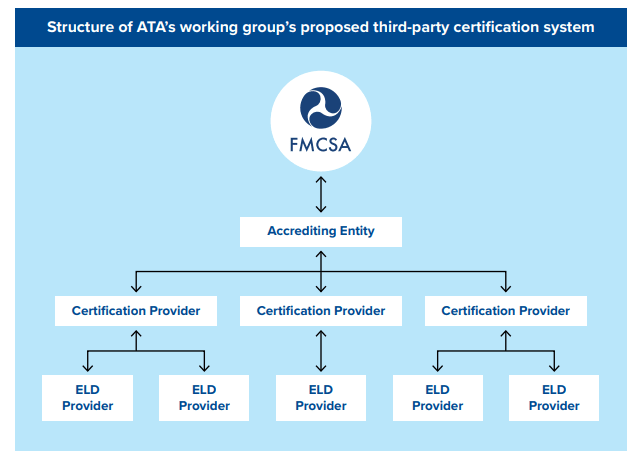
ATA's longer-term proposal would fundamentally change how ELDs are approved for use in the United States.
ATA report, "The Road to ELD Certification"
Who Would Pay for ELD Certification?
ATA's report also addresses how the proposed certification system could be funded.
FMCSA would provide initial funding to help establish the accreditation and certification infrastructure. Once the system was operating, under ATA's plan, ELD providers would pay independent certification organizations for testing. Those organizations, in turn, would pay accreditation fees.
That would create a largely fee-supported system, with FMCSA continuing to support certain oversight costs.
The report doesn't estimate what certification would cost ELD providers or whether those expenses might eventually be passed along to motor carriers.
ATA also doesn't propose a specific deadline for when all ELDs would have to be independently certified. Instead, it recommends that FMCSA gather industry feedback on how long it would take to establish the certification infrastructure and evaluate devices already in use.
Certification Wouldn't Be a One-Time Approval
ATA also wants to make sure ELDs remain compliant after receiving certification.
Under its proposal, devices would undergo regular reviews throughout their life cycle, and certification organizations would face periodic audits.
The report suggests an approach similar to Canada's, where certification providers can review 25% of a device's requirements each year. ELD companies would also have to periodically verify their registration information, including their U.S. presence.
Another recommendation could help FMCSA track which fleets use particular devices.
ATA proposes adding ELD information to the MCS-150 motor carrier identification report. That could help investigators identify other fleets using a device under investigation, or other ELDs used by a fleet suspected of fraud.
ATA also recommends periodically updating ELD technical requirements as technology and methods of manipulation evolve.
What's Next for ELD Certification?
For now, ATA's recommendations are proposals, not new federal requirements.
The association wants FMCSA to move ahead with fraud-detection and enforcement improvements while using its existing ELD rulemaking initiative, which began with a 2022 advance notice of proposed rulemaking, to develop a third-party certification program.
ATA recommends that FMCSA issue a notice of proposed rulemaking as soon as practical and begin developing the certification framework alongside that process.
The report grew out of an October 2025 decision by ATA's Safety Policy Committee to support stronger ELD integrity measures, including independent certification.
"FMCSA has already demonstrated its commitment to meeting this challenge," Grove said. "The next step is to give the agency a stronger, lasting framework to protect the integrity of ELDs and hours-of-service compliance."
Watch HDT's 2022 interview on HDT Talks Trucking about the FMCSA's advanced rulemaking proposal on ELDs.
More Safety & Compliance

Daimler, Paccar Recall Trucks Over Driveline Defect
Nearly 4,900 Freightliner, Western Star, and Kenworth trucks are being recalled because a missing snap ring could allow the driveline to separate from the truck.
Read More →
133 ELDs Revoked as ATA Pushes Certification Reform
FMCSA just removed a record number of electronic logging devices from its registry. ATA says it's time to rethink how ELDs get approved in the first place.
Read More →
CVSA Sets 2027 International Roadcheck Dates
The annual 72-hour truck inspection blitz will take place May 11–13 across North America. Here's what fleets can expect and what inspectors found during the 2026 event.
Read More →
FMCSA’s New Complaint Platform Makes It Easier to Report Trucking Safety Concerns
The FMCSA Complaint Center features expanded complaint categories and a name change away from the word "consumer."
Read More →
FDA Eases Path for Oral-Fluid Testing
Federal actions could advance oral-fluid drug testing for truck drivers, but lab certification delays and marijuana rescheduling questions remain.
Read More →
Kodiak Lines Up Fleets for Driverless Trucking
An agreement for 75 trucks, a new Texas freight lane, and progress on safety validation move Kodiak closer to its planned driverless highway launch.
Read More →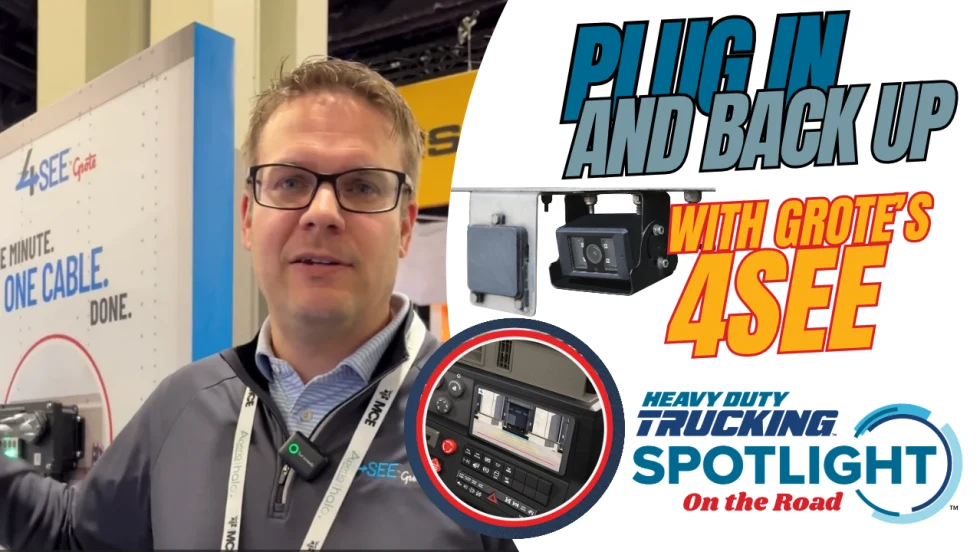
More Trailer Data Through the Same Seven-Way [Video]
Can trucking’s standard seven-way connector handle more cameras and trailer data? Grote’s Adam Slade shows HDT how the company is using new technology with its 4See trailer system, not only to add a new backup camera but also to expand other capabilities — without adding another connection.
Read More →
PrePass Intelligence Mines Fleet Bypass, Toll and Safety Data
PrePass Intelligence helps fleets measure bypass savings, flag potential toll overcharges, and spot suspicious transactions by combining data from separate systems.
Read More →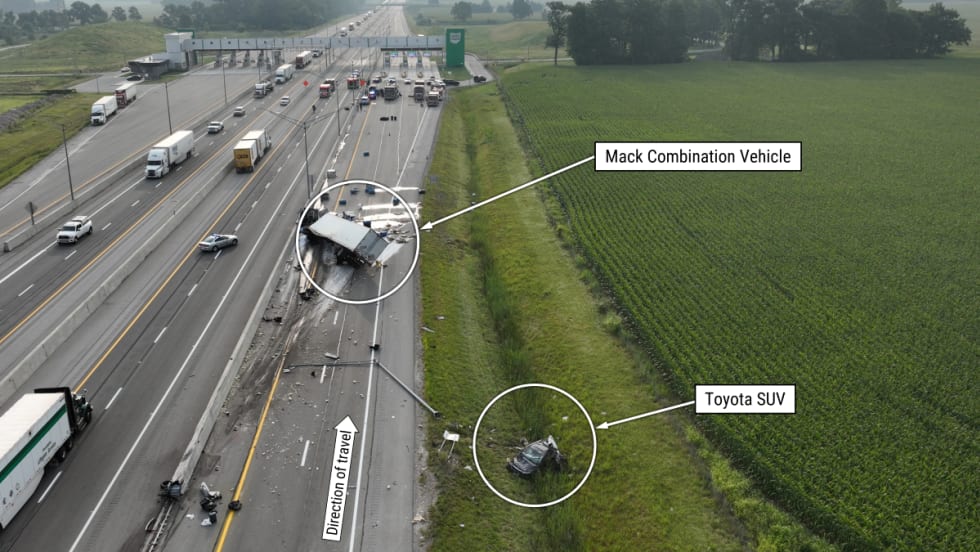
Fatal Crash Exposes Toll Plaza Risks
An NTSB investigation found that last-minute lane changes and large speed differences at an Ohio toll plaza created a hazard the truck driver couldn't avoid in time.
Read More →
When Language Stops the Truck: The Return of ELP Out-of-Service Orders
English language proficiency rules for commercial drivers aren’t new, but renewed out-of-service enforcement has raised the stakes. Here’s what carriers need to know before a driver reaches a roadside inspection.
Read More →