




Truck Snow Removal: Fines Aren't the Only Risk
Delaware and Maryland are the latest states to add requirements and fines for snow and ice removal on commercial trucks. But a flying-ice accident could cost a fleet more than a citation.

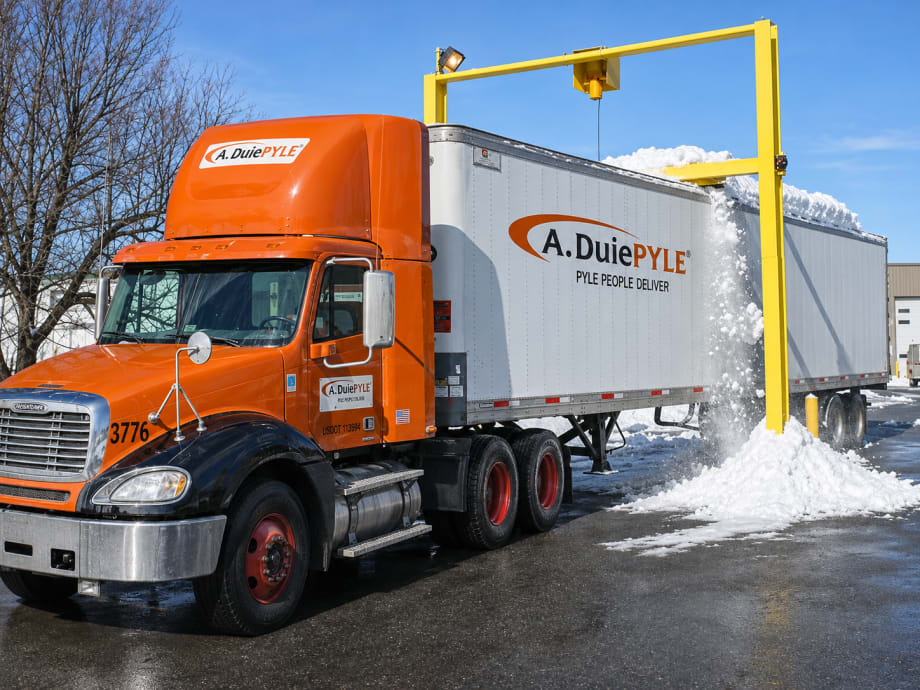
Fines for not clearing accumulated snow from tractor-trailers climb considerably when snow or ice flies off a truck and causes damage or injuries. In this file photo, A. Duie Pyle is shown using a snow-cleaning gantry for a 2015 HDT story.
A. Duie Pyle. Enhanced using ChatGPT. See Terms of Use.
- Delaware and Maryland have new snow and ice removal laws that took effect in fall 2026, with specific requirements and fines for commercial trucks.
- Commercial vehicle penalties can reach $1,500 if falling snow or ice causes an accident resulting in injury or property damage.
- Fines aren't the only financial risk. Trucking companies can face negligence lawsuits when snow or ice flying off their vehicles causes injuries or damage, even in states without specific snow-removal laws.
*Summarized by AI
A chunk of ice flying off the top of a tractor-trailer can do a lot more than damage someone's windshield. It can cause serious injuries — and potentially leave a trucking company facing a costly lawsuit.
Now Delaware and Maryland have joined other states with snow and ice removal laws that apply to commercial trucks. Both laws took effect this fall, just ahead of the winter driving season.
The basic fines may not seem like much. But the penalties climb considerably when snow or ice flies off a truck and causes damage or injuries. And that's before considering the potential for civil litigation.
Of course, getting snow and ice off the roof of a 13-foot-high trailer is easier said than done. Both laws address that challenge, although in different ways.
Delaware Truck Snow Removal Law
Delaware's new law, Senate Bill 233, took effect September 24, 2026. It requires drivers to remove snow and ice that has accumulated on their vehicles before operating them.
Drivers can be fined $25 to $75 for not doing so, even if no snow or ice falls from the vehicle. They can't receive more than one penalty for violating the requirement within a 24-hour period.
If snow or ice falls from a moving vehicle and causes injury or property damage, the penalties are much higher:
- Noncommercial vehicles: $200 to $1,000.
- Commercial vehicles: $500 to $1,500.
Police can stop vehicles when they have reasonable, articulable suspicion that the snow-removal law has been violated.
There are some exceptions. The law doesn't apply on roads with speed limits of 25 mph or less. It also doesn't require drivers to remove snow and ice that accumulate while the vehicle is being continuously operated, except from the windshield. That means a truck wouldn't necessarily have to stop to clear its roof every time snow starts falling while it's on the road.
Maryland's Truck Snow Removal Requirements
Maryland's new Clear Before You Drive Act took effect October 1, 2026.
The law requires drivers to make reasonable efforts to remove accumulated snow and ice that could threaten people or property before operating their vehicles. It specifically covers the hood, trunk, windshield, windows, and roof, as well as truck cabs and the tops of trailers and semitrailers.
The "reasonable efforts" language is important, particularly for trucking fleets. The law also includes an exception when complying would violate workplace safety laws or regulations or threaten the driver's health or safety.
Unlike Delaware, Maryland generally treats snow-removal violations as a secondary offense. That means police ordinarily can't stop a vehicle solely because it has accumulated snow or ice. They can issue a citation after stopping a driver for another suspected violation.
The exception is when the snow-removal violation contributes to an accident resulting in property damage, death, or serious bodily injury. In that case, the fine for a commercial vehicle is $500 to $1,500.
Maryland's fines for commercial vehicles increase with repeated violations:
- First offense: $75.
- Second offense: $150.
- Third offense: $300.
- Fourth offense: $600.
- Fifth or subsequent offense: $1,000.
A driver can't be found in violation more than once in a 24-hour period.
Which States Require Snow Removal?
Delaware and Maryland aren't the only states with laws addressing snow and ice on vehicles, particularly in the Northeast.
Connecticut: Requires commercial and noncommercial vehicle drivers to remove accumulated snow and ice that could threaten people or property. The basic fine is $75. If falling snow or ice causes injury or property damage, fines range from $200 to $1,000 for noncommercial vehicles and $500 to $1,250 for commercial vehicles. The law includes an exception for certain ongoing winter weather conditions.
Maine: Specifically includes snow and ice in its definition of an unsecured load, with fines of $150 to $500. A separate law requires drivers of vehicles registered at less than 10,000 pounds to take reasonable measures to prevent accumulated snow or ice from falling while driving.
New Hampshire: Under what's commonly known as "Jessica's Law," drivers are expected to remove snow and ice before driving. Enforcement is through the state's negligent-driving law, with fines of $250 to $500 for a first offense and $500 to $1,000 for subsequent offenses.
New Jersey: Requires reasonable efforts to remove accumulated snow and ice before driving, including from truck cabs, trailers, and intermodal freight containers. Fines range from $25 to $75 even if nothing falls from the vehicle. Commercial vehicle operators face fines of $500 to $1,500 if flying snow or ice causes injury or property damage.
Pennsylvania: Requires drivers to make reasonable efforts to remove accumulated snow and ice within 24 hours after snowfall or icing ends. The basic fine is $50, even if nothing falls from the vehicle. Fines increase to $200 to $1,500 if dislodged snow or ice causes death or serious bodily injury. The law includes exceptions for commercial drivers traveling to snow-removal facilities or when removing the accumulation would violate workplace safety rules or threaten their health or safety.
Rhode Island: Prohibits driving with significant amounts of snow or ice that could blow off and obstruct another driver's vision. It also prohibits accumulations that obstruct the driver's own view through the windows. Natural accumulation while driving during adverse weather is exempt.
Other states may address snow and ice hazards through existing laws about unsecured loads, obstructed visibility, or careless or reckless driving.
And for trucking fleets operating across state lines, it's the laws where the truck is operating that matter, not where the truck or driver is based.
Can Flying Ice Lead to a Trucking Lawsuit?
For trucking companies, the potential financial consequences don't end with a traffic citation. In the event of a crash, the cost could be much higher, as plaintiffs’ attorneys would likely use the offense against a motor carrier or driver in a resulting lawsuit.
In fact, lawsuits over ice flying off commercial trucks aren't anything new.
Back in 1951, a driver on the Alaska Highway lost his right eye after a large chunk of ice fell from an Alaska Freight Lines tractor-trailer and smashed through his windshield.
The driver sued the trucking company, alleging negligence. A federal district court agreed and awarded him more than $16,000 in damages — a substantial amount at the time.
In 1955, the Ninth Circuit Court of Appeals upheld the judgment, rejecting the company's argument that the danger was too remote to require precautions.
The court pointed out that the carrier operated in winter conditions where snow and ice accumulation was foreseeable and that it already had procedures for clearing snow and ice from trucks at certain locations.
More recently, a motorist sued FedEx Freight after a large piece of ice crashed through his windshield in Vermont in 2014, causing serious injuries to his face and eye.
The lawsuit alleged that the ice came from a FedEx Freight tractor-trailer whose roof hadn't been properly cleared.
FedEx Freight ultimately won the case in 2017 after a federal judge found insufficient evidence that one of its trucks was responsible. But years of litigation can be expensive, even when the carrier ultimately wins.
Researched and edited with the assistance of ChatGPT. See Terms of Use.
Quick Answers
Several states specifically require drivers to remove snow and ice from commercial vehicles, including trailer roofs. Requirements and exceptions vary by state. Delaware and Maryland both enacted new snow-removal laws in 2026.
*Summarized by AI
More Safety & Compliance
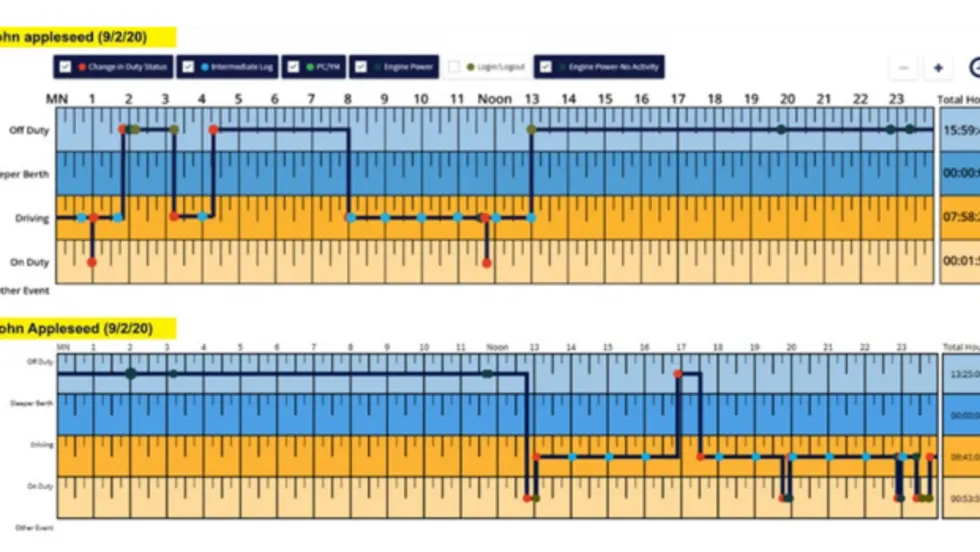
How ATA Wants to Fix ELD Certification
ATA's new roadmap calls for independent ELD certification, better fraud detection and closer oversight of providers. Here's how the proposed system would work.
Read More →
Daimler, Paccar Recall Trucks Over Driveline Defect
Nearly 4,900 Freightliner, Western Star, and Kenworth trucks are being recalled because a missing snap ring could allow the driveline to separate from the truck.
Read More →
133 ELDs Revoked as ATA Pushes Certification Reform
FMCSA just removed a record number of electronic logging devices from its registry. ATA says it's time to rethink how ELDs get approved in the first place.
Read More →
CVSA Sets 2027 International Roadcheck Dates
The annual 72-hour truck inspection blitz will take place May 11–13 across North America. Here's what fleets can expect and what inspectors found during the 2026 event.
Read More →
FMCSA’s New Complaint Platform Makes It Easier to Report Trucking Safety Concerns
The FMCSA Complaint Center features expanded complaint categories and a name change away from the word "consumer."
Read More →
FDA Eases Path for Oral-Fluid Testing
Federal actions could advance oral-fluid drug testing for truck drivers, but lab certification delays and marijuana rescheduling questions remain.
Read More →
Kodiak Lines Up Fleets for Driverless Trucking
An agreement for 75 trucks, a new Texas freight lane, and progress on safety validation move Kodiak closer to its planned driverless highway launch.
Read More →
More Trailer Data Through the Same Seven-Way [Video]
Can trucking’s standard seven-way connector handle more cameras and trailer data? Grote’s Adam Slade shows HDT how the company is using new technology with its 4See trailer system, not only to add a new backup camera but also to expand other capabilities — without adding another connection.
Read More →
PrePass Intelligence Mines Fleet Bypass, Toll and Safety Data
PrePass Intelligence helps fleets measure bypass savings, flag potential toll overcharges, and spot suspicious transactions by combining data from separate systems.
Read More →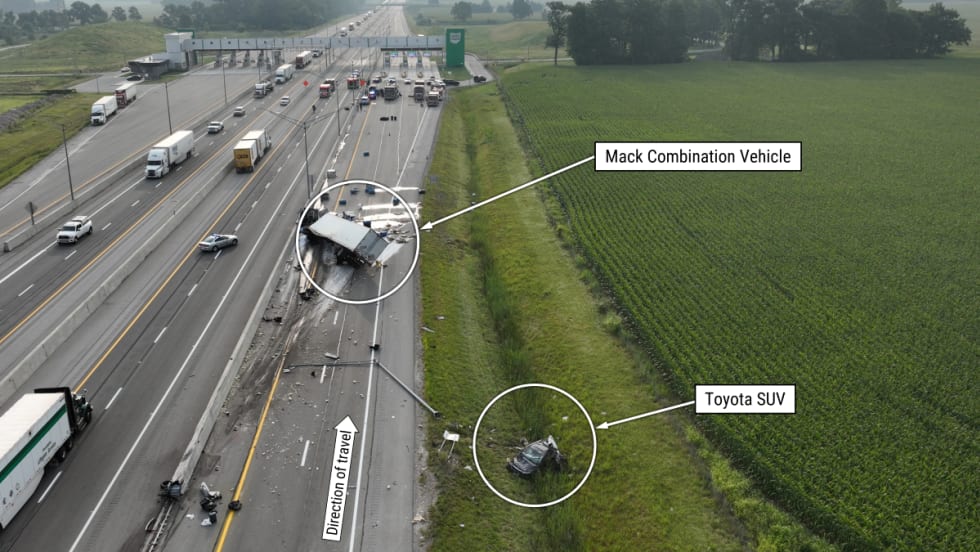
Fatal Crash Exposes Toll Plaza Risks
An NTSB investigation found that last-minute lane changes and large speed differences at an Ohio toll plaza created a hazard the truck driver couldn't avoid in time.
Read More →