




5 Steps to Avoid Common Mistakes When Implementing In-Cab Cameras
5 Essential Features for Your Trucking Fleet's Dash Cams
Not all dash cameras are created equal. Each offers a different level of protection and return on your trucking fleet’s investment. Here are five features to consider when comparing in-cab video system vendors.
by Lucero Truszkowski, J.J. Keller & Associates
May 9, 2025
In-cab cameras, or dashcams, are an important safety tool for trucking companies.
3 min to read
Many trucking fleets use cutting-edge dash cameras to improve safety metrics and create a culture of safety. But creating such a culture involves transitioning from a reactive mindset to a preventive mindset.
Dash cameras help protect your business by allowing you to monitor drivers, gather evidence during accidents, and reduce the risks that come with liability claims. Investing in these devices is an effective way to enhance safety while boosting efficiency.
But not all dash cameras are created equal. Each offers a different level of protection and return on your fleet’s investment.
Consider the following essential features when comparing in-cab video system vendors.
1. High-Definition Video
The quality of the video captured by your dash cam is critical, especially when it comes to accident documentation and legal protection.
It’s important to choose dash cameras with at least 1080p HD resolution. Higher-resolution cameras provide much sharper images, helping to capture crucial details such as license plates, road signs, and other vehicles.
Since trucks often operate at night, it's also wise to choose a camera with night vision capabilities. Dash cams equipped with infrared sensors or advanced low-light technology will:
Ensure clarity in low-light conditions.
Minimize grainy footage, maintaining the integrity of any potential evidence.
2. Field of View
A wide field of view is another key feature to look for when selecting a dash cam.
In the trucking industry, it’s important to have a broad angle camera to help capture more of the road and surroundings.
A camera with a field of view of 120-170 degrees will give you an optimal coverage area, allowing you to see multiple lanes and potential dangers. This wide perspective is helpful for spotting side-approaching vehicles and can be crucial in preventing accidents and resolving insurance claims.
3. Expert Eyes on Your Video
Using a managed review service can be an invaluable piece of your safety program. These services employ expert reviewers who go through the footage to identify and highlight key incidents for review.
By using such a service, businesses can:
Reduce the workload for internal teams.
Receive timely, accurate insights.
Promote safe driving practices.
4. Dual-Facing Cameras
Driver-facing cameras have become more popular in fleet management systems as they offer real-time monitoring of driver behavior.
These cameras help ensure that drivers are adhering to safety regulations and company policies. A dual-facing system that records both the driver and the road provides managers with insights into habits like seatbelt usage, drowsiness, or distracted driving.
The driver-facing feature also enhances driver accountability, which can be especially useful for coaching and improving performance. And these cameras protect drivers by documenting that they were following safety protocols during an accident.
5. Real-Time Cloud Storage
Dash cams that offer cloud connectivity provide real-time access to footage, allowing fleet managers to review incidents as soon as they occur. With cloud storage, the video is securely saved online, ensuring that the footage is not lost even if the camera gets damaged.
Cloud capabilities support quick data transfers, which can be vital in urgent situations. Cameras that offer 4G or Wi-Fi connectivity take this feature a step further, enabling remote access to video data without the need to wait for trucks to return to the base.
Dash cameras equipped with these advanced features can significantly improve your fleet’s safety, efficiency, and overall operation.

About the Author: Lucero Truszkowski joined safety and compliance consulting firm J.J. Keller & Associates as an associate editor in 2022. Her expertise includes process documentation, plain-English writing, and translating complex concepts for customers across a spectrum of subjects, including transportation, human resources, and driver training.This article was authored and edited according to Heavy Duty Trucking’s editorial standards and style to provide useful information to our readers. Opinions expressed may not reflect those of HDT.
Subscribe to Our Newsletter
More Safety & Compliance

Marijuana and Trucking’s Drug-Testing Dilemma
Marijuana is getting stronger, laws are changing, and drug tests still can’t reliably establish impairment. What does that mean for truck drivers and the fleets that employ them?
Read More →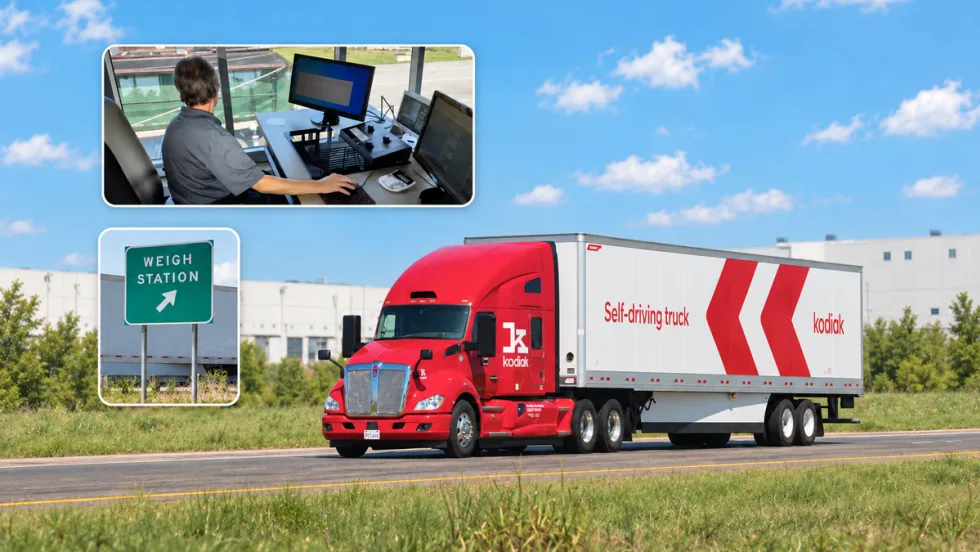
PrePass, Kodiak Connect Driverless Trucks to Roadside Enforcement
The system will allow enforcement agencies to verify Enhanced Inspection information and decide whether Kodiak’s autonomous trucks can bypass roadside screening sites.
Read More →
From One Generation to the Next: How Mentorship Builds Safer Truck Drivers
After three decades in trucking, Harold Perry shares what he's learned about driver safety, mentorship, and helping the next generation build confidence behind the wheel.
Read More →
FMCSA Pauses Biennial-Update Enforcement Amid Motus Transition
Carriers whose updates were due on or after June 1 have more time, while FMCSA works to stabilize its new registration system and warns of phishing sites impersonating its new carrier registration system, Motus.
Read More →
ZF Expands Commercial Vehicle Push in North America
ZF is expanding its North American commercial-vehicle presence with new transmission applications, electrification, trailer technology and autonomous-driving systems.
Read More →
Truck Drivers Need More Than Another Alert
Fleets have more visibility into truck health, safety events, and driver activity than ever. The next challenge is turning all that information into useful guidance for the person who has to decide what to do next.
Read More →
Tesla Wants a Self-Driving Semi. Are Cameras Enough?
Could Tesla’s camera-only autonomous driving technology work on an 80,000-pound Semi? In this commentary, HDT's Deborah Lockridge takes a look at Tesla, Cybercab, and how autonomous trucks see the road.
Read More →
What DOT’s Automated Vehicle Strategy Means for Trucking
The U.S. Department of Transportation issued a new automated-vehicle strategy that outlines plans for driverless-truck regulations, cross-state freight corridors, and federal safety standards.
Read More →
NYC Expands Speed, Pedestrian Safety Tech Across Fleet
New York City is expanding intelligent speed assistance and pedestrian-alert systems across its municipal fleet, moving the technologies from pilot programs into vehicle procurement and retrofit requirements.
Read More →
FMCSA Removes 110 Truck Driver Training Schools from Certified ELDT List
Federal regulators also are targeting more than 160 additional training providers and launching a nationwide audit of third-party CDL skills testers as part of a broader crackdown on trucking fraud.
Read More →