




Nussbaum, Roehl Announce Second Driver Pay Increase This Year
This year has seen a swath of major truck driver pay increases as freight capacity has tightened.

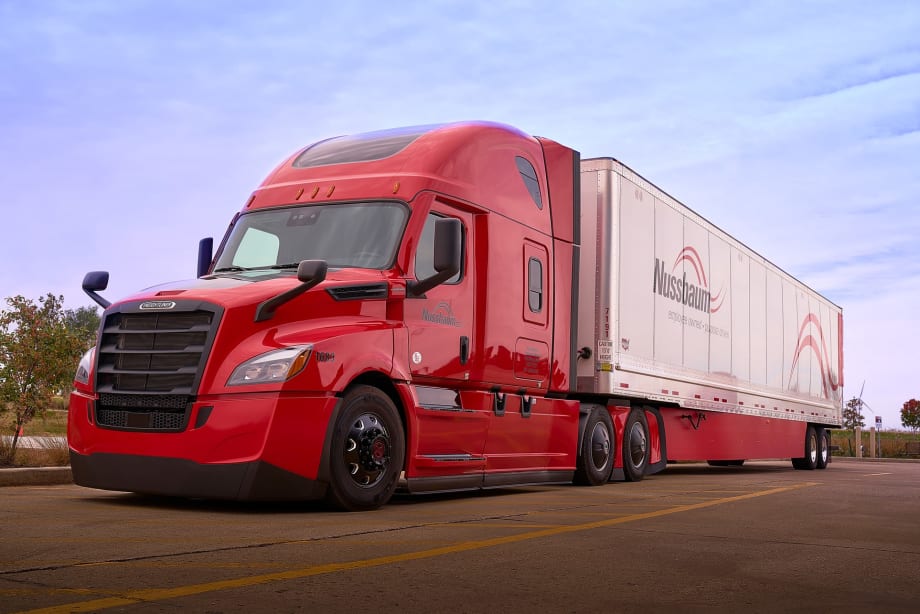
Nussbaum Transportation urges drivers to look beyond per-mile rates. "A high advertised rate can hide a short-route system paying nothing for work at the dock, time waiting at a shipper, or equipment failures.”
Nussbaum Transportation
- Nussbaum and Roehl have announced a second pay increase for drivers this year.
- The trucking industry is experiencing widespread pay raises for drivers.
- Increased driver pay comes as a response to tightening freight capacity.
*Summarized by AI
Nussbaum Transportation and Roehl Transport both recently announced their second driver pay increase of the year.
Nussbaum is announcing its second major pay move of the year, boosting activity pay, detention pay, weekly guarantees, and trainer pay. It previously announced the largest driver pay increase in its history in May, which included profit sharing in the Illinois-based truckload carrier.
“It's built around this idea: Pay drivers for everything the job demands — including the work that a cost-per-mile rate quietly leaves out,” said company officials, such as paying for pickups and deliveries and Nussbaum’s "1 hour free" detention standard.
- Activity pay rises from $20 to $23 on every pickup, delivery, and stop-off, with trailer relays and shuttles going from $12 to $15 per event.
- Detention pay climbs 25%, from $20 to $25 per hour, and still kicks in after one hour.
- The weekly minimum guarantee increases $50 per week.
- An extra $50/week for drivers who run on a special Illuminate Loop project.
- Trainer pay jumps 50%, from an extra $500 to $750/week (atop the trainer’s regular mileage, activity pay, and guarantee).
The detention bump applies fleetwide, while the activity pay and guarantee bumps apply to OTR and Regional Van System drivers.
Paying For the Work, Not Just The Miles
Most carriers pay only "stop-offs" between the first pickup and final delivery, treating those two as covered by the mileage rate. In addition to stop-offs, Nussbaum pays on every pickup and every delivery, as well as drop-lot relays.
"That's exactly where the work is," said Jeremy Stickling, chief administrative officer. "The guard shack, staging, hooking trailers, the paperwork, the dock. Our activity pay puts a floor under every stop."
It also helps high-volume weeks, when a driver running 8 or 9 shorter loads does considerably more hands-on work than a driver with 2 long hauls, yet logs fewer miles. Higher activity pay helps to close that gap.
Detention rises to $25 per hour while keeping Nussbaum’s "first hour free" structure. Much of the industry requires two hours before detention pay kicks in and only pays the driver if the shipper reimburses the carrier.
"Ours starts after one hour, and we pay even if we can't recover the time,” Stickling said. “The driver lost it, so they get paid. Collection is our problem, not theirs."
Nussbaum considers its weekly guarantee “one of the highest safety nets in the industry.” The $50 guarantee bump sweetens it even more, serving as a floor for weeks when things go sideways.
Those are the features job-seeking drivers should weigh, Stickling says, but rarely ask about.
"When a driver says 'just give me your cents per mile,' that's usually the very question that burned them," he said. "A high advertised rate can hide a short-route system paying nothing for work at the dock, time waiting at a shipper, or equipment failures.”
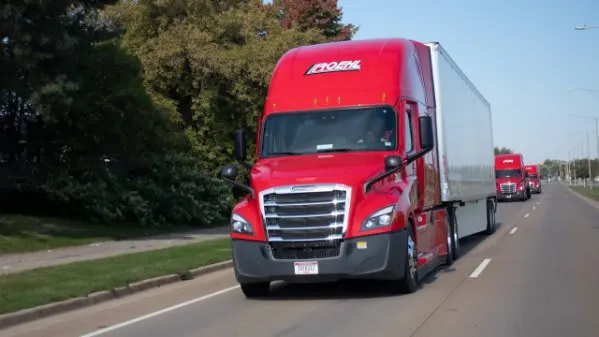
Roehl pay increases will be effective October 4 for most company drivers in its Refrigerated, Flatbed, Van, Curtainside, and Dedicated Divisions.
Roehl
Roehl Drivers Could Earn $100,000 Plus
Roehl Transport also announced its second truck driver pay increase this year. The combined increases represent one of the largest driver compensation investments in Roehl's history, the company said.
The new higher pay program will position Roehl's top-earning drivers among the highest-paid drivers in the trucking industry, the company said. Many will be earning over $100,000 annually while getting home weekly, and in some cases daily, according to the company.
The pay increases will be effective October 4 and apply to most company drivers in Roehl’s Refrigerated, Flatbed, Van, Curtainside, and Dedicated Divisions.
The company also announced what it said was a significant compensation increase for owner-operators and lease operators who partner with Roehl.
Earlier this year, Roehl increased driver pay to reward longevity and tenure, including for those drivers who chose to start and grow their careers through Roehl’s on-the-job CDL training program. The company also increased Certified Driver Trainer compensation and added retention bonuses.
Other Driver Pay Hikes
Anderson Trucking Service is increasing pay for company flatbed drivers, raising the base mileage rate 16.7% from $0.60 to $0.70 per mile.
The $0.10-per-mile increase applies across all classes and tenure levels and covers both loaded and empty miles.
The new rate took effect Sept. 21 for all 327 current ATS company flatbed drivers. This year, the top 50% of company flatbed drivers have averaged $1,600 per week, while the top 20% have averaged $2,100 per week, according to the company.
Drivers can also maximize their earnings through ATS’s Upside Pay program. On loads of 1,200 miles or less, drivers can earn 26% of load revenue in lieu of mileage. ATS calculates both mileage pay and Upside Pay on eligible loads, and drivers receive the higher amount.
These increases follow several significant driver pay announcements earlier this year from companies such as Averitt, Highway Transport, Maverick, Melton Truck Lines, and others.
More Drivers

From One Generation to the Next: How Mentorship Builds Safer Truck Drivers
After three decades in trucking, Harold Perry shares what he's learned about driver safety, mentorship, and helping the next generation build confidence behind the wheel.
Read More →
Truck Drivers Need More Than Another Alert
Fleets have more visibility into truck health, safety events, and driver activity than ever. The next challenge is turning all that information into useful guidance for the person who has to decide what to do next.
Read More →
FMCSA Removes 110 Truck Driver Training Schools from Certified ELDT List
Federal regulators also are targeting more than 160 additional training providers and launching a nationwide audit of third-party CDL skills testers as part of a broader crackdown on trucking fraud.
Read More →
Hours of Service Pilot Programs: FMCSA Readies for 2027 Rollout
Two pilot programs could eventually reshape hours-of-service rules, giving truck drivers options to pause their 14-hour clock or use longer split sleeper rest periods.
Read More →
Medical Cards, English Proficiency Reshape Roadcheck Violations
Medical-card violations jumped to the top of the driver out-of-service list during CVSA’s 2026 International Roadcheck, while English-language proficiency violations appeared among the leading violations for the first time.
Read More →
Driver Trust Can Make or Break the Success of Fleet Safety Technology
New Teletrac Navman research suggests that onboarding, transparency about driver data, and positive feedback can play a significant role in how commercial drivers respond to safety and coaching technology.
Read More →
EEOC Sues KLLM Over Alleged Sex Discrimination in Driver Training
KLLM is facing a federal sex-discrimination lawsuit over policies the EEOC alleges put female truck driver trainees at a disadvantage.
Read More →
FMCSA Moves to Codify English Language Requirements for Commercial Drivers
By changing regulations on English-language proficiency requirements for commercial drivers, rather than relying on a guidance memo, the FMCSA said future administrations won't be able to walk back the Trump administration's stricter enforcement with just a memo.
Read More →
Drivers Put Western Star Trucks to the Test at Star Nation Experience
Watch to get an inside look at the Western Star trucks, technology, and community behind the Star Nation Experience 2026!
Read More →
Trump Administration Looks to Put More Veterans Behind the Wheel
The Freedom Haulers program pulls together existing and expanded programs at several federal agencies to recruit veterans to drive commercial heavy-duty trucks and cut the red tape for them to get a CDL, training, and employment.
Read More →