




What the Best Fleets to Drive For Teach About Driver Retention
Survey fatigue, AI-powered routing, owner-operator expectations, and the decline of social media all emerged as themes from this year's Best Fleets to Drive For program.

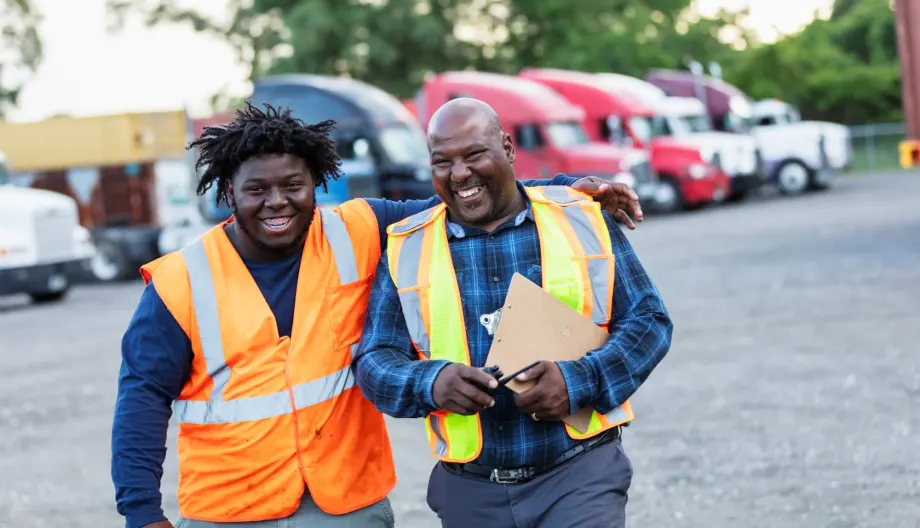
Drivers like working for trucking companies where it feels like a family. But it has to be more than just a slogan.
Getty Images / Kali9
The biggest driver retention takeaway for trucking companies from this year's Best Fleets to Drive For program isn't about pay or perks. It's about trust and communication.
The Best Fleets to Drive For program, created and administered by online driver training provider CarriersEdge, evaluates fleets each year to determine the best ones for truck drivers.
They are nominated by drivers, then evaluated based on interviews, company practices, safety and retention data, and most importantly, driver surveys.
As we’re starting to come out of a multi-year freight recession and the driver market becomes more competitive, there are takeaways from the Best Fleets program that can help carriers take advantage of the upturn.
Participation in this year's Best Fleets program was down, as some companies were focused on simply surviving the tough times.
“They're just trying to keep the lights on sometimes,” said CarriersEdge CEO Jane Jazrawy in an episode of HDT Talks Trucking.
“When they're struggling, they're not thinking about drivers and driver programs and how to make drivers happy. They're trying to get enough miles to keep their trucks profitable.”
But among the fleets that continue to excel, several trends stood out.
Driver Satisfaction is Holding Up. Trust Isn’t.
One of the more surprising findings is that drivers generally remain satisfied with their employers. Drivers seemed to be about as happy with their companies as they usually are, she said.
But when you look in more detail, she said, driver satisfaction with just about everything has fallen.
“So we have a general, we have a lot of high satisfaction,” she said. “But what I saw was that the level of dissatisfaction was getting bigger and bigger and bigger.”
It’s a trend that started a couple years ago, but after three years of freight recession and economic uncertainty, the change is really noticeable.
And a big one, she said, is trust. Drivers were less likely to believe management communicates honestly.
Better Communication Builds Driver Trust
The highest-performing fleets weren't necessarily the ones spending more money on new driver programs. Instead, they were the ones communicating better.
“They were still cutting programs, they were still dialing it back, but they talked to their drivers,” Jazrawy said.
And they didn’t just rely on surveys, she said.
"It's actually talking to drivers. Drivers do want to be in communication with their fleets. They want to talk to someone. They want to know what's happening with the company."
It’s easier for drivers (or any employee, for that matter) to accept cutbacks during tough times when they understand the business challenges because leaders talked openly about them instead of allowing rumors and assumptions to fill the gaps.
One example she highlighted was K&J Trucking, where the company president regularly records short videos updating drivers on the state of the business.
Drivers Want Conversations, Not More Surveys
Driver survey fatigue is growing, while the highest-performing fleets are relying more on direct conversations and regular communication.

The best fleets are making phone calls, talking with drivers when they're in the terminal, and creating more opportunities for two-way communication.
Getty Images / Photosvit
For years, fleets have increasingly relied on surveys to gauge driver satisfaction. There are a lot of communication tools that allow fleets to send messages to drivers.
Jazrawy believes many drivers have reached their limit.
“People were relying on surveys, and there is an incredible amount of survey burnout,” she said. “People do not want to do another survey.”
In fact, she said, one of the driver comments they received during the Best Fleets to Drive For selection process was, “the best part of working here is not doing another survey.”
The best fleets are making phone calls, talking with drivers when they're in the terminal, and creating more opportunities for two-way communication.
Technology makes it easier than ever to push information out to drivers. Listening still requires a human conversation.
AI Could Solve One of Trucking's Biggest Driver Complaints
AI-assisted route planning may reduce drivers' perceptions of unfair dispatching by assigning loads based on stated preferences rather than dispatcher discretion.
Some trucking fleets are using AI agents to handle routine questions from drivers, and that has a place as long as it doesn’t replace real human communication.
The Best Fleets to Drive For survey uncovered what may be one of the best uses of AI for driver satisfaction: Routing.
Truck drivers often think that how routes are assigned is unfair. Whether or not favoritism actually exists, many drivers believe someone else is getting better loads or better home time.
Jazrawy says one fleet is beginning to change those perceptions by using AI for route planning.
Leonard’s Express has been testing a system that allows drivers to specify their preferences — such as when they want to be home or where they don't want to run — and then optimizes routes accordingly.
Because the routing decisions are based on driver preferences and objective criteria instead of individual dispatch decisions, drivers perceive the process to be more fair.
It's an example of AI improving the driver experience without replacing the vital human relationships.
Small Fleets Can Compete With the Biggest Carriers
One misconception Jazrawy hears from small fleets is that only large carriers have the resources to become a Best Fleet to Drive For. While larger fleets believe they’re at a disadvantage because personal relationships with drivers don’t come as easily.
The data says otherwise.
Small fleets often outperform much larger competitors because they're more intentional about communication and execution, she said.
“What we look at is, what are you doing with the resources that you have?”
Just talking to drivers, giving them a phone call, she pointed out, doesn’t require a big monetary investment.
One Hall of Fame fleet, FTC Transportation, has between 20 and 25 trucks. Jazrawy pointed out that they built sophisticated driver scorecards years ago using nothing more than Excel spreadsheets.
Likewise, large fleets have access to sophisticated technology but often struggle simply because managing communication across thousands of drivers is inherently more difficult.
Owner-Operators Want Different Support Than Company Drivers
The survey responses also highlight important differences between company drivers and owner-operators.
When asked at the end of the survey what they like best about the company they drive for, Jazrawy said, one of the number one answers among owner-operators was “freedom.”
“They want to be able to run their businesses,” she said. “Pay is almost secondary to freedom.”
Company drivers tend to value benefits such as wellness programs, mental health resources, and support when personal challenges arise.
Owner-operators place a premium on services that help them run their businesses more successfully, such as access to financing, accounting resources, discounts, inspections, or maintenance support.
In both cases, however, drivers repeatedly described their favorite companies in similar terms.
“Family,” Jazrawy said. “They want to work for a place that recognizes them as a human being. And they all say it feels like a family when they are enjoying the work.”
She warns fleets, however, that just saying “we treat you like family” is just empty words without action behind it.
“What I usually say to fleets is, from the office side, you don't get to say the word family. You can say that it feels like a family, but until your drivers say it feels like family, it doesn't count.”
Social Media Is Losing Its Value for Driver Communication
For years, fleets increasingly turned to Facebook and other social platforms to communicate with truck drivers, both for recruiting and for ongoing communication with their current drivers.
That strategy may be losing effectiveness.
According to Best Fleets data, the percentage of drivers following their fleet on social media has dropped significantly from its peak several years ago.
Why?
“I think that was happening because social media has become so complex that if you're relying on social media to get messages to your drivers, they may not even be on social media anymore,” Jazrawy said.
“They may have just said, ‘Forget it.’ I'm going to maybe Discord or something or FaceTiming my kids.”
Jazrawy believes public social media still has value for recruiting, but it's becoming much less effective as an internal communications tool.
Private chat apps, group emails, text chains, and dedicated messaging platforms are being looked at by many fleets, although the industry is still searching for the next platform drivers will widely embrace.
Discord, she said, might be the way to interact with Gen Z, and it will be interesting to see what shows up in next year’s Best Fleets to Drive For.
One Easy Driver Retention Win: Healthy Snacks
Not every takeaway from the Best Fleets to Drive For involved technology or management strategy. One surprisingly consistent favorite among drivers?
Healthy snacks.
Asked about benefits drivers appreciate, healthy food available at terminals consistently ranked near the top, Jazrawy said.
It's a reminder that improving the driver experience doesn't always require major investments.
Sometimes small gestures, combined with honest communication and consistent leadership, can make a big difference.
Best Fleets to Drive For: The Bottom Line
If there's one lesson from this year's Best Fleets to Drive For program, it's that driver retention remains a relationship business.
Technology can help. AI may improve routing decisions. Better data can identify problems sooner.
But the Best Fleets to Drive For excel at something much more fundamental: They communicate openly, listen to drivers, and treat them like family.
And don’t forget the healthy snacks.
More Drivers

EEOC Sues Texas Trucking Company Over Driver Age Limits
The agency says Trancasa USA rejected applicants over 65 and applied tougher driving-record standards to those over 60.
Read More →
Nussbaum, Roehl Announce Second Driver Pay Increase This Year
This year has seen a swath of major truck driver pay increases as freight capacity has tightened.
Read More →
From One Generation to the Next: How Mentorship Builds Safer Truck Drivers
After three decades in trucking, Harold Perry shares what he's learned about driver safety, mentorship, and helping the next generation build confidence behind the wheel.
Read More →
Truck Drivers Need More Than Another Alert
Fleets have more visibility into truck health, safety events, and driver activity than ever. The next challenge is turning all that information into useful guidance for the person who has to decide what to do next.
Read More →
FMCSA Removes 110 Truck Driver Training Schools from Certified ELDT List
Federal regulators also are targeting more than 160 additional training providers and launching a nationwide audit of third-party CDL skills testers as part of a broader crackdown on trucking fraud.
Read More →
Hours of Service Pilot Programs: FMCSA Readies for 2027 Rollout
Two pilot programs could eventually reshape hours-of-service rules, giving truck drivers options to pause their 14-hour clock or use longer split sleeper rest periods.
Read More →
Medical Cards, English Proficiency Reshape Roadcheck Violations
Medical-card violations jumped to the top of the driver out-of-service list during CVSA’s 2026 International Roadcheck, while English-language proficiency violations appeared among the leading violations for the first time.
Read More →
Driver Trust Can Make or Break the Success of Fleet Safety Technology
New Teletrac Navman research suggests that onboarding, transparency about driver data, and positive feedback can play a significant role in how commercial drivers respond to safety and coaching technology.
Read More →
EEOC Sues KLLM Over Alleged Sex Discrimination in Driver Training
KLLM is facing a federal sex-discrimination lawsuit over policies the EEOC alleges put female truck driver trainees at a disadvantage.
Read More →
FMCSA Moves to Codify English Language Requirements for Commercial Drivers
By changing regulations on English-language proficiency requirements for commercial drivers, rather than relying on a guidance memo, the FMCSA said future administrations won't be able to walk back the Trump administration's stricter enforcement with just a memo.
Read More →