



How Can Trucking Fleets Keep the Best Drivers?
Why Do Truck Drivers Leave — Really?
Invest in Truck Drivers’ Lives to Improve Retention
 MENU
MENU SEARCH
Communication and culture work together to create an atmosphere where a driver will be less likely to look for greener pastures. Learn why drivers leave and how to craft a top-tier culture in this HDT series.
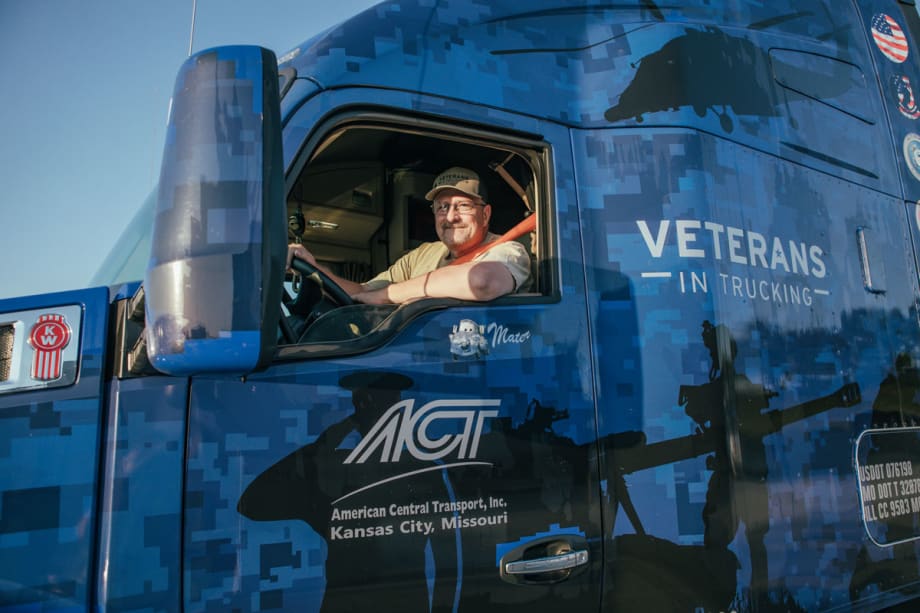
Phil Wilt, president of American Central Transport, says it's up to the trucking company to meet driver expectations.
Photo: ACT
Driver pay and benefits may help you land an experienced truck driver, but it takes more than that to make sure he or she will stay. Communication and culture work together to create an atmosphere where a driver will be less likely to look for greener pastures elsewhere. But it takes work to craft a top-tier culture.
Where can one find fleets that have excelled in creating such a culture to use for benchmarking? The CarriersEdge Best Fleets to Drive For program. Mark Murrell, CarriersEdge co-founder, and leaders from two fleets that consistently are in the Top 20 Best Fleets to Drive For shared their insights with HDT. In this series, we’ll share their advice.
To create driver stability, a company must first understand what it really needs and what a successful driver for that company will look like. They must know who they are and who will be a good fit.
Second, companies must slow down and take the time to find the person that fits. When they find that good fit, those drivers will not leave.
All of that must be driven from the top down, Murrell says.
“The CEO's job is to make sure the company knows who they are and what they’re about and then everybody else flows from that — HR, operations, safety, recruiting, whatever the job title happens to be in the company,” he says. “They all have to take the lead from the vision that’s coming from the top.”
With everyone on the same page, you don’t have the safety department thinking one goal is the mission, while operations has another perspective, and HR yet another. Those conflicts impact drivers.
“There really isn’t a wrong page,” Murrell says. “I think it’s just a matter of making sure that you pick one and everybody’s on it. And that can change over time.”
Much has changed since Phil Wilt, president of American Central Transport, started in trucking. That includes driver expectations, which he says now are much higher. But in his eyes, it is up to the trucking company to meet those expectations.
“Are we earning the right for them to continue to drive for us every day? That’s kind of our attitude," Wilt explains. "So, I think it starts with just the fact that we’re trying to make sure that we have an environment that is important to them, that they like, that they enjoy, that they feel valued, and that they feel heard."
It’s that type of attitude that puts ACT consistently in the top 20 of the Best Fleets to Drive for program.
Jim Guthrie, director of operations for Prime Inc., another Top 20 Best Fleet, says company culture is the foundation of retention.
“It’s hard to build culture, it’s hard to replicate,” he says. “Many have tried, and few have succeeded. We feel like we have a good thing going.”
Murrell says people sometimes have the idea that they should aim for zero turnover, but that is not necessarily the case.
Normal turnover for the Best Fleets tends to be in the 40% to 50% range, according to Murrell. He notes that larger fleets tend to have higher turnover numbers, and fleets with new-driver entrant programs also have higher turnover. The best he has seen, as an average, is about 30%.
“The reality is that every fleet has got probably 60 to 70% of their drivers that are pretty steady and pretty stable, then they've got another pool that turns a fair bit.”

Even among the Best Fleets to Drive For, some fleets have 70 to 75% turnover.
If a fleet’s turnover is higher than it would like, there may be good reasons for turnover to be that high, Murrell says.
A fleet may be deploying new programs to modernize and be progressive, and drivers might not be comfortable with the changes. Or there may have been an acquisition and drivers might not fit as well with the new culture.
“I would tell people to look at why is that turnover happening,” Murrell says. “If you're making a bunch of changes to improve the company and drivers are quitting as a result, it may not necessarily be a bad thing” in the long run.
“Successful business in any industry requires the right people in the right places, doing the right jobs for that organization,” Murrell says. “Some of these drivers may be fabulous. And they may be fabulous in different situations, but maybe they're not fabulous for you anymore. And when that happens, it’s okay for them to go.”
The Best Fleets to Drive For program was founded in 2009 by CarriersEdge and the Truckload Carriers Association. The program is now put on solely by CarriersEdge, which will offer recruiting and retention insights during the Best Fleets to Drive For Education and Awards Conference taking place April 8-9, 2024.

Fleets have more visibility into truck health, safety events, and driver activity than ever. The next challenge is turning all that information into useful guidance for the person who has to decide what to do next.
Read More →
Federal regulators also are targeting more than 160 additional training providers and launching a nationwide audit of third-party CDL skills testers as part of a broader crackdown on trucking fraud.
Read More →
Two pilot programs could eventually reshape hours-of-service rules, giving truck drivers options to pause their 14-hour clock or use longer split sleeper rest periods.
Read More →
Medical-card violations jumped to the top of the driver out-of-service list during CVSA’s 2026 International Roadcheck, while English-language proficiency violations appeared among the leading violations for the first time.
Read More →
New Teletrac Navman research suggests that onboarding, transparency about driver data, and positive feedback can play a significant role in how commercial drivers respond to safety and coaching technology.
Read More →
KLLM is facing a federal sex-discrimination lawsuit over policies the EEOC alleges put female truck driver trainees at a disadvantage.
Read More →
By changing regulations on English-language proficiency requirements for commercial drivers, rather than relying on a guidance memo, the FMCSA said future administrations won't be able to walk back the Trump administration's stricter enforcement with just a memo.
Read More →
Watch to get an inside look at the Western Star trucks, technology, and community behind the Star Nation Experience 2026!
Read More →
The Freedom Haulers program pulls together existing and expanded programs at several federal agencies to recruit veterans to drive commercial heavy-duty trucks and cut the red tape for them to get a CDL, training, and employment.
Read More →
A test drive of Mack’s Command Steer active steering system evaluates how it can make truck driving easier and less tiring.
Read More →