



How Can Trucking Fleets Keep the Best Drivers?
Why Do Truck Drivers Leave — Really?
Invest in Truck Drivers’ Lives to Improve Retention
Listen — and Respond — for Better Driver Satisfaction
Three Things to Focus on to Retain Truck Drivers
 MENU
MENU SEARCH
Mark Murrell, president of CarriersEdge, has three simple tricks he uses to retain good drivers.
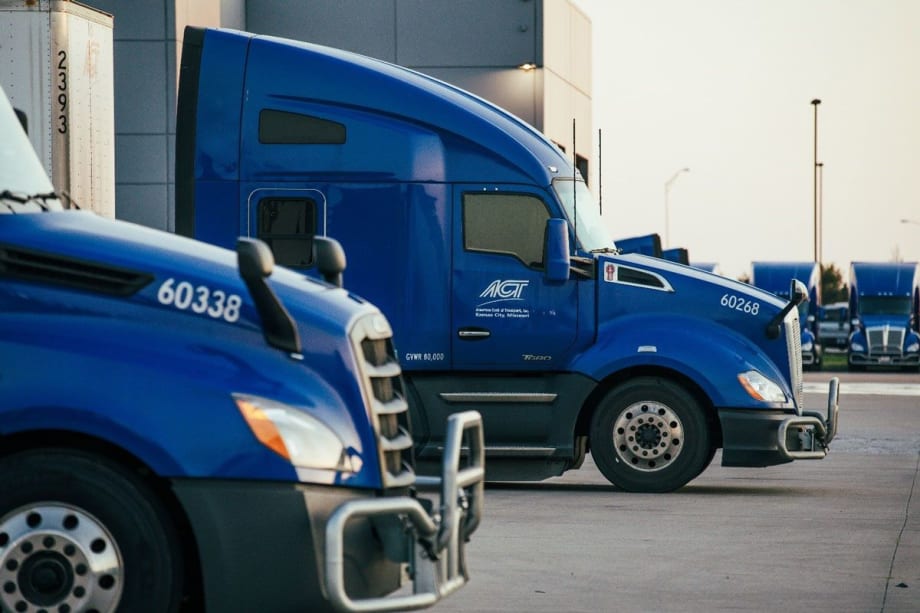
Understanding what your competitors are doing -- and paying -- is a critical aspect of managing driver retention.
Photo: ACT
The nomination and selection process for determining the Best Fleets to Drive for each year is a deep dive into all kinds of metrics, including driver retention. Mark Murrell, co-founder and president of CarriersEdge, has a grasp on the driver retention trends and tactics used by the most successful fleets after years of working with fleets in the program.
Murrell has three simple points he says fleets should be doing to retain drivers.
That must be more than just a mantra proclaiming an open-door policy and saying the leaders will listen. That is reactive. Murrell suggests leaders be proactive and ask drivers what is working and what is not.
However, leadership must act on what they learn through that feedback.
“When you get that feedback, act on it, and show drivers the things that you’re doing, why you're doing it, and things that you can’t do, clarify why it is that you can’t do them. Have those conversations and make those changes,” Murrell says.
“Drivers tend to stick around in places where they know they’re heard or where they know that their input matters.”
Murrell says over the past five years there has been a shift toward using more technology to measure driver performance or conduct surveys. While those are useful, he stressed that technology cannot be the only component of communication and relationship-building with drivers.
“You've got to follow up those things with in-person communication,” he says. “In-person maybe isn't the right word, because it can be on the phone, it can be a Zoom meeting, that's all fine.” The key is it’s a live person-to-person conversation.
Since the Covid-19 pandemic made real in-person conversations more difficult, many fleets began heavily using technology, such as survey apps and automated scorecards to measure performance.
But surveys and scorecards are impersonal.
“It’s just a system telling you something,” Murrell explains. “If that isn't balanced with the human side of it, it really breaks down that collaboration and breaks down the relationships within the company. So, we’ve seen drivers start to really shift and say, ‘Enough with the technology, we want to have a conversation.’”
Fleets are learning it is not enough to provide drivers with a scorecard of how they are doing once a quarter that determines if they get a bonus or not.
“Drivers definitely want that personal touch, they want that personal relationship. And that makes a big difference on retention,” says Murrell.
Look at what else is happening, and what other fleets are doing.
Murrell says it is common for a fleet to know what other fleets are paying, but it takes more research to really find out how companies are approaching driver recruiting and retention. Executives looking to improve driver retention should dig for information on what other companies are doing in areas such as performance management, driver coaching, social activities, and operational components.
“You don't have to solve these problems entirely on your own. A lot of times somebody else has figured out a solution that can be really applicable within a fleet once you find out about it,” he adds.
Murrell says rarely does he find fleets that are not willing to share what they are doing in those areas. They may hold back some financial metrics, but they are typically happy to share ideas about driver programs and other topics that can help the industry.

Fleets have more visibility into truck health, safety events, and driver activity than ever. The next challenge is turning all that information into useful guidance for the person who has to decide what to do next.
Read More →
Federal regulators also are targeting more than 160 additional training providers and launching a nationwide audit of third-party CDL skills testers as part of a broader crackdown on trucking fraud.
Read More →
Two pilot programs could eventually reshape hours-of-service rules, giving truck drivers options to pause their 14-hour clock or use longer split sleeper rest periods.
Read More →
Medical-card violations jumped to the top of the driver out-of-service list during CVSA’s 2026 International Roadcheck, while English-language proficiency violations appeared among the leading violations for the first time.
Read More →
New Teletrac Navman research suggests that onboarding, transparency about driver data, and positive feedback can play a significant role in how commercial drivers respond to safety and coaching technology.
Read More →
KLLM is facing a federal sex-discrimination lawsuit over policies the EEOC alleges put female truck driver trainees at a disadvantage.
Read More →
By changing regulations on English-language proficiency requirements for commercial drivers, rather than relying on a guidance memo, the FMCSA said future administrations won't be able to walk back the Trump administration's stricter enforcement with just a memo.
Read More →
Watch to get an inside look at the Western Star trucks, technology, and community behind the Star Nation Experience 2026!
Read More →
The Freedom Haulers program pulls together existing and expanded programs at several federal agencies to recruit veterans to drive commercial heavy-duty trucks and cut the red tape for them to get a CDL, training, and employment.
Read More →
A test drive of Mack’s Command Steer active steering system evaluates how it can make truck driving easier and less tiring.
Read More →