





Update (July 14, 2025): Digital Driver Medical Card Rollout Hiccups? FMCSA Offers Temporary Fix
What Trucking Fleets Need to Know About Changes to Driver Medical Card Process
After years of delays, the process of sending commercial driver medical cards to state licensing agencies is finally going digital — except for in the states that still aren't ready.
June 20, 2025
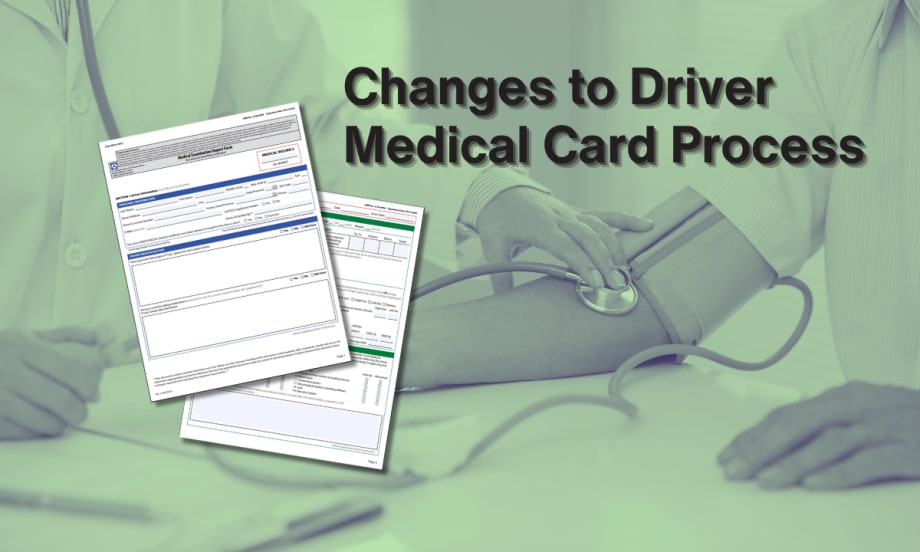
No more paper medical examiner certificates means changes to fleet driver qualification procedures.
Image: HDT Graphic
4 min to read
After years of delays, the process of sending commercial driver medical cards to state licensing agencies is finally going digital — unless a driver is commercially licensed in one of 14 states that still aren't ready.
The Federal Motor Carrier Safety Administration’s Medical Examiner’s Certification Integration rule was published in 2015 and scheduled to go into effect in 2018. It has been delayed several times, largely due to IT and cybersecurity challenges.
As of June 23, 2025, the integration rules are supposed to now be in effect. However, some states apparently still aren't ready.
This rule modernizes the way commercial drivers’ medical certification information is collected, stored, and shared.
The medical certificate, often referred to as a med card, confirms that drivers are physically qualified to drive a commercial motor vehicle under federal regulations, based on a medical exam by a professional on the FMCSA's National Registry of Certified Medical Examiners.
The Old Process For Handling Commercial Driver Medical Cards
Drivers with commercial driver’s licenses for the past several years have been responsible for providing a paper copy of their medical examiner’s certificate to their state’s driver licensing agency.
The medical professionals performing those exams were required to submit results to the FMCSA registry of certified examiners, but that process was often delayed or incomplete, explained Brandon Wiseman of Trucksafe Consulting in an article on the company's website.
Meanwhile, state licensing agencies had to manually update license records, “a process prone to human error and paperwork bottlenecks,” Wiseman said.
What Has Changed in the CDL Driver Med Card Process?
Under the new integration rules in effect June 23, 2025, drivers will no longer have to provide a paper copy of their medical exam certificate to their state’s driver licensing agency.
Certified medical examiners will send the medical exam results directly to the national registry at FMCSA.
The FMCSA then electronically transmits those results to state licensing agencies, which link them up with that driver’s records.
The state licensing agency must downgrade a driver’s commercial driver's license or permit within 60 days if it gets notification that the driver is no longer medically qualified or has an expired medical card.
Drivers must still self-certify their type of commercial operation, but they will not need to submit a physical copy of their medical card.
The new regulation does not change the process for non-CDL drivers.
What If My State's Not Ready?
As of June 20, several states have failed to meet the June 23 deadline, according to the transportation attorneys at Scopelitis, Garvin, Light, Hanson & Feary,
The list of states that have not yet implemented National Registry II, or NRII, can be found at the bottom of the NRII Learning Center page. As of June 20, they include:
Alaska
California
Florida
Illinois
Iowa
Kentucky
Louisiana
New Hampshire
New Jersey
New York
North Carolina
Oklahoma
Vermont
Wyoming
The FMCSA issued an Information Sheet for Medical Examiners and Drivers in States That Have Not Implemented NRII. According to that information sheet:
Medical Examiners must continue to issue paper medical cards to drivers.
Drivers must continue to manually submit their new medical cards to SDLAs in states that have not implemented NRII. SDLAs must change a driver’s status to “not certified” if the driver fails to submit the new medical card within 10 days of the medical card’s expiration and must initiate downgrading procedures within 60 days from the change in status.
Carriers should require the driver to submit a copy of the new medical card to the carrier, and carriers should then obtain a motor vehicle record from the SDLAs within 15 days of the issuance of the medical card.
For more details, see the information sheet. As states come into compliance, FMCSA said it will update its NRII page.
Less Paperwork Doesn’t Equal Less Fleet Responsibility
The new integration means trucking employers will no longer need to manually verify the medical examiners’ credentials of their commercial drivers.
Although the change means less paperwork for motor carriers, it doesn’t mean less responsibility. Fleets are still responsible for verifying their drivers are medically qualified at all times. Under the new program, this will be done via CDLIS/MVR checks for CDL drivers.
According to Foley Services, fleet employers that don’t track medical certification properly could have compliance violations and fines of up to $16,864.
“Fleets should recognize that the rule won’t eliminate their obligations to monitor driver qualification,” said Brandon Wiseman of Trucksafe Consulting. “It merely shifts the process from paper forms to electronic records for CDL drivers.”
More Drivers

From One Generation to the Next: How Mentorship Builds Safer Truck Drivers
After three decades in trucking, Harold Perry shares what he's learned about driver safety, mentorship, and helping the next generation build confidence behind the wheel.
Read More →
Truck Drivers Need More Than Another Alert
Fleets have more visibility into truck health, safety events, and driver activity than ever. The next challenge is turning all that information into useful guidance for the person who has to decide what to do next.
Read More →
FMCSA Removes 110 Truck Driver Training Schools from Certified ELDT List
Federal regulators also are targeting more than 160 additional training providers and launching a nationwide audit of third-party CDL skills testers as part of a broader crackdown on trucking fraud.
Read More →
Hours of Service Pilot Programs: FMCSA Readies for 2027 Rollout
Two pilot programs could eventually reshape hours-of-service rules, giving truck drivers options to pause their 14-hour clock or use longer split sleeper rest periods.
Read More →
Medical Cards, English Proficiency Reshape Roadcheck Violations
Medical-card violations jumped to the top of the driver out-of-service list during CVSA’s 2026 International Roadcheck, while English-language proficiency violations appeared among the leading violations for the first time.
Read More →
Driver Trust Can Make or Break the Success of Fleet Safety Technology
New Teletrac Navman research suggests that onboarding, transparency about driver data, and positive feedback can play a significant role in how commercial drivers respond to safety and coaching technology.
Read More →
EEOC Sues KLLM Over Alleged Sex Discrimination in Driver Training
KLLM is facing a federal sex-discrimination lawsuit over policies the EEOC alleges put female truck driver trainees at a disadvantage.
Read More →
FMCSA Moves to Codify English Language Requirements for Commercial Drivers
By changing regulations on English-language proficiency requirements for commercial drivers, rather than relying on a guidance memo, the FMCSA said future administrations won't be able to walk back the Trump administration's stricter enforcement with just a memo.
Read More →
Drivers Put Western Star Trucks to the Test at Star Nation Experience
Watch to get an inside look at the Western Star trucks, technology, and community behind the Star Nation Experience 2026!
Read More →
Trump Administration Looks to Put More Veterans Behind the Wheel
The Freedom Haulers program pulls together existing and expanded programs at several federal agencies to recruit veterans to drive commercial heavy-duty trucks and cut the red tape for them to get a CDL, training, and employment.
Read More →