




FMCSA Extends Entry-Level Driver Training Rule Compliance Date
The new entry-level driver training rule, originally scheduled to go into effect Feb. 7, now will have to wait another two years because the government needs more time to finish the registry of approved training providers.

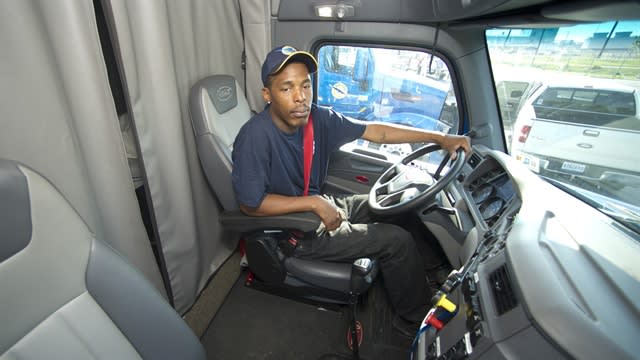
FMCSA said a big reason for delaying the entry-level driver training rule is to give the agency more time to complete development of the Training Provider Registry.
Photo: Paccar Financial
The new entry-level driver training rule, originally scheduled to go into effect Feb. 7, now will have to wait another two years because the government needs more time to finish the registry of approved training providers.
The Federal Motor Carrier Safety Administration amended the final rule, Minimum Training Requirements for Entry-Level Commercial Motor Vehicle Operators, to extend the compliance date from Feb. 7, 2020, to Feb. 7, 2022.
FMCSA said this move is to give the agency additional time to complete development of the Training Provider Registry. The TPR is a system that will allow commercial driver training providers to self-certify that they meet the training requirements. It will provide the electronic interface that will receive and store entry-level driver training certification information from training providers and transmit that information to state driver license agencies.
The extension also provides state licensing agencies time to modify their information technology systems and procedures, as necessary, to accommodate their receipt of driver-specific ELDT data from the registry. An earlier partial delay that was proposed would have affected only licensing agencies; fleets were still going to need to comply.
In a statement, FMCSA said it is delaying the entire final rule, as opposed to a partial delay as proposed, due to delays in implementation of the TPR that were not foreseen when the proposed rule was published.
As part of those extension process, FCMSA is accepting public comments on the proposed interim rule. Comments must be made within 45 days of the interim final rule being posted in the Federal Register.
“While news of the full delay is not unexpected, it is very disappointing to the entire commercial vehicle training community as well as safety advocates who have seen this as a critical step towards improving highway safety,” said Don Lefeve, president of the Commercial Vehicle Training Association. "The ELDT rule applies to both interstate and intrastate commercial drivers seeking a commercial driver’s license (CDL). Unlike numerous state laws on commercial driver training that provide exemptions for employers, or have lax training requirements, ELDT requires anyone seeking a CDL to receive formal training, register with the FMCSA, and teach the proper curriculum. “From large organizations to one-man trainers, ELDT will create a training standard that will positively impact every driver responsible for driving an 80,000-pound vehicle on our roadways. Put simply, the ELDT rule is in the interest of everyone’s safety."
"The Truckload Carriers Association supports any and all efforts that lead to the increased safety training and performance for our industry’s entry level drivers," said David Heller, vice president of government affairs for TCA said. "While we are disappointed that the rule will allow an additional 2 years for substandard training institutions to continue operating, we are confident that the schools and carriers that have adopted the federal standard and in many cases, surpass it, will continue to effectively train drivers with a safety centric focus to operate on our nation’s highways."
“The announcement of the delay was not unexpected,” Abigail Potter, manager, safety and occupational health policy for the American Trucking Associations told HDT. “Over the summer, FMCSA issued a rule making statement that indicated a partial delay was likely. There have been significant concerns about several aspects of the rule – including the Driver Training Registry. So while we are disappointed in this delay, we do understand that is necessary in order for FMCSA to make sure all the different components and relationships with appropriate state agencies are properly established before its implementation.”
More Delays in Long-Awaited Driver Training Rule
The agency began work on this rulemaking back in 2007, but efforts to advance a rule setting standards for entry-level driver training date actually started in the 1980s.
The rule was mandated by Congress under the MAP-21 highway bill, passed in 2012. FMSCA said the rule was based, in part, on recommendations of the agency’s Entry-Level Driver Training Advisory Committee, a negotiated rulemaking committee that held a series of meetings in 2015.
Although applauded by trucking interests, including the American Trucking Associations, the rule remains controversial because it does not include a requirement for 30 hours of behind-the-wheel training for new drivers, which had been included in the notice of proposed rulemaking that FMCSA had issued in March 2016.
The resulting rule requires applicants seeking a CDL to demonstrate proficiency in knowledge training and behind-the-wheel training on a driving range and on a public road. Training providers must determine that each CDL applicant demonstrates proficiency in all required elements of the training to successfully complete the program.
The driver training must be obtained from an instructional program that meets qualification standards set forth in the final rule. FMCSA said it expects that “many entities currently providing entry-level driver training, including motor carriers, school districts, independent training schools, and individuals will be eligible to provide training that complies with the new requirements.”
How to Comment
Interested parties can submit comments identified by Docket Number FMCSA-2007-27748 via the Federal eRulemaking Portal: https://www.federalregister.gov/documents/2020/02/04/2020-01548/extension-of-compliance-date-for-entry-level-driver-training Follow the online instructions for submitting comments.
Comments also can be sent via mail: to Docket Management Facility, U.S. Department of Transportation, 1200 New Jersey Avenue, SE., West Building, Ground Floor, Room W12-140, Washington, DC 20590-0001.
Executive Editor David Cullen contributed to this story.
More Safety & Compliance
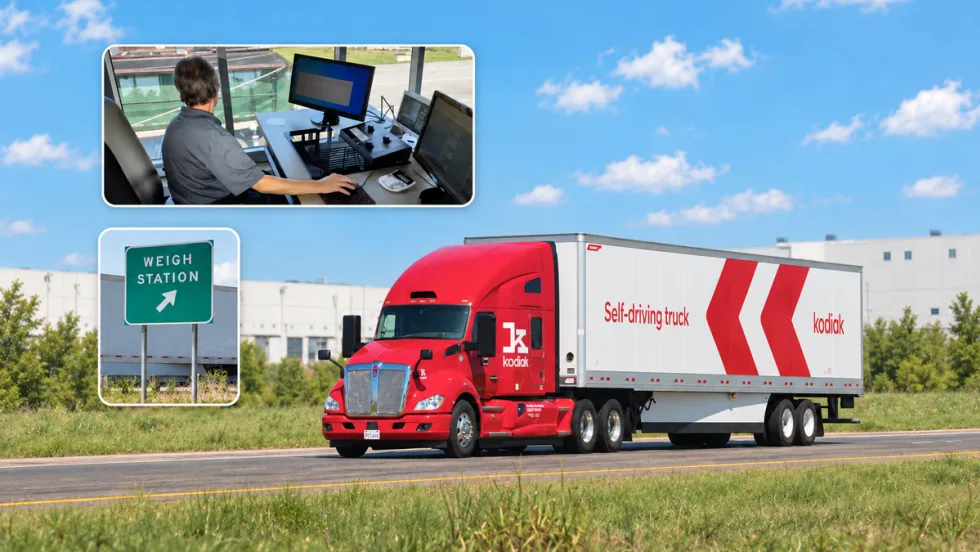
PrePass, Kodiak Connect Driverless Trucks to Roadside Enforcement
The system will allow enforcement agencies to verify Enhanced Inspection information and decide whether Kodiak’s autonomous trucks can bypass roadside screening sites.
Read More →
From One Generation to the Next: How Mentorship Builds Safer Truck Drivers
After three decades in trucking, Harold Perry shares what he's learned about driver safety, mentorship, and helping the next generation build confidence behind the wheel.
Read More →
FMCSA Pauses Biennial-Update Enforcement Amid Motus Transition
Carriers whose updates were due on or after June 1 have more time, while FMCSA works to stabilize its new registration system and warns of phishing sites impersonating its new carrier registration system, Motus.
Read More →
ZF Expands Commercial Vehicle Push in North America
ZF is expanding its North American commercial-vehicle presence with new transmission applications, electrification, trailer technology and autonomous-driving systems.
Read More →
Truck Drivers Need More Than Another Alert
Fleets have more visibility into truck health, safety events, and driver activity than ever. The next challenge is turning all that information into useful guidance for the person who has to decide what to do next.
Read More →
Tesla Wants a Self-Driving Semi. Are Cameras Enough?
Could Tesla’s camera-only autonomous driving technology work on an 80,000-pound Semi? In this commentary, HDT's Deborah Lockridge takes a look at Tesla, Cybercab, and how autonomous trucks see the road.
Read More →
What DOT’s Automated Vehicle Strategy Means for Trucking
The U.S. Department of Transportation issued a new automated-vehicle strategy that outlines plans for driverless-truck regulations, cross-state freight corridors, and federal safety standards.
Read More →
NYC Expands Speed, Pedestrian Safety Tech Across Fleet
New York City is expanding intelligent speed assistance and pedestrian-alert systems across its municipal fleet, moving the technologies from pilot programs into vehicle procurement and retrofit requirements.
Read More →
FMCSA Removes 110 Truck Driver Training Schools from Certified ELDT List
Federal regulators also are targeting more than 160 additional training providers and launching a nationwide audit of third-party CDL skills testers as part of a broader crackdown on trucking fraud.
Read More →
Beyond DOT Compliance: What Makes a Trucking Fleet Truly Safe?
A trucking fleet can follow every rule and still make unsafe decisions. The real test comes when safety conflicts with freight, productivity, or cost.
Read More →