




Class 8 Truck Sales Forecast to Rebound in 2021
From what happened this year to what is projected to happen next year sales-wise, the heavy-duty truck market will be set up for a “modest rebound in 2021 followed by growth into 2023,” according to Act Research.


A downturn in the freight market and uncertainty driven by trade and tariff issues are partly to blame for falling Class 8 truck sales.
Photo: Mack Trucks
Yes, it’s always darkest before the dawn, but at least sometimes the dawn comes sooner than later. From what happened this year to what is projected to happen next year sales-wise, the heavy-duty truck market will be set up for a “modest rebound in 2021 followed by growth into 2023,” according to Act Research President and Senior Analyst Kenny Vieth.
Vieth issued that assessment on Nov. 27, explaining that for Class 8 sales over the next four years, what will take place is a “regression to the mean.” That’s statistical speak for the tendency of extreme outcomes to return to normal after an unusual event, which in this case was this year’s remarkably strong truck sales.
He added that with the U.S.-driven “trade war as a major caveat to forecast expectations, our underlying view is that the economy will experience slower growth but not recession in 2020.” The forecast then calls for heavy-duty truck sales to start to rebound the very next year.
However, Vieth cautioned that “the far years of this forecast are influenced by the prospect of new emission controls in 2024, triggering a 2023 pre-buy, followed by a 2024 payback. “This regression-to-the-mean for 2020, after near-record production in 2019,” he advised, “has been our forecast since early 2018, so our subscribers have had nearly two years of yellow-light signals on the upcoming correction.”
The most recent preliminary Class 8 sales numbers, those for the month of November, show that Class 8 net orders “failed to sustain October’s encouraging start to the order season,” said Tim Denoyer, ACT vice president and senior analyst in a Dec.3 news release.
“The freight market downturn worsened in the past month and uncertainty surrounding trade and tariffs continue to weigh on truck buyers’ psyches,” he continued. “With rising pressure on carrier profits from the combined impact of lower rates and the recent, rather sudden jump in insurance premia, recent events have not developed in the industry’s favor.”
Act Research reported that combined North American Class 5-8 intake fell 15% m/m and 38% y/y in November on a nominal basis. Preliminary North America Class 8 net order data show the industry booked 17,500 units in November-- down 20% from October— and Class 5-7 orders fell 8% m/m, to 15,300 units.
Denoyer also noted that while private fleets continue to add capacity on the retail end, “the market is increasingly heeding for-hire price signals and the stage is being set to right-size the fleet, bringing it closer to equilibrium with the work to be done.”
Slow Start
Research firm FTR released similar Class 8 preliminary numbers, also on Dec. 3, calling the heavy-duty sales performance “disappointing” at 17,300 units, down 21% from the month before. That’s the lowest November total since 2015-- and it’s 39% lower than the same month a year ago. Fleets remain extremely cautious heading into 2020, placing small orders and not extending orders much beyond the first quarter, according to FTR.
“The fall order season has gotten off to a slow start,” remarked Don Ake, FTR’s vice president— commercial. “Freight growth has stalled from the high rates of last year. This is causing fleets to be much more measured in their ordering for 2020. There still will be plenty of freight to haul, so we expect fleets will continue to be profitable and to replace older equipment. However, there won’t be a need for much additional equipment on the roads.”
He added that there’s a “great deal of uncertainty… Manufacturing has receded for four straight months, slowing economic growth. The trade war and tariffs are destabilizing prices and supply chains. And the tumultuous political climate just adds to an uneasy mix. The industry thrives on stability, but we are now on a rocky road.”
Commenting on the medium-duty market’s prospects, Act Research’s Vieth said customers “clearly remain concerned about the near-term future, as demonstrated by the continuing pullback in order activity that has led to narrower backlogs. Despite the weaker looking front-end of the demand cycle and very high inventories, build and sales continue to perform at near-record levels.”
A separate report issued on Dec. 4 by Act Research and Rhein Associates finds that engines over 10L are projected to account for more than 85% of Class 8 production between 2020 and 2024. Nonetheless, the trend to smaller-displacement engines (11L/13L vs 15L/16L) is expected to continue.
“Helped by strong tractor demand, engines over 14L constitute the largest market segment in 2019, with 49% share of the over 10L engine market,” pointed out Tom Rhein, president of Rhein Associates.
Regarding Class 5-7, Rhein said, “In this market, the current metric of interest is gasoline penetration, which continues to gain share.”
“Diesel power is under attack long-term for use in on-highway commercial vehicles,” noted Act’s Vieth. “Alternative power is being developed, tested, and refined, even as diesel engines are transitioning to become more fuel efficient and clean.
“While total cost of ownership calculations will ultimately determine the market for alternatively powered vehicles,” he added, “it is important for decision-makers to understand upfront activities, like Department of Energy spending on research into advanced vehicle technologies, repercussions for violations of the Clean Air Act, and notices and hearings for proposed regulations, like those designed to accelerate the use of zero-emission vehicles.”
More Fleet Management
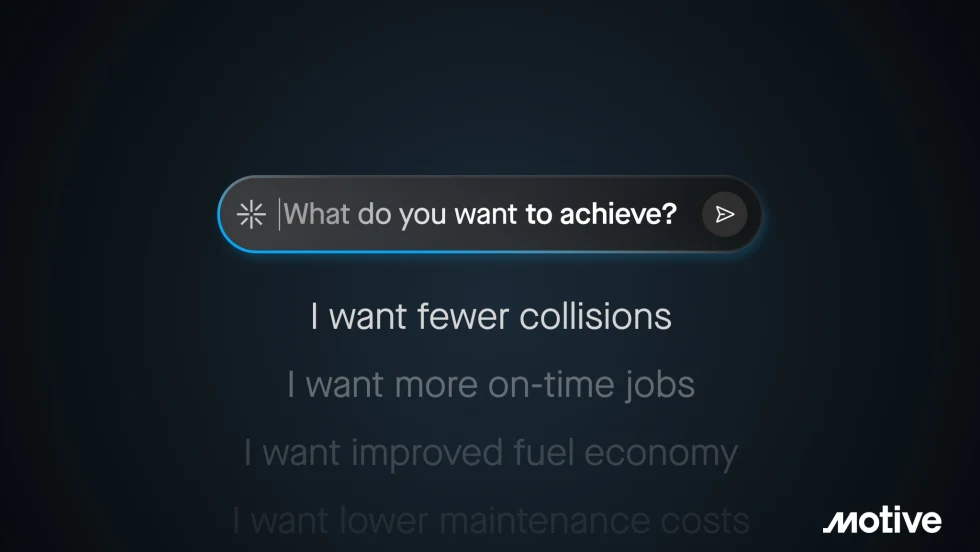
Motive Adds AI Agents for Fleet Operations
New tools automate follow-up on fleet data, from maintenance work orders to driver alerts, with two-way voice conversations planned for later this year.
Read More →
Can You Beat Our Trucking Trivia Challenge?
Test your truck knowledge with 19 trivia questions from Heavy Duty Trucking Exchange. Can you keep up with the fleet pros?
Read More →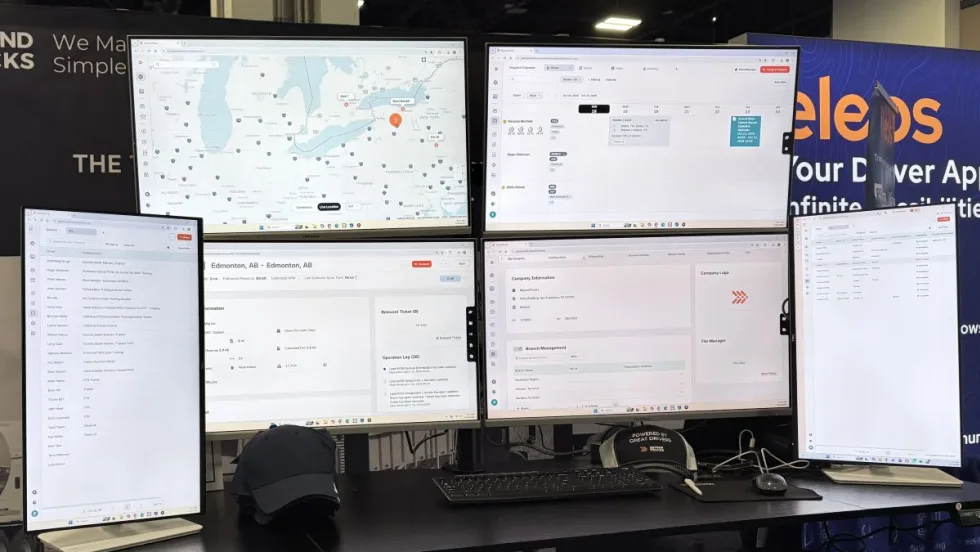
BeyondTrucks Adds Rules Checks to Dispatch
New Compatibility Engine checks driver qualifications, equipment requirements and fleet policies before loads are dispatched.
Read More →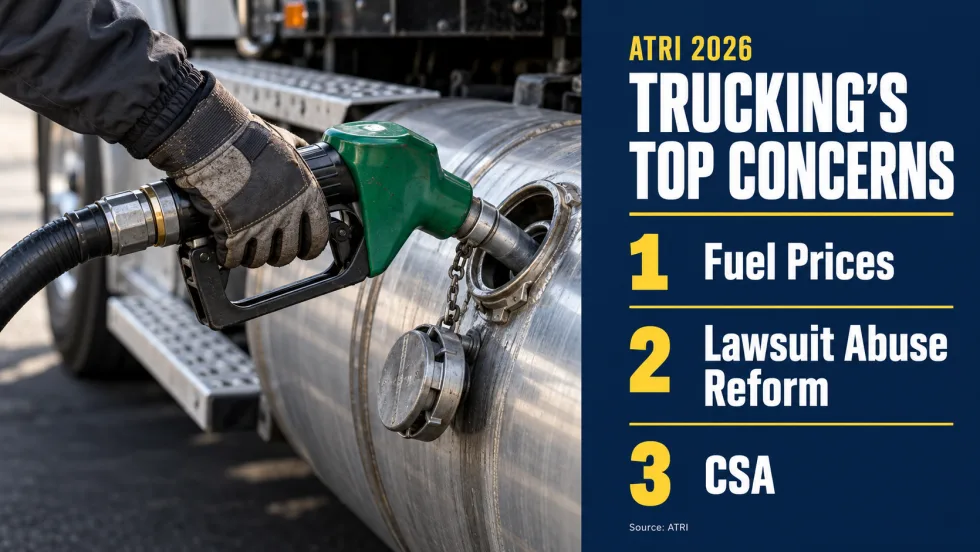
Diesel Prices Hijack Trucking’s Worry List
ATRI’s annual survey finds cautious optimism about freight, but diesel costs, litigation, and insurance continue to squeeze fleets. Drivers have different priorities on several issues.
Read More →
Nomination Deadline Extended for HDT Emerging Leaders
Just a few more days to nominate accomplished trucking fleet professionals under 40 who are making an impact and helping lead the industry forward for the HDT Emerging Leaders award. Deadline extended to October 20!
Read More →
What Will ATA’s New Leader Bring to Trucking's Table?
Incoming President and CEO Mark Colson’s record in Alabama offers clues about his priorities and approach following Chris Spear’s abrupt departure as the head of the American Trucking Associations.
Read More →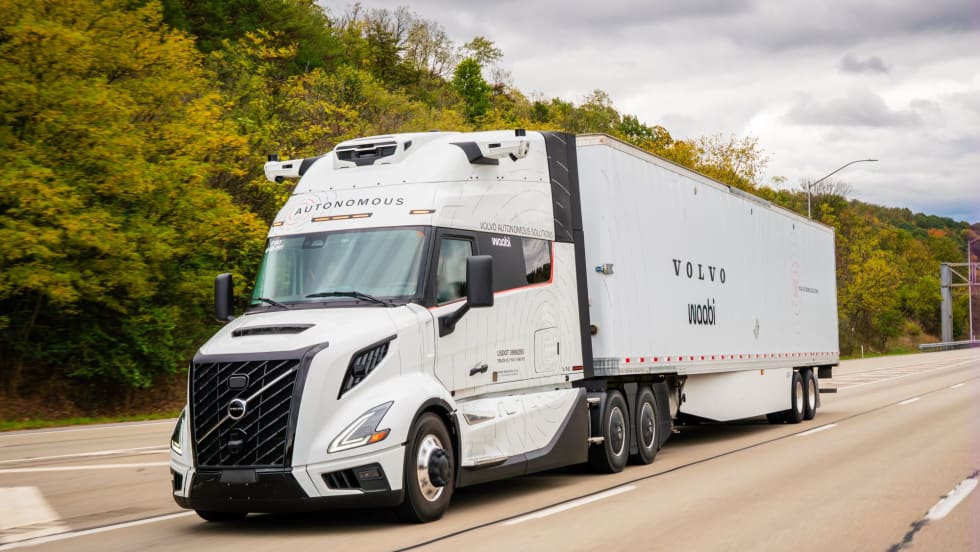
Volvo, Waabi Start Commercial Autonomous Operations in Texas
Volvo VNL Autonomous trucks, powered by the Waabi Driver, are hauling freight directly to third-party facilities for a customer in Texas.
Read More →
Samsara Launches Custom AI Agent Builder
Agent Studio lets fleets create AI tools for hours-of-service monitoring, reporting and driver support, including agents that communicate by phone.
Read More →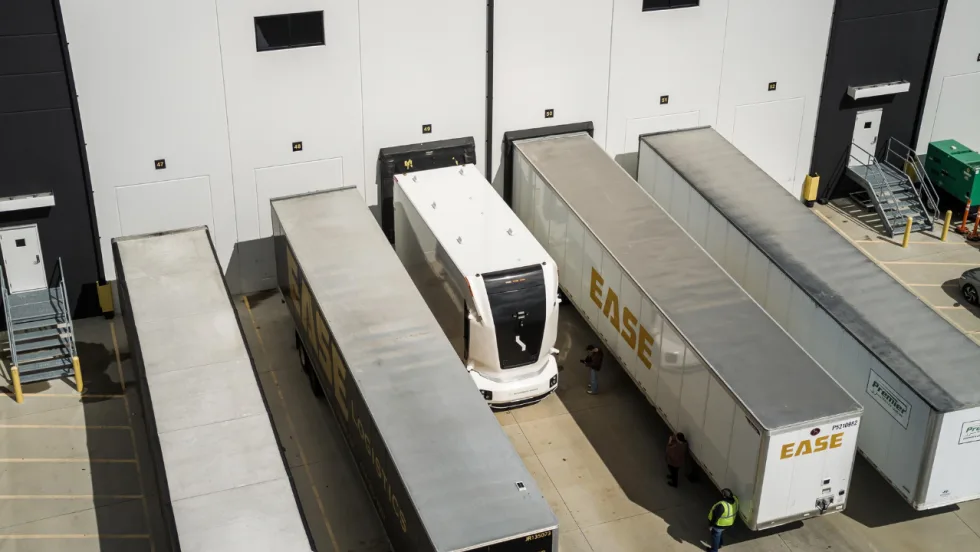
Einride Driverless Electric Trucks Begin Daily Freight Operations in Ohio
Two cabless electric trucks are hauling freight between EASE Logistics facilities in Marysville, Ohio, as part of a multi-state truck automation project.
Read More →
Geotab Links Fleet Card to Vehicle Data
The new card combines fuel discounts with telematics-based purchase controls. Geotab’s analysis also points to potential savings from choosing lower-priced fuel stops.
Read More →