




Is the Clean Truck Partnership Still Valid After EPA's California Waiver Repeal?
Truck makers question California's authority to amend or enforce its Advanced Clean Truck rules and challenge the viability of the Clean Truck Partnership agreement..

How much can California continue to regulate zero-emission trucks in the wake of federal deregulatory efforts?
Image: HDT Graphic
The California Air Resources Board should stop working on amendments to its Advanced Clean Trucks Act, according to the Truck and Engine Manufacturers, because an agreement it signed with the state is no longer viable.
Since the federal government revoked California’s EPA waivers for its Advanced Clean Trucks and NOx regulations, the state has nevertheless apparently expected truck and engine makers to continue along the state’s path because of the Clean Truck Partnership agreement signed in 2023.
The Clean Truck Partnership agreement, CARB said at the time, was a “commitment from the companies to meet California’s vehicle standards that will require the sale and adoption of zero-emissions technology in the state, regardless of whether any other entity challenges California’s authority to set more stringent emissions standards under the federal Clean Air Act.”
In return, CARB agreed to work with manufacturers to give them reasonable lead time to meet CARB’s requirements and before imposing new regulations, and to support the development of necessary ZEV infrastructure.
Does CARB Have the Authority to Amend ACT?
In an email announcement on July 24, the California Air Resources Board said it had approved amendments to its Advanced Clean Truck and Zero-Emission Powertrain Certification.
The state said those changes "support commitments made in the Clean Truck Partnership."
But the Truck and Engine Manufacturers Association and Daimler Truck North America said the Clean Truck Partnership is no longer viable because of the way CARB’s EPA waiver was withdrawn.
While California has proceeded as if the Clean Truck Partnership largely negates the effects of the federal government’s waiver repeal, truck and engine makers beg to differ.
The Clean Truck Partnership agreement says, "The OEMs commit to meet, in California, the relevant provisions of the CARB regulations ... and any agreed-upon modifications to such regulations as set forth in this Agreement, irrespective of the outcome of any litigation challenging the waivers or authorizations for those regulations or of CARB’s overall authority to implement those regulations." (Bold emphasis added by HDT).
In a letter to CARB, Daimler Truck North America said the Congressional action terminating CARB’s authority “did not arise from any litigation or private party challenge to CARB’s or EPA’s preemption waiver authority, [which] undermines the viability and effect of the Clean Truck Partnership.”
"Irrespective of the outcome of any litigation challenging the waivers or authorizations for those regulations" appears to refer to litigation, not to Congress decided to yank the waivers on its own.
In comments filed with CARB, the Truck and Engine Manufacturers Association said that before proceeding with its proposed ACT amendments, CARB should instead engage in direct discussions with EMA and its members to address the lack of viability of the ACT regulations as a whole.
DTNA made the same point: “CARB is proposing changes to a rule that lacks a preemption waiver and cannot receive a waiver in the future. CARB should not adopt amendments to a rule that has no valid legal force.”
Do ACT Amendments Reflect the Clean Truck Partnership Agreement?
Even if you assume the Clean Truck Partnership is still viable, EMA and DTNA said the state isn’t holding to the agreement with its recent Advanced Clean Truck amendments.
“The Clean Truck Partnership, to the extent it has any remaining effect, requires CARB to engage with OEMs on future amendments to the ACT rule, including those to address product availability and credits,” DTNA said in its letter.
“CARB proposed these amendments without consulting DTNA or EMA regarding the changes. DTNA does not believe CARB’s current proposed amendments were drafted in this spirit.”
EMA also said the proposed amendments are inconsistent with the terms of the Clean Truck Partnership.
“CARB has proposed the amendments at issue without first engaging in any substantive discussions with EMA or its members regarding the specifics of the proposed amendments, or whether those proposed amendments are acceptable to EMA and its members,” said the comments.
Part of the Clean Truck Partnership says that "CARB, EMA and the OEMs [will] mutually agree to work together to resolve any issues that may warrant regulatory amendments to either the Omnibus or ACT regulations."
That has not happened, EMA said.
CARB said the amendments are minor changes with no significant cost or emissions impact.
Can Truck Makers Walk Away from Clean Truck Partnership?
On August 4, 17 business groups, clean freight advocates and public health organizations sent a letter to truck manufacturers warning that walking away from the Clean Truck Partnership will hurt the trucking industry.
The warning came in a letter from Public Citizen, Oregon Business for Climate, Sierra Club, Natural Resources Defense Council and others to the biggest truck manufacturers in the world, such as Daimler and Volvo.
The groups pointed to the EMA comments and to a letter from Daimler Truck North America last month to CARB regarding the amendments.
“At a time when the EPA is proposing to do away with pollution emissions rules, jeopardizing $2.4 billion per year fueling and maintenance savings, this move by the manufacturers against the partnership deal further threatens regulatory certainty and cost savings for the trucking industry,” the environmental groups said.
The move also “attacks thousands of businesses which have adopted over 52,000 electric trucks deployed across the U.S.,” they said.
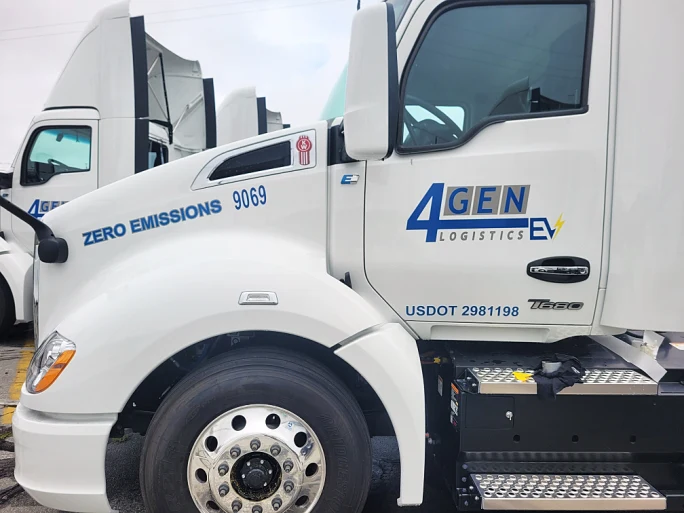
Fleets that were early adopters and made big investments in zero-emission trucks and charging infrastructure are unsure what deregulatory efforts will mean for them.
Photo: 4Gen Logistics
Where Are the Heavy-Duty ZEVs?
In contrast to claims from environmental groups, CARB and others about the success in adoption of zero-emission commercial vehicles, both EMA and DTNA pointed to data showing that the vast majority of ZEVs sold in the state are vehicles such as pickups and vans — not larger medium- and heavy-duty trucks, which face additional obstacles in adopting zero-emissions vehicles.
“Despite the substantial effort to sell ZEVs in California, the demand for M/HD ZEVs has not developed sufficiently to match the percentages in the ACT,” the truck maker’s letter said.
“While there might be significant ZEV sales in the Class 2b-3 market, the data does not support CARB’s expected demand for ZEVs in the heavier weight classes,” it added.
EMA’s comments explained that recent reports of Polk data for new trucks registered in California show that the ACT regulations are not working, even though truck and engine makers have complied with the regulations, made major investments in electrified vehicle technology and cleaner diesel vehicles, and promoted the sales of these more environmentally friendly models.
“Despite those significant efforts, the demand for ZEV trucks is still minimal, and ZEVs account for only 4% of Class 4-8 trucks, which is less than half of the ACT mandate of 9%,” EMA said.
California's truck emissions regulations also affect the purchase of new conventionally fueled vehicles, according to EMA. For example, in 2024, new tractor registrations were down by 30% compared to prior years, and there was a 66% reduction in the registration of new current model year Class 4-8 trucks in 2024 compared to 2023.
“The impacts will only get worse if the ACT’s ZEV-sales mandates are allowed to continue to ratchet up year over year.”
You Can't Sell Electric Trucks Without a Place to Charge Them
DTNA said the single biggest factor inhibiting sales is the lack of charging infrastructure. Construction and permitting delays prompted CARB to give extensions to fleets under the Advanced Clean Fleets regulation, but no such extensions were given to manufacturers under ACT. Electric trucks aren’t going to sell if fleets don’t have a way to charge them.
“CARB’s proposals do not provide adequate lead time or stability for manufacturers to plan their product portfolios, and introduce new incentives and disincentives that create new winners and losers,” DTNA said.
“CARB’s proposed amendments try to address product shortages by further leveraging credits generated by electric pickup trucks and vans, rather than addressing the fundamental issue with the ACT — unrealistic ZEV penetration rates for heavier categories of vehicles. This amounts to an expectation for manufacturers of heavy-duty commercial vehicles to subsidize manufacturers of small ZEVs.
“DTNA believes that… CARB should not proceed with these proposed amendments and instead reconsider the continuing viability of the ACT as a whole, including its expected ZEV penetration rates.”
More Fuel Smarts
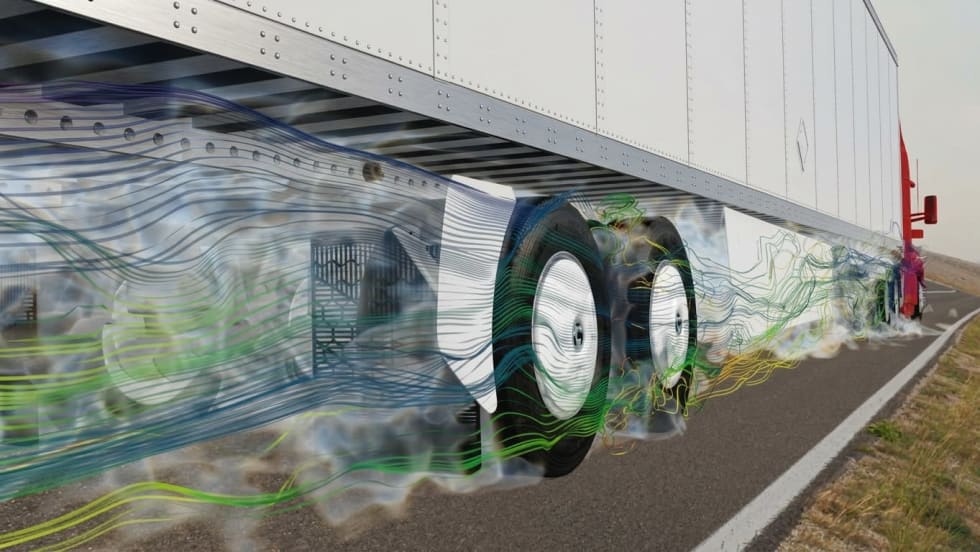
FlowBelow Redesigns Trailer AeroSlider to Cut Fuel Use
The lighter trailer aerodynamic system installs in less than 45 minutes, according to the company, with potential payback in under a year depending on fuel prices and trailer mileage.
Read More →
Why Diesel Price Relief Efforts May Fall Short
Diesel prices have eased from September’s record high, but doubts about additional Russian supply and limits on dyed-diesel tax relief mean trucking fleets still face expensive fuel. And prices could go higher.
Read More →
Why Small Fuel Savings Matter in Trucking
Can better fuel economy help pay for driver raises? In this podcast, GP Transco explains how small efficiency gains create room to reinvest in its people.
Read More →
How GP Transco Cuts Trucking Fuel Costs, a Tenth of a Gallon at a Time
What’s another tenth of a mile per gallon worth? GP Transco shares how equipment upgrades and driver coaching turn small gains into meaningful fuel savings.
Read More →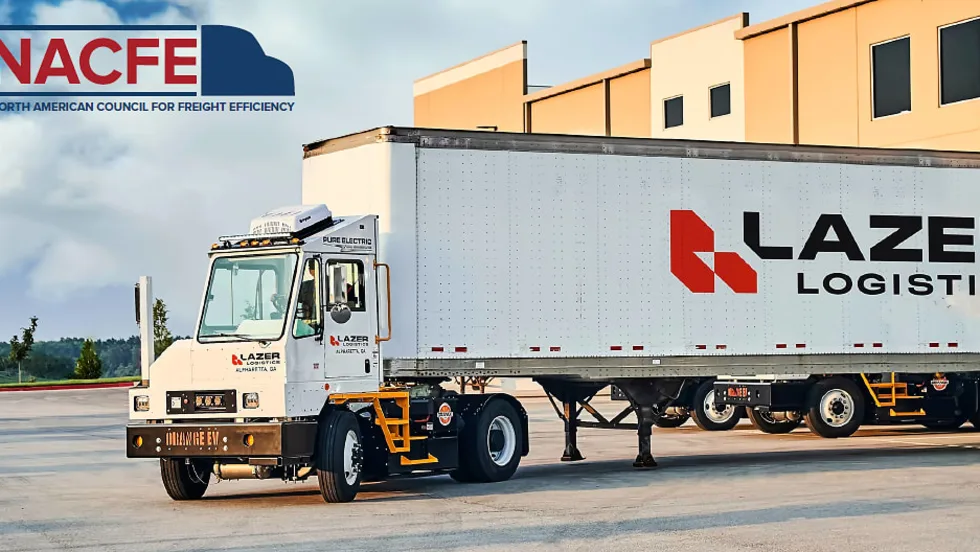
Electric Yard Tractors Move Beyond Pilots
Operating-cost savings have overtaken sustainability goals as the leading reason surveyed fleets are adopting battery-electric terminal tractors, according to new NACFE research.
Read More →
Geotab Links Fleet Card to Vehicle Data
The new card combines fuel discounts with telematics-based purchase controls. Geotab’s analysis also points to potential savings from choosing lower-priced fuel stops.
Read More →
Fleet Economics Shape Electric Truck Outlook
ACT Research expects costs, charging infrastructure, and technology improvements to drive zero-emission commercial vehicle adoption as federal regulations and incentives retreat.
Read More →
Wex Adds Cardless Fuel Payments for Over-the-Road Customers
A new fuel card feature for Wex customers offers convenience and security.
Read More →
New California Law Could Shed Light on Electric Truck Prices
Why do battery-electric Class 8 trucks remain so expensive? A California bill signed by Gov. Gavin Newsom would give fleets and state agencies more visibility into what manufacturers charge.
Read More →
How Volvo Updated Its D13 for EPA 2027 [Watch]
Volvo’s updated D13 promises lower emissions without sacrificing performance or fuel economy. Take a closer look at what changed inside the engine in this HDT Spotlight video.
Read More →