




Association Challenges California's Clean Truck Partnership
The Western States Trucking Association is challenging a deal that truck and engine makers made with California to continue to meet the state's truck emissions rules even if it lost the federal authority to implement those rules

California's NOx and zero-emission truck regulations are dead..... but are they really?
Image: HDT Graphic
The Western States Trucking Association is challenging a deal that truck and engine makers made with California to continue to meet the state's truck emissions rules even if it lost the federal authority to implement those rules.
The association filed a petition with California’s Office of Administrative Law, alleging that the California Air Resources Board, by entering into the Clean Truck Partnership, improperly adopted what was in reality a regulation in violation of the California Administrative Procedure Act.
CARB, the Truck and Engine Manufacturers Association, and truck and engine makers entered the Clean Truck Partnership in the summer of 2023.
In that deal, the OEMs agreed to comply with CARB’s Advanced Clean Trucks and Heavy-Duty Omnibus regulations, “irrespective of the outcome of any litigation challenging the waivers or authorizations for those regulations or of CARB’s overall authority to implement those regulations.”
Truck makers did this in exchange for California's commitment to work collaboratively with manufacturers to provide lead time to meet specific regulatory requirements before imposing new ones.
Congress vs. California Air Resources Board
After Congress recently voted to revoke the Environmental Protection Agency waiver for California’s Advanced Clean Trucks regulation and the Heavy-Duty Low-NOx Omnibus rule, CARB has taken actions indicating it’s forging ahead in its truck emissions goals by expecting truck and engine makers to abide by the Clean Truck Partnership agreement.
On May 23, CARB issued a Manufacturers Advisory Correspondence document saying it will continue to certify engines and trucks pursuant to the ACT and Omnibus regulations for model year 2026 in part to “facilitate meeting the commitments of the [CTP]," according to the WSTA petition.
After President Trump signed the congressional orders revoking the EPA waivers, California Gov. Gavin Newsom issued an executive order that, among other things, continues the Clean Truck Partnership work and requires reports on progress every six months.
Western States Trucking Calls CTP 'Invalid Underground Regulation'
“The CTP creates new regulatory obligations for virtually an entire industry — including the requirement to follow regulations that are not authorized by federal law,” said the association in its petition.
“It also purports to grant CARB new powers, such as the power to require new vehicle and engine certifications to meet requirements that do not have federal authorization. Although the CTP stands in for CARB regulations, CARB did not comply with the APA in introducing this alternative regulatory regime. Thus, the CTP is an invalid underground regulation.”
The petition notes that if CARB had gone through the APA procedures, it would have had to publicly explain and justify the implementation of its stringent zero-emission vehicles policy in the face of federal preemption, and purchasers and fleet operators would have had the opportunity to comment on the issues the CTP will create.
Critics: Petition is ‘Attack on the Industry’
Critics of the Western States Trucking Association petition say the Clean Truck Partnership has helped provide certainty to businesses that have already adopted electric trucks, at a time when shifting federal regulations have caused uncertainty.
The WSTA petition undermines that certainty, critics say, calling the challenge an attack on the future of the trucking industry.
One of those critics is Craig Segall, who helped negotiate the Clean Truck Partnership Agreement as CARB deputy executive officer and assistant chief counsel.
He said the association's attack on the agreement would set the trucking industry back and called on truck manufacturers to stand by the agreement they signed two years ago.
“The companies shook hands with California on a workable path forward," Segall said in a news release.
"Will they now stand behind their commitments as others attack them? Or will they stay silent during this attack? My hope is that they will stand up for the electric future they claim to support.”
More Equipment
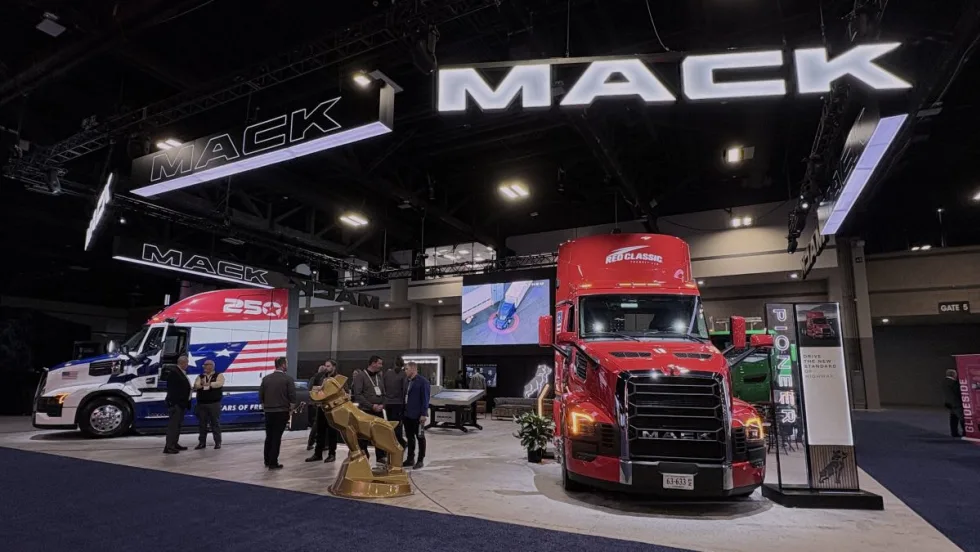
Trucks at ATA's 2026 MC&E in Charlotte, North Carolina [Photos]
From rigs decked out in patriotic America's 250 paint schemes to autonomous trucks and more, check out these photos from ATA's 2026 Management Conference & Exhibition.
Read More →
Help HDT Find Trucking’s Top Products
Have you come across a new product that could make a difference for trucking fleets? Nominate it for HDT’s 2027 Top 20 Products Awards by November 9.
Read More →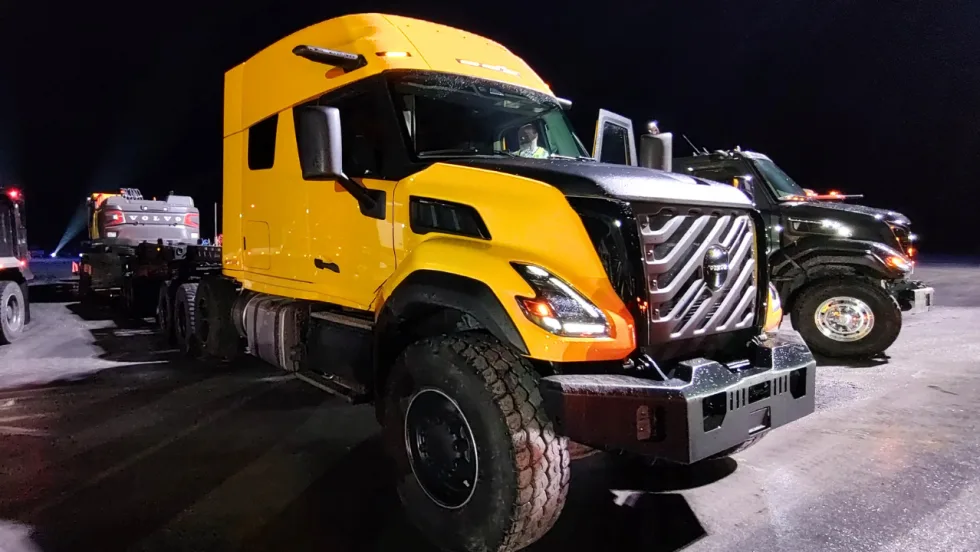
Volvo Unveils New VNX Heavy-Haul and Vocational Truck
Volvo Trucks has launched the VNX, a new vocational truck also available as a tractor in day cab and two sleeper configurations, with one heavy-haul model. The Volvo VNX is powered by Volvo's D13 platform, which delivers up to 540 horsepower and 1,950 pound-feet of torque and is EPA 2027-compliant.
Read More →
How GP Transco Cuts Trucking Fuel Costs, a Tenth of a Gallon at a Time
What’s another tenth of a mile per gallon worth? GP Transco shares how equipment upgrades and driver coaching turn small gains into meaningful fuel savings.
Read More →
Electric Yard Tractors Move Beyond Pilots
Operating-cost savings have overtaken sustainability goals as the leading reason surveyed fleets are adopting battery-electric terminal tractors, according to new NACFE research.
Read More →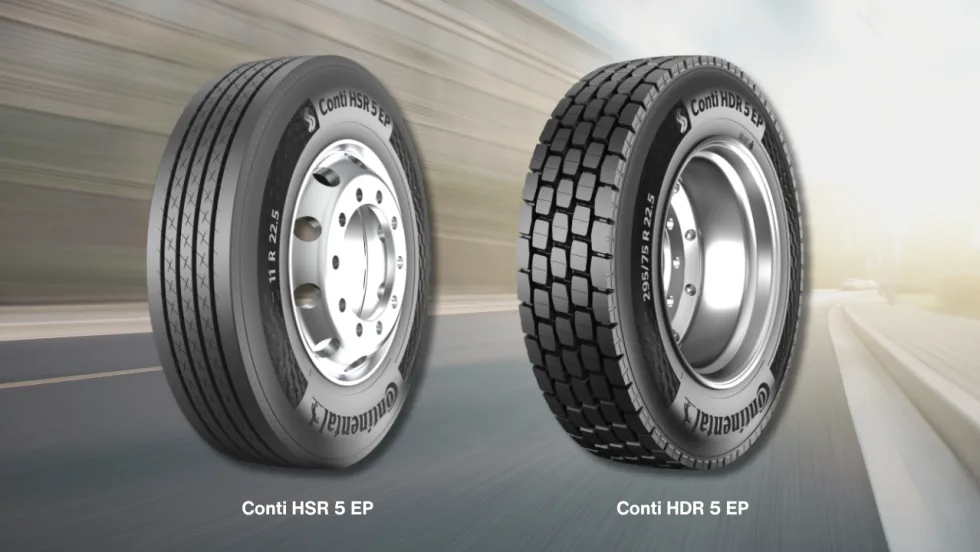
Continental Introduces New Regional Truck Tires
Continental says its new Generation 5 steer and drive tires for regional operations offer longer tread life, with estimated mileage gains of 22% and 19%, respectively.
Read More →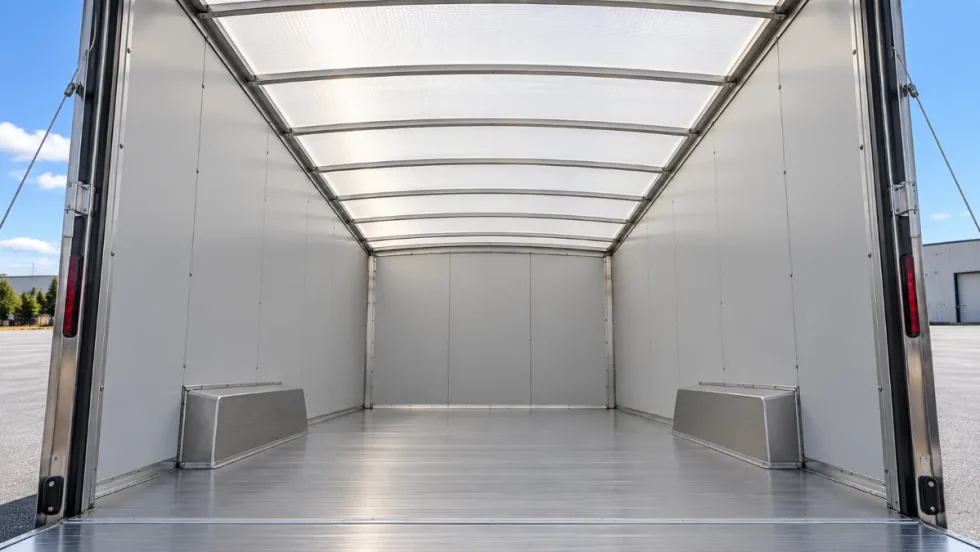
Tekmodo Introduces CargoBright Brand for Translucent Trailer Roofs
CargoBright is designed to diffuse daylight across the cargo area while performing as a working vehicle roof.
Read More →
Fleet Economics Shape Electric Truck Outlook
ACT Research expects costs, charging infrastructure, and technology improvements to drive zero-emission commercial vehicle adoption as federal regulations and incentives retreat.
Read More →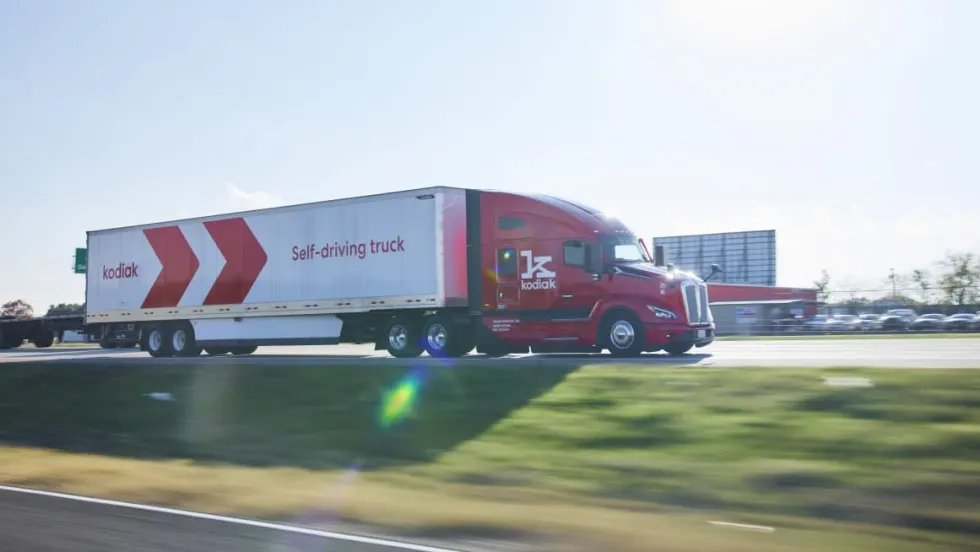
Kodiak Targets Dallas–Houston for Driverless Trucks
The company says its autonomous trucks are completing the I-45 run without a safety observer taking control. It plans to remove the observer by the end of 2026.
Read More →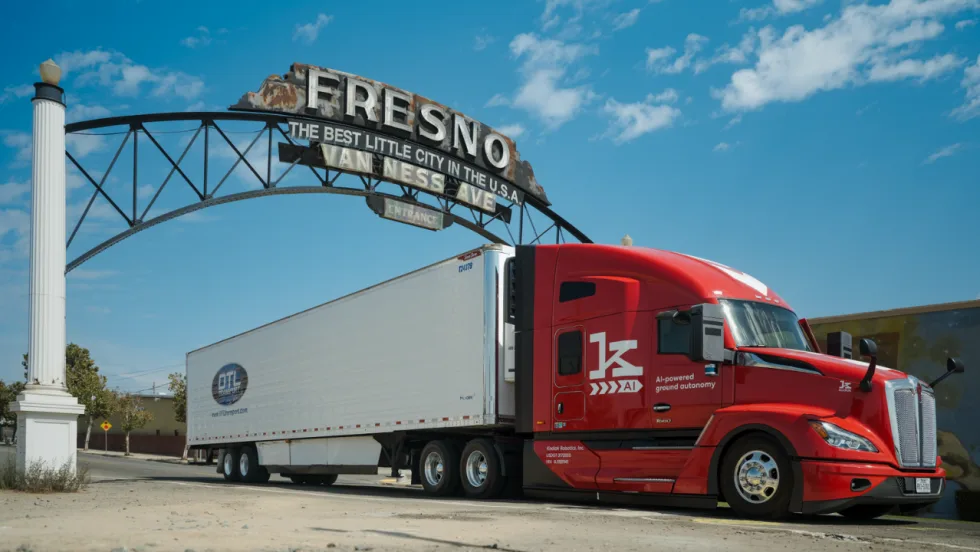
Kodiak Hauls Produce in California Autonomous Truck Pilot
Kodiak AI and DTL Transport have begun hauling produce between Fresno and Los Angeles under California’s new rules for testing heavy-duty autonomous trucks. A safety driver remains behind the wheel.
Read More →