





California Announces $1 Billion Electric Truck Rebate Program
Can Multi-Speed EV Transmissions Solve Heavy Trucking’s Biggest Electric-Vehicle Problems?
A startup called Sigma Powertrain believes purpose-built multi-speed gearboxes can boost efficiency, reduce battery size and improve gradeability for heavy-duty battery-electric trucks.
May 26, 2026
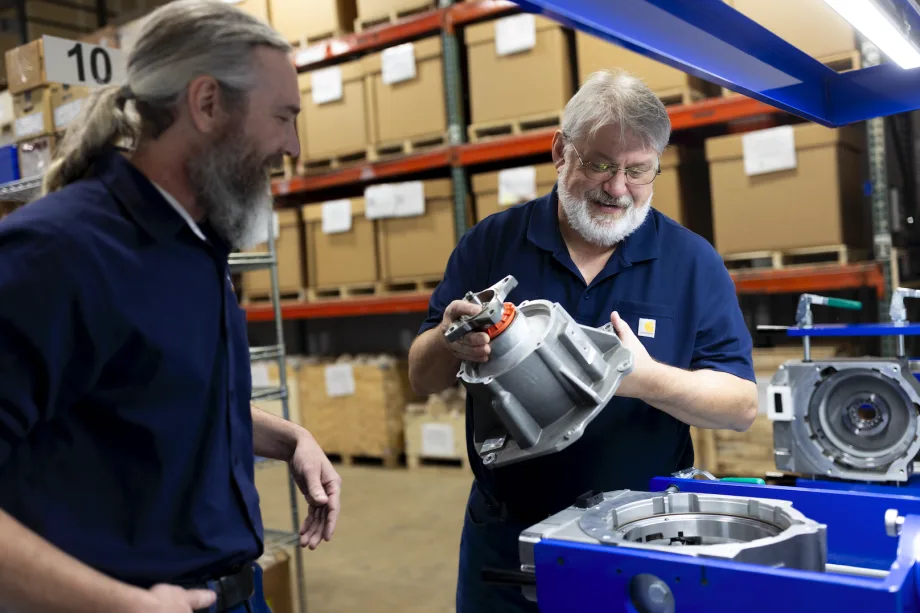
Sigman Powertrains founder and CEO John Kimes (right) believes that spec'ing automatic transmission in battery-electric commercial vehicles allows electric trucks to use smaller motors, improve efficiency by 10-15%, increase gradeability and potentially reduce battery-pack size.
Credit:
Sigma Powertrain
4 min to read
For years, the prevailing wisdom in battery-electric vehicles has been simple: Electric motors produce instant torque, so transmissions are unnecessary.
John Kimes, CEO of startup company called Sigma Powertrain thinks differently. Kimes believes that logic breaks down quickly once vehicle weight and vocational demands start climbing.
“Once you get into very high gross vehicle weights, transmissions stop being a luxury and become a requirement,” Kimes said.
That’s why Sigma Powertrain is developing multi-speed electric transmissions specifically for commercial, vocational and off-highway vehicles.
Kimes said the company’s technology allows electric trucks to use smaller motors, improve efficiency by 10-15%, increase gradeability and potentially reduce battery-pack size.
That matters, he explained, because most battery-electric trucks today still rely on oversized motors paired with single-speed reduction gearboxes.
According to Sigma, those systems force motors to operate far outside their peak efficiency range for much of the duty cycle.
The result, Kimes argues, is wasted energy and larger, heavier, more expensive battery packs.
Why Commercial EVs Are Different
Kimes said the single-speed approach works reasonably well in passenger vehicles because the compromises are manageable.
Commercial trucks are another story.
“Take an electric garbage truck that needs to climb a 30% grade to dump at a site and still run highway speeds,” he explained. “If you try to do that with a single-speed setup, the motor becomes enormous.”
Sigma’s approach uses multi-speed transmissions to keep the electric motor operating closer to its optimal efficiency range across varying speeds and loads.
In one customer application cited by Kimes, a 1,200-kW motor was replaced with an 800-kW motor paired with a Sigma transmission while still improving acceleration, gradeability and overall efficiency.
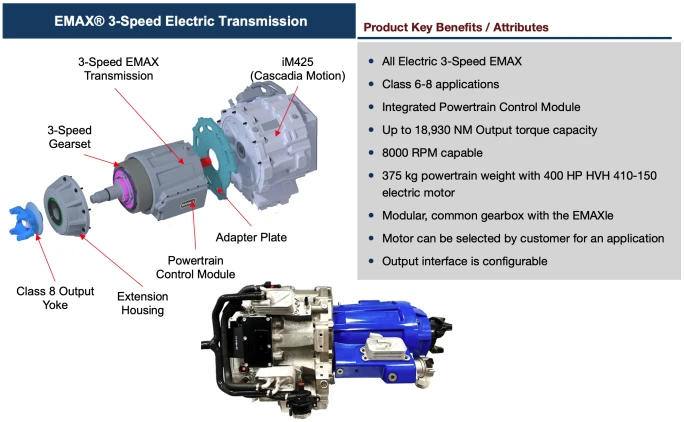
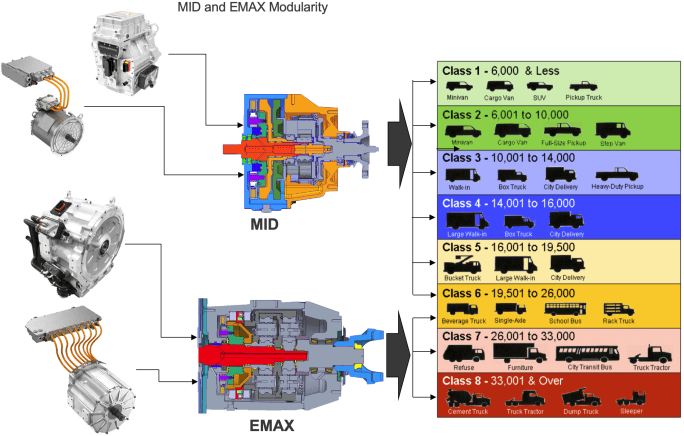
The company currently offers three transmission families:
- MID-Series for Class 1-7 trucks
- EMAX for Class 6-8 vocational applications
- Terramax for large mining, drilling and off-highway equipment
The largest Terramax configuration scales up to 2.6 megawatts for 400-ton mining trucks.
A Different Kind of Transmission
Kimes’ background spans nearly four decades in powertrain engineering, primarily at Ford and General Motors. Much of Sigma’s technology stems from work he began years ago while developing transmission components at Ford.
Credit:
Sigma Powertrains
Traditional automatic transmissions, he said, are poorly suited for EVs because of their hydraulic systems, torque converters and friction clutches, all of which create parasitic energy losses.
Battery-electric trucks simply cannot afford those inefficiencies.
“Battery energy density is terrible compared to diesel fuel,” Kimes said. “Every watt matters.”
Sigma’s solution replaces traditional friction clutches with what the company calls electronically actuated “e-clutches.” These are steel-on-steel mechanical clutches that require power only during engagement or disengagement.
There are no hydraulic systems, no clutch packs and no friction materials to wear out.
“It’s all hard steel on hard steel,” Kimes said. “The transmissions will go a million miles. We don’t have wear components.”
The transmissions also enable features like mechanical hill hold without draining battery power.
According to Kimes, a truck equipped with Sigma’s system can remain stationary indefinitely on a steep grade without consuming energy because the clutches mechanically lock into place.
Smaller, Lighter and More Efficient
One of the more surprising claims from Sigma is that the transmissions add relatively little weight compared to single-speed setups.
“Most of the mass already exists in any gearbox, Kimes said. “That includes shafts, gears, housings. We’re primarily adding clutches.”
Credit:
Sigma Powertrains
The company’s MID-Series transmission for medium-duty trucks weighs roughly 55 to 75 kilograms, according to Kimes.
Sigma also says the transmissions allow OEMs and upfitters to downsize electric motors substantially while still improving performance.
That could become increasingly important as fleets continue struggling with the tradeoffs between range, payload capacity and battery costs.
Looking Beyond Pure Battery-Electric
While Sigma is focused heavily on battery-electric commercial vehicles today, Kimes also believes hybrid systems may eventually play a larger role in long-haul trucking.
He described future concepts that combine downsized diesel engines, multiple electric motors and Sigma’s transmission technology into highly efficient hybrid powertrains capable of all-electric urban operation and diesel-powered highway cruising.
“A properly designed hybrid system could deliver 30% fuel savings while fitting into the same space as an existing transmission,” he said.
For now, though, Sigma’s immediate focus remains commercial EVs where high torque demands and challenging duty cycles expose the limitations of single-speed drivetrains.
And after years of the industry assuming electric vehicles would eliminate transmissions altogether, Kimes believes the market may be circling back toward a more familiar solution -- just executed in a very different way.
More Fuel Smarts

Wex Adds Cardless Fuel Payments for Over-the-Road Customers
A new fuel card feature for Wex customers offers convenience and security.
Read More →
New California Law Could Shed Light on Electric Truck Prices
Why do battery-electric Class 8 trucks remain so expensive? A California bill signed by Gov. Gavin Newsom would give fleets and state agencies more visibility into what manufacturers charge.
Read More →
How Volvo Updated Its D13 for EPA 2027 [Watch]
Volvo’s updated D13 promises lower emissions without sacrificing performance or fuel economy. Take a closer look at what changed inside the engine in this HDT Spotlight video.
Read More →

Diesel Price Spike Shortens Payback for Natural Gas Trucks, Report Says
Energy Vision estimates fleets could recover the higher purchase price of an RNG-fueled Class 8 tractor in 1.3 to 2.8 years under current fuel-price scenarios.
Read More →
Calstart Becomes Catalyst Mobility, Reflecting Broader Focus
Calstart is now Catalyst Mobility, reflecting the nonprofit’s growing national role in clean transportation, including zero-emission trucks, infrastructure and incentive programs.
Read More →
Record Diesel Prices Squeeze Trucking Fleets
Average U.S. diesel prices have climbed to nearly $6 a gallon, surpassing the 2022 record as tight refinery capacity and Middle East disruptions keep fuel costs elevated.
Read More →
Sponsored•September 9, 2026
How Fuel Delivery Shapes Engine Performance
Fuel delivery depends on more than what happens at the injector. For fleet, maintenance and technical professionals, looking at the full path from pump to injector can provide useful context for understanding engine performance.
Read More →
East Coast Port Launches $45M Electric Truck Push
The Port Authority of New York and New Jersey announced millions in incentives for zero-emission drayage trucks, yard tractors, and new charging hubs near the port.
Read More →
Detroit Opens Orders for EPA 2027 Engines
Detroit isn’t starting from scratch to meet EPA 2027 diesel emissions standards. Its Gen 6 DD13 and DD15 engines keep much of today’s platform while updating the fuel and aftertreatment systems.
Read More →
Zero-Emission Truck Corridor Planned for West Coast
California, Oregon, Washington, British Columbia and Baja California are coordinating plans for truck charging and hydrogen fueling from Canada to Mexico.
Read More →